
Quick answer: Build a front-desk interview introduction that shows how you route visitors, protect information, and keep appointments organized without inventing office experience. Start with the setting you genuinely know, choose one relevant action, describe your own contribution and connect it to the specific role. Treat examples in this guide as hypothetical practice material, never as statements about a real candidate.
An opening answer is a professional introduction, not a complete biography. Employer responsibilities vary; use the actual posting, avoid invented employers or figures, and be ready to explain every claim in a follow-up. This guide uses job-related interview guidance and occupation-specific sources where applicable.
Open With the Front-Desk Work You Actually Know
A receptionist introduction should tell the employer how you handle the first point of contact. Start with the type of people-facing work you have done, then name a specific task such as verifying an appointment, taking a complete message or directing a visitor. O*NET identifies these as core receptionist activities, but not every office assigns the same duties to its front desk. Read the employer’s posting before assuming you would handle money, medical records or building access.
For an experienced receptionist, a practical opening could mention balancing calls with arrivals during a busy shift. A first-time applicant might use a volunteer registration desk, a customer-service station or an approved campus event. Label the setting correctly. A college welcome table is not the same as a medical practice, yet it may offer genuine evidence of greeting people and passing unusual questions to a supervisor.

Connect Visitor Service to Accuracy
Saying “I love helping people” tells the interviewer little about how you work. Instead, describe the moment that required careful attention: confirming the correct attendee name, checking which room an appointment uses, or recording a caller’s return number. A hypothetical interview answer might say, “At a volunteer event I checked names against our approved list and sent guests to the right check-in station when their registration was incomplete.”
Do not invent numbers of daily calls, guests or appointments. If you tracked a count, use only the real recorded figure and be ready to explain its scope. If you did not, you can show the process. The employer is assessing whether you will recognize missing details, maintain an orderly queue and avoid giving the wrong visitor the wrong information.
Explain How You Handle a Calendar Conflict
A receptionist may be asked about two people expecting the same appointment window. In an introduction you need only preview your ability to check records and communicate calmly; save the full example for a follow-up. Mention whether you verified the calendar, notified the responsible scheduler and explained only confirmed options. Avoid claiming you personally changed a clinician’s, manager’s or attorney’s appointments if you did not have that authority.
If you have not used a particular scheduling platform, do not suggest you have. Instead, describe a calendar or spreadsheet you really maintained and say you can learn the employer’s approved system. “I recorded changes and asked the coordinator to confirm exceptions” demonstrates a transferable control. Claims about being an expert in every front-desk program make a weak introduction because an interviewer can immediately ask for a specific example.
| Posting priority | Experience to mention | Boundary to respect |
|---|---|---|
| Visitor flow | Greeting, sign-ins and clear directions | Do not share visitor or staff private details |
| Scheduling | Calendar updates and confirmation checks | Do not promise appointments you cannot confirm |
| Phone coverage | Accurate messages and escalation | Do not give unauthorized policy answers |

Show Discretion Without Disclosing Real Records
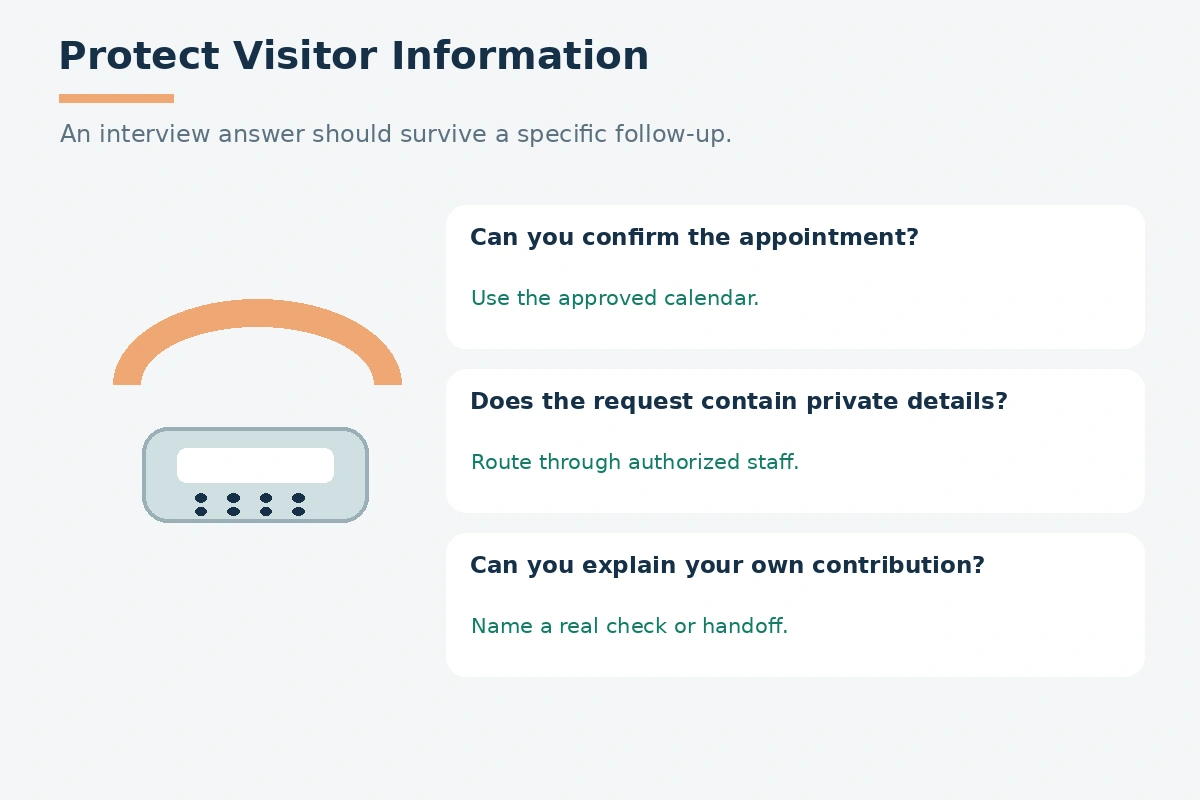
Reception work can expose you to phone numbers, visitor information and sensitive conversations. Your introduction should not reveal any former patient, client, student or employee details. You might say you followed a sign-in process, restricted access to a list or routed a private question to the designated employee. Those are concrete habits without exposing somebody else’s information.
Never assume that a receptionist is authorized to discuss a client account, release medical information or waive an organization’s check-in requirement. In a hypothetical answer, be precise: “I confirmed the question belonged with the office manager and passed it on through the approved channel.” This describes professional judgment better than promising you can solve every visitor problem on the spot.
Adapt the Opening for Different Workplaces
A small nonprofit, a hotel lobby and a health clinic may all have reception areas, yet their routines differ. For a clinic, you can emphasize careful routing and privacy without claiming healthcare credentials. For an office, calendar management and accurate messages may be central. For a hospitality setting, guest communication and coordination with other staff may matter more. Choose one of these threads only when the vacancy supports it.
Compare the posting’s requirements with your real evidence before the interview. If it lists phone systems, ask yourself whether you used that system or simply handled calls through another channel. If you lack a specific tool, do not turn familiarity with email into mastery of a telephone switchboard. Honest transferable examples allow the employer to assess training needs fairly.
Close With a Practical Front-Desk Contribution
An effective ending explains the difference your approach makes to the work, not to an imaginary hiring score. You might say, “I enjoy the combination of welcoming visitors and keeping details organized, and this role’s appointment and phone responsibilities fit the work I want to develop.” This makes your interest specific while leaving room for the interviewer to ask which tools you have used.
Before the conversation, test your answer for three things: a clear setting, an observable action, and a real boundary. Can you identify the person you would escalate to? Can you explain how you check spelling or dates? Can you keep the answer to roughly a minute without a long autobiography? Those checks make the introduction useful and truthful.
How We Research Interview Advice
We checked primary interview guidance and occupation-specific information on October 29, 2026. The relevant references are Source 1, Source 2, Source 3. These sources help identify a credible answer structure and typical tasks; they do not certify any individual experience or guarantee an employer outcome.
All sample introductions are hypothetical and should be rewritten from your own verified experience. JobAsk does not claim any paid interview-coaching partnership for this guide. Read our affiliate disclosure for site-wide information about possible relationships.
More Interview Preparation Guides
- Tell Me About Yourself in 30 Seconds: Build a Focused Interview Pitch
- Receptionist Interview Questions: Visitors, Scheduling, and Privacy
- Receptionist Interview Questions: Explain Your Front Desk Priorities
- Medical Receptionist Interview Questions: Scheduling and Privacy
- Receptionist Interview Questions: Front-Desk Scenarios and Answers
Use visitor-facing volunteer work, service work or another real example of accurate routing and organization; do not describe it as paid reception work.
Only if you actually handled that volume and can explain how it was measured. Otherwise discuss the process you used.
Yes. Explain your practices without exposing real client, visitor or patient information.
Only if you genuinely used it. You can discuss learning a new system without claiming prior proficiency.
A focused opening of about 45–60 seconds is often practical, but adjust to the interviewer’s question rather than following a rigid rule.