
A seasonal job cover letter should answer three questions quickly: which seasonal position you want, when you can genuinely work, and what evidence shows you can learn the work. Do not promise every weekend or late shift simply because you want the job. If the posting lists a specific end date, compare it with your actual school, family, travel, or other obligations before applying. The example and worksheet below help you write a focused letter without treating seasonal work as an informal commitment with no rules.
Read the season and role before drafting your opening
Seasonal openings can involve retail peaks, parks, visitor services, hospitality, warehouse support or event operations. The same word “seasonal” does not establish a standard start date, weekly hours, job duties or training length. Copy the exact job title from the posting into your working notes. Record the stated season, location, likely shift pattern and any required qualifications. If a schedule is missing, write “schedule to confirm” rather than inventing it. That uncertainty belongs in a question for the employer, not in a confident assertion in your application.
A useful opening names the position and connects one real responsibility with the employer’s need. For instance, an applicant for a temporary visitor-services desk could mention experience giving clear directions at school events. An applicant for a holiday stock position could mention checking labeled supplies in a campus club. These are examples of transferable experience, not evidence that the person previously held a paid visitor-services or inventory role. Keep the first paragraph about the job, not a long autobiography.
Make an honest availability table first
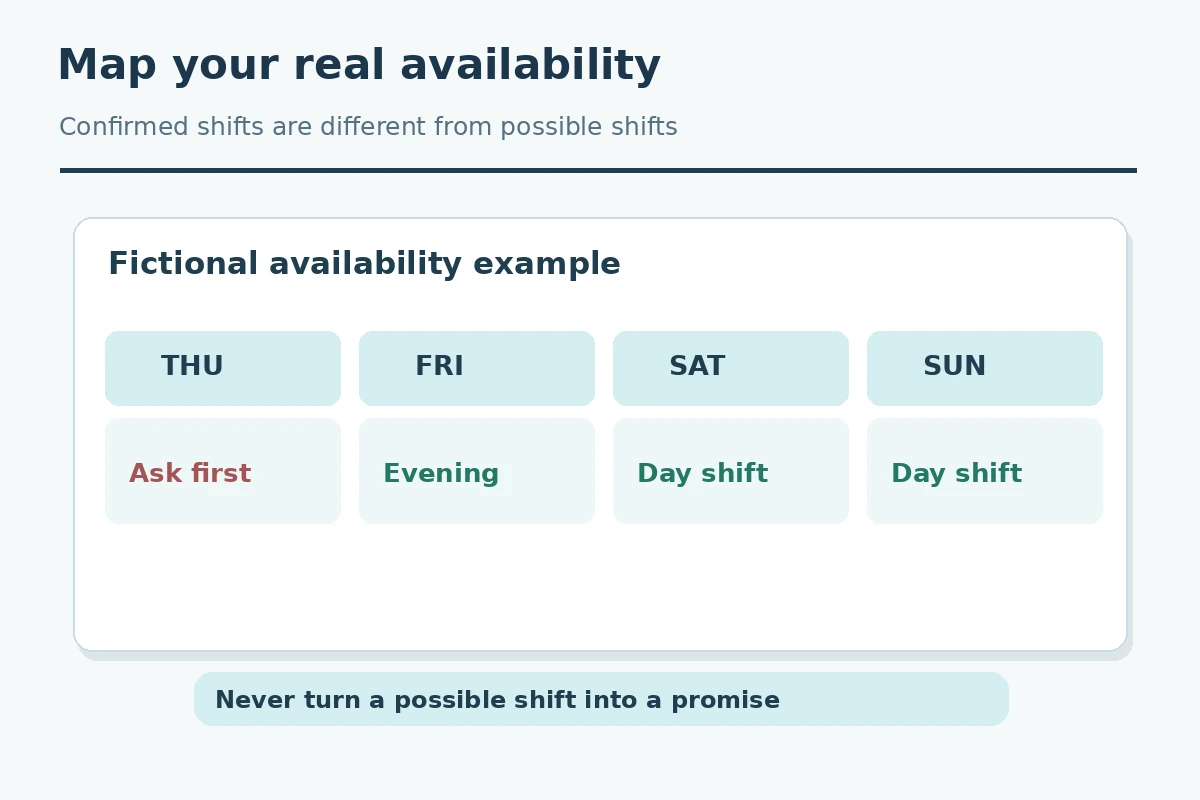
Before mentioning availability, separate dates you can commit to from dates that are tentative. For each week, note the earliest workable start, the latest workable finish, transportation constraints, and known absences. Include weekend availability only when you can reliably provide it. If you have a fixed exam week or a prebooked trip, do not hide a conflict and hope it will never be noticed. The letter can give a concise summary of your dependable availability while the application form carries the details if requested.
Consider the difference between “I am available for every shift from November through January” and “I can work Friday evenings and weekends through January 10; weekday availability changes after the semester ends.” The second is more useful when it matches reality. If the employer needs mandatory training before the first shift, ask about the training schedule and whether your actual dates fit it. Do not claim that an unconfirmed start date or a potential class change is already settled.
Use one task example instead of claiming broad experience
Select one job requirement and locate a truthful example: checking names on a signup list, helping visitors find rooms, keeping supplies organized, or handling a busy service line under a supervisor. Describe what you personally did, what source information you used, and who handled decisions you could not make. If the example comes from volunteering, a club or class, label that context plainly. “Tracked registration names for a school event and reported missing entries to the coordinator” is clearer than claiming you “managed full event operations.”
Do not manufacture quantities, sales totals, safety certifications or customer ratings. If a useful number is documented and you personally know its basis, it can be included; otherwise, a clear sequence of responsibility works well. The goal is to show that you can arrive prepared, follow a process, communicate changes and ask before crossing a boundary. When a role touches cash, equipment or food handling, never imply that classroom practice replaces required employer training or any mandated credential.
Draft a short letter that fits the application channel
Here is a hypothetical seasonal retail-support example to adapt only where accurate: “Dear Hiring Team, I am applying for the Seasonal Stock Support position at your Westside location. During my campus event volunteer shifts, I checked supply lists, arranged labeled materials and flagged missing items to the team lead. I am comfortable following written instructions and asking for clarification before changing a process. I can work Saturdays and Sundays from the advertised start period through December 31, and I would welcome information about required orientation and weekday shifts. Thank you for considering my application.”
This sample does not claim forklift access, point-of-sale authorization, guaranteed availability beyond the date given, or a real employer relationship. Replace the invented setting, location and dates with information that is true for you. If the application requires a form field instead of an uploaded letter, preserve the relevant content while removing postal-letter formatting. If the employer says not to attach extra documents, follow that instruction. Check that your resume and availability form say the same thing.

Ask two scheduling questions at the right moment
At a screening call, ask what dates the season actually covers, whether early training is required, how schedules are communicated and how employees report conflicts. Do not turn the initial cover letter into a list of demands. A sentence about the shifts you can reliably cover is usually enough. If your availability is narrow, focusing on a role that needs those shifts is more useful than trying to appear flexible in a way you cannot sustain.
Keep a copy of the exact version you sent and of the posting’s dates. If an employer later suggests hours outside your stated window, clarify the change before agreeing. The position may be seasonal, but your responses should still be professional and verifiable. A letter that establishes a realistic schedule makes the rest of the application easier to reconcile and can help you assess the offer when it arrives.

Run the final seasonal-letter review
Read the letter once as a scheduler: can the reader identify your desired location, availability and relevant task without searching? Read it again as a supervisor: are there claims about operating equipment, handling payments, training others or independently approving changes that you have not earned? Remove vague enthusiasm, unsupported speed claims and filler about being a “perfect fit.” Use the employer’s exact title only after checking the current posting.
Finally, verify names, file attachments, the deadline and the preferred submission channel. Keep a simple record of the date you applied and the availability you stated. If you receive an interview, bring the same information rather than improvising a broader schedule. The best seasonal cover letter is a credible small promise supported by your actual actions, not an attempt to sound permanent, senior or endlessly available.
How We Research Cover-Letter Guidance
We reviewed official university career-center guidance on tailoring letters, selecting real evidence, keeping documents concise, and following the employer’s stated channel. We separately checked specialized guidance where available. The sample passages are fictional teaching examples, not actual employers, offers, hiring outcomes, or claims that any organization accepts unsolicited material. Availability, screening, worksite and eligibility details must be confirmed with the individual organization.
Sources checked November 10, 2026: careerservices.upenn.edu; careercenter.ucdavis.edu; careers.gmu.edu. Read the affiliate disclosure.
More Resume and Cover Letter Guides
Include a concise confirmed window if dates matter to the posting. Put detailed exceptions in the employer’s requested schedule form or discuss them when invited.
Yes. Identify it as coursework, a school event or other genuine context, and explain the specific task rather than claiming employment.
Say which shifts you can reliably cover; do not imply unlimited availability. Confirm the employer’s actual schedule before accepting.
No. Emphasize following training and instructions, and do not represent exposure or interest as certification or authorization.
Keep it concise, usually within one page, and prioritize the role, evidence and true availability over repetitive personal background.