
A cover letter to a former employer should explain why you are applying to the specific opening now and what you can contribute that is relevant to the current team. Familiarity with the organization can be useful, but previous employment is not a guarantee of rehire. Verify the position, use the official application process, and compare the duties you once performed with the role being advertised today. Treat the time since departure as evidence of learning or change only when you can describe what actually happened.
Start with the current position, not the reunion
Read the new job posting and check whether its team, software, location or responsibilities differ from the work you remember. People, policies and reporting structures may have changed. Your opening should name the vacancy rather than writing a generic “I would love to come back.” If your prior service is relevant, mention the department and dates accurately without implying that a previous manager has already endorsed you. Avoid describing the organization as unchanged because you have not been there recently.
A grounded opening could be: “I am applying for the Scheduling Coordinator opening. I previously supported visitor schedules on the operations team, and my later work with shared calendars has strengthened the tracking and handoff practices relevant to this role.” That is a model, not a statement you should copy without the history. It tells the reader about a present role match first. Whether the employer recognizes your name is secondary to the evidence you submit through its current process.
Separate your former duties from your new experience
Create two columns: “what I did there” and “what I learned afterward.” In the first, list duties you personally completed under the actual title you held. In the second, list skills, projects or training gained since leaving and how they relate to the new posting. If there has been no major change, do not invent one. You can still describe stronger understanding of the position or a different current fit if that is true. Avoid claiming managerial status from having occasionally helped colleagues.
For example, you may have checked appointment requests while employed there and later learned to produce clear exception summaries at another workplace. The transferable value is the combination of careful record handling and improved communication, not an imagined productivity figure. Keep private information from both employers out of the letter. You can refer to public processes or general work types without disclosing customer accounts, internal policies or the names of coworkers who did not agree to be mentioned.

Address the departure only when it helps
You usually do not need to explain a full employment history in the letter. If the reason for leaving is directly relevant to your decision to return, keep it factual and brief: for example, a fixed-term contract ended or you relocated. Do not rewrite the reason as a promotion, layoff or personal arrangement that did not occur. If the departure involved conflict or performance concerns, avoid using the cover letter to litigate old events or criticize former managers. Prepare to answer honestly if the employer asks through its process.
A positive framing is not the same as concealment. “After completing my fixed-term assignment, I developed additional scheduling experience elsewhere” is fine only if both facts are true. “I left to broaden my leadership experience” is not fine if it invents a motivation or role. The strongest letter focuses on actual value in the current vacancy and leaves sensitive or detailed background discussion for an appropriate conversation. There is no universal guarantee that employers will consider former staff eligible for every opening.
Write a concise return application
Hypothetical example: “Dear Hiring Team, I am applying for the Program Support Coordinator position posted on your careers page. I previously worked as an administrative assistant with your community programs team, where I maintained meeting logs and routed schedule updates to the coordinator. Since then, I have gained additional experience documenting service requests and creating clear weekly handoff summaries. I would value the opportunity to apply these skills to the responsibilities described in the current posting. Thank you for reviewing my application through your regular process.”
This example avoids named individuals, invented endorsements and an assumption that a former employee will be fast-tracked. Replace the title, team and work facts with your true history. If you worked at several locations of the same organization, make the particular entity and dates clear. If the posting asks for an internal reference or rehire eligibility information, answer the form accurately; the cover letter should not attempt to override that formal check.

Respect the current hiring route and relationships
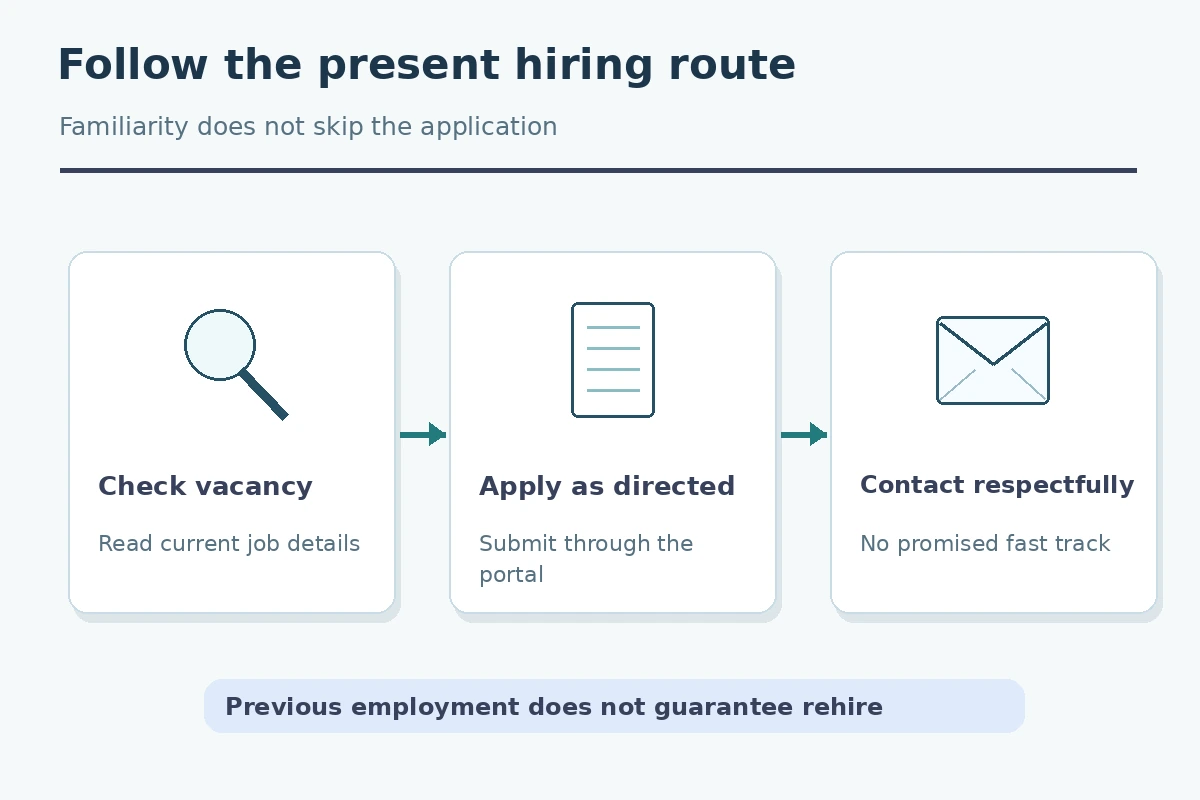
Some organizations may welcome a former employee contacting an appropriate recruiter, while others require all applicants to use a public portal. Follow the posted method even if you still know a former manager. You can let a contact know you have applied without implying they promised to recommend you. Do not send a personal message that pressures a former colleague to bypass established selection steps or disclose internal candidate information.
If a previous supervisor has changed jobs, do not assume they remain part of the hiring process. Make sure you have consent before naming a person as a reference. A return application may be evaluated against current eligibility, licensing, background or other employer policies; do not assert those rules are automatic or universal. If the organization rejects or does not answer the application, treat that as part of the normal job search rather than evidence of a personal obligation to rehire you.
Check the letter for old-company assumptions
Read every statement about the organization and mark whether it comes from the current posting or from memories of your prior job. Confirm the former title, department name, dates and current role requirements. Review your resume to ensure those details match. If you earned a new credential, verify its actual status before presenting it as completed. Do not say you can return immediately if you still need notice or a move; discuss a realistic start date if asked.
Finally, make the evidence recent enough to be useful and the tone respectful without sounding entitled. A current hiring manager should learn what you can do today, not just that you enjoyed the old workplace. Keep one copy of the exact submission and track the formal application confirmation. A former employer is still a prospective employer until a new position is actually offered and accepted.
How We Research Cover-Letter Guidance
We reviewed official university career-center guidance on tailoring letters, selecting real evidence, keeping documents concise, and following the employer’s stated channel. We separately checked specialized guidance where available. The sample passages are fictional teaching examples, not actual employers, offers, hiring outcomes, or claims that any organization accepts unsolicited material. Availability, screening, worksite and eligibility details must be confirmed with the individual organization.
Sources checked November 10, 2026: careers.gmu.edu; careerservices.upenn.edu; careercenter.ucdavis.edu. Read the affiliate disclosure.
More Resume and Cover Letter Guides
Yes, when relevant. State your actual title, team and dates, then connect that experience to the current vacancy.
Only briefly if it helps the current application; give a truthful reason and avoid turning the letter into a dispute about past events.
Follow the employer’s current application instructions. You may contact an appropriate person respectfully, but do not assume this replaces the formal process.
Not without support. Systems and policies may have changed; emphasize relevant experience without promising a specific employer outcome.
Identify specific verified skills or tasks gained since leaving and explain how they connect to the new job description.