
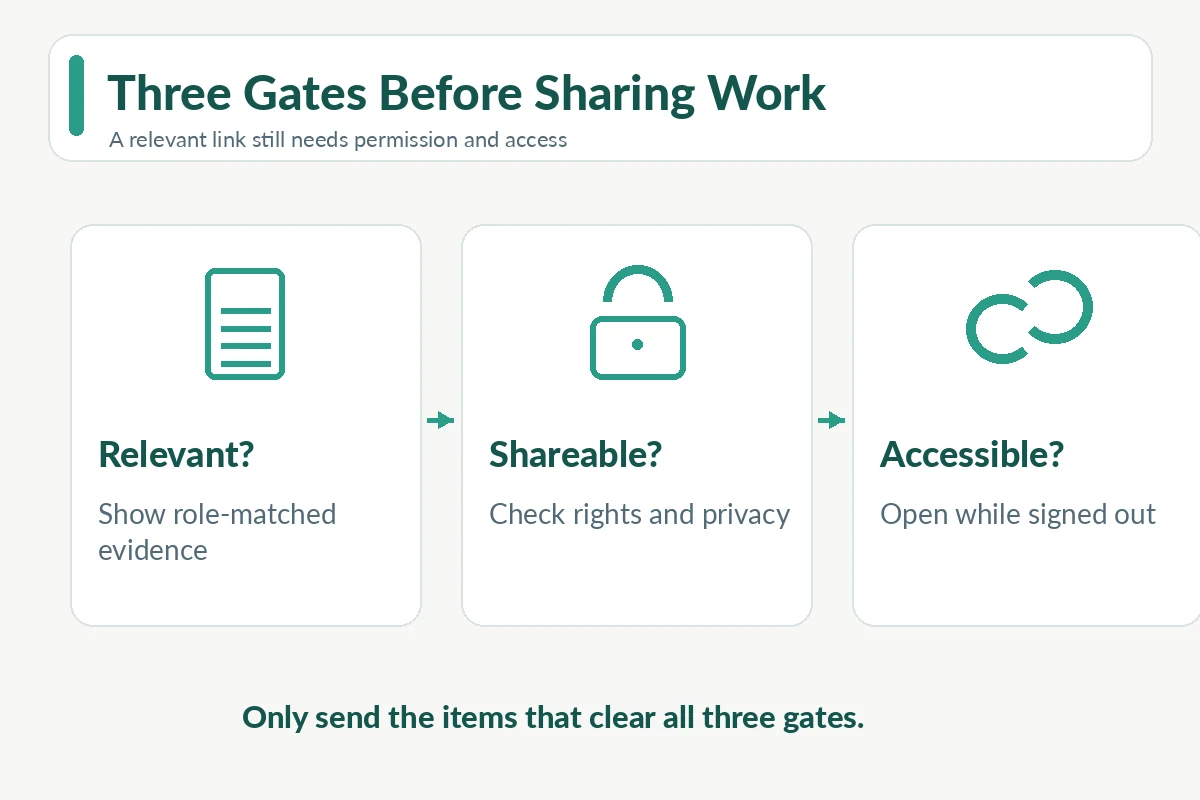
When an interviewer asks to see a portfolio after the meeting, send a small set of relevant, authorized work samples through the channel they specify. Check that each link opens for an external viewer, that you have permission to disclose the material, and that your contribution is accurately labeled. You do not need to send an entire archive of previous employers’ files. If you were not asked for additional materials, a concise optional link may be appropriate in a thank-you note for a portfolio-centered role, but it should not become an unsolicited assignment or a security risk.
Confirm What the Interviewer Requested
Re-read any email or note from the interview: did the team ask for a public URL, a PDF, a writing sample, a GitHub repository, a project walkthrough or a specific file format? A portfolio link answers a different need from a timed take-home test. If there is a deadline, file size limit or secure portal, follow those instructions exactly. If there is no request and the job is not portfolio-centered, do not assume a large attachment will be welcomed.
UC Davis Career Center advises selecting relevant portfolio examples rather than a full chronology, verifying that links work and crediting contributors to team projects. That makes a useful first filter. For an illustrative design role, a short research-to-prototype case study may be more relevant than unrelated illustration work. For technical support, a sanitized documentation sample might be better than a public repository containing internal tickets.
Run a Permission and Confidentiality Check
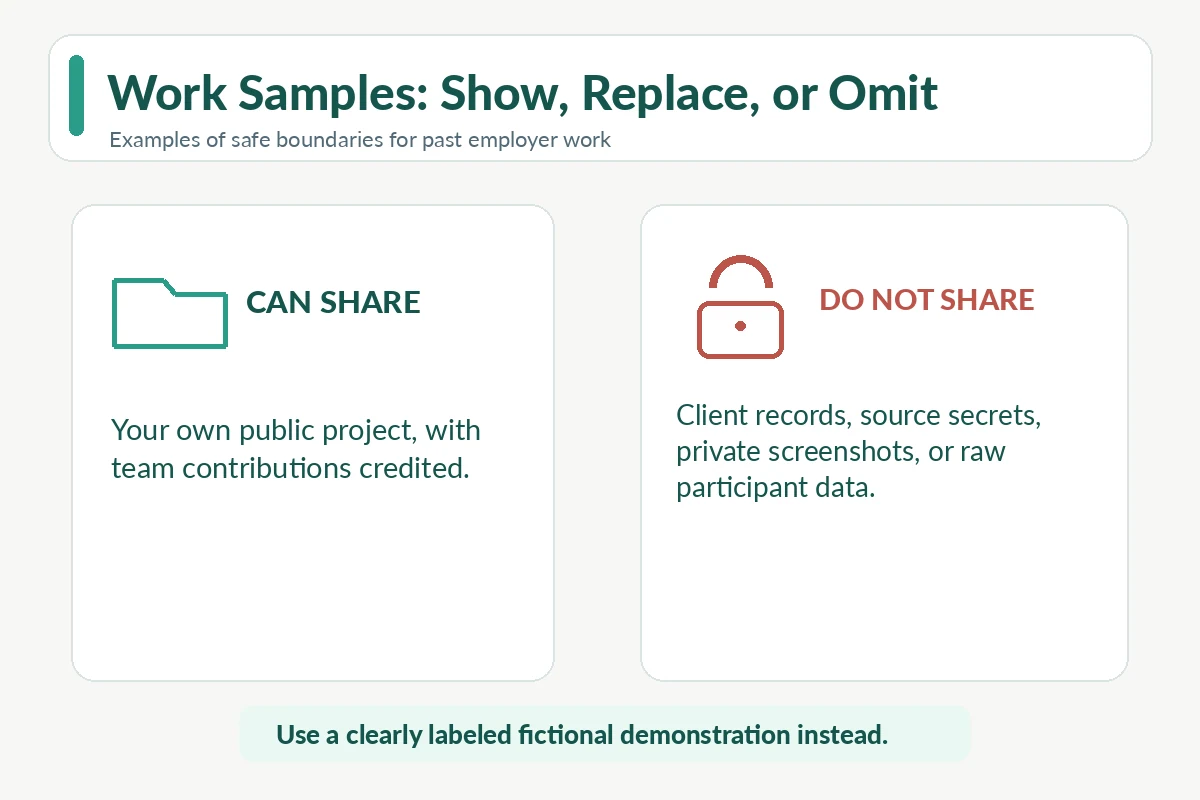
For each sample ask: did I create it, do I have the right to show it, and does it contain confidential information? Paid work can belong to an employer or client under agreements, while school assignments or self-initiated projects may have different terms. Do not assume a password or hidden URL automatically authorizes sharing. Avoid customer names, proprietary screenshots, source code, internal financial records, identifiable patient details and unapproved personal data.
When original material is confidential, create a clearly labeled independent demonstration using fictional data or describe your process at a non-sensitive level. Do not present a reconstructed sample as actual approved client work. For example, a fictional operations candidate can describe a public template they designed and its logic, noting that the template is illustrative. If uncertain about rights, omit the item until the owner confirms it may be shown.
Test the Link Exactly as the Employer Will See It
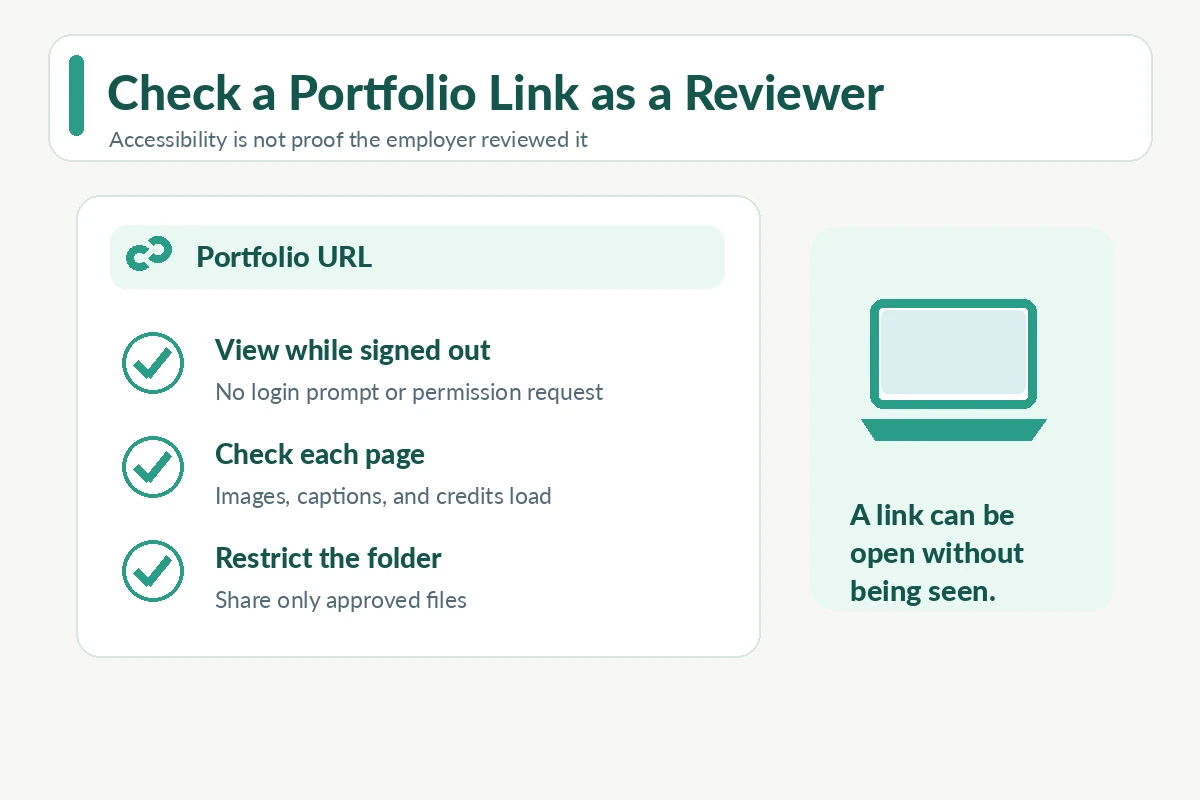
Open the portfolio URL in a private browsing session while signed out of your own accounts. Check that the pages load, videos play with captions where needed, PDF pages are legible and download permissions match your intent. Ensure a link does not demand permission requests from unknown external accounts or unexpectedly reveal an entire shared folder. Replace cryptic file names with readable page titles. Keep access settings as narrow as possible while still following the recruiter’s requirements.
Check mobile as well as desktop viewing when feasible, especially for a long case study. If the interviewer requested a downloadable document, inspect its opening and page order. If the organization uses a secure upload portal, do not route around it with an open public link just because your own website is easier. An access test is a technical check, not evidence that a recruiter has reviewed the material.
| Question | Safe example | Stop and revise |
|---|---|---|
| Is it relevant? | Two role-matched samples | Unrelated bulk folder |
| May it be disclosed? | Your own or approved work | Private client records |
| Can a reviewer open it? | Tested external-viewer link | Account-only access |
Write a Brief Message With Accurate Project Credits
Illustrative email: ‘Subject: Portfolio examples — Product Designer interview. Thank you for discussing the research-to-handoff workflow with me yesterday. As requested, here are two shareable examples: [project link], showing my wireframe and usability-summary contribution, and [project link], showing a self-directed design system exercise. Both links should be viewable without sign-in. Please let me know if your team prefers another format.’ This sample uses placeholders and does not describe a real employer or candidate.
Explain what you personally did on shared projects: ‘created prototype screens,’ ‘drafted the documentation,’ or ‘reviewed test notes’ rather than ‘led the launch’ if others owned the decision. UC Davis emphasizes credit for collaborators. The email should not contain a long autobiography: the portfolio itself supplies supporting work. If you are sharing a new sample after the interview, be honest about when it was created; do not quietly revise a timed task and present it as the original submission.
Use a Three-Item Portfolio Evidence Card
For each item write the problem, your role and the public outcome or work product that can safely be demonstrated. A software candidate might show an open-source bug fix with a link to the exact contribution, while a writer might share an authorized published article with a short editing note. A private employer presentation should not be uploaded merely to satisfy a recruiter request. If you cannot show a result due to confidentiality, explain the kind of work you can discuss and offer a permitted alternative.
Keep the number of examples small and aligned with the position description. Label hypothetical practice projects as practice, student work as coursework and team work with explicit credit. If you provide code, remove secrets and proprietary dependencies. If you provide user research, do not expose raw participant data or recordings without permission. The aim is to make evidence review easy, not to maximize folder size.
Separate Legitimate Document Requests From Red Flags
A portfolio request ordinarily asks for work you can show, not your bank account, passport scan, security code or a fee to access a recruiting portal. The FTC warns that fake recruiters may use realistic interview invitations to solicit personal information and payments. Verify unexpected sender addresses through the employer’s official website or previously confirmed contact, especially when the post-interview instruction changes domains or asks you to install unusual software.
After sending, note the date, link version and who received it. If the recruiter asks for different permissions, adjust only the requested item’s access within your rights. Avoid repeated ‘did you open it?’ messages. If a stated hiring date passes, the usual status follow-up process applies; sending a portfolio does not give you proof of interview status, selection or access by a particular reviewer.
How We Research and Verify Interview Guidance
This U.S.-focused guide was checked on 2026-11-13 against career-center and consumer-protection guidance: careercenter.ucdavis.edu; www.uwb.edu; consumer.ftc.gov. The sources support general professional communication and the specific boundaries identified above; they do not predict an individual employer’s response. Every sample message, job title, personal anecdote, requisition number and person in this article is an illustrative fictional example, not a documented real hiring exchange. Always follow the instructions in your own interview invitation and verify a recruiter through an official company channel. See our affiliate disclosure; this page does not claim a paid employer or service partnership.
More Interview Preparation Guides
Sometimes for a portfolio-centered role, but keep it brief and relevant; follow any stated recruiter instructions.
Not unless you are authorized and the content may be disclosed. Use a safe independent example instead.
No. Grant the minimum access that allows the requested work to be reviewed.
Name your individual contribution and credit collaborators without claiming exclusive authorship.
No. A working link confirms accessibility, not whether or how the materials were assessed.