
Training skills on a resume can come from onboarding a coworker, demonstrating a safe routine, preparing instructional materials, or coordinating a class. Describe what you personally taught or supported, who approved the content, and how you knew the learner was ready for the next step. Do not imply that mentoring one teammate made you the owner of a formal training program or qualified you to certify performance.
Identify whether you coached, taught, or coordinated
Peer coaching, classroom instruction, training administration, and program design are different responsibilities. A retail team member may show a new colleague the store’s approved opening checklist. A training coordinator may send invitations and track completion records. A learning specialist may assess needs and develop instructional material. Match the vocabulary to the work you actually performed.
Use the O*NET training specialist profile for occupational context, not as a menu of achievements to copy. It lists delivery, assessment, materials, and program evaluation as possible specialist activities. An employee who simply showed a coworker where to find a procedure should say so, rather than adopting the full specialist profile. Accurate scope is more convincing in a hiring conversation.

Describe the learner and the specific task
The phrase “trained staff” lacks context. State whether the learners were newly hired coworkers, volunteers, interns, customers, or class participants. Identify the task: check-in steps, stock labeling, scheduling, document handling, or use of a permitted tool. Avoid sensitive training content, confidential policies, or personal learner records that you cannot disclose.
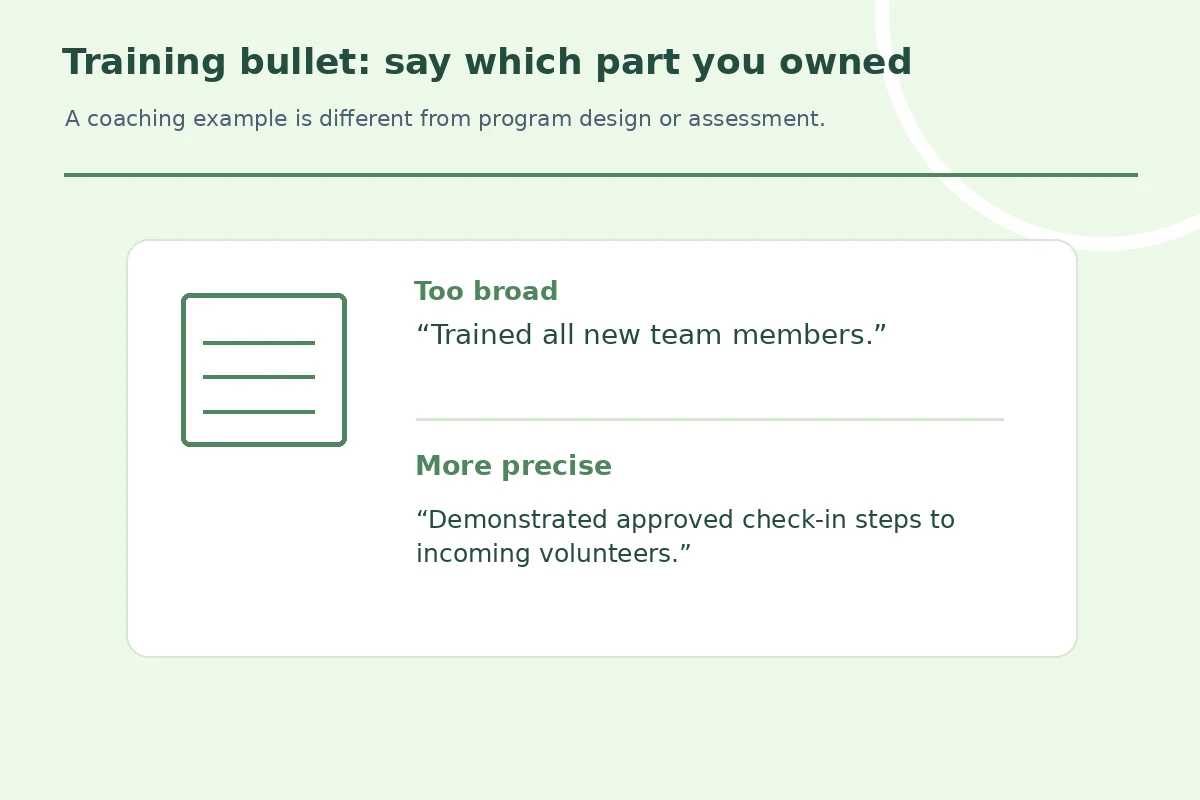
A hypothetical example reads: “Walked new volunteers through the approved event check-in process and showed where to escalate unusual registrations.” It describes demonstration and a support boundary. Do not claim to have independently evaluated every volunteer, issued credentials, or changed policy unless those were genuine assigned duties. A resume should not manufacture authority through stronger verbs.
Explain the material you used or created
Training support may involve an approved procedure, quick-reference guide, slide deck, role-play, or a checklist. Say whether you followed existing material, adapted it with permission, or developed something new. A tool you use to show a procedure does not necessarily make you the document owner. If you wrote a guide, clarify its purpose, revision process, and approval status.
For instance, a class project could include a fictional onboarding checklist you designed and tested with classmates. Label it educational, not organizational deployment. If a workplace used your handout after review, you can explain that fact when it is verifiable and shareable. Never publish protected operating instructions or copies of proprietary training slides without permission.
Describe demonstrations and feedback accurately
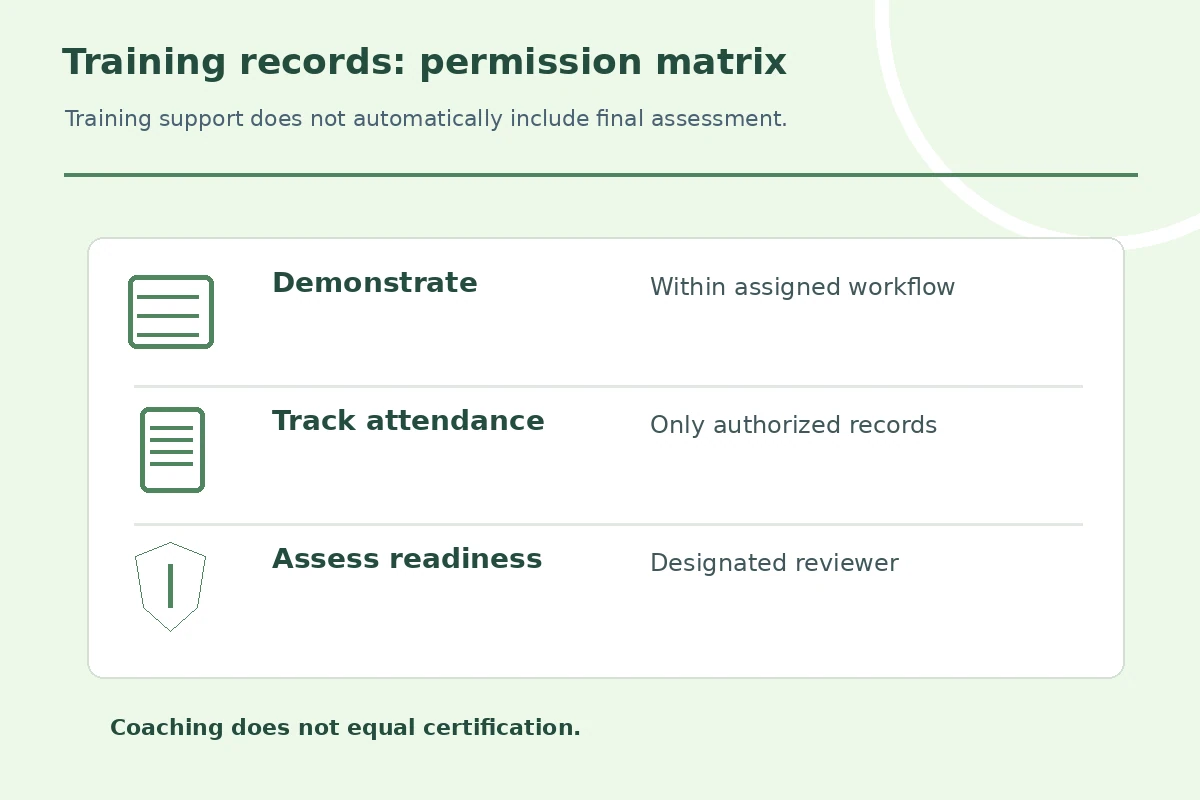
Good instructional practice involves showing the task, letting a learner ask questions, and checking understanding at an appropriate level. If you merely observed a practice attempt, describe observation; if an authorized trainer signed off competence, attribute that approval correctly. Different environments have strict rules about who can assess safety-sensitive or licensed work.
An honest bullet might say, “Demonstrated the approved intake checklist to new volunteers, answered routine questions, and referred exceptions to the shift supervisor.” The example does not promise that every trainee passed an assessment. If you did record actual feedback or improve a guide after a review, name the change with the appropriate owner.
Use a quick evidence and authority table
| Skill claim | What to check | Boundary |
|---|---|---|
| Peer coaching | Who and what task? | No assumed trainer credential |
| Instruction material | Followed or authored? | Approval status matters |
| Learner records | What did you track? | Protect private results |
| Final sign-off | Who assessed readiness? | No invented certification |
Keep certification and safety decisions separate
Helping a learner use equipment or access a system is not the same as authorizing that person to operate independently. In healthcare, industrial, legal, security, or other regulated contexts, use exact training and supervision terms. Describe the observed activity and assigned scope. Do not claim to certify, license, or approve someone when those actions belong to a designated authority.
If your role involved scheduling a safety class, the resume might say “coordinated attendance records for instructor review.” It should not say “certified employees in safety compliance.” When an employer asks about results, explain what you measured or recorded. If you did not receive reliable assessment data, do not invent a completion percentage.
Translate training into a concise evidence-based bullet
Use action, learner, method, and boundary. “Coached new front-desk volunteers on the approved check-in workflow and routed unusual cases to a supervisor” is specific. If you actually designed and delivered a course, the bullet should name the learning objective, materials, review and real feedback. Avoid generic claims like “excellent trainer” or “expert in onboarding” without a supporting example.
For the skills section, choose terms that match your real tasks: peer coaching, job aids, procedure demonstrations, orientation coordination, or training records. The work-history bullet then shows context. If you are changing careers, these transferable abilities can help, but label volunteer and academic examples accurately and avoid pretending they were paid corporate training roles.
Check the finished resume for believable authority
Read the target vacancy and mark which skill claims require proof. Could you explain the number of people taught, the material used, the approved procedure, and the responsible reviewer? Add real quantities only when confirmed and appropriate to share. If the role asks for learning management system administration, do not substitute ordinary spreadsheet attendance tracking for those technical permissions.
Ask a reader to identify the difference between your support task and the trainer’s assessment. If the distinction is unclear, rewrite the bullet. Also proofread software names, position dates, and the final PDF. The goal is an accurate description of your contribution, not a guaranteed outcome from automated screening.
Practice with an original fictional work sample
Make an original fictional orientation plan for volunteers at an imaginary community event. Include a session objective, the approved check-in steps, a practice question, a help contact, and a separate supervisor sign-off. Draft one resume bullet for leading the walkthrough, another for creating a practice handout only if you actually did that. The exercise helps distinguish teaching, material development, and final authorization. It should never be described as an employer’s real onboarding record or as evidence that you qualified someone for regulated work.
How We Research Resume Skills
For this guide we reviewed occupational task descriptions and US resume guidance on November 7, 2026: www.onetonline.org (Training specialists deliver instruction, develop materials, and evaluate programs); cloudfront.careeronestop.org (Skills listed on a resume should be relevant to actual work); cloudfront.careeronestop.org (Past duties and accomplishments should support skills claims). Occupational profiles describe typical duties, not proof that any specific applicant has those skills. The resume bullets and work samples in this article are hypothetical editorial examples. Always confirm the job posting, your real responsibilities, permission to share records, and applicable training requirements.
This is independent resume guidance, not a paid employment offer or guaranteed screening result. No employer reviewed or endorsed the hypothetical examples. Read the JobAsk affiliate disclosure and avoid posting confidential employer records as evidence of your skills.
More Resume and Cover Letter Guides
It can support peer coaching if you actually demonstrated a task or answered onboarding questions. Do not describe it as program leadership.
Yes, when clearly labeled and genuinely performed. Explain the procedure and your responsibility.
Say you delivered or supported training using approved materials, not that you authored the curriculum.
No. Describe attendance tracking or learner support instead if those are the tasks you did.
Only if you held the actual assessment and certification authority. Otherwise describe your instructional support and referral process.