
A UX designer resume objective can help an early-career candidate show the direction of their design work without claiming that a classroom prototype was a launched product. Identify the kind of UX position you seek, mention one or two demonstrated methods such as interview synthesis or usability-test observation, and point the reader to a portfolio case study that proves those methods. The objective is optional and should not crowd out stronger evidence. A hiring team is more likely to learn from a real research decision and revision than from the unsupported label ‘creative, user-centered problem solver.’
Decide whether UX is the right target title
Read the posting for UX designer, product designer, UX researcher, interaction designer or digital interface specialist. These labels overlap but are not identical. A UX research role may emphasize study planning and synthesis; an interface design role may emphasize flows and prototypes; a product design role may require broader collaboration and design systems. Choose the role your evidence actually supports rather than copying every title into one line.
O*NET groups many digital-interface responsibilities together, which does not mean that any one junior employee performs them all. If your work is a Figma practice project, do not claim front-end engineering, production accessibility compliance or ownership of a shipped interface unless true. Your objective can acknowledge that you are seeking a first role that involves mentored research and iterative prototyping.
Start with a question and real observation
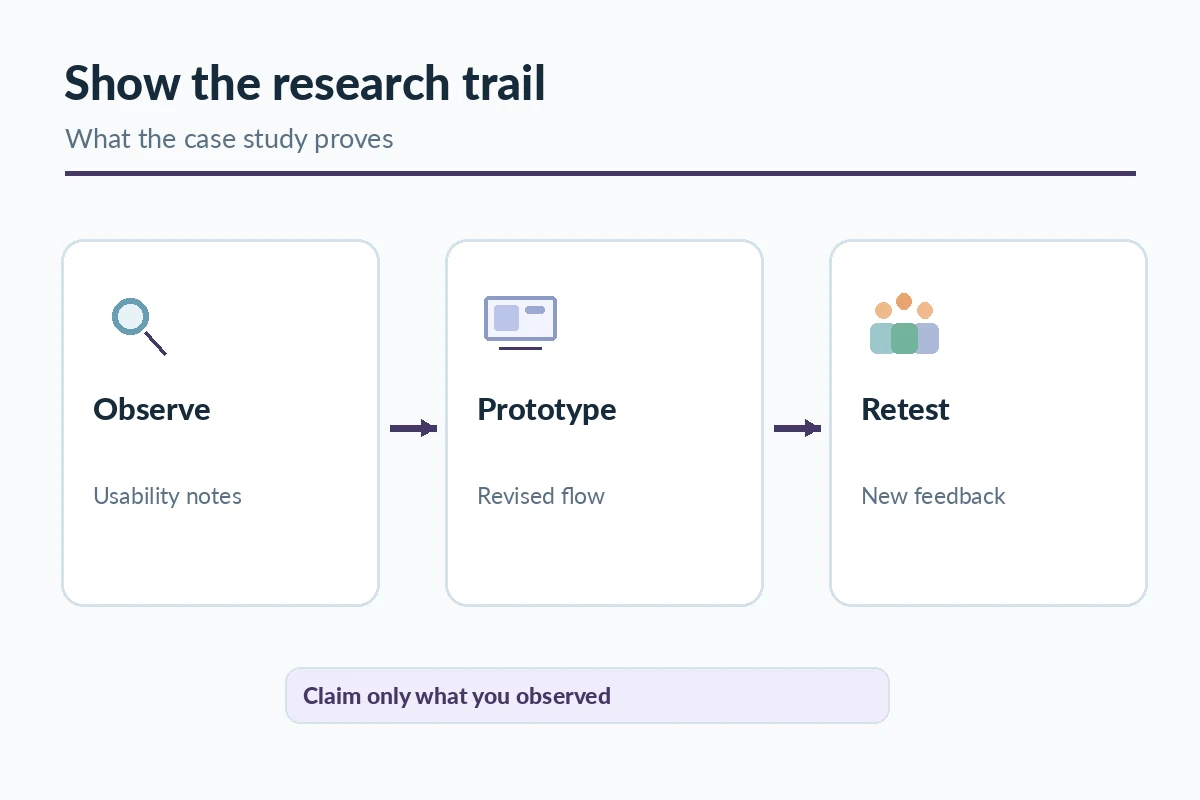
A useful portfolio story starts with a question such as why users missed a navigation link, then describes the evidence you gathered. This may come from a supervised class usability exercise with clearly consented participants, not necessarily a workplace. Distinguish actual observations from guesses. Keep consent and privacy in mind if you used interview notes or recordings; a public case study should not expose participant identities or sensitive quotations.
Write down which part of the study was yours. If a group selected tasks and you consolidated feedback, state that division. Avoid claims such as ‘led nationwide user research’ when you helped recruit a few class volunteers. The objective might foreground interview synthesis or research documentation, but the body must explain your exact involvement.
Document prototypes and the stage they reached
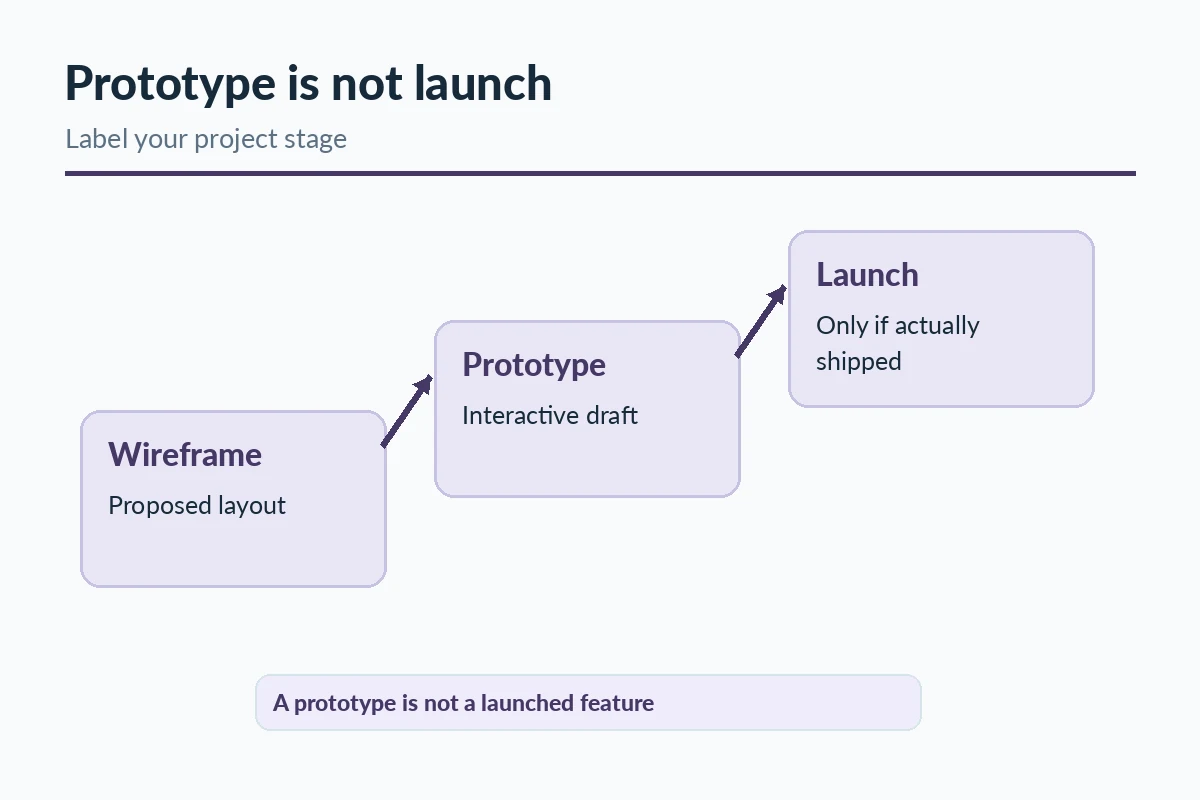
A wireframe, clickable prototype, usability study and production feature represent different levels of delivery. Label each artifact by its true stage. For example, ‘built an interactive prototype and tested a navigation flow during coursework’ is defensible if the work exists. ‘Shipped a redesigned checkout’ is false if the project stopped at a mock-up. Never convert an illustrative screen into a commercial product result.
Make the case study useful: show the original flow, the observation that prompted change, a revised design and a remaining question. If a solution was never tested, call it a proposal rather than an improvement proven by users. Recruiters may value that disciplined distinction more than unsupported conversion rates.
Rewrite a generic objective with role evidence
Weak example: ‘Passionate UI/UX designer seeking a great company where I can grow.’ It centers the applicant and lacks proof. A stronger hypothetical student objective is: ‘Seeking a junior UX designer position, bringing documented usability-test synthesis and iterative prototyping from academic projects.’ If your portfolio contains only practice exercises, this makes the context clear.
A career changer who worked in customer service might use: ‘Customer support specialist transitioning to UX design, applying first-hand issue-triage experience and a documented interface-research portfolio.’ Only say ‘research portfolio’ if the cases genuinely report a method and observation, not screenshots with invented interview insights. Keep the wording concise and let the work samples carry the detail.
Turn a case study into supporting resume bullets
A case study might generate three honest bullets: ‘Mapped a three-step appointment flow for a class assignment,’ ‘Observed where test participants hesitated and grouped findings,’ and ‘Revised navigation labels for a second prototype review.’ The number of steps is illustrative here; use your actual project details. Name tools you genuinely used but do not let software names replace the problem-solving story.
If you collaborated with a developer, say how you handed off a prototype or discussed constraints. Do not claim that you built code you never wrote. If you used a template, credit the appropriate source and focus on the parts you modified. Ensure that every image and data element in your portfolio is permitted for sharing.
Match accessibility statements to demonstrated work
Accessibility is a serious professional concern, not a decorative resume keyword. You might truthfully say that you checked color contrast during a class exercise or considered keyboard navigation during a prototype review. Do not declare a product compliant with legal or technical standards if you neither tested nor had the authority to certify it. Refer to concrete checks and explain any unresolved limitations.
A posting may ask for collaboration with researchers, engineers and stakeholders. Provide a believable example of responding to critique, recording a design decision or explaining a trade-off. Your objective can name collaboration as an interest, but claims about teamwork should appear in the actual project story rather than in a list of adjectives.

Choose the simplest opening that adds information
For an experienced designer with directly matching roles, a summary or no opening section may be better. For a graduate moving from print design or customer support, an objective can explain the transition in a few lines. Compare both versions at the top of the resume and keep the one that helps the reader most quickly understand the position, relevant evidence and portfolio link.
Before submitting, open your portfolio in a private browser window and verify that every link works. Check labels such as ‘concept,’ ‘class project’ and ‘launched’ against what really happened. Do not advertise unverified usability scores, sales improvements or hiring outcomes; an accurate process narrative is already useful.
How We Research Resume Objective Examples
We compared U.S. university career-center guidance about optional and role-specific objectives with O*NET occupational duties and role boundaries. Examples are hypothetical and do not describe a real employer, verified hiring outcome, credential, or guaranteed applicant-tracking-system result. Employers can set different requirements, so review the actual job posting and do not claim responsibilities or qualifications you have not held.
Sources checked November 10, 2026: www.umassd.edu; cpd.emory.edu; careercenter.education.wisc.edu; www.onetonline.org; career.uoregon.edu. Read our affiliate disclosure for editorial relationship information. This article is educational, not a promise of employment.
More Resume and Cover Letter Guides
Yes. Name the target junior role and point to genuinely completed, clearly labeled academic or independent projects rather than invented client experience.
Only when the tool is central to the role and you can demonstrate meaningful work. Otherwise keep the objective focused on methods and show the tool in Skills or a case study.
A real feature made available in an actual product; a prototype or class mock-up is not the same. Describe the exact project stage.
Avoid claiming measured improvement without appropriate evidence. You can say that feedback motivated a revision or that you proposed a better path.
Not always. A clear role heading and linked portfolio may communicate the fit more efficiently than an additional objective.