
A warehouse supervisor interview thank-you email can demonstrate care for both people and operations. Reference a genuine conversation about shift turnover, work assignments, safety escalation, inventory exceptions or training coverage. Then connect it to something you actually did, such as documenting an open task, briefing a team, or stopping work to report an unsafe condition through the proper process. Do not claim you can certify equipment operators, disregard safety rules or guarantee zero incidents. This example keeps the note specific, short and accurate about supervisory authority.
Anchor the Thank-You in the Supervisor’s Real Priorities
Warehouse leadership involves more than keeping orders moving. O*NET describes first-line material-moving supervisors as coordinating labor, monitoring safe work, checking completion, reporting problems, maintaining records and assigning tasks. The actual authority, equipment and safety obligations depend on the employer and facility. From your interview, pick the issue the manager emphasized: perhaps a reliable changeover between receiving and shipping shifts, clear escalation of damaged stock, or coaching employees on established procedures. Do not assume the operation uses a tool or process merely because a generic warehouse job description mentions it.
A specific opener could be, “I appreciated discussing how the team records incomplete picks and safety concerns before handing over a shift.” That identifies a real operational question without inventing performance figures. If the interviewer talked about staffing and workload, you might instead mention balancing priorities and asking for resources. Write down their wording while it is fresh. Avoid adding an elaborate story about an accident, confidential incident or employee discipline case merely to prove that you understand safety. A brief, factual reference is more appropriate.
Use a Short Warehouse Supervisor Thank-You Email Template
Illustrative note: “Subject: Thank you — Warehouse Supervisor interview. Hello [Name], Thank you for meeting with me about the Warehouse Supervisor role. I appreciated hearing how your team tracks open work and safety concerns across shifts. In my [actual team lead, coordinator, or supervisor experience], I used a documented handoff to identify incomplete tasks and communicate next steps to the authorized lead. I would welcome the opportunity to support the same clear ownership and safe-work habits on your team. Thank you again for your consideration. Best, [Your name].”
This is a model, not a claim that every warehouse uses the same reporting system. Replace the experience sentence with a true example, even if it is smaller than a formal supervisor assignment. If you have not supervised staff, do not describe yourself as their manager. You can refer to shift coordination or training you actually performed, as long as you respect approval and equipment boundaries. The message is strongest when it reflects what happened in the conversation instead of repeating every resume bullet or making a broad promise about throughput.
Differentiate Shift Communication From Final Decision Authority
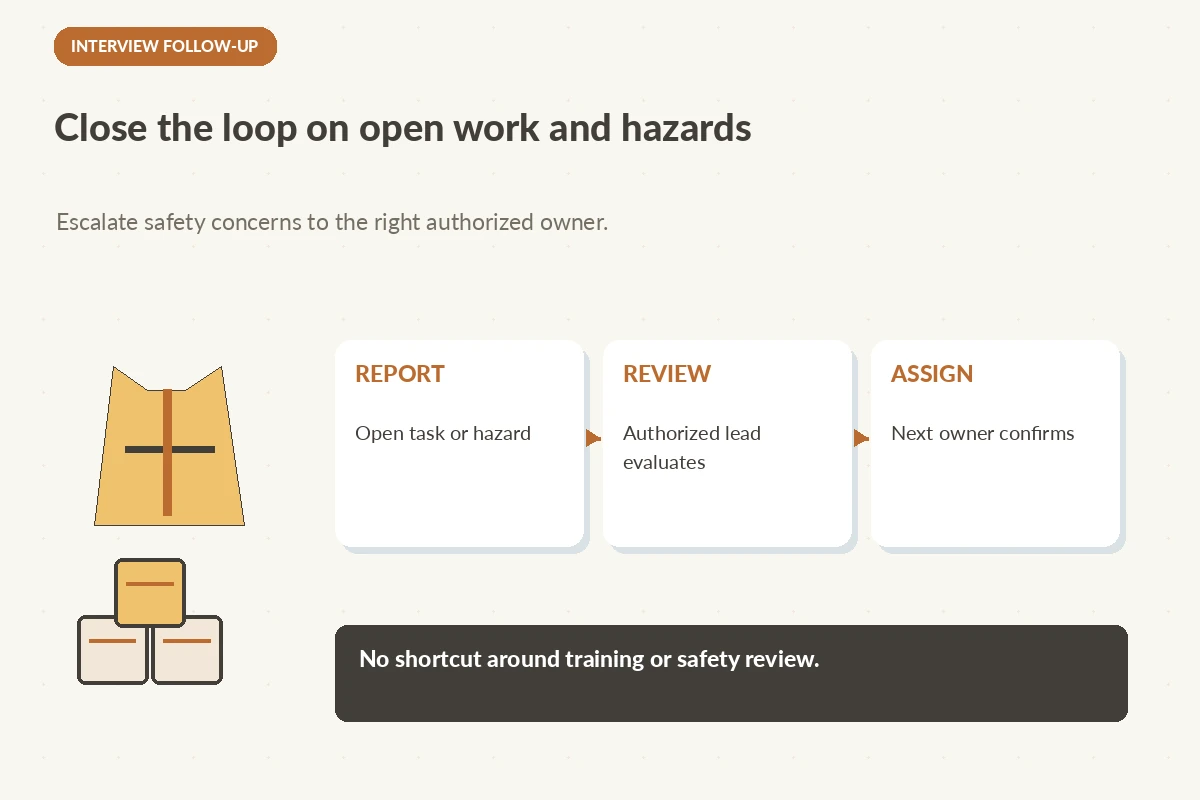
A frontline worker can pass along a stock discrepancy or an uncompleted order, but may not be authorized to close an incident, override a quality hold, approve an exception or adjust staffing. A supervisor may also need approval from safety, HR or operations management before a decision is final. In a follow-up, use precise verbs: “reported,” “verified,” “assigned under policy,” “escalated,” or “documented” as applicable. Avoid “I cleared all safety holds” unless that was genuinely within your delegated responsibilities. The ability to recognize boundaries is a leadership strength, not a weakness.
Try a hypothetical distinction. Too broad: “I ensured every late shipment went out safely.” More defensible: “At shift change, I flagged pending loads and assigned the authorized team lead to verify readiness.” A real example may be simpler still. If your role was to brief a supervisor rather than assign tasks, state that. You can mention that a clear handoff makes problems visible, but do not promise a specific accident reduction or shipping performance outcome without verified data.
| Warehouse issue | Truthful follow-up detail | Do not claim |
|---|---|---|
| Incomplete shipment | Documented open task | Automatically completed |
| Equipment concern | Escalated per policy | Untrained staff can operate |
| Shift assignment | Confirmed named task owner | All approvals were yours |
| Safety incident | Referred through proper route | Confidential details are sharable |
Treat Safety as a Process, Not a Slogan
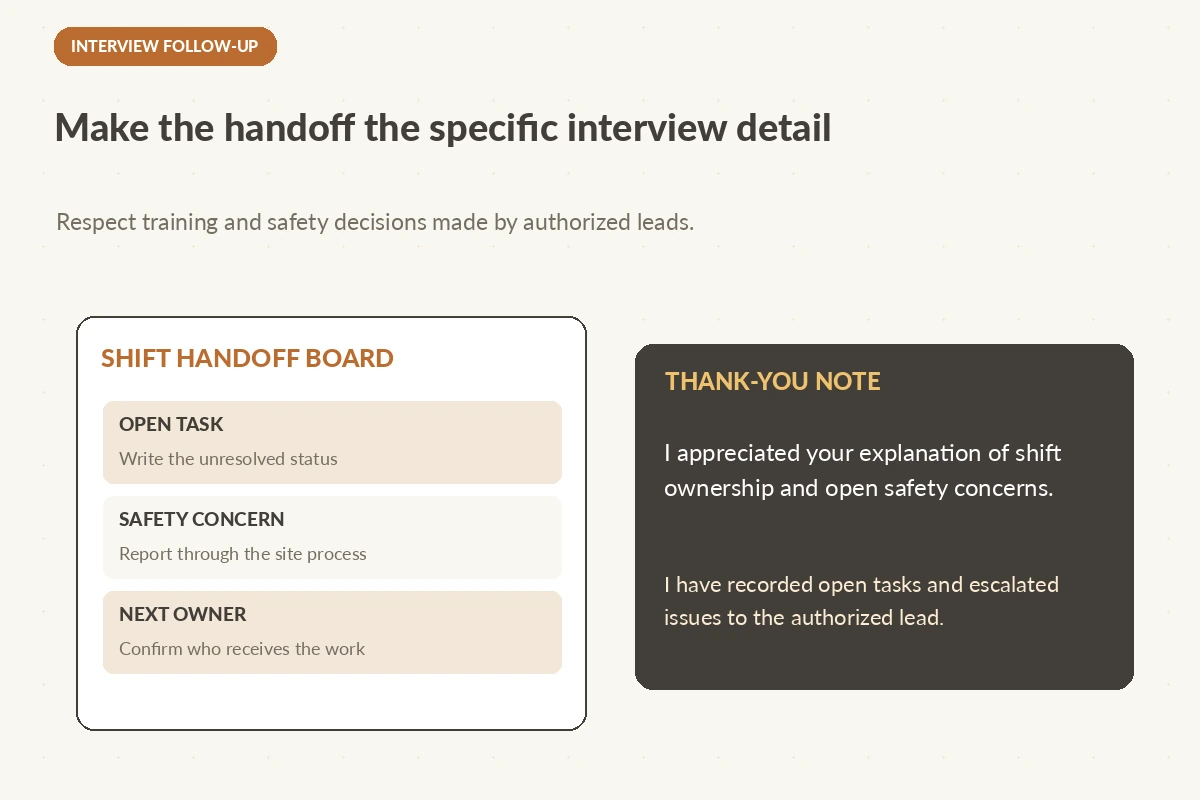
Avoid using the phrase “safety first” without saying what the team's process requires. If your interview covered safe equipment use, explain that you value trained operators, established procedures and prompt escalation of hazards. You should not claim you can waive equipment training, designate an untrained person as qualified or certify forklift operation through a thank-you message. Safety authority varies by employer and applicable requirements; the email is not a substitute for those requirements. Keep the message about your willingness to follow and support the facility's actual process.
If a manager described a stop-work or equipment-inspection procedure, you can acknowledge that discussion without sharing restricted incident records from prior employment. Do not name employees involved in injuries or disciplinary matters. A safe example is “I appreciated your emphasis on documenting equipment concerns before reassigning work.” If you have relevant training, describe only credentials you actually hold and can verify. Do not add a certification title, expiry date or safety statistic because it sounds persuasive. Hiring teams can assess your qualifications through the appropriate process.
Send to the Hiring Contact and Respect the Decision Schedule
A warehouse supervisor may interview with a facility manager, shift lead, safety representative and recruiter. Thank each person through the contact route actually supplied, or send a note to the recruiter for forwarding if you lack direct addresses. If several people interviewed you, a short mention of the topic each discussed is more personal than pasting the exact same message to all. Career centers recommend sending promptly and including a specific interview detail, but a note does not guarantee an offer. Read it carefully, especially if the facility title includes a shift or department.
Use a simple subject such as “Thank you — Warehouse Supervisor interview.” Avoid using a shift time or facility address copied from another employer. Do not use the thank-you email to pressure the manager for an immediate hiring decision. If you were given a realistic timeline, record it and follow it later through a separate polite status inquiry when appropriate. A courteous note can support professional communication without duplicating your application or demanding extra meetings.

Check Operational Claims Before Clicking Send
For a final review, look at your note like a shift-handoff record: is the job identified, is the detail actually from the discussion, is the action yours, and does the next step match what you were authorized to do? Have you exposed confidential employee details, incident specifics, shipment numbers or customer information? Have you suggested training or certification you have not earned? If so, edit. A brief thank-you should withstand the same truthfulness test as a resume bullet. It does not need to impress with an invented productivity percentage.
If a candidate's strongest example is from school, service work or a team project, it can still be used with an accurate description of role and scope. Do not fabricate a warehouse safety incident to match the job. You can close by restating interest in the facility's emphasis on safe, traceable operations without promising outcomes. The manager needs to know you can listen, communicate and respect process—not that you can provide a perfect shift without seeing the workplace.
How We Research and Maintain This Guide
This guide was checked against the linked career center, occupation and privacy resources on 2026-11-13: University of Michigan Career Center USC Career Center O*NET OnLine (U.S. Department of Labor). The email, scenario and decision table are illustrative, not a reported employer interview or an offer guarantee. Roles, approval paths and application instructions depend on the actual organization. For relationship information, read the affiliate disclosure. JobAsk does not claim source endorsement.
More Interview Preparation Guides
Describe the responsibilities you actually held and distinguish coordinating work from formal supervisory authority.
You may refer to training you really completed; do not invent a certification or imply permission to operate equipment.
Avoid confidential incident information and unverifiable claims. A general description of the reporting process is sufficient.
Mention one true practice such as noting open work, assigning an authorized owner or escalating a safety concern.
Usually not. The thank-you is separate from a later status inquiry based on the employer’s stated timeline.