
Part-time research assistant jobs may involve literature searches, data entry or cleaning, participant scheduling, survey administration, laboratory support, or preparing tables for a supervising researcher. Job titles differ across universities, hospitals, nonprofits, and private research teams. The most important fit questions are which methods you will actually use, which data you may access, whether participants are involved, and who has authority to approve or change the study procedure.
O*NET describes social science research assistants as supporting researchers with data management, quality control, reporting, and related tasks. HHS guidance also makes clear that studies involving human participants have oversight and protocol responsibilities. An entry-level or part-time posting should therefore be screened for task boundaries rather than treated as permission to recruit participants, alter consent materials, or release results independently. This guide focuses on realistic applications and job review, not current vacancies.
Identify the Research Setting and Actual Method
A university survey project, a community evaluation, a laboratory study, and an archival document project can all advertise research assistance but ask for different preparation. Read the posting for the research question, data type, software, methods, and expected deliverables. Separate work you can demonstrate—such as organizing citations or checking spreadsheet entries—from methods requiring specialist training or direct supervision.
Useful search terms may include “part-time research assistant,” “survey research aide,” “data collection assistant,” or the relevant department and project type. Verify listings through the lab, university, or employer’s official website. Some positions have fixed weekly meetings or time-sensitive study sessions even when the total hours appear small. Ask whether work is performed on site, remotely, or at field locations, and whether schedules vary around recruitment or data-collection periods.

Show Evidence for Data Accuracy and Research Habits
A credible beginner application can describe an approved course project, literature review, supervised data-cleaning task, or documented spreadsheet quality check. Focus on what you produced and how you verified it. For example: “Compared entered survey codes against a class project codebook and flagged unclear responses for instructor review.” This conveys a useful method without implying that you designed a funded study or approved an analysis plan.
Distinguish data entry, data cleaning, statistical analysis, and interpretation. They are related but not interchangeable. If the listing mentions a software package you have only used once in class, state that level of familiarity. Do not claim authorship of a team paper unless the author list confirms it, and avoid copying restricted study data into public portfolios. A concise, reproducible work sample using fictional data often shows more than a long unsupported skills list.
Understand Consent, Privacy, and Protocol Boundaries
If research involves people, ask who oversees recruitment, consent, participant communications, and storage of identifying records. HHS Office for Human Research Protections guidance addresses investigator responsibilities and approved study procedures; the assistant’s permitted tasks must be defined within that framework where applicable. Never assume that an assistant may alter an interview script or contact someone whose information appears in a data set.
If the approved protocol permits supervised scheduling or participant follow-up, ask what training and scripts you must use and whom to contact when a participant raises a concern. Where a study does not involve human subjects, other data or safety policies can still apply. Candidates should not seek access to private data simply to prove enthusiasm. They should show a willingness to follow established access, retention, and reporting rules.
| Path or task | What to confirm | Important boundary |
|---|---|---|
| Literature review | Public or approved references | Citation format and supervisor review |
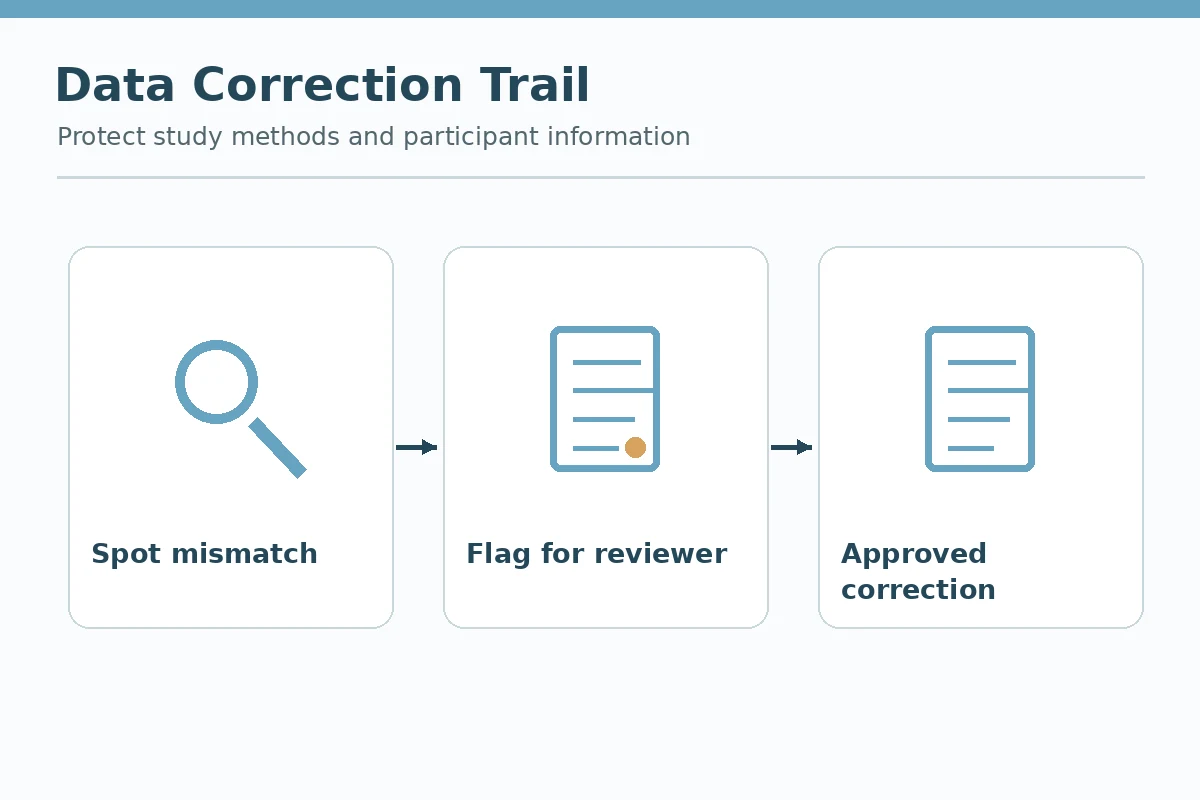
| Data quality | Authorized data and codebook | Access, corrections, audit trail |
| Participant contact | Approved scripts and appointments | Protocol, training, escalation |
Clarify Hours Around Research Milestones
A regular five- or ten-hour allocation can become difficult if the team schedules interviews during a narrow window, laboratory sessions have fixed coverage, or a grant report approaches its due date. Ask the manager which hours are fixed, what work can be completed asynchronously, and how tasks are reassigned when a staff member is absent. For participant-facing assignments, time-zone changes or study appointments can matter more than nominal flexibility.
Record the difference between paid hours and project deliverables. Some roles are hourly positions; others are defined by a contract or institutional student appointment. Do not infer work authorization, benefits, or course credit from the phrase research assistant. Read the actual terms and consult the relevant institution for any eligibility questions. A schedule that works for reading articles may not work for live participant calls.

Apply With a Method-Specific Evidence Note
A short hypothetical outreach note is: “I am interested in the part-time research aide position on your department’s careers page. In a supervised course project, I checked survey entries against a codebook and documented unresolved mismatches. I can work two weekday mornings. Could you clarify which methods are assigned to new assistants and whether participant communication requires separate training?”
Attach only materials the employer requests and that you have permission to share. Keep the original job URL, proposed tasks, schedule, supervisor, and application deadline in a private tracker. Do not share study identifiers or participant records in public folders or casual messages. A useful interview question is who reviews data corrections, because it reveals whether the team has a process for quality assurance without assuming the new assistant can independently change the underlying research record.
Two Illustrative Cases and Their Different Lessons
Hypothetical assistant A is asked to verify data entries in an approved training set and flag mismatches for review. Assistant B receives a list of participant phone numbers and is told to improvise a recruitment script without any information about approvals. Both sound like research support, but the second requires immediate clarification of oversight and authority before any contact. This is an illustration, not a finding about a real study.
A student completing an independent class literature review can demonstrate source selection and citation organization, but not claim to have led the professor’s funded project. They can prepare a safe sample bibliography and explain which decisions were reviewed. That evidence may be appropriate for an entry-level literature support position even if it does not meet a vacancy requiring specialized laboratory training.
How We Research and Verify Job Information
We reviewed public primary occupational, institution, and consumer-protection sources on 2026-11-14. The www.onetonline.org reference supports o*NET outlines data quality, analysis, reports, and research support duties for social science research assistants. The www.hhs.gov reference supports hHS OHRP explains that human-subjects research follows approved protocols and oversight requirements. The www.bls.gov reference supports bLS defines social science research assistants as staff who support surveys, laboratory work, data management, and research outputs. All positions and candidate examples in this article are hypothetical. A posting can change or disappear; verify the actual employer, duties, schedule, credentials, and permissions before acting. See the affiliate disclosure for information about editorial transparency and potential commercial relationships.
Related Job Search Guides
No single requirement applies to every project. Review the specific subject, methods, education, and training requirements in the posting.
Possibly, within authorized access, training, and review limits. Do not assume permission to see or export sensitive data.
Only if the applicable study approvals, training, and assigned procedures authorize your role. Ask the investigator or coordinator.
An original or authorized literature summary, codebook example, or fictional data-quality demonstration relevant to the actual job.
Confirm fixed meetings, data-collection windows, live interviews, paid hours, and supervisor expectations in the actual offer.