
In a second interview with HR, prepare to confirm what the role requires, how the hiring process works, and which employment terms are still undecided. Bring a clear work-history summary and questions about schedule, location, reporting, training, and the next decision point. An HR meeting may include behavioral questions, but it may also clarify items a hiring manager did not cover. Its presence alone does not mean an offer has been made.
First check who will attend and whether the meeting is an interview, a policy discussion, or a pre-offer information call. HR teams differ in authority. An HR representative may explain a written policy without being able to promise a particular schedule or compensation arrangement. Your task is to distinguish confirmed terms from possibilities and leave with a record of who will provide final details.
Separate Job Requirements From Offer Terms
Prepare questions in two columns. On the job side, put expected duties, usual schedule, team location, reporting contact, and required training. On the offer side, put the items you should verify when an offer is formally made, such as compensation details, start date, conditions, and benefits documents. If HR gives a tentative answer, ask whether it is a current written policy or something the hiring team must approve.
Avoid assuming that a verbal estimate is a contract, or that every role uses the same probation, overtime, or remote-work arrangement. The safest response is a respectful clarification: “Could you tell me where the final schedule and reporting expectations will be documented?” This turns uncertainty into an actionable next step without demanding a promise the representative cannot make.
Rehearse Work History Without New Claims
HR may revisit dates, gaps, eligibility or reasons for seeking a new role. Compare your resume and application before the call so you can correct errors accurately. If you used different shorthand in an earlier interview, explain the factual distinction. Do not invent responsibilities, claim a manager title you did not hold, or treat an informal volunteer task as paid employment.
For scenario questions, use a genuine example of confidentiality, following a policy, escalating a problem, or handling competing requests. Explain the role boundary as well as the action. OPM’s structured-interview guidance focuses on job-related behaviors; that is a useful preparation model, but it does not mean this employer will use a formal scoring system.
| Question area | Ask HR | Do not assume |
|---|---|---|
| Hiring stages | Who coordinates the next decision and how will I hear? | A second HR meeting equals an offer |
| Schedule or location | Which terms are fixed and where will they be documented? | A tentative description is a final term |
| Personal documents | Which verified portal and stage require this item? | An email request is safe because the sender says HR |
Protect Privacy and Request Interview Access
The U.S. EEOC explains that employers generally may not ask disability-related questions before making an offer. It also describes a candidate’s ability to request a reasonable accommodation for the application process. If you need an interviewing adjustment, you can explain the adjustment needed without volunteering unrelated medical history. For a specific legal concern, consult the applicable authority rather than treating an article as legal advice.
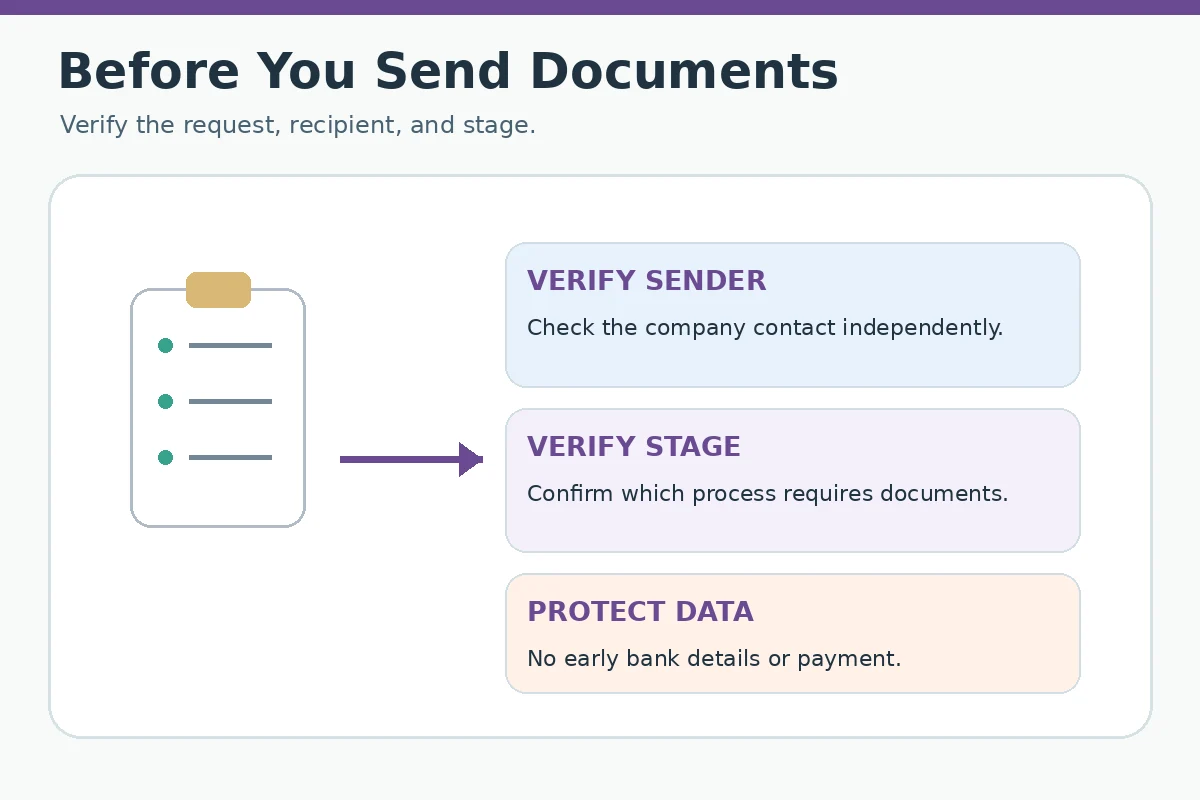
Do not email identity documents, bank numbers, passwords, or payment details merely because someone schedules a second HR call. The FTC warns that fake recruiters can use professional-looking invitations to seek money and sensitive information. Verify suspicious requests using a known company contact or careers page, not only a link inside the invitation.
Ask HR Questions the Right Person Can Answer
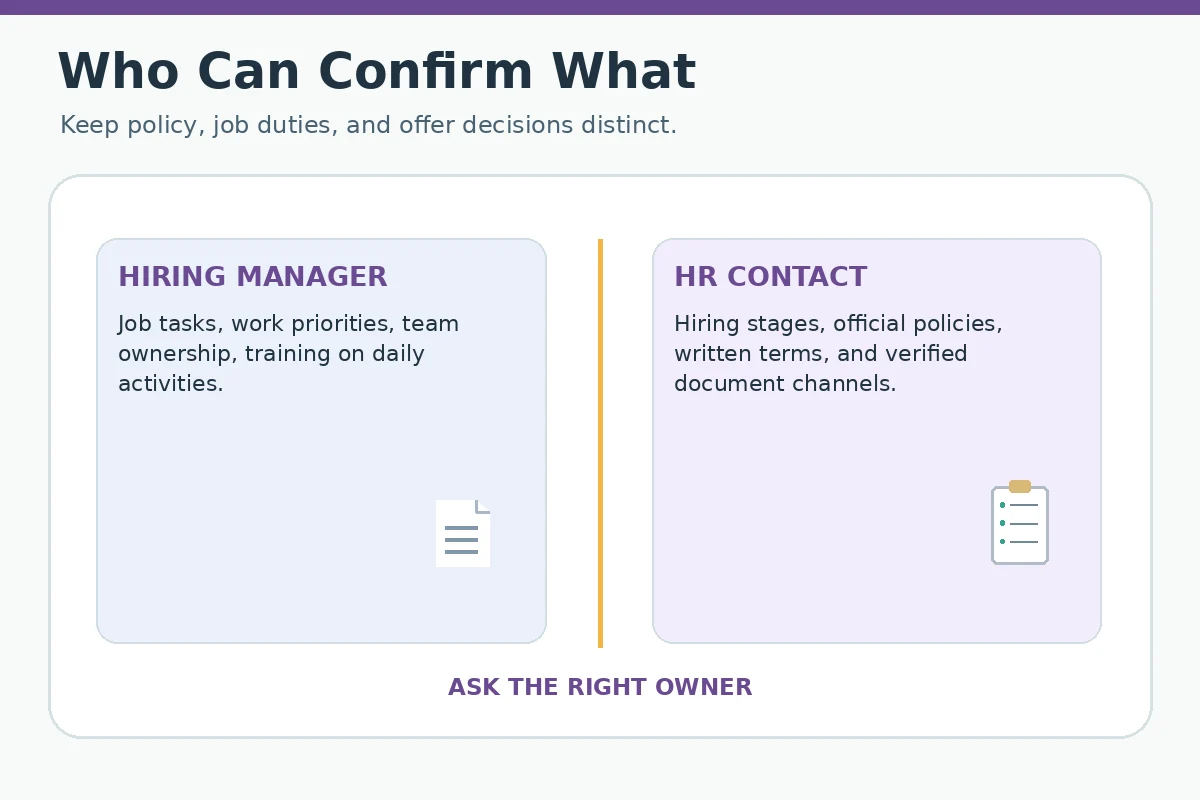
Good HR questions include “What are the remaining stages and who coordinates them?” “Which location or schedule requirements are fixed?” and “When can candidates review written policies that apply to the role?” For role-specific technical priorities, ask the hiring manager instead. A question that matches the interviewer’s responsibilities is usually more productive than a broad demand to describe the entire company culture.
If benefits or salary come up, request accurate materials and confirm what is preliminary. Do not give an invented competing-offer number to influence the discussion. You may say you would like to review the complete compensation package before making a decision. If a mandatory certification or background step is mentioned, ask which official written instructions apply to this role.
Handle Policy Questions With a Decision Rule
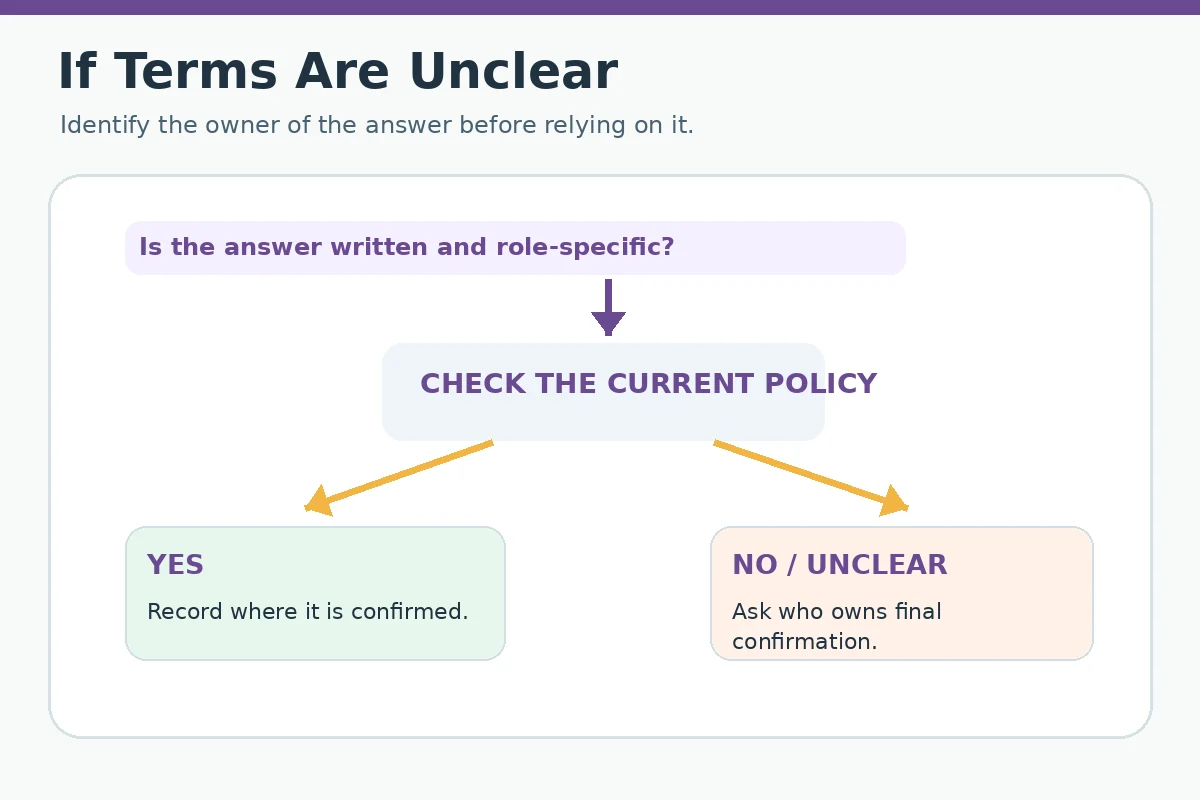
When a policy question has no clear answer, capture three facts: what is known now, who owns the decision, and when or how it will be confirmed. For example, “The posting says hybrid, but the team uses rotating onsite days. Who will confirm the schedule for the opening?” Do not announce that a recruiter’s guess is a permanent guarantee.
A good distinction is “I can meet the stated travel requirement” versus “I can travel anytime with no restrictions.” The first is grounded in what the role requested; the second may be unnecessarily broad or inaccurate. If different representatives give conflicting information, ask for written clarification without accusing either person of deception.
End With a Clean Record of the Process
Before ending, ask for the contact person, the next expected stage, and whether any additional material is needed. You can summarize the key points neutrally: “My understanding is that the hiring manager confirms scope and HR will send written terms if the process reaches the offer stage.” Invite correction rather than presenting your summary as a binding agreement.
Keep a private log of the date, interviewer role, confirmed job terms and open questions. A courteous follow-up should not send sensitive data unless it is requested through a verified, appropriate channel. The outcome of a second HR interview is uncertain until the employer actually communicates it; avoid treating the meeting as acceptance or publication of a job offer.
How We Research Interview Guidance
We reviewed the linked career and public-interest guidance on 2026-11-14: U.S. Office of Personnel Management (The U.S. Office of Personnel Management explains that structured interviews assess job-related competencies through behavior and hypothetical situations.); U.S. Equal Employment Opportunity Commission (EEOC describes applicant interview accommodations and limits on pre-offer disability inquiries in the United States.); Federal Trade Commission (FTC explains warning signs of fake job interviews and early demands for personal or banking details.). We also compared candidate topics with the WordPress title inventory supplied by the site owner, the preceding local package and the original JobAsk content plan. Interview formats and employer procedures differ; all sample scenarios here are hypothetical, not verified employment histories, interview transcripts, promises of hiring outcomes or a substitute for employer policy. For transparency, see the JobAsk affiliate disclosure; this article does not claim an endorsement or paid partnership.
More Interview Preparation Guides
No. It shows another conversation is scheduled, not a confirmed decision or offer.
Yes, seek accurate written details and distinguish a general range from a final offer; do not assume a guarantee.
Verify the request independently. The FTC warns that fraudulent recruiters seek personal and banking details early.
The EEOC describes a process for requesting reasonable accommodation for interviewing; explain the adjustment you need without unnecessary medical details.
Ask which person owns the decision and request the current role-specific terms in writing before relying on either description.