
Part-time retail jobs are easier to compare when you separate the work from the store name. Sales-floor assistance, cash register coverage, inventory support, and customer pickup can have different pace, equipment, and scheduling demands even within the same location. Decide which duties you can perform and which days you can actually work before replying to a listing. A generic phrase such as “flexible availability” should not replace a truthful schedule.
The U.S. Bureau of Labor Statistics retail sales profile describes customer assistance, merchandise work, and variable evening or weekend schedules; some workers take part-time shifts at busy periods. This is occupational context, not a promise that a specific store has vacancies. Read the actual posting, confirm whether it is a regular role or short-term seasonal support, and note whether sales and cashier responsibilities are combined.
Separate the Store Jobs Before Searching
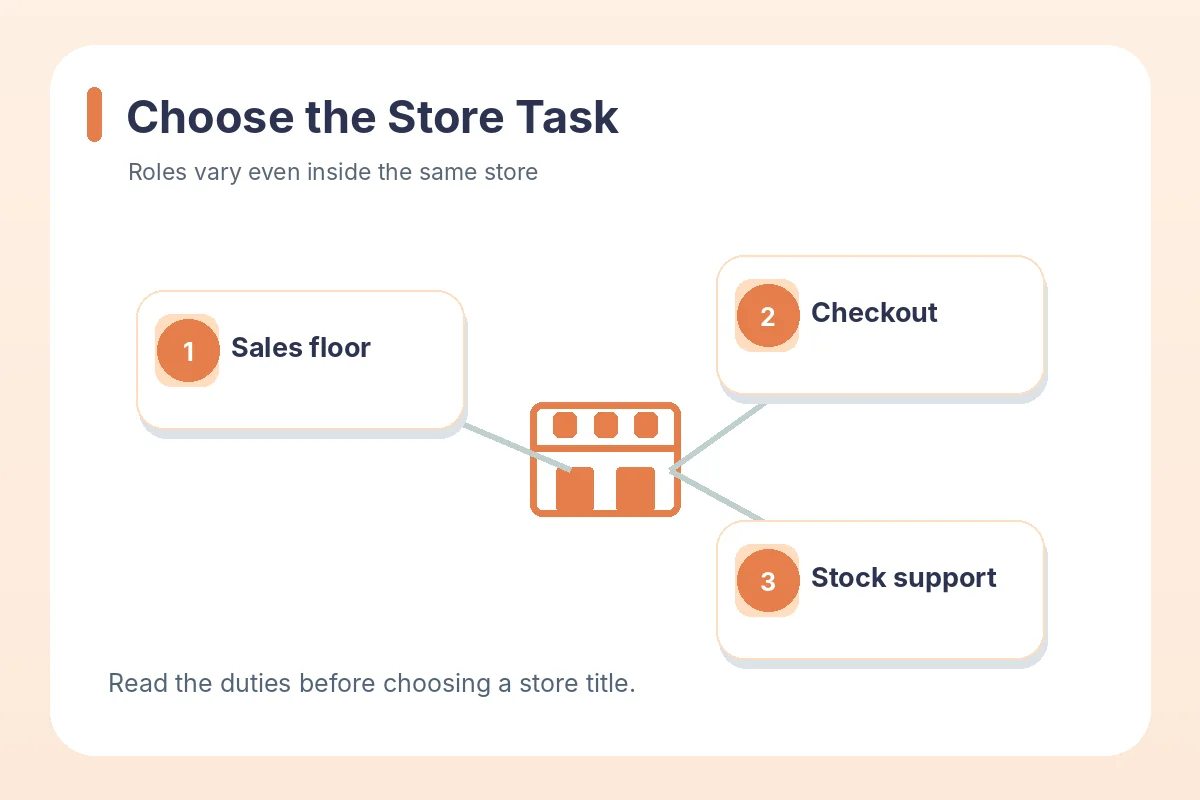
A sales associate may greet shoppers, answer product questions, replenish displays, or locate merchandise. A cashier-focused position may involve payment procedures, returns, and accurate handoffs; a stock-oriented shift can emphasize deliveries, shelving, labeling, and lifting within workplace requirements. Read the verbs in each advertisement rather than assuming a title tells the whole story. If an employer uses a mixed-role label, ask which tasks occupy most of the shift and who handles exceptions.
Search using duties as well as titles: “retail sales associate part time,” “store inventory associate,” or “customer pickup associate,” plus an appropriate location. Avoid applying to advertisements solely because they mention a familiar brand. Some branches hire locally or use different job titles. Compare the store location, shift window, travel cost, job status, and application route in one short tracking record.
Build an Honest Weekly Availability Grid
Write the earliest time you can arrive and the latest time you can remain on each day. Include transit time, class commitments, caregiving responsibilities, or another job. Mark firm restrictions separately from optional extra shifts. A posting that calls for weekend closing coverage is not a fit if you must leave before the store closes, regardless of enthusiasm. Exact hours vary by store and season, so the advertisement and manager matter more than a generic schedule estimate.
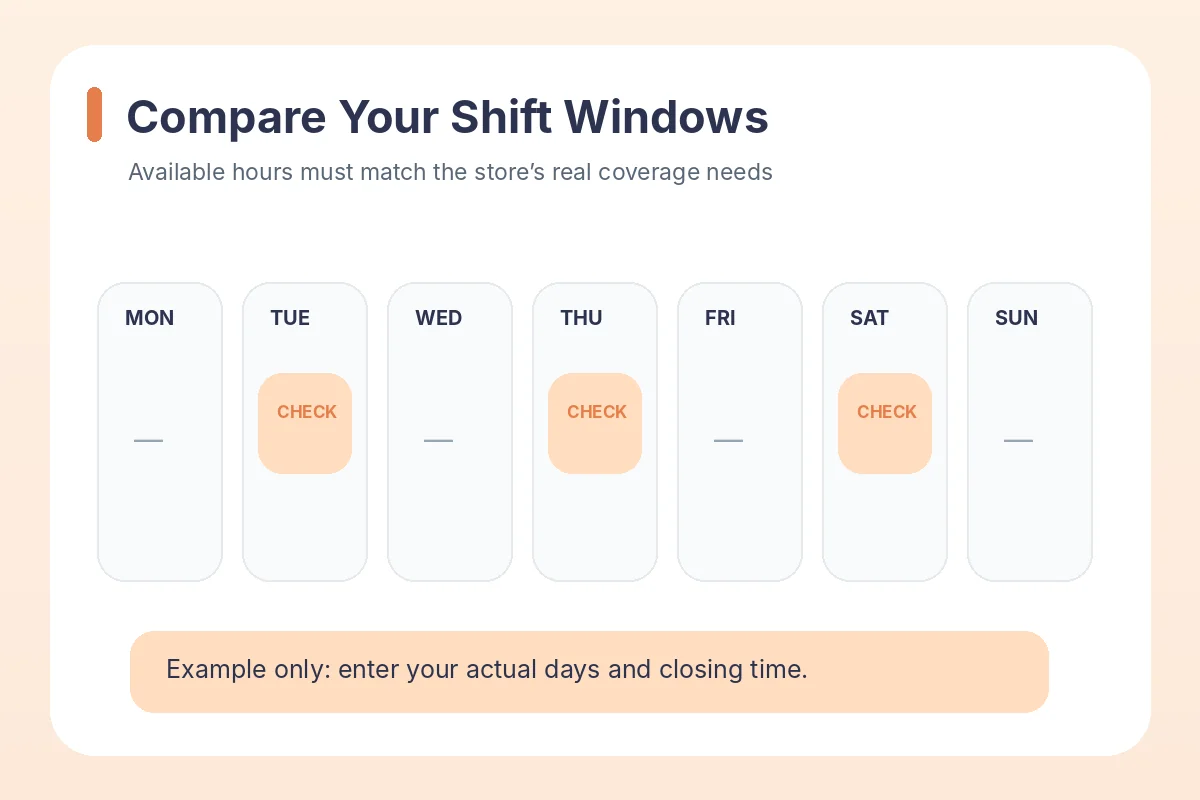
For a hypothetical applicant, Tuesday and Thursday after 4 p.m. and Saturday morning may be workable; Sunday evening may not. The candidate should state those windows clearly rather than write “any time.” Ask whether shifts are scheduled in advance, whether minimum shift lengths apply, and whether holidays or inventory days add occasional changes. A predictable smaller schedule can be better than agreeing to hours you cannot reliably attend. If that is your next decision, our guide “Part-Time Event Staff Jobs” explains how to compare venue roles and irregular shifts.
Show Retail Skills With Verifiable Examples
Customer-facing work calls for listening, clear explanations, and calm referrals when a request is outside your authority. Stock work may require accurate labeling and keeping shared workspaces organized. Cashier activities require careful handling of transactions under store policy. Match only skills you can demonstrate. Volunteer fundraising, event check-in, school store duties, and a documented club inventory task can be relevant, but disclose the setting instead of presenting them as paid retail employment.
A hypothetical resume bullet could read: “Organized supplies for a student event and checked item counts against a sign-out sheet.” It does not claim sales growth, shrink reduction, or cash-register proficiency. If you have used a specific point-of-sale system, name it only if you genuinely know it. For an interview, prepare an example of assisting someone, resolving a small mistake, or checking an item count and explain your actual contribution.
Compare Shift Terms Beyond the Hourly Label
The most useful comparison is not simply “part-time” versus “full-time.” Ask about expected weekly hours, posted schedule notice, on-call expectations, breaks, closing tasks, and whether the position is seasonal. Many retail locations need evening and weekend coverage, as noted by the BLS work schedule overview, but not every location offers the same options. Do not infer an exact number of hours, benefits, or overtime treatment from a role label; consult the actual offer and applicable policies.
When you interview, ask how a shift typically starts and ends. Does recovery work occur after the doors close? Are inventory counts scheduled outside ordinary trading hours? Is cross-training expected? These questions uncover hidden timing and responsibility differences. For applicants balancing school or another job, a predictable end time and dependable commute may matter more than a seemingly open schedule on the job board. If that is your next decision, our guide “Part-Time Cleaning Jobs” explains how to compare worksites, schedules, and safety.
Check the Posting and Application Route
Use the employer’s official career page to verify that a listing exists at the location and bears the same job title. Search postings by city or store address, and note their dates if displayed. If you encounter a recruiter through social media or private messaging, independently verify the contact through the employer’s published channel. The FTC warning on work scams explains why demands for upfront payment or unusual check-handling arrangements are serious warning signs.
Create a minimal tracking line: employer and location, duties that match, availability fit, application date, and status as shown by the employer. Do not store government identification numbers, passwords, or payment details in a general-purpose spreadsheet. A confirmation email does not mean a hiring manager has reviewed the application. If the platform allows corrections, use its own instructions instead of submitting multiple competing applications to the same opening.

Use a Short Store-Fit Decision Routine
Before pressing apply, answer three questions in order: Can I do the central duties? Can I actually work the required schedule? Is the vacancy verifiably associated with the employer and location? If any answer is unknown, pause for clarification. If a listing requires handling register exceptions without training, ask about supervision rather than claiming competence. If the job includes heavy stock movement, review the stated physical tasks and any available accommodation process.
After applying, prepare a concise introduction: the specific role you want, a real example of careful service or organization, and the availability you can keep. In an interview, avoid “I can do everything” and instead mention the tasks you can learn with training. This approach makes an application stronger by improving fit, not by promising a hiring outcome. Revisit your availability grid whenever school or family commitments change.
How We Research These Job Options
This guide uses U.S. occupation descriptions as background evidence and adds an applicant-side decision framework. It does not represent a live vacancy list, guarantee work, or assume a particular employer’s schedule. Examples marked hypothetical illustrate a method only; candidates must replace them with their own verified details. Sources consulted on 2026-10-23: BLS occupational profile, BLS occupational profile, FTC consumer guidance. Affiliate relationships are not asserted; see the affiliate disclosure.
Related Job Search Guides
- Retail Job Boards: Compare Store Careers, Shifts, and Sales Duties
- Part-Time Museum Jobs: Visitor Services, Event Shifts, and Real Requirements
- Retail Job Applications Online: Match Store Duties and Shift Availability
- How to Find Legitimate Remote Jobs and Check Their Real Requirements
- Evening Part-Time Jobs: Compare Shifts, Duties, and Commutes
No. Roles can include floor sales, merchandise recovery, stock support, customer pickup, and checkout. Confirm the advertised task mix.
Requirements vary by employer. Relevant customer contact, volunteer organization, and inventory tasks can provide honest examples.
Many retail schedules include weekend coverage, but the exact commitment depends on the posting and location.
Only if that is accurate. State real days, start times, and end times, including commuting constraints.
Verify it through the employer’s official channels. Never pay to secure a job or follow unexplained check-transfer instructions.