
Quick answer: Start with gardening helper, groundskeeping trainee, garden maintenance assistant, or plant-care support roles. These jobs may involve weeding, mulching, watering, planting, and clearing paths, with powered equipment reserved for trained workers. The right first role matches the setting, physical demands, and the tasks you can safely perform.
“Enjoying plants” is useful motivation but does not mean you can safely operate cutting equipment, apply pesticides, or work around traffic and hazards without instruction. Read the employer’s task list and ask how they train new staff. Seasonal schedules, weather, and location matter as much as the job title.
Choose a Plant-Care Role Instead of a General Labor Label
The O*NET groundskeeping profile includes mulching, planting, watering, trimming and removing litter. Gardening work can occur at private gardens, campuses, parks, garden centers or managed grounds. A garden maintenance helper may have more hand-tool and bed-care duties than a crew centered on mowing and power equipment. Read the actual task mix before applying.
Ask whether the work focuses on planting and soil preparation, routine garden maintenance, greenhouse stock, or large-property groundskeeping. Two openings with “gardener” in the title can have very different physical demands and vehicle requirements. If the listing mentions chemical application, tree work or powered equipment, mark those duties separately; do not assume they are beginner tasks.
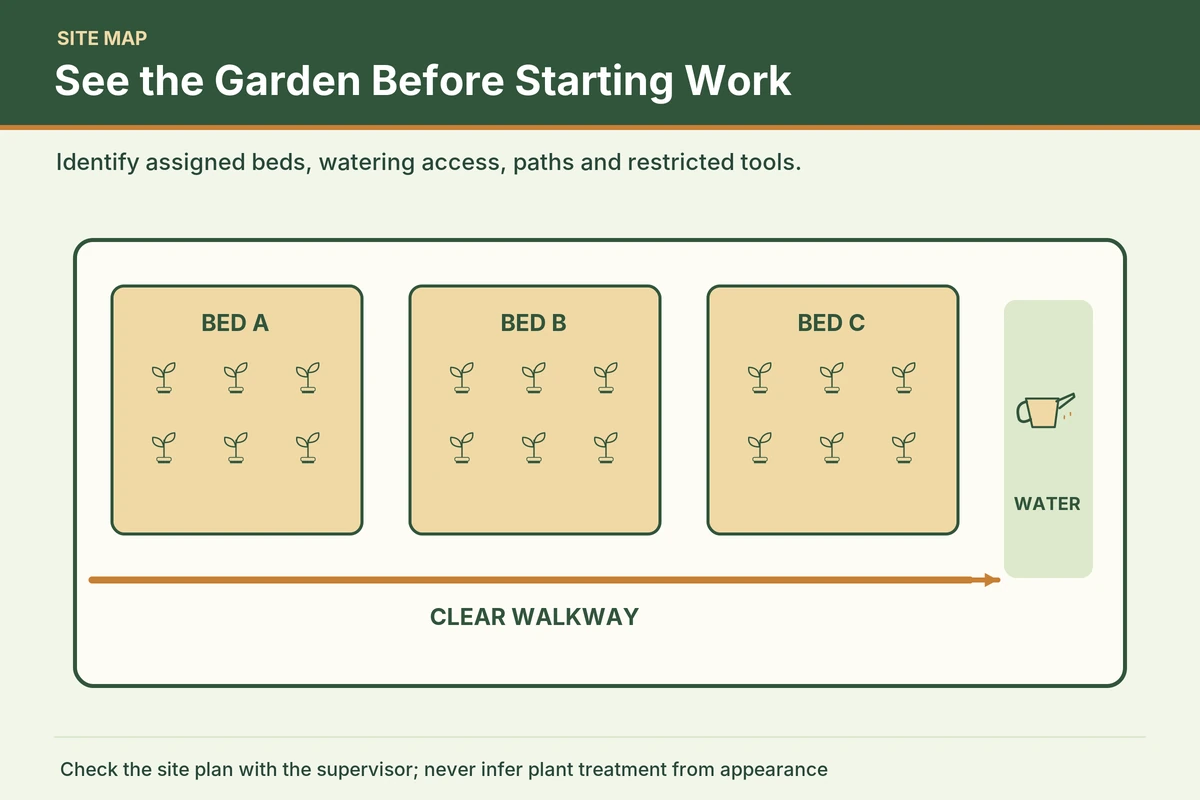
Build a Basic Work Map of the Garden
A useful first-day sequence is to learn the site zones and plant-care instructions, identify approved tools, receive an assigned area, carry out one clearly defined task, and report what you observed. For example, a trainee might be asked to weed and mulch a bed while avoiding planted seedlings. The exact sequence is employer-specific, and a supervisor should explain plant identification and any restrictions.
Create a simple observation log for your own learning: bed or zone, task assigned, condition noted, and person notified about a concern. A dry patch does not always mean more watering is the right fix. Rather than improvising with fertilizer or chemicals, ask what watering schedule, plant requirements, and materials the site uses. Accurate observations can be more valuable than overstated horticultural expertise.
Know Which Tools Need Instruction
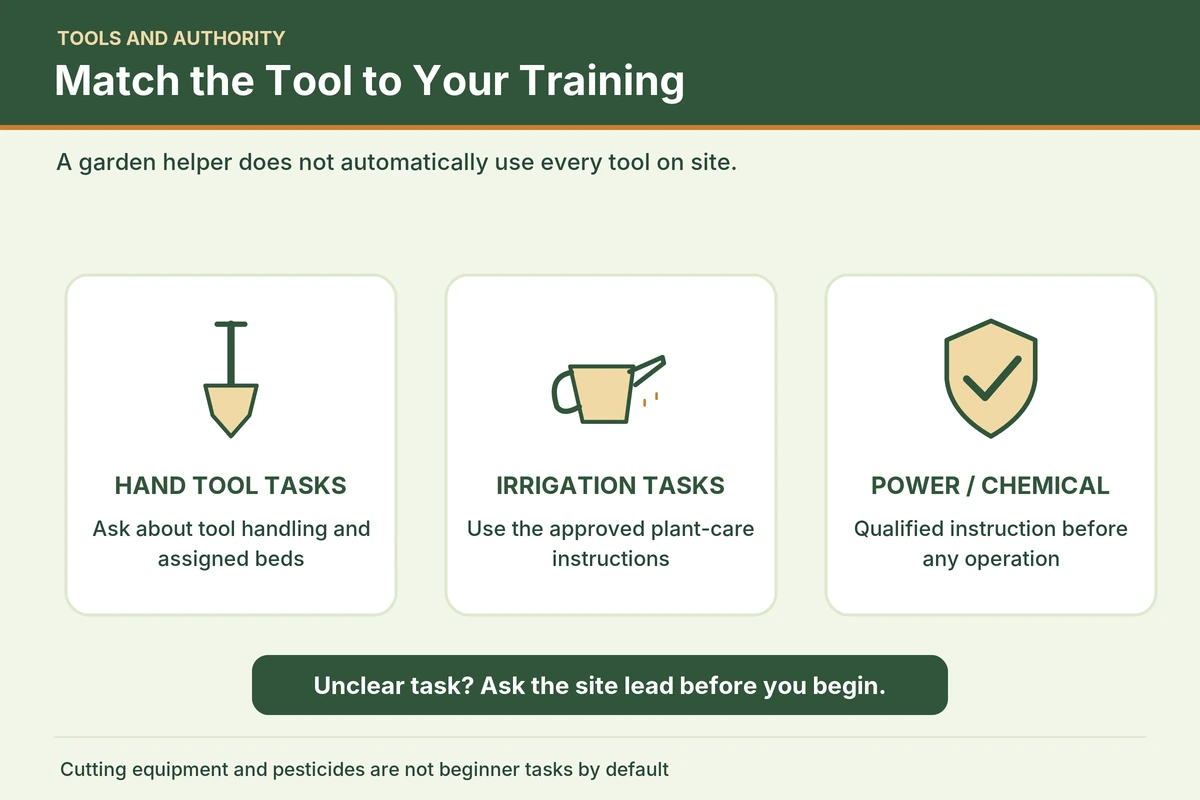
Hand tools still cause injury if used carelessly, and powered trimmers, mowers, sprayers and chainsaws introduce different hazards. The OSHA landscape hazard guide highlights risks from cutting equipment, heat, lifting, traffic, noise and chemicals. A beginner should be shown the correct tool, protective equipment, safe storage and reporting method before operating it.
Do not offer to mix or apply pesticides merely to appear versatile; depending on the product and state, further training or authorization may apply. Ask who decides which treatment is needed and who is qualified to use it. Similarly, tree work at height is not just another gardening task. Refusing an unsupervised task outside your training is different from refusing ordinary work.
Prepare Honest Evidence of Outdoor Reliability
Experience from home gardening, school landscaping projects, volunteering in community beds, or park cleanups can count as examples if you label them accurately. For instance: “Maintained a shared planting bed by weeding weekly, recording watering, and alerting the organizer to plant damage.” Avoid fabricating plant-survival rates or claiming expertise with equipment you have only seen in videos.
If you lack a gardening history, use examples of punctual outdoor work, accurate observation, following a process, and working with others. An employer may value reliable attendance more than a long list of unfamiliar plant names. Mention genuine exposure to heat, lifting, or early schedules only if you have it and can meet the role’s documented demands.
Compare Seasonal and Year-Round Work
The BLS grounds maintenance guide distinguishes the wider field of outdoor work from one employer’s specific opening. Some crews follow seasonal planting cycles, while facilities may need year-round maintenance. Ask which weeks are typically busiest and whether work changes during bad weather.
Make a realistic commute and availability plan. Record the worksite location, morning reporting time, travel between sites, and whether equipment or uniforms are provided. A job that looks compatible with your schedule may involve multiple properties or a driving requirement. Confirm whether travel between jobsites is part of the paid work arrangement rather than guessing.
Apply With a Role-Matched Task Example
A hypothetical short message: “I am interested in the gardening helper role. I have volunteered on a neighborhood garden project, including weeding, moving mulch, and recording watering tasks. I am comfortable following planting instructions and would welcome training on approved tools and site safety.” Change every claim to match your real history. Do not imply professional pesticide training or tree-climbing competence.
In your resume, group relevant experience under clear headings: gardening or outdoor projects, dependable work history, availability, and equipment training actually completed. If a job asks for a license to drive a work vehicle, verify that requirement. Your application should make the supervisor confident that you will communicate before making changes that could damage plants or put people at risk.
Ask Practical Questions and Verify the Opening
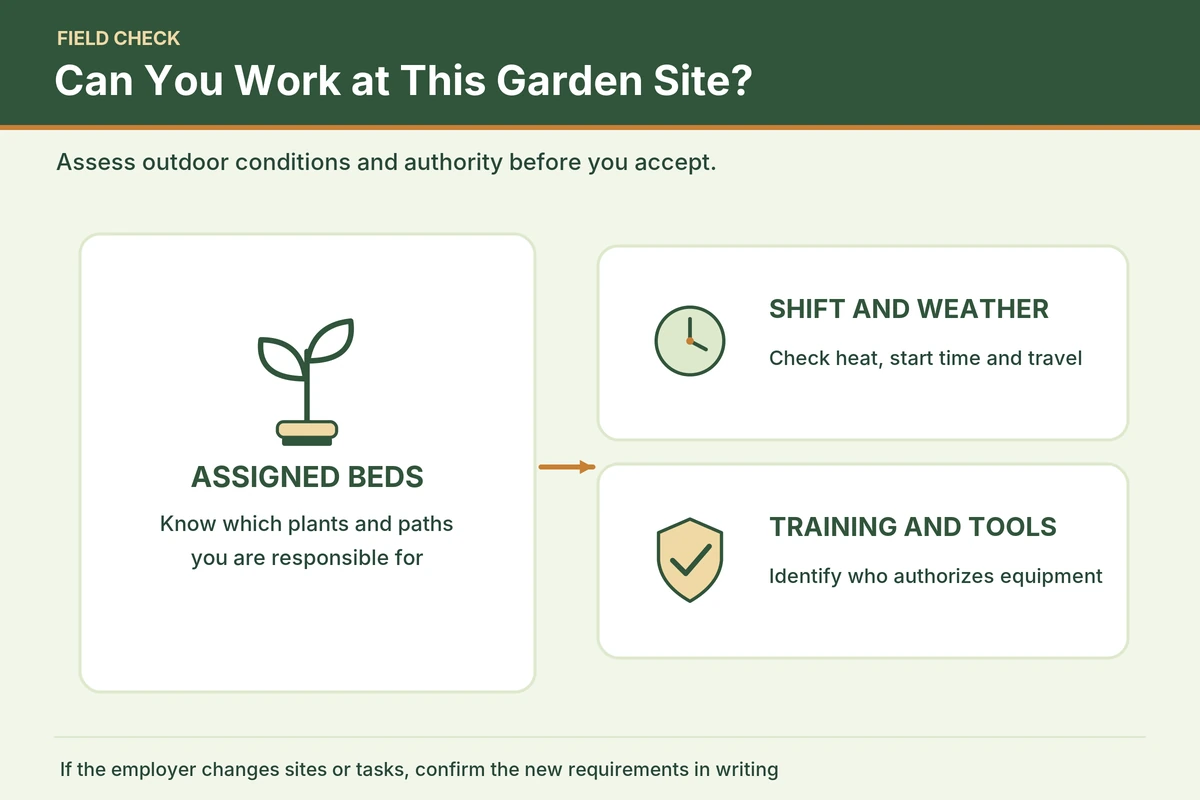
Ask what a new helper does in the first week, who identifies plants and work zones, what protective equipment is supplied, and who approves chemical or powered-equipment tasks. Ask how weather disruptions are handled and whether shifts are at one fixed location or multiple clients. Look for clear answers tied to actual operations.
Confirm the employer through its independent website or known local business listing. The FTC advises job seekers to verify recruiting messages and avoid paying for a promised position. Keep a record of duties, contact details and agreed conditions. A legitimate hiring process should explain the work rather than demanding immediate payments or sensitive banking information.
How We Research Entry-Level Opportunities
This guide draws on published occupational descriptions, government guidance, and task-specific safety resources: onetonline.org; bls.gov; osha.gov. Those sources describe typical work or regulations; they do not verify any particular job posting, wages, employer policies, or a job offer. All suggested application messages and scenarios are hypothetical and must be rewritten using your actual experience. Review JobAsk’s affiliate disclosure; this guide makes no affiliate recommendation.
Related Job Search Guides
- Landscaping Jobs With No Experience: Start With Groundskeeping Safely
- Cleaning Jobs With No Experience: Compare Sites, Shifts, and Safety
- Florist Jobs With No Experience: Shop Assistant and Flower-Care Skills
- Hospital Jobs With No Experience: Separate Support Roles From Licensed Care
- Office Jobs Without Experience: Match Clerical Tasks to Real Skills
Some employers consider genuine home or volunteer gardening relevant. Label it accurately and check the posting’s task and training requirements.
Requirements depend on task, product, location and employer. Do not apply pesticides unless trained and authorized under applicable rules.
They overlap, but specific roles may focus on plant beds, grounds cleanup, mowing, installation or other distinct duties.
Ask whether the employer supplies tools, PPE and training; do not assume you must purchase equipment before hiring.
Understand the real worksite, expected schedule, physical demands, and who supervises unfamiliar equipment or procedures.