
To put hotel front desk experience on a resume, name the property or employer, your actual title, dates, and the guest-facing tasks you performed. The most useful bullets explain reservations, check-in records, request routing, coordination with housekeeping, and handoffs at shift changes. Make it clear which decisions you made and which were handled by a manager or other authorized person.
O*NET lists reservations, guest registration, room records, and complaint referrals among hotel desk-clerk tasks. Hotel operations differ by property: one clerk may support night audit or payments, while another only checks bookings and greets visitors. The fact that a task exists somewhere in hospitality does not mean it belongs on your resume. Translate your own shift duties into verifiable evidence.
Describe the guest touchpoints you actually handled
The front desk connects booking information, room readiness, arrival details, guest questions, and departures. Start by identifying which touchpoints you performed. You may have checked arrival lists, confirmed approved reservation details, issued keys after verification, updated room status, or directed guests to the correct employee. Avoid writing that you “managed hotel operations” if you followed the desk checklist.
Write one line of context when the role name is broad: “Front desk associate supporting evening arrivals and room-status coordination.” If work involved both reception and event assistance, note the two areas separately. Distinguish personal work from a team shift. For example, recording a housekeeping request is different from guaranteeing that maintenance resolved the issue.

Show reservation accuracy without exposing guest information
A useful bullet might say “Compared arrival details with the reservation record and referred discrepancies under desk policy.” This is an illustrative example, not a claim about your history. If you maintained a guest request log or updated room availability, describe the approved process at a high level. Never include personal guest names, booking numbers, card details, or screenshots of a live reservation system in a resume.
If you used property-management software, state the product only if you actually operated it. Clarify whether you processed bookings, viewed schedules, or entered guest requests. Being shown the software during training is not the same as independently managing changes. Keep any numbers you use limited to trustworthy nonconfidential shift data that you are authorized to disclose.
Explain service recovery versus manager-only decisions
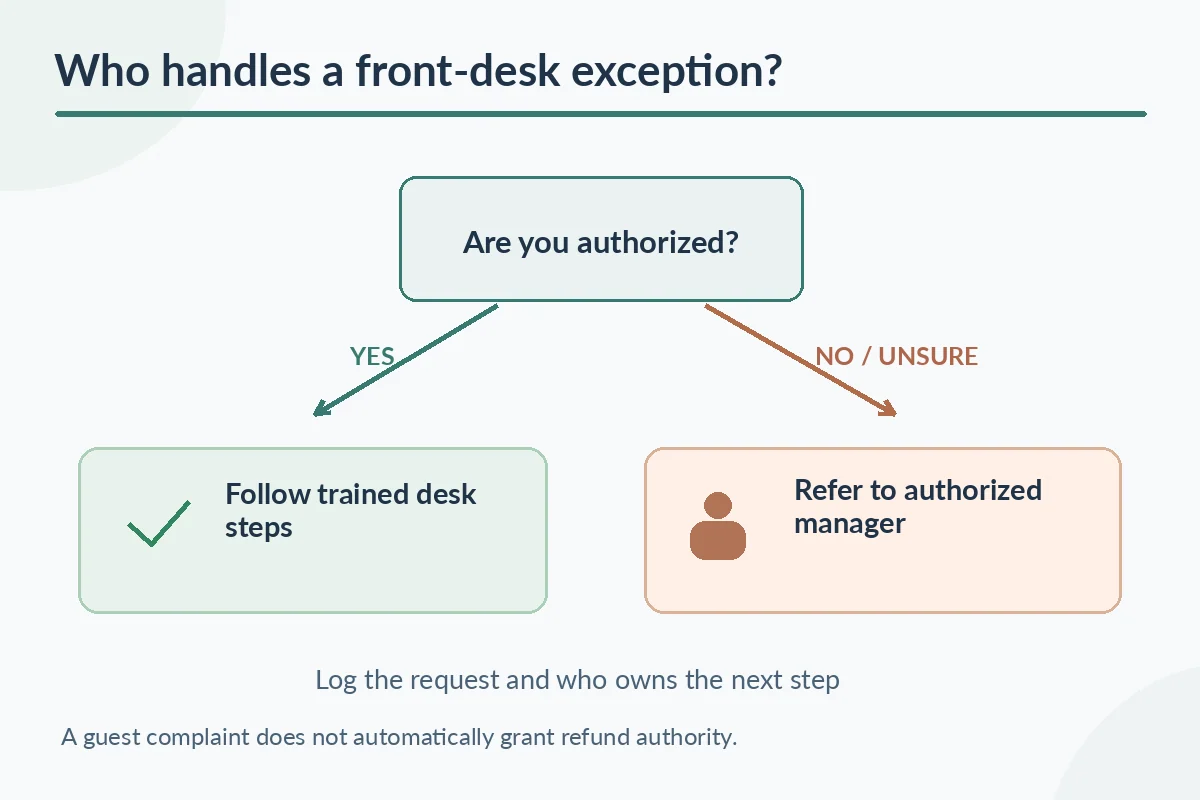
Guest complaints can create pressure to promise refunds, upgrades, or exemptions. Record how you listened, checked available policy, explained the next step, and contacted the person with the required authority. A precise experience bullet might emphasize making complete notes for the manager rather than “resolved all guest disputes.” Such wording shows professional handling without inventing decision rights.
BLS describes lodging managers as coordinating staff and handling operational problems. Your resume should distinguish that managerial work from clerk duties. If a manager approved an adjustment after you prepared the relevant details, say that you documented and escalated the request. Do not claim personal authorization to alter charges, disclose room occupancy, or bypass identification controls unless that authority was real.
Highlight housekeeping and next-shift handoffs
A clean handoff helps the next desk worker understand unresolved requests, expected arrivals and room-status updates. If you maintained a shift note, contacted housekeeping about readiness, or flagged maintenance needs through an approved channel, those are strong experience examples. Explain what information you conveyed, not confidential guest details. Describe how you knew the item reached the correct team.
A hypothetical bullet is “Updated the handoff log with pending guest requests and notified the morning desk team of actions awaiting review.” Only adopt it if you performed the task. Keep the handoff outcome honest: recording a request is not evidence that a repair or refund happened. Transferable experience often lies in the documented communication itself.
Adapt the evidence for hospitality and office roles
For another front desk job, emphasize checking reservations and communicating with guests. For an administrative position, prioritize accurate records, schedule changes, routing calls and clear notes. For customer support, emphasize listening, documentation, follow-up and escalating exceptions. Tailoring means choosing which true responsibilities deserve more space, not rewriting a clerk as a lodging manager.
Limit your bullets to the strongest relevant tasks and avoid tired adjectives such as “friendly professional.” Instead, write an observable action: verified an arrival detail, relayed a room request, reconciled an assigned log, or prepared the next-shift notes. If a specific booking system is required in the new role, list it only at the level you have genuinely used.

Check dates, permissions, and measurable claims
Match your work-history dates and title to employment records. Avoid made-up satisfaction ratings, percentages of guest complaints solved, or hotel-wide occupancy outcomes. If you have approved figures from your own work, explain exactly what they represent. Otherwise, concrete duties are enough. A reader should be able to ask you about any bullet and receive a clear example.
Review the resume for guest privacy, payment information, and internal security details before sending it. You do not need to show screenshots of a reservation database to demonstrate front desk competence. A truthful account of how you handled records, questions and handoffs tells an employer far more about your readiness than inflated hospitality language.
How We Research Work Experience Examples
We checked O*NET Hotel, Motel, and Resort Desk Clerks, BLS Lodging Managers, CareerOneStop Work Experience on October 29, 2026. These sources describe typical occupation duties and reliable approaches to work-history writing, not a guarantee about any particular employer or applicant. Every quoted resume line in this article is hypothetical and must be rewritten to match the reader’s documented tasks, employer, role and dates.
We deliberately separate observation, assistance, approved independent tasks, and decision-making authority. We do not invent metrics, certifications, outcomes, or employer endorsements; private project or customer records should never be shared without approval. For transparency about the website, read the affiliate disclosure.
Related Guides
- Hotel Front Desk Cover Letter With No Experience: Guest Service and Handoffs
- Hotel Front Desk Resume Objective: Show Guest Service and Check-In Accuracy
- Hotel Front Desk Interview Questions: Check-In, Guest Complaints, and Shift Handoffs
- Hotel Jobs With No Experience: Choose Front Desk or Housekeeping
- Research Experience on a Resume: Explain Methods, Records, and Your Contribution
Yes, if you used that system. State what tasks you performed instead of claiming expert proficiency from observation.
Only if they are real, attributable, verifiable, and approved for sharing; never invent them.
Describe the documentation, policy check, and handoff to the authorized decision-maker.
Yes. Highlight transferable scheduling, record accuracy, communication and follow-up responsibilities.
No private guest or payment data should be shared without appropriate permission; use general process descriptions.