
A skilled trades informational interview is a chance to learn how people enter an occupation, what apprentices practice under supervision, and who sets program requirements. It is not a substitute for a formal apprenticeship application or permission to operate equipment. Speak with an apprentice, experienced worker, trainer, or program sponsor about their specific trade and workplace. Then verify eligibility, training schedule, wage progression, and credential details with an official sponsor or listing rather than assuming one worker’s experience applies everywhere.
Understand the differences among trade contacts
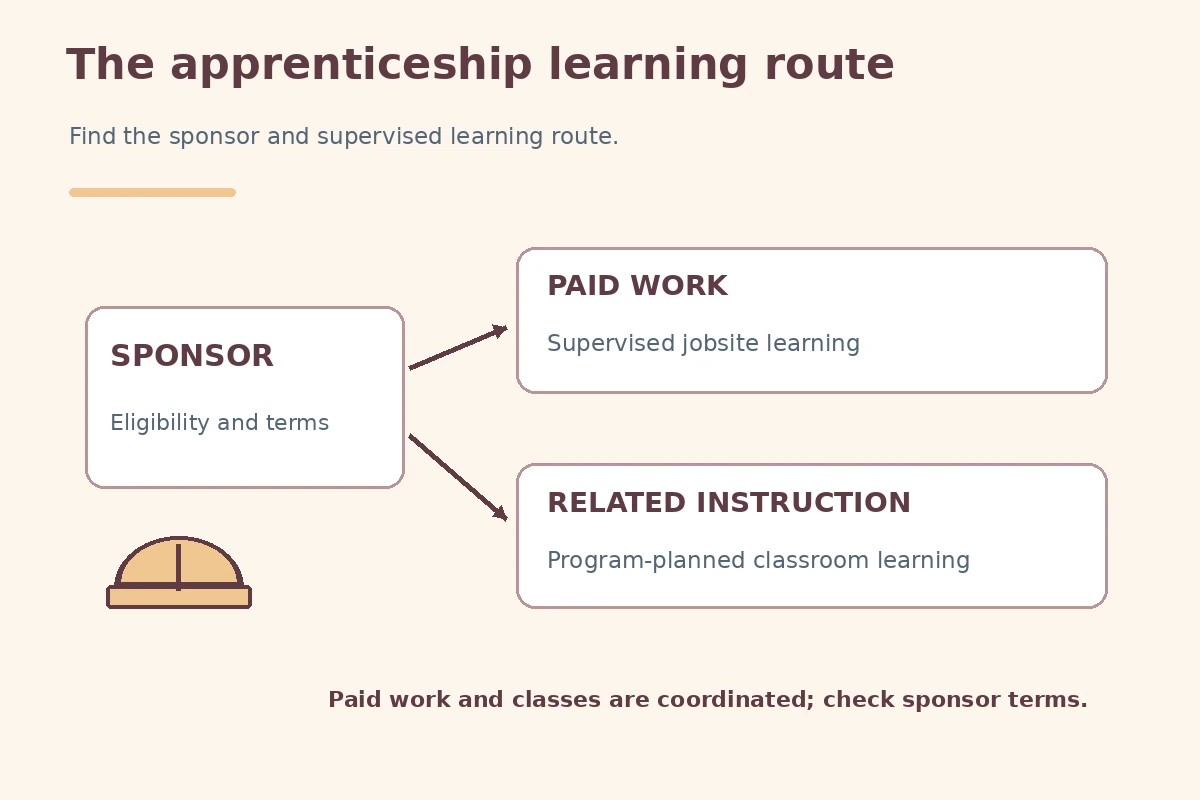
An experienced worker can explain typical assignments, safe work habits, and the demands of the trade. A current apprentice can describe what early training felt like in that program. An employer or program sponsor is generally better placed to confirm entrance requirements, registration, related classroom instruction, and application steps. Do not ask a friendly journeyworker to promise a position or certify that you are eligible. Apprenticeship.gov describes Registered Apprenticeship as combining paid work, structured learning, mentoring, progressive wages, and a portable credential, but the details of a specific opportunity must be confirmed directly.
Begin with a defined trade rather than “any hands-on job.” Your questions for a maintenance mechanic will differ from those for a construction electrician, welder, or plumbing apprentice. A concise outreach message could say: “I am comparing apprenticeship routes in this trade and would value twenty minutes to understand what beginners learn first and how training is supervised.” Ask for career perspective, not free on-site instruction. If you are invited to observe, follow the host’s visitor rules and do not cross controlled areas or touch tools without explicit authorization.
Ask which tasks require supervision and safety instruction
A useful opening question is: “What can a new apprentice do on the first week, and what must they wait to learn?” Then ask how supervisors verify competence before assigning more complex work. Physical work environments may involve heights, moving equipment, electricity, chemicals, or other serious hazards. It is unsafe to infer that a task is permitted simply because someone watched another worker perform it. Do not request a demonstration of hazardous procedures during a career conversation. Ask how the program documents instruction, protective equipment requirements, emergency procedures, and restricted work instead of asking to try the task.
Write two columns: tasks explained in general terms and work that requires instruction or authorization. If someone says beginners “help with setup,” ask what that includes and who checks the result. A person may be able to organize materials or prepare records before they can use a specialized machine; exact boundaries depend on the trade and worksite. Do not treat the conversation as certification or legal advice about licensing. If the contact refers to a local rule, apprenticeship standard, or licensing board, note the source and verify it with the responsible organization.

Clarify paid work, classes, and progression terms
Ask about the relationship between jobsite hours, related instruction, work schedule, mentor support, and progression milestones. For a particular opportunity, the official sponsor should confirm how instruction is delivered, whether time is paid, which costs are covered, and how wages advance. Apprenticeship.gov explains general features of Registered Apprenticeship, but that description does not replace written conditions from a specific employer or sponsor. Avoid assuming the same entry test, age threshold, classroom location, or selection calendar applies to every occupation. The question is how to locate authoritative program information.
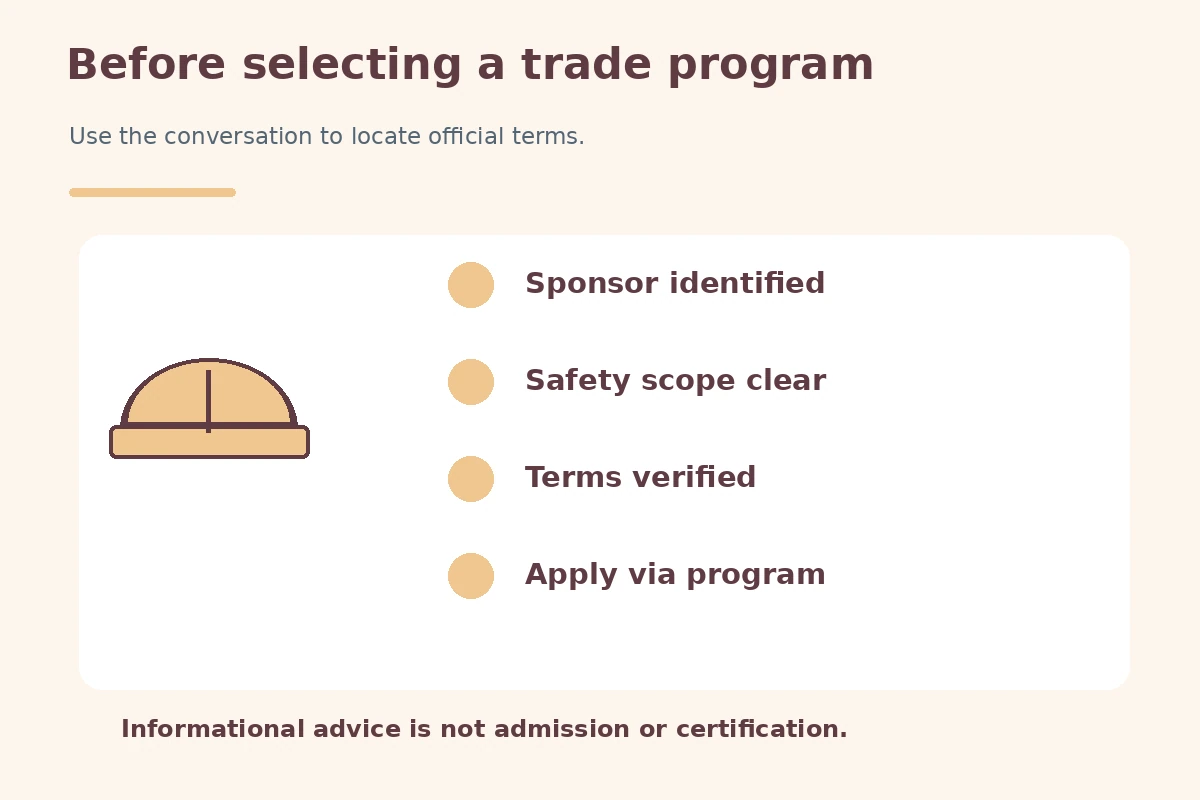
A practical comparison table can record sponsor name, trade, location, entry criteria, training structure, documentation needed, application channel, and a date checked. If the speaker describes a useful pathway, ask where the official listing can be found. Apprenticeship.gov offers a finder and explains how applicants apply to employers or program sponsors. Do not pay a person who promises a guaranteed apprenticeship slot merely because they claim to have influence. Verify the relationship and contact details through the program’s official channels before sharing sensitive records.
Prepare five questions that reveal the real learning path
You can use a twenty-minute sequence: What surprised you during the first months? What kinds of assignments were supervised most closely? How are jobsite and classroom learning connected? What documents or preparation did you need to apply? What would you research before choosing a sponsor? Ask follow-ups about the specific trade rather than demanding an exact salary prediction or a shortcut around instruction. If the speaker discusses progression, distinguish a personal story from the program’s current formal requirements. Do not assume that previous experience waives any mandatory training without written confirmation.
Imagine a fictional apprentice says they first practiced interpreting drawings before participating in field installation under an instructor. The useful follow-up is, “How was your readiness checked, and where can applicants see the curriculum?” It is not “Can you show me how to do the installation tomorrow?” A good career conversation identifies what to learn safely and where to obtain supervised training. Record which parts came from personal experience and which parts are published sponsor policy. Do not reproduce risky tool-use instructions in a public article or pretend an illustrative anecdote is real testimony.
| Conversation topic | What to record |
|---|---|
| Worker perspective | Ask about lived work and supervised learning. |
| Sponsor confirmation | Verify eligibility and official program conditions. |
| Safety boundary | Never treat observation as authorization to use tools. |
| Apply | Follow the employer or sponsor’s current official instructions. |
Use official information to decide the next step
After the discussion, thank the person and refer to a specific safe learning insight. Your action plan might be to compare two registered programs, review eligibility, visit an American Job Center, or complete permitted preparatory study. Confirm that the program currently accepts applicants before gathering documents or spending money on travel. Check that a recruiter or school is actually authorized to explain the program’s entry process. If you find conflicting information, ask the sponsor directly rather than relying on hearsay from social media or an outdated listing.
Keep a short career tracker: the trade you investigated, who provided general perspective, official sponsor links, application deadlines, training conditions, and unanswered questions. Distinguish an apprenticeship from a casual helper job that lacks the same structured progression; neither label alone confirms a particular credential. If you learn the work environment or schedule is a poor fit, the informational interview still served its purpose. It allowed you to evaluate the route without claiming a certification, accepting unsafe assignments, or making assumptions about future pay.
How We Research This Career Conversation
This guide compares the profession-specific duties described by primary sources with recommended informational-interview practice. Sources reviewed: Cos; Depaul; Apprentice; Apprentice Finder. The scenarios, example statements, and proposed questions are hypothetical; they are not interviews with actual employees and do not verify any employer’s hiring policy. The organization and role determine access permissions, requirements, and daily responsibilities. Review the affiliate disclosure. No paid referral or employer partnership is asserted.
Related Job Search Guides
No. Only the relevant employer or sponsor can confirm the actual selection process.
No. Verify whether the program is registered and what instruction and credential it provides.
Do not operate tools or enter restricted work areas without required training and authorization.
No. Confirm the current program’s written progression and relevant local rules.
Use official sponsor or employer channels and the Apprenticeship.gov finder.