
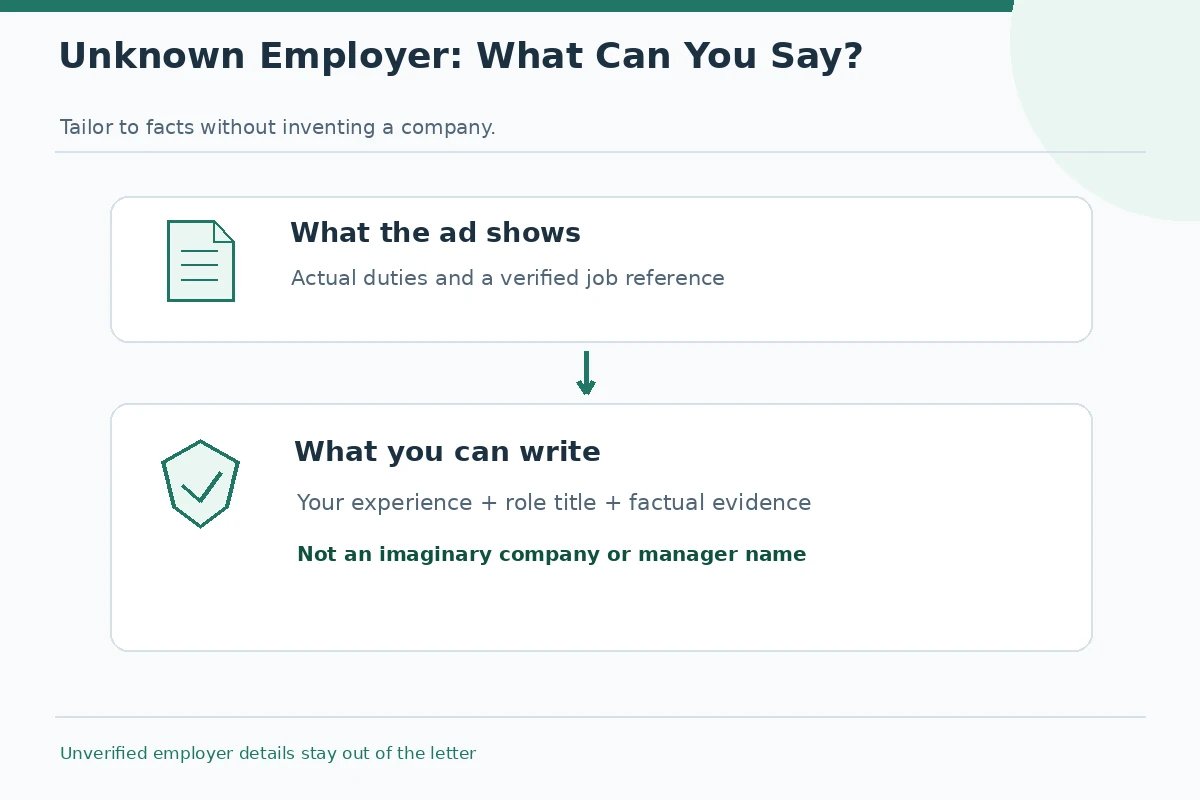
When a job advertisement hides the employer’s name, do not invent a company, manager, location, or mission statement to make your cover letter look tailored. A usable letter can identify the posted job title and describe your relevant evidence without a fabricated address block. First assess whether the vacancy and submission route are credible. If the recruiter cannot provide a legitimate employer or clear process, hold back sensitive details until you can verify who will receive your application.
First: choose a format that fits this exact application
Before drafting, examine the actual employer instructions and the material you can verify. A cover letter is not a substitute for a résumé, screening questions, a research statement, or an official submission form. The format should make the job title, your contribution, and the next step obvious to a reader. If a detail is missing, distinguish it from a fact instead of filling it with an invented name or outcome. This guide addresses one specific format problem rather than offering a universal template for every vacancy.
Separate an unknown name from an unverified opportunity
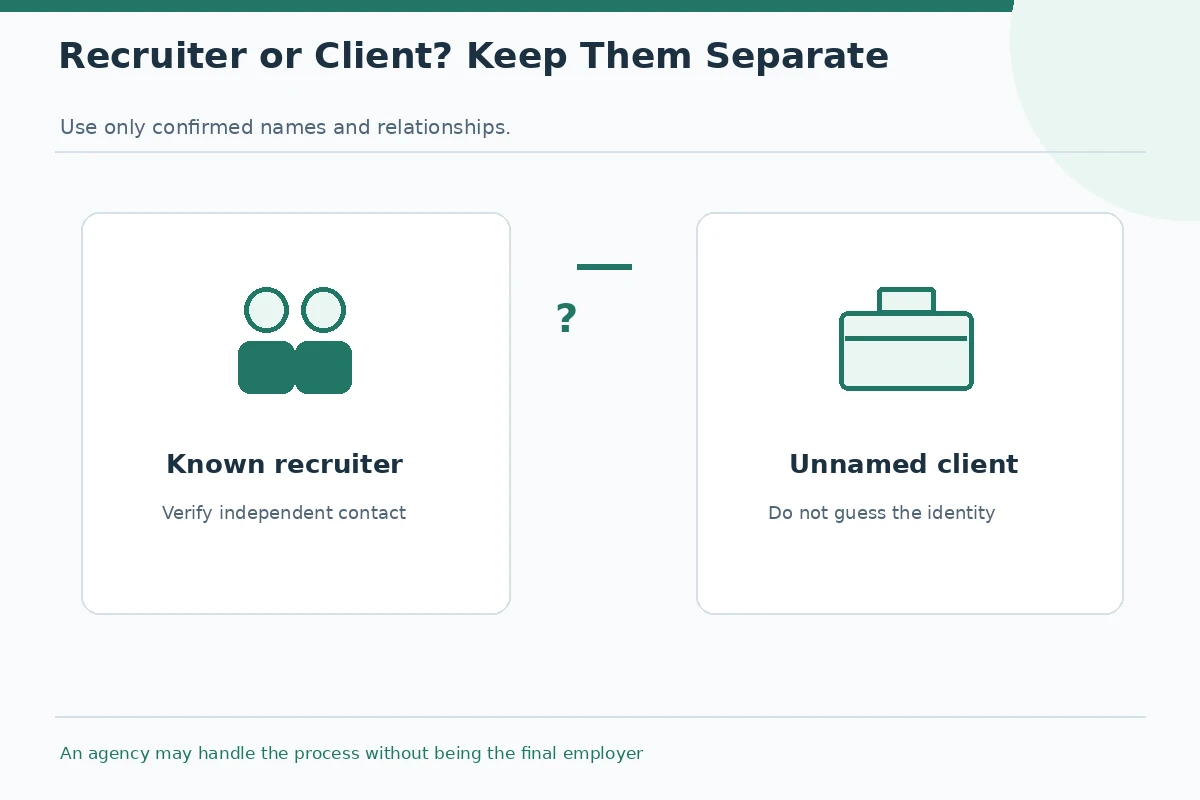
An anonymous listing is not necessarily fraudulent. Recruiters sometimes withhold a client name early in a search. But you should still know what kind of role is being offered, where the work will take place, the application channel, and which entity will collect your documents. Verify the recruiter through independent contact details rather than only the message sender. Fraud warnings from the FTC explain why name-dropping a recognizable employer or sending a realistic-looking posting is not proof that a vacancy is genuine.
Use a neutral opening rather than a fake address block
If the posting does not provide an organization name or hiring manager, do not fabricate a street address. Use your real contact information in a simple header, the date where appropriate, and a professional greeting such as “Dear Hiring Team.” In the first sentence, name the advertised role and the verified job identifier if supplied. Avoid generic claims about the unknown company’s culture. An honest letter remains professional even when some recipient details are unavailable.
Tailor to duties that actually appear in the advert
The safest way to customize this letter is to match published tasks with experience you can prove. If the job involves invoice tracking, identify a genuine coursework or administrative example involving records and review. If the listing states little more than “remote assistant, high pay,” you lack enough information to write a specific letter; ask for a full description before applying. Do not pretend to possess a certification, security clearance, employer relationship, or tool access that you have not verified.
| Decision point | What to show | What to avoid |
|---|---|---|
| Organization unknown | Use a verified role or reference | Do not invent an employer |
| Recruiter confirmed | Address the real recruiting team | Check contact independently |
| Sensitive details requested | Pause and verify | Never pay or send bank information |
Keep personal information proportional to the stage
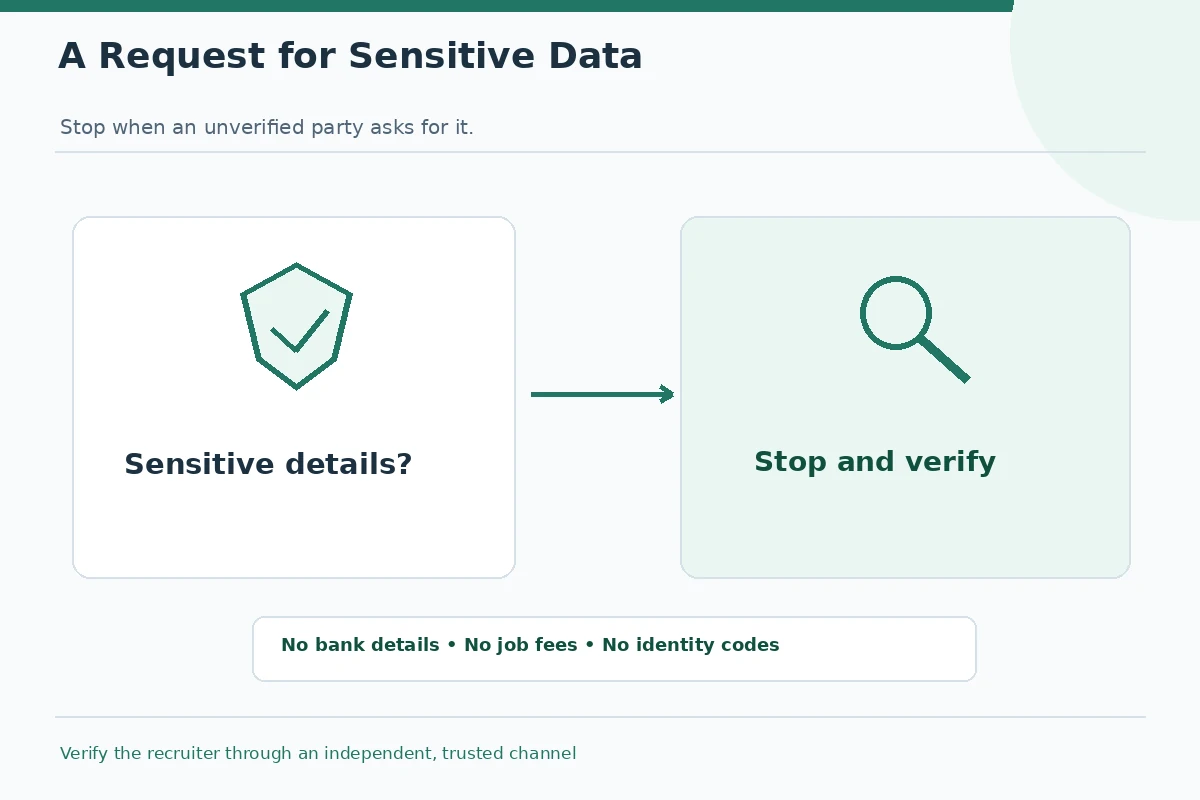
A cover letter ordinarily needs a name and usable reply details, not a Social Security number, bank account, passport copy, full birth date, or family information. If an unfamiliar party demands those materials before a legitimate hiring process, stop and investigate. Use a professional email address and consider excluding a residential street address when it is not needed. Never send login codes or pay for equipment because the alleged recruiter calls it a preliminary step. These are employment-scam warning signs, not formatting requirements.
Identify the right recipient after verification
If a legitimate staffing agency is handling the vacancy, address your letter to its recruiting team or to the specific representative who is authorized to receive applications. Do not imply that the agency is itself the final employer unless that is known. If the employer is later disclosed, review the entire application and rewrite any organization-specific paragraph with actual information. Keep a dated copy of what you sent, to whom, and for which job reference, because anonymous advertisements can be reposted by unrelated accounts.
Use an evidence-focused letter without flattering a mystery firm
A practical structure is an opening with the verified role, one paragraph explaining a relevant task, a short statement of the kind of work you seek, and a professional closing. Example: “I am applying for the records coordinator position referenced as [posting ID]. In a student office project, I checked data-entry exceptions against source documents and flagged unresolved entries for review.” The bracketed ID is a field to fill only with a real identifier. Do not add invented customer names, business priorities, or claims that a hiring director has already read your résumé.
Run a submission-route verification checklist
Look up the agency or advertised hiring organization independently, compare its website and legitimate contact channels, and check whether the position appears in an official listing where possible. A job board listing alone does not prove authenticity. Be cautious of pressure to move immediately to encrypted chat, receive a check, or supply financial information. If the employer cannot be confirmed, you can ask for clarification or decline to apply. Formatting a polished letter should never override basic identity and privacy checks.
A worked example: unknown organization, known work
A fictional candidate sees a post for “Operations Records Assistant,” with no employer listed. The weak draft says, “I admire your company’s award-winning records department.” That is unsupported. A better version begins with the exact role and says, “During a volunteer scheduling project, I updated a shared log, flagged duplicate entries, and passed unresolved issues to the supervisor.” The candidate still needs to verify the recipient independently before sharing the résumé. Truthful specificity about tasks is more useful than pretend familiarity with the employer.
Hypothetical wording: revise the claim, not just the layout
Too broad: “Your nationally recognized company is my dream employer.” More specific: “I am applying for the advertised records assistant role and can describe my experience checking logs and escalating discrepancies.” These are fictional teaching examples, not a candidate’s real achievement or an employer endorsement. Adapt the structure only if the underlying activity and status are true in your case. Do not copy project figures, job identifiers, affiliations, authorship, or approval decisions into your own application unless they match records you can honestly explain. A polished layout cannot rescue an unsupported claim.
Check the final copy against the evidence
Read the document as a reviewer who has only the job posting and your résumé. Can that person find the exact role and understand why your experience matters? Are the dates, names, work settings, and project statuses consistent? Can you explain every named tool, action, and outcome if interviewed? Reopen the final file or form entry after saving and check visual layout, text readability, links, and attachments. Keep a version record for the application rather than overwriting unrelated letters. No font, template, or keyword guarantees selection.
How We Research This Guide
We used these primary professional resources: FTC warns about impersonated recruiters, premature demands for sensitive information, and fake job postings., FTC advises checking vacancies through official employer sites and independent contact routes., Texas Tech discusses choosing an address block or simplified header appropriate to the context.. The sources were checked November 16, 2026. They support the relevant letter conventions, application context, and safeguards; they do not certify any individual employer policy or hiring result. We compared this topic with JobAsk’s existing general cover letter pages and selected a more specific reader problem, then wrote illustrative examples rather than presenting fictitious real-world experience. No affiliate product or paid partnership is recommended here. See affiliate disclosure for the site policy. The employer’s own instructions control the final submission.
More Resume and Cover Letter Guides
Yes when the address is unknown or unnecessary for the submission, while keeping the heading professional.
No. But the recipient, role, and process need independent verification before sharing sensitive information.
No. Do not present guesses as facts in the letter.
If the verified process allows it, identify the role clearly without inventing a reference.
Stop, verify the organization independently, and do not share sensitive financial or identity details prematurely.