
For a data entry resume with no experience, use a real school exercise or self-directed practice project to demonstrate how you enter, compare and correct information. Label practice data as practice data; never list a made-up employer or imply that you handled real client records. A useful first resume can include a concise skills section, relevant coursework or training, and one clearly named project describing the dataset, tools and checks you actually performed. Accuracy and responsible handling of information are more persuasive than unsupported typing-speed claims or a long list of programs you have never used.
Separate actual entry work from a simulated exercise
General office and information clerk descriptions from the Bureau of Labor Statistics include collecting data, filing records, checking documents and updating electronic information. Those tasks explain why employers value field accuracy and clear records. They do not mean a novice must have used an employer’s proprietary database to apply. On a scratchpad, identify which task you have performed in school, a club, a volunteer setting or a personal spreadsheet; write ‘practice’ next to anything simulated.
For example, entering a fictitious store inventory list into a spreadsheet is an independent project, not inventory employment. Fixing typos in a class roster may be real coursework, but copying actual classmates’ contact information into your portfolio would be inappropriate. If you worked at a real organization in an authorized support capacity, identify the exact duties you performed and the restrictions you followed. What matters is a defensible trail from action to resume statement.
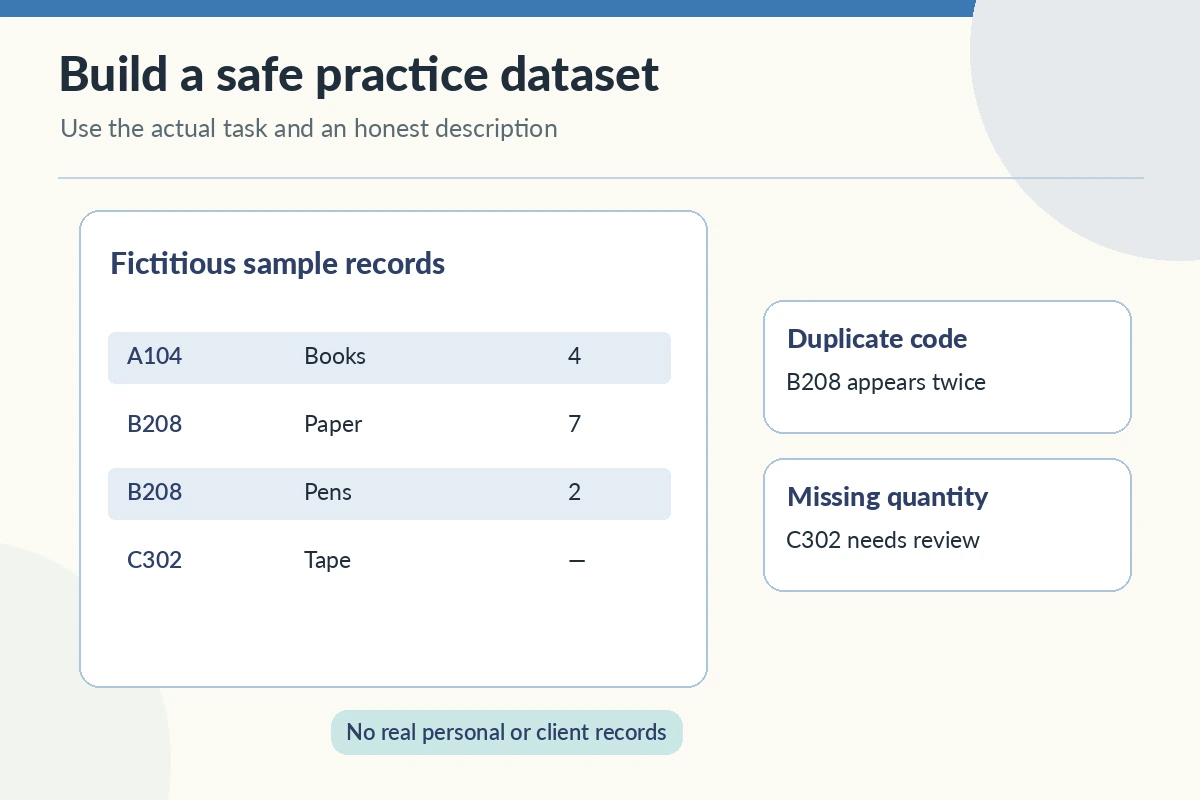
Build a simple sample-data check that you can explain
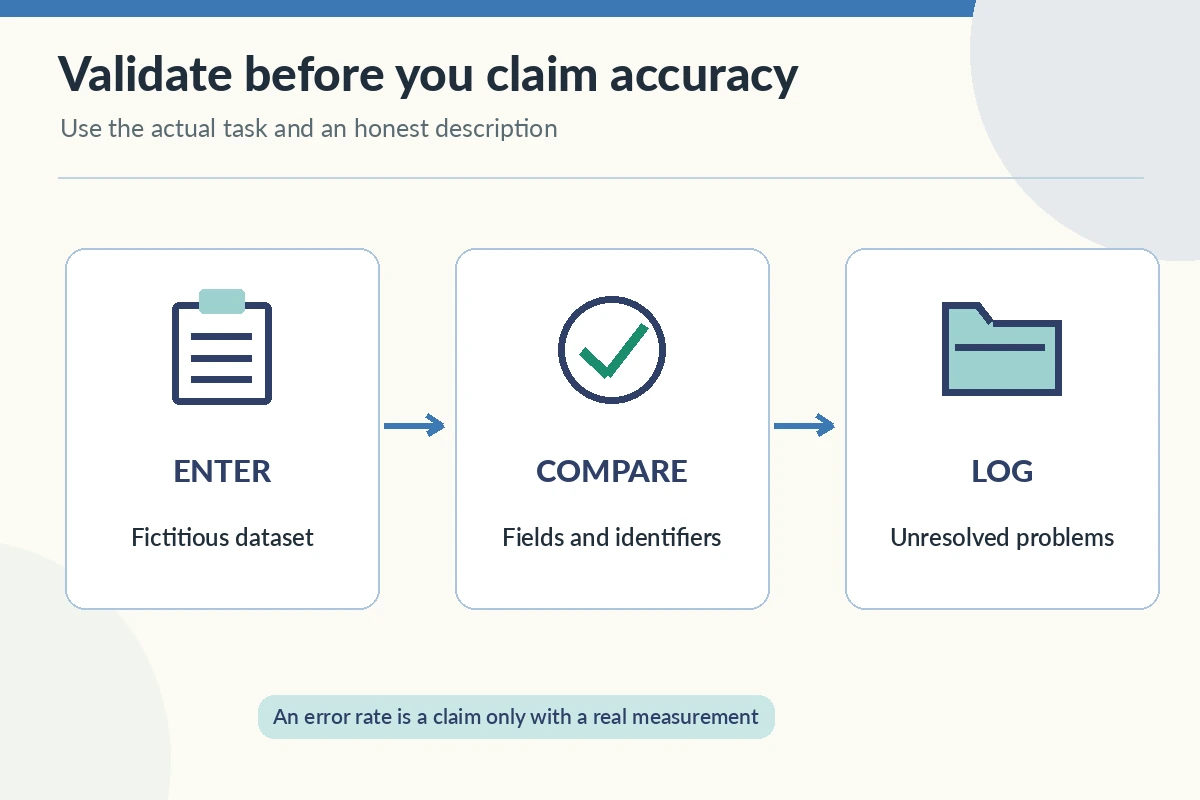
Create a clearly fictitious table using non-identifying entries, such as item code, category and quantity. Check for blank mandatory fields, duplicated identifiers, inconsistent date formats and totals that do not match the row values. Keep a simple change log explaining what you corrected and what you set aside for review. Never use real customer names, Social Security numbers, addresses or financial records for an online demonstration.
A small project provides more useful evidence when you show the verification method than when you announce a huge, unsupported success rate. If you used a filter, sort or formula, name it and be prepared to reproduce it. If you do not understand lookup formulas, do not write VLOOKUP or XLOOKUP merely because a job description mentions them. Accuracy metrics belong on the resume only when a real, documented measurement supports them; no need to invent a percentage.
Create a project bullet around the checks you performed
Hypothetical entry for someone who actually completed it: ‘Practice Data Validation | Independent Spreadsheet Project | October 2026. Entered fictitious product records into a spreadsheet; checked required fields and duplicate item codes; maintained a correction list for inconsistent entries.’ This is stronger than ‘Professional data entry expert’ because it names the data type, tool and check while identifying the work as simulated. Change the details if your project was different.
Use Education, Relevant Project and Skills as legitimate sections. If you have a class assignment, identify the course rather than naming an imaginary client. If you have completed authorized volunteer data handling, you may include the volunteer organization and specific duties, without publishing confidential contents. Format dates plainly, and distinguish a course completion statement from a professional certificate. A one-line profile can show your target role but must not advertise paid years of experience you lack.
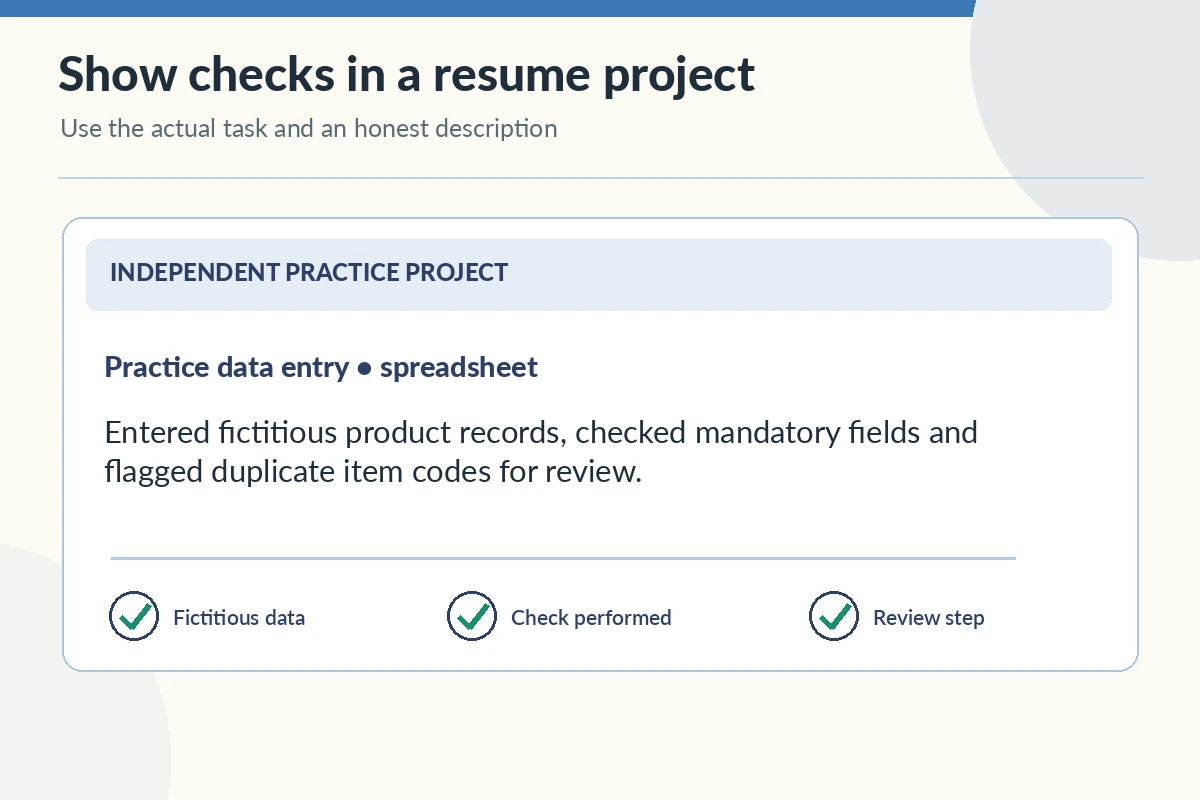
List software skills with honest levels and evidence
Match the employer’s actual requirements: basic word processing, spreadsheet entry, sorting and record updates may matter more than obscure tools. Write ‘Excel: tables, sorting and filters (coursework)’ only if you can demonstrate those actions. If you have used Google Sheets but not Excel, name Sheets rather than treating programs as interchangeable. Generic statements such as ‘100% accuracy’ or ’80 words per minute’ should be removed unless you can document the method, date and conditions of the measurement.
Some job advertisements request document processing, data comparison or customer communication in addition to typing. A classroom project using a handoff checklist could support document control; a school office volunteer role could support communication if genuinely performed. Keep tool capabilities separate from employment credentials. If a posted role requires access to sensitive data or specialized regulations, acknowledge the training requirement rather than suggesting you are authorized already.
Spot suspicious data entry postings before sending your resume
The FTC warns that supposed remote data entry employers can impersonate familiar companies and push applicants toward text-only interviews, early bank-data requests or equipment-check schemes. Independently confirm the role through the employer’s actual website and published contact information; a logo in an email is not verification. Do not pay to secure a job, deposit checks for an unknown employer or send identity and bank documents to a suspicious contact.
A well-written resume does not protect you if the listing itself is fraudulent. If a posting offers unusually easy money for vague work and demands immediate private messaging, verify it before proceeding. Apply through a legitimate employer channel when available. This article concerns how to describe evidence accurately; it does not certify that any particular online data-entry job is genuine or that a specific software platform is required.
Run the final field-by-field resume audit
Review the resume as if a hiring coordinator asked you to demonstrate each claim. Could you open the spreadsheet and show the validation checks? Can you explain why a record was flagged instead of silently changed? Are titles, dates and training names real? Does the document use ordinary readable headings, consistent spacing and a file format requested by the employer? Are links safe to open and free from personal data? These checks reveal more than another round of adjective polishing.
Remove fake client names from templates, do not include hidden test data, and never link to an open folder of unredacted records. Keep any screenshot limited to clearly fictitious examples. You can submit a first data entry resume without paid history by showing a real process and acknowledging its practice setting. Keep the file short enough for the meaningful proof to stand out, then tailor the project description to each specific job posting.
How We Research First-Job Resume Examples
We reviewed the University of Michigan career-center resume guidance and the occupational references relevant to a data entry role, then compared practical examples with the specific duties and limitations described in those sources. Examples in this article are hypothetical templates only: use them only after replacing them with your own truthful activities, dates and results. Source references: University of Michigan Career Center resume resources; BLS office clerks; BLS information and hotel desk clerks; FTC remote job scam warning. This material provides general resume-writing information, not a hiring guarantee. Read the JobAsk affiliate disclosure for information about commercial links.
More Resume and Cover Letter Guides
Use relevant education, software skills you can demonstrate, and a labeled school or independent practice project with specific data checks.
Yes when clearly described as simulated or practice work. Do not present it as an employer assignment or claim it involved real customer records.
No. Omit unverified numbers. If you choose to include a tested speed, describe it accurately and be able to explain how you measured it.
List the tool you have actually used and the specific functions you know. Do not imply proficiency with a different program.
Verify the position on the employer’s independent official site, avoid upfront payments, and treat early sensitive-data demands or equipment-check schemes as serious warning signs.