
For an accounting clerk resume with no work experience, make your actual training and careful checking process visible. A class exercise that required recording mock transactions, comparing totals and identifying discrepancies can be relevant if labeled Coursework or Practice Ledger Project. It is not proof that you managed a company’s books. List the spreadsheet or accounting tools you really used, and describe the level of task and supervision honestly. Focus on one verifiable example—accurate fields, documented totals, and a clear handoff when figures did not match—rather than claiming financial responsibility or a credential you have not earned.
Understand what entry-level accounting support entails
BLS describes bookkeeping and accounting clerks entering and classifying transactions, checking figures and records, working with spreadsheets, and identifying mismatches. Responsibilities vary from a narrowly defined accounts payable support task to broader ledger maintenance. The BLS also explains that entry requirements vary; some employers prefer accounting coursework while others provide on-the-job training. Read the actual posting instead of assuming all accounting clerks reconcile bank accounts or authorize payments.
Make three columns for the role: documented posting requirement, your actual evidence, and tasks still needing training. A classroom transaction log may connect to accurate data entry and basic classification. It does not mean you have entered live payroll, prepared real taxes, signed off payments, audited financial statements or used restricted client information. If a posting expects professional experience you lack, do not hide that condition inside a misleading summary.

Create a small practice ledger that can be reproduced
Use clearly fictional transactions from a class problem or an independent exercise, such as a sample supplies purchase and a hypothetical service payment. Record a date, description, category and amount with consistent formatting. For a double-entry exercise, make sure the debit and credit columns balance according to the rules you were actually taught. If you have not learned formal accounting entries, use a basic categorized transaction table instead of pretending to prepare a complete general ledger.
Keep a second sheet for checks: missing fields, duplicate identifiers, incorrect totals and unresolved items that should be reviewed. If you correct a simulated typo, note why; if the amount is ambiguous, do not just choose a value to make the totals agree. Never upload real invoices, bank statements, customer names, employee records or tax documents into a public portfolio. A practice-only dataset is enough to explain a beginner workflow.
Label the project so employers cannot mistake it for paid work
Hypothetical entry, only after doing comparable work: ‘Practice Transaction Ledger | Introductory Accounting Coursework | Fall 2026. Recorded fictitious transactions in a spreadsheet, checked debit and credit totals, and flagged unmatched source amounts for instructor review.’ This wording states the learning context and the exact limit of responsibility. Do not write ‘Bookkeeper, ABC Corporation’ when ABC Corporation was only a made-up case study in the course.
A project bullet should include an actual verb, object and check: ‘Compared the worksheet totals against the assignment instructions and documented discrepancies.’ If you also built a separate reference list for transaction codes, include it only if true. Unsupported claims like ‘eliminated all financial errors’ or ‘performed company audits’ can undermine credibility. An independent home budget spreadsheet is not employer accounting; if relevant, label it as a personal project and omit private household numbers.

Order education, projects and software skills for a novice
Use Contact, Education, Relevant Coursework or Project, and Skills as your starting layout. If you completed a real internship or held paid administrative work, include the accurate organization and dates as Experience. Do not use ‘Certified’ unless you earned a credential and can name its issuer. A course completion, continuing education module and professional certification are not interchangeable. Keep the title of any in-progress qualification clear rather than implying it has already been awarded.
List spreadsheet skills at the level you can defend: entering tabular data, simple formulas, filters, balancing totals or basic pivot tables only if actually practiced. If you trained in a demo version of a bookkeeping program, describe it as a demo or course environment; that is different from administering a client’s account. The project section should carry the proof. Avoid placing a skill from a copied job description into a resume when you cannot explain how you used it.
Treat discrepancies and approvals as separate responsibilities
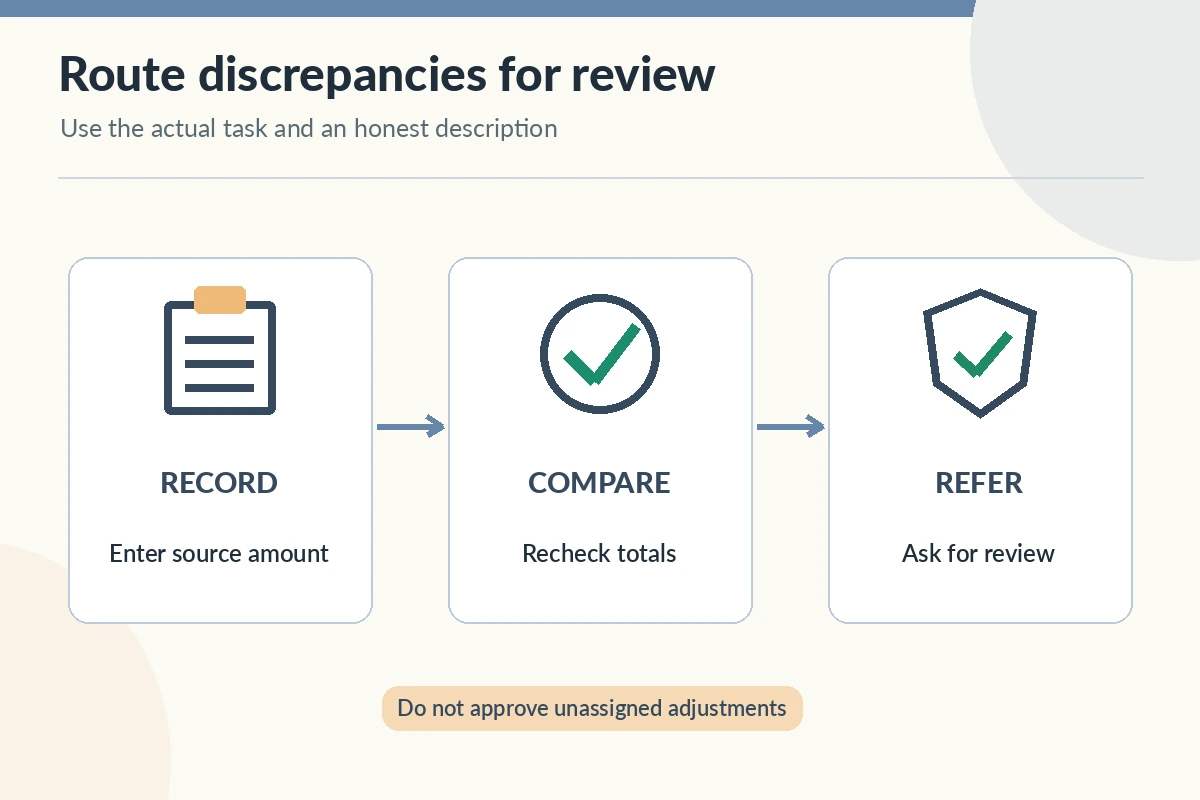
In accounting support, the method for finding a difference is often as important as recognizing that one exists. Your sample exercise can demonstrate comparing source amounts with entered figures, rechecking the arithmetic and recording unresolved differences for an instructor or supervisor. It should not imply you independently approved adjustments or moved funds. If a hypothetical source voucher and ledger do not agree, the safe description is ‘flagged for review,’ not ‘approved correction.’
Keep confidential and access-controlled records out of public demonstrations. Never send screenshots with real banking details or claim your class project was commissioned by a business if it was not. Explain the tool and the review step in ordinary language. If you later gain real workplace authority, you can update the resume to reflect actual duties and controls. Until then, an accurate supporting role is more convincing than invented seniority.
Audit each claim before exporting the accounting resume
Read your resume as if the interviewer might ask for the worksheet. Can you reproduce the total check and identify which entries were fictional? Are course dates and tool names correct? Did you describe school assignments under training rather than payroll employment? Are your claims limited to the skills the posting asks about? Remove unsupported numbers and generic phrases about ‘financial expertise.’ Check the PDF for consistent alignment, selectable text and accessible headings.
The final document should provide a clear path from a genuine task to a skill relevant to the employer. Mention your availability and willingness to learn the employer’s procedures without claiming authority you do not hold. If the employer asks for accounting software that you have never used, do not pretend. Use an honest spreadsheet exercise to establish your foundation, then address the training gap accurately in the application or interview.
How We Research First-Job Resume Examples
We reviewed the University of Michigan career-center resume guidance and the occupational references relevant to a accounting clerk role, then compared practical examples with the specific duties and limitations described in those sources. Examples in this article are hypothetical templates only: use them only after replacing them with your own truthful activities, dates and results. Source references: University of Michigan Career Center resume resources; BLS bookkeeping and accounting clerks; BLS office clerks; BLS information and hotel desk clerks. This material provides general resume-writing information, not a hiring guarantee. Read the JobAsk affiliate disclosure for information about commercial links.
More Resume and Cover Letter Guides
Yes under Coursework or Relevant Projects, with clear language that the transactions and records were practice examples rather than live company books.
Only list QuickBooks if you have used it. Follow the actual posting; explain relevant spreadsheet work and your learning level without claiming unfamiliar software.
Name what you recorded, the tool you used and how you checked it—for example, comparing fictitious transaction totals and logging discrepancies.
Specify it was a classroom or practice reconciliation if that is what you completed. Do not imply you controlled an organization’s bank accounts.
Recheck the source and calculation, document the discrepancy and ask the designated reviewer rather than silently adjusting figures to make totals balance.