
Tell me about yourself data entry is best answered with an accurate snapshot of your relevant work, one task you can explain and a reason for pursuing this particular role. Lead with a real example, not a copied personal biography. The interviewer needs to understand what you actually did, what you checked, and which decisions belonged to someone else. The examples below are illustrative and must be replaced with your own truthful experience.
Lead with accuracy, not typing-speed claims
A strong data entry introduction explains how you convert source material into a reliable record. Typing is one part of the role, but completeness, consistency and handling errors matter too. Begin with the document types you have actually handled—forms, class spreadsheets, invoices or volunteer sign-up logs—and identify one check you performed. You do not need to invent a words-per-minute score or present a classroom spreadsheet as an employer database. The interviewer is listening for careful process habits.
O*NET lists checking source documents, identifying errors and storing records as common duties. Not every job allows a clerk to correct the original document, and not every database has the same review controls. Read the posting for the kinds of records and confidentiality requirements involved. An introduction suited to medical records should not suggest unlimited access to patient information. One suited to inventory should not imply authority to rewrite receiving reports.
Build the introduction from record, check and handoff
Use three moves: name the source material, describe how you verify the entry, and explain what happens when information does not match. This establishes a method instead of the unsupported claim “I am extremely detail oriented.” A candidate with office experience can use an actual data check. Someone without employment experience might use a coursework exercise, but should say so plainly. The resulting answer is specific enough to prompt a useful follow-up.
If a process included a second reviewer, mention the reviewer rather than claiming that you independently approved the record. When talking about software, distinguish a spreadsheet, a training database and a live production system. A statement like “I used Excel formulas to flag duplicate IDs in a class project” is more honest than “I managed the organization’s master database.” Never name a tool you cannot demonstrate in an interview.
A sample answer with correct review boundaries
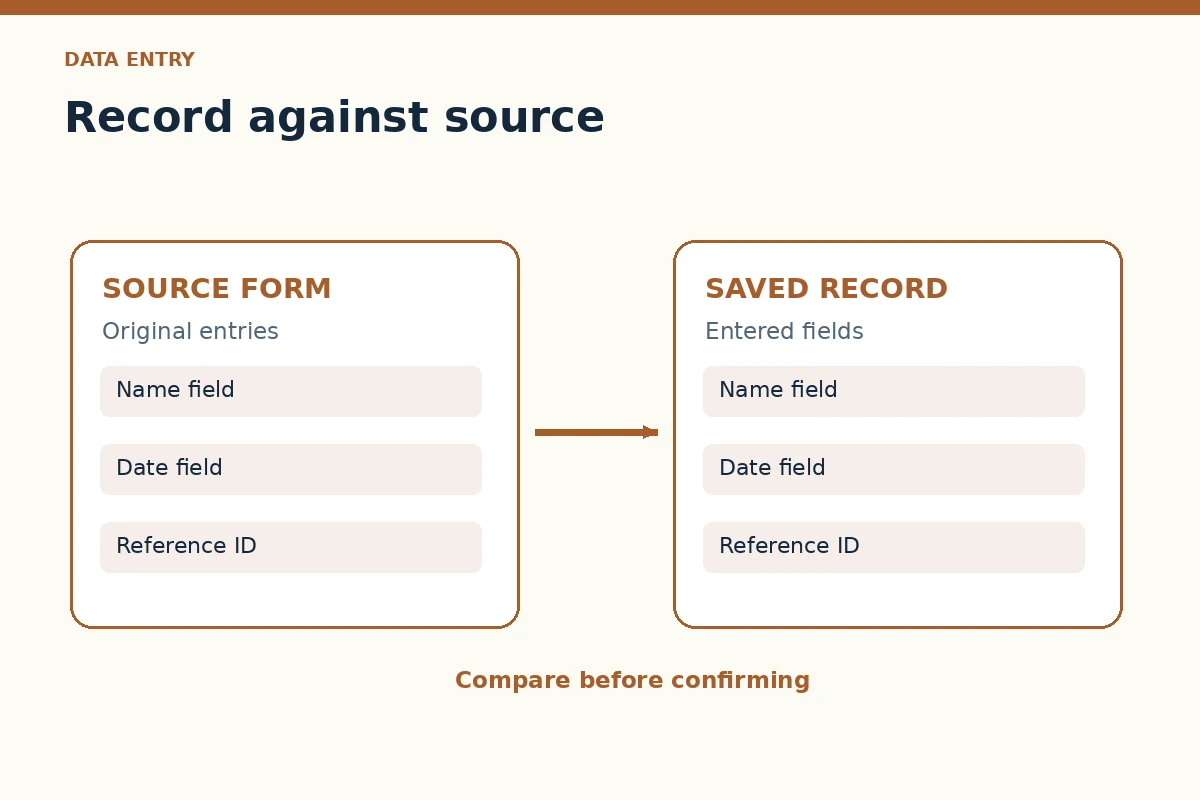
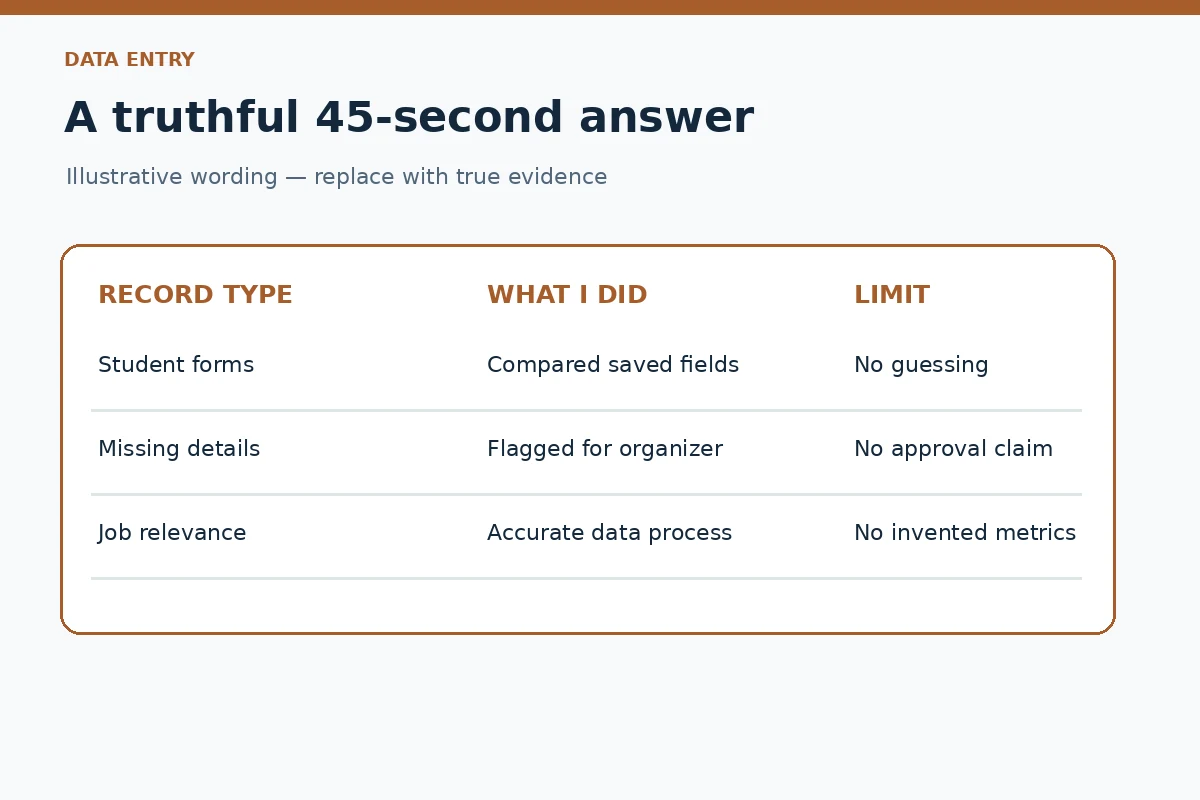
Illustrative answer, not a real candidate: “I’m interested in record-focused work because I like turning incomplete information into clear, checkable entries. During a student event I helped maintain an attendee spreadsheet, comparing the forms with the saved records and marking missing details for the organizer instead of guessing. That taught me to keep the source available, use a consistent check and ask for clarification before changing uncertain information. I’d like to apply that method in a structured data entry role.”
If you did not maintain an event list, replace the example with something true. Do not add made-up error rates, record volumes or confidentiality training. If the record was inaccurate and you corrected it, explain whether you had authority to change it. Avoid revealing real names, addresses or records. The example should make the quality of your checking visible, not provide an excuse to display private data.
Explain what you do when documents conflict
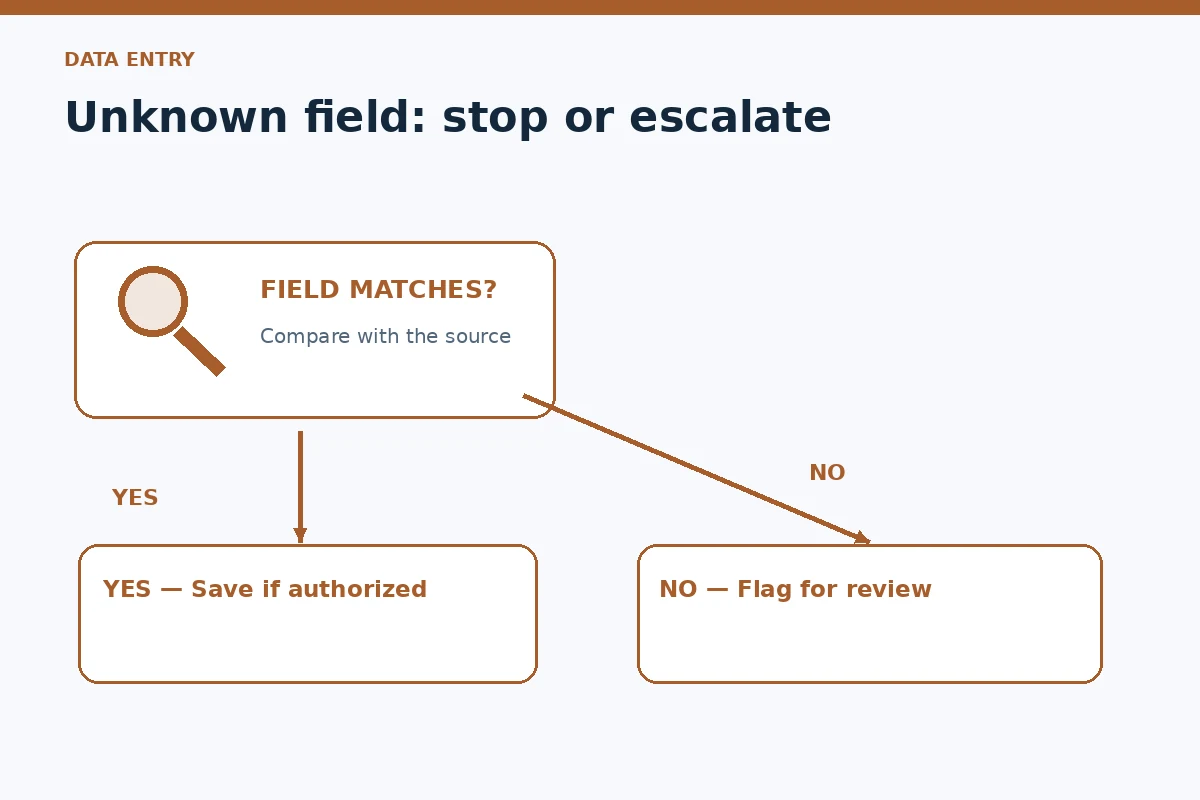
Suppose an order form shows one date and an attached note shows another. A thoughtful introduction can say you would identify the mismatch, preserve the original material and follow the employer’s clarification process. You should not guess the answer based on which number appears more recent. Sometimes a clerk can correct a typo directly; sometimes a supervisor or data owner must approve the change. State that you would follow the established rules rather than claiming universal authority.
Use this situation to describe what you personally controlled in a past task. Did you flag the record, record an exception ID, ask a coordinator or wait for approval? If you have no paid experience, a class exercise with mismatched values still demonstrates how you think, provided you label the context honestly. Avoid “I never make mistakes”; recognizing and reporting errors responsibly is a credible professional strength.
Choose the strongest evidence from your background
Candidates often have useful record examples that are not labelled data entry. A retail stock count, library catalog exercise, tutoring attendance list or school lab inventory may involve controlled fields and source comparisons. Name the exact information you recorded and one quality control you performed. Do not turn family household tasks into professional experience if the context would be misleading. Evidence is stronger when someone can verify your role, even if the project was small.
Make a private evidence list with four columns: source, entered field, verification check and next responsible person. Fill it with real examples. If a column cannot be completed, do not claim that step. This preparation also helps with later questions about accuracy under time pressure, which may require a more detailed example than the opening itself.
Treat privacy and access as part of the work
Some data entry jobs handle financial, health, employment or customer information. You can tell an interviewer that you follow the given access and storage rules, but do not imply you have particular legal certification or system privileges without evidence. If a portfolio or application requests a work sample, use invented dummy data rather than exporting an employer’s confidential records. Keep your interview introduction free of real client names, IDs and internal system credentials.
Explain that resolving an error may require a manager or record owner. Accuracy does not mean changing every suspicious field yourself. If the role involves official records, an audit trail may matter as much as the final value. You can demonstrate this judgment by describing how you kept the original, noted the uncertainty, and handed the issue to someone authorized to decide.
Practice a short answer that survives follow-ups
Time your introduction and remove repeated adjectives. Keep one real context, one verification method and one fit statement. If the interviewer asks for speed, give only a speed that comes from an actual test and explain the conditions. If no result is available, describe your emphasis on correct entries and openness to the employer’s testing process. Do not infer a hiring threshold from a public blog post.
Ask yourself: Can I describe the source document? What did I check with my own eyes? What happened to missing information? Those three questions help prevent an attractive story from drifting into invention. End by pointing to the task you want to do next—accurate records under documented procedures—not by promising that you can process unlimited volume without mistakes.
How We Research Job Interview Introductions
We checked O*NET data entry keyers profile for occupation-specific responsibilities and CareerOneStop’s interview preparation guidance for researching employers and practicing honest examples. We also consulted U.S. OPM structured-interview guidance to distinguish the situation, individual action, and result in a follow-up answer. These sources do not authorize particular workplace actions or verify a candidate’s history; employer processes vary.
All sample introductions and scenarios on this page are illustrative, not actual applicant statements or hiring guarantees. The sources are paraphrased and cannot certify a particular organization’s process. Review the affiliate disclosure for the site’s general policy; no employer endorsement, paid placement, or affiliate relationship is assumed here.
More Interview Preparation Guides
No. Accuracy, comparing entries with source records, confidentiality and handling missing information are also relevant.
Yes, as coursework or a student project. Do not label it a paid office role.
Use a real description of your checks. Never invent accuracy percentages or record volumes.
Only within the applicable access and correction procedures. Some changes require a supervisor or record owner.
Describe the exact spreadsheet tasks and be clear that you have not used an employer’s specialized system yet.