
Fashion job boards should be searched by the type of apparel work you can show, not only by the word ‘fashion.’ A sketch-driven design role, a technical developer’s fit-review work, and a production coordinator’s vendor tracking require different skills. BLS describes fashion designers as creating clothing, footwear and accessories, using design tools and working with manufacturing partners; it also emphasizes portfolios. Start with three possible job families, then compare specific outputs required in each posting. Use specialist boards to discover brands and employers, but verify a role through the actual company careers page before applying or sending portfolio files.
Separate creative design from technical apparel development
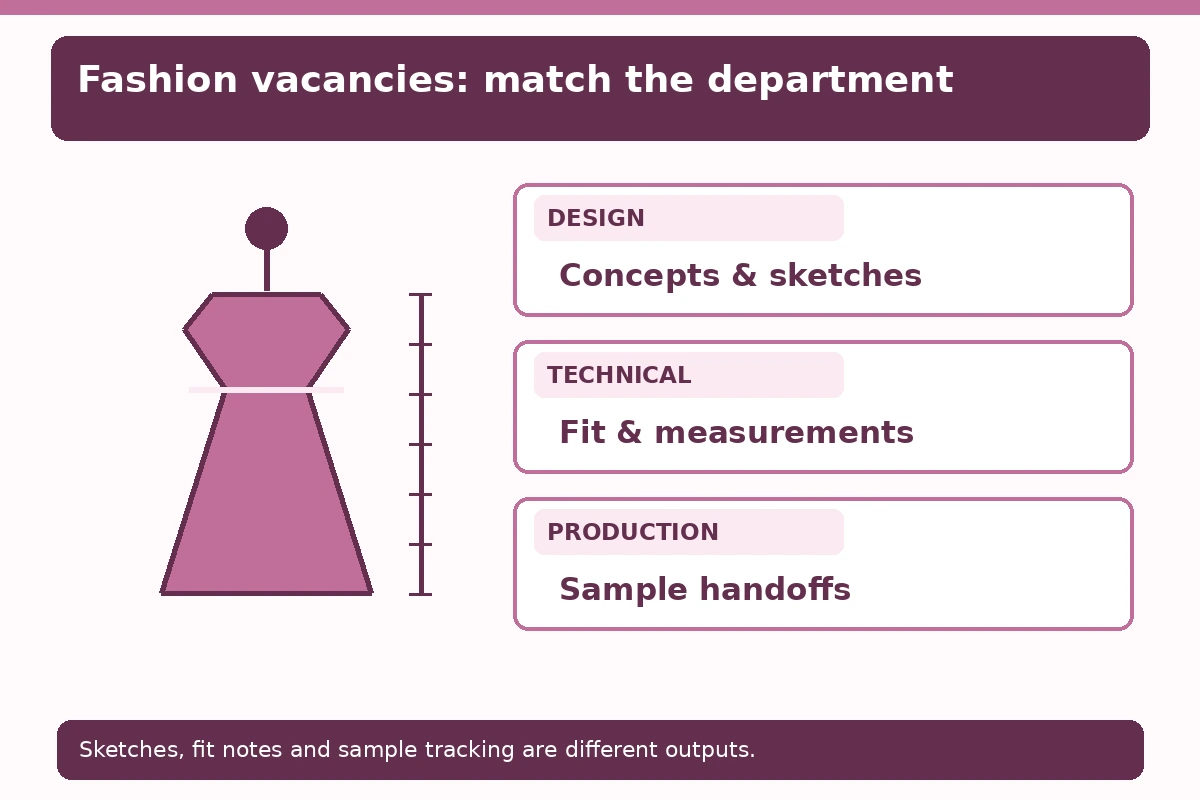
Creative fashion design may involve trend research, concept sketches, color stories and collection direction. Technical roles may focus on measurements, fit corrections, specification packs and communicating approved changes to manufacturers. The employer may combine duties, but the job posting should reveal the primary outputs. Do not apply to a technical role with only mood-board images if the employer asks for measurable construction details. Conversely, a portfolio of specification tables without context may not communicate the creative intent expected of a designer. Read each listing’s verbs—sketch, revise, fit, source, approve—and identify where a supervisor owns the final decision.
Treat production, merchandising, and sourcing as distinct paths
Fashion industry work does not stop when a design is approved. Production support may track sample status, vendor handoffs and delivery issues; merchandising may focus on assortment and product performance; sourcing may involve materials and supplier communication. A ‘fashion coordinator’ title can refer to any of these activities, so do not guess from the title. Look for named systems, materials, document flows and teams. A simple logistics or records project may demonstrate transferable coordination skills without pretending that you directed factory production. Ask whether the position is at a design office, retail headquarters, manufacturer or vendor, because the daily work can be very different.
Build a portfolio that proves your exact contribution
BLS notes that fashion employers often use portfolios to evaluate creative work. For design roles, show a coherent concept, selected sketches, fabric choices and what changed after critique. For technical work, a permission-cleared fit-note example or hypothetical specification can demonstrate structured communication. For production support, show a fictional sample tracker or a redacted issue log. Mark group projects with your actual contribution and distinguish classroom exercises from commercial collections. Never present confidential lookbooks, vendor prices or unapproved client assets as public portfolio work. The hiring manager needs evidence of your process, not a claim of senior authority.
Search by apparel category and work level
A broad job board may combine footwear, accessories, children’s wear, outerwear, knitwear and general retail jobs. Add the category you actually know, the work type and a realistic level such as assistant, associate, coordinator or intern. Search ‘technical design assistant footwear’ rather than relying on ‘fashion jobs’ if fit notes are your strength. Read the qualifications carefully: CAD knowledge, fabric or construction skills, travel expectations and sample-room collaboration may matter more than trend vocabulary. If you lack a required tool, report your actual proficiency; do not list software merely because it appears in the posting.
Review fashion board listings against official brand careers
Use a board to discover an opening, then find the brand’s official recruitment site independently. Confirm job ID, office location, department, employment type and any instructions about portfolios or confidentiality. Some brands recruit through agencies or design studios; if so, ask who is the employer and how submitted samples will be used. An unfamiliar domain asking you to pay for an interview or upload identity documents before verification is a warning sign. The FTC explains that scam listings can imitate legitimate companies, and a recognizable name or logo is not proof that a post was authorized.
| What to compare | What the listing should tell you | Safe next action |
|---|---|---|
| Creative design | Sketches, concepts and revisions | Owned or permission-cleared process pages |
| Technical development | Fit notes, measurements and specifications | Hypothetical or cleared spec example |
| Production coordination | Samples, vendors and delivery handoffs | Mock tracking sheet with owners |

Compare design deliverables to the actual approval chain
Ask what the employee is expected to prepare versus approve. A junior design assistant may compile inspiration references, prepare revisions and follow a lead designer’s instructions; that does not necessarily make the assistant accountable for final collection decisions. Similarly, someone gathering size-spec feedback may flag mismatches but not authorize a supplier’s production run. When writing your resume, separate ‘prepared,’ ‘tracked,’ and ‘proposed’ from ‘approved’ or ‘directed.’ If the listing claims an unusually broad level of responsibility for an entry role, ask who reviews final decisions and what training or support exists.
Check whether the work requires onsite sample access
Fashion jobs described as ‘hybrid’ may still require fitting sessions, sample-room work, vendor visits or physical material reviews on particular days. A distant applicant should ask for the real worksite and schedule rather than assuming fully remote access. BLS describes designers working with samples and manufacturers, although arrangements vary widely. Verify whether travel is occasional, regular, or tied to production cycles and whether the employer expects personal equipment or software. Do not estimate travel costs or promise you can attend every fitting without knowing the actual requirements. Match the posting to your practical availability.
Evaluate internships and portfolio requests without oversharing
Some entry-level fashion postings request a portfolio link or selected work samples; others send a take-home brief. Clarify whether the assignment is hypothetical evaluation work, whether it requests usable commercial designs, how files will be stored, and what attribution or confidentiality terms apply. Do not send original unprotected client source files or signed contracts without permission. A short, curated PDF or link may be enough if the employer specifies acceptable formats. Record who requested it and the deadline. Employers may have legitimate practical assessments, but the FTC’s general advice on impersonation and payment requests remains relevant.

Use a small role matrix to prioritize applications
Build a three-row shortlist: design concept work, technical fit/specification work, and production or sourcing coordination. For each, record an official job link, the primary deliverable, two relevant skills and one piece of evidence you are allowed to show. Hypothetical example: a technical design assistant opening expects fit-note tracking; you can show a fictional annotated garment measurement sheet. A designer opening expects a visual process; you can show selected sketches with a documented revision. A production assistant opening expects vendor tracking; you can show a clean sample-status spreadsheet. Submit only when your evidence fits the stated role, not merely the brand’s reputation.
How We Research Job Search Websites
JobAsk checked these public primary sources on November 16, 2026: BLS describes fashion design duties, manufacturing relationships, samples, and the importance of portfolios. FTC explains how fake postings and impersonation can appear on job sites. We compared this search intent with the user-provided inventory of WordPress posts and the preceding JobAsk packages. Public search and a local inventory cannot confirm private WordPress slug availability. Job listings and platform interfaces can change; examples here are hypothetical, not current job offers. We do not guarantee hiring results, compensation, endorsements or employer approvals. Read our affiliate disclosure.
Related Job Search Guides
No. They may include technical development, merchandising, sourcing, production and other support roles. Read the actual department and outputs.
Requirements vary. BLS explains the importance of portfolios for designers, but check each employer’s specific request.
Only with appropriate permission and without revealing confidential work. A clearly labeled independent example is safer when rights are unclear.
Not necessarily. Technical roles may emphasize measurements, fit and production specifications, while illustration emphasizes visual presentation.
Find the job on the brand’s official recruiting website or confirm with its published HR contact. Be cautious about fee and identity requests.