
An instructional designer resume summary should describe the learning problem you addressed, the materials you produced, and how they were reviewed or evaluated. That is more useful than claiming to transform learning for every audience. Specify whether your projects involved staff training, online courses, classroom materials, or tutorials; these may demand different skills. If you created a practice module for a course, label it as coursework rather than a deployed organizational program. Keep claims about learner improvement tied to real evidence.
Identify the kind of learning work you actually did
Instructional design can involve e-learning modules, instructor guides, classroom resources, onboarding tasks, and assessment design. Read the opening for audience, delivery environment, review process, and platform requirements. A candidate who made a tutorial in a class project should not claim to have run a company training program. If you taught a workshop, that may demonstrate facilitation but not necessarily course design; identify the lesson planning or material creation you performed. The summary should connect your genuine experience to the employer’s particular delivery format rather than cover every learning technology at once.

Start with the learner need, not the software name
A tool list can obscure the purpose of a learning asset. Ask which gap the content was meant to address, who the learners were, and what they needed to do afterward. In a hypothetical example, new staff need to locate an internal escalation guide; the designer creates a short navigation exercise and a one-page checklist. This is a sensible project description, but it is not evidence that real staff reduced errors. The summary could mention “needs-informed onboarding materials” if that process occurred. Put the actual tool names in the skills or project section.
Show a short, defensible summary example
A fictional applicant might write: “Instructional design contributor creating short onboarding modules and checklists from documented learner requirements. Builds storyboards, incorporates subject-matter expert comments, and designs practice questions aligned with stated objectives.” This phrasing explains tasks and review, not a guaranteed performance result. Change every verb to match your actual part of the project: drafted, revised, facilitated, administered, or evaluated. A freelancer should not claim subject-matter authority simply because they formatted an expert’s content. A student should label any simulated stakeholders or practice reviews.
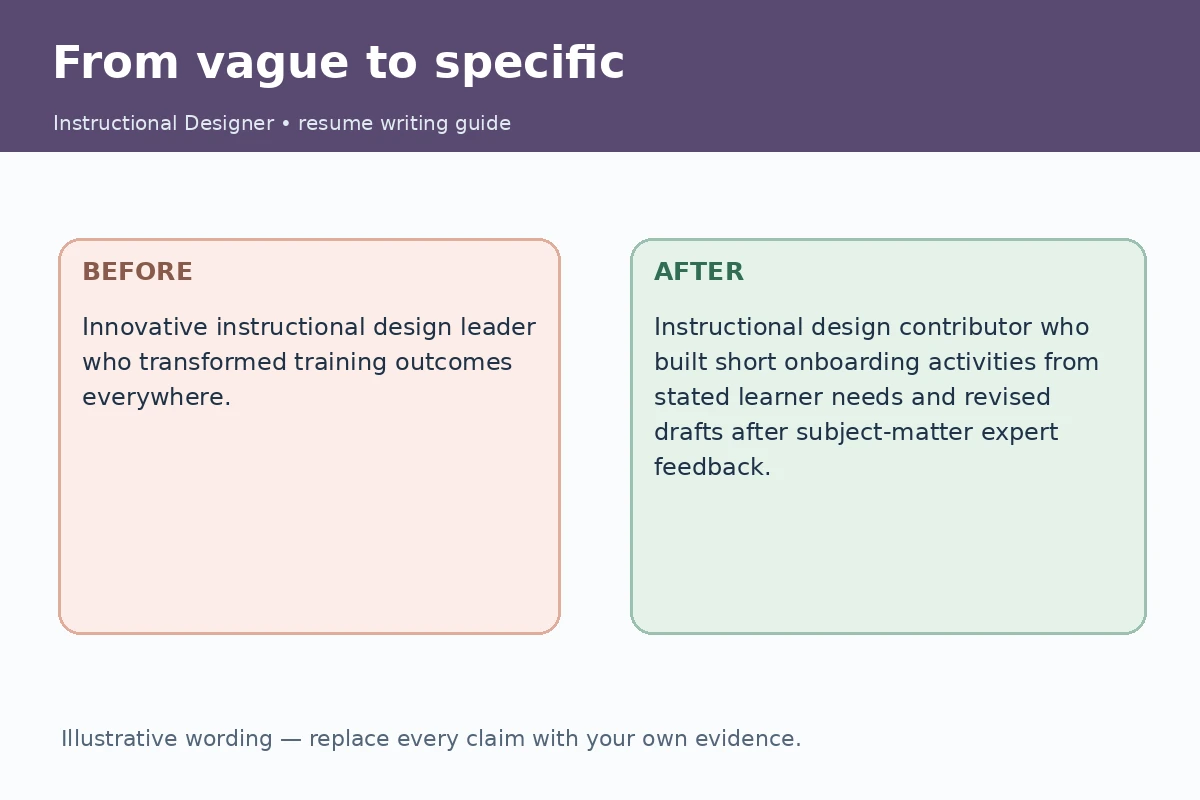
The example lists a coherent chain: a learner need, a storyboard, expert review, and a practice question. A reviewer can follow that chain in the portfolio. If the candidate merely formatted slides, replace ‘designs practice questions’ with the exact formatting or editing contribution. If the training was never delivered, do not call it a successful rollout; if feedback came from classmates rather than subject experts, name that source honestly. This exercise is about clear attribution, not minimizing work. Precise scope lets an employer see how you would fit into a team that must approve content before publication. The example is hypothetical.
Connect objectives to an actual learning activity
An effective project explanation shows that a learning objective matches an action. “Locate the escalation policy” calls for a search-and-identify exercise; “respond to an example inquiry” may call for a supervised scenario. Vague objectives such as “understand everything” cannot easily support a specific assessment. Choose one real alignment decision that you made and describe it in a project bullet. A summary can mention objectives and assessment design, but the evidence should show the prompt, activity, and reason for the match. Do not make up learner scores to demonstrate that the design worked.
Make subject-matter reviews visible and honest
Training materials often depend on subject-matter experts, compliance owners, or supervisors to confirm content. You may draft a storyboard and incorporate comments; you may not have permission to approve legal, financial, technical, or safety information. Describe your role precisely, including when an expert corrected an example. A revision record can show how you improved clarity or changed a step after review. That is valuable evidence even without a business metric. Avoid claiming sole authorship of content you assembled with another person’s expertise or presenting an unapproved training module as organization-wide policy.
Distinguish assessment plans from measured results
A knowledge-check question, rubric, pilot survey, and measured workplace performance outcome are different levels of evidence. If you wrote a practice quiz but did not run it, say you designed the quiz; do not report improvement. If a pilot was completed, specify what was actually measured and the sample limits in the project section. An instructional designer summary need not contain percentages. The reviewer will often learn more from a concise statement about the intended skill, assessment method, and responsible reviewers than from a number with no documented baseline.
Describe tools, accessibility, and delivery with evidence
A learning project may involve slides, an LMS, authoring software, captions, documents, or interactive exercises. List functions you performed rather than calling yourself an expert in a platform after viewing a demonstration. If you wrote alt text, checked reading order, or tested keyboard navigation in an actual project, say so accurately. Do not claim a formal accessibility certification or guaranteed legal compliance based on informal checks. If materials contain confidential business processes or participant data, build a clearly labeled fictional portfolio sample or obtain written permission before sharing.
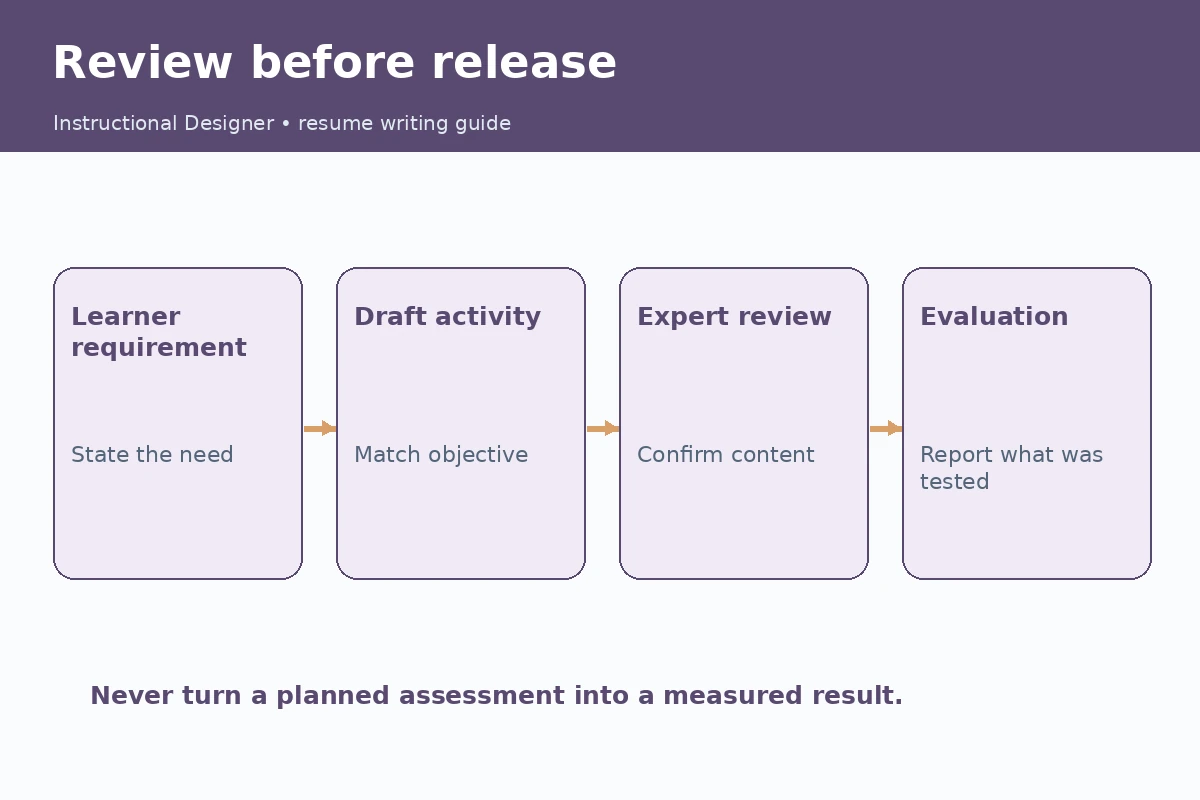
Verify the summary against a portfolio storyboard
Choose one accessible artifact that supports each important claim: an anonymized needs statement, storyboard excerpt, sample activity, review note, or assessment plan. Label what is hypothetical, what was used in practice, and which part you created. Check that the summary does not imply final approval, delivered training, or measured effectiveness that cannot be proved. Then compare your first lines with the advertised audience and project type. A short summary that makes clear how you work with experts and evidence will be more persuasive than a broad statement about revolutionary learning outcomes.
How We Research Professional Resume Summaries
We reviewed BLS occupational guidance; O*NET occupation details; Penn Career Services resume guidance; Berkeley Career Engagement resume guidance to separate the tasks typical of this field from what any particular applicant actually did. Occupational descriptions inform which terms to explain, but they are not proof that a named person has the listed credentials. The resume resources emphasize targeted, specific evidence. Examples on this page are hypothetical; they must be rewritten to match your records, permissions, and the job posting. We do not invent employment, project outcomes, certifications, test scores, salary, or hiring assurances. Check your current employer requirements and refer to our affiliate disclosure before relying on any linked recommendations.
More Resume and Cover Letter Guides
Yes. Identify it as coursework or a self-directed project and describe your own design work.
Describe exposure truthfully, but do not claim independent course administration or configuration.
No. An assessment instrument is not a measured learning outcome unless it was used and results were actually evaluated.
Use the organization’s actual approval structure; instructional design work does not automatically grant technical or policy authority.
An authorized sample showing a learner need, objective, activity, review history, and your contribution, without confidential data.