
You can search for a new job while employed by keeping the process on personal devices and accounts, using your own time, and handling interview requests without misrepresenting your current obligations. A private search is not the same as hiding wrongdoing: continue meeting your actual duties and respect valid confidentiality, intellectual-property, and conflict-of-interest rules at work.
Before opening job sites, decide what you want to change: responsibilities, scheduling, location, growth, or work environment. Set clear must-haves and deal-breakers so you do not repeat the same frustrations in a new organization. Review any employment agreement or policies relevant to outside work, recruiting, confidentiality, and company property. Requirements depend on your circumstances; do not assume a universal legal rule applies.
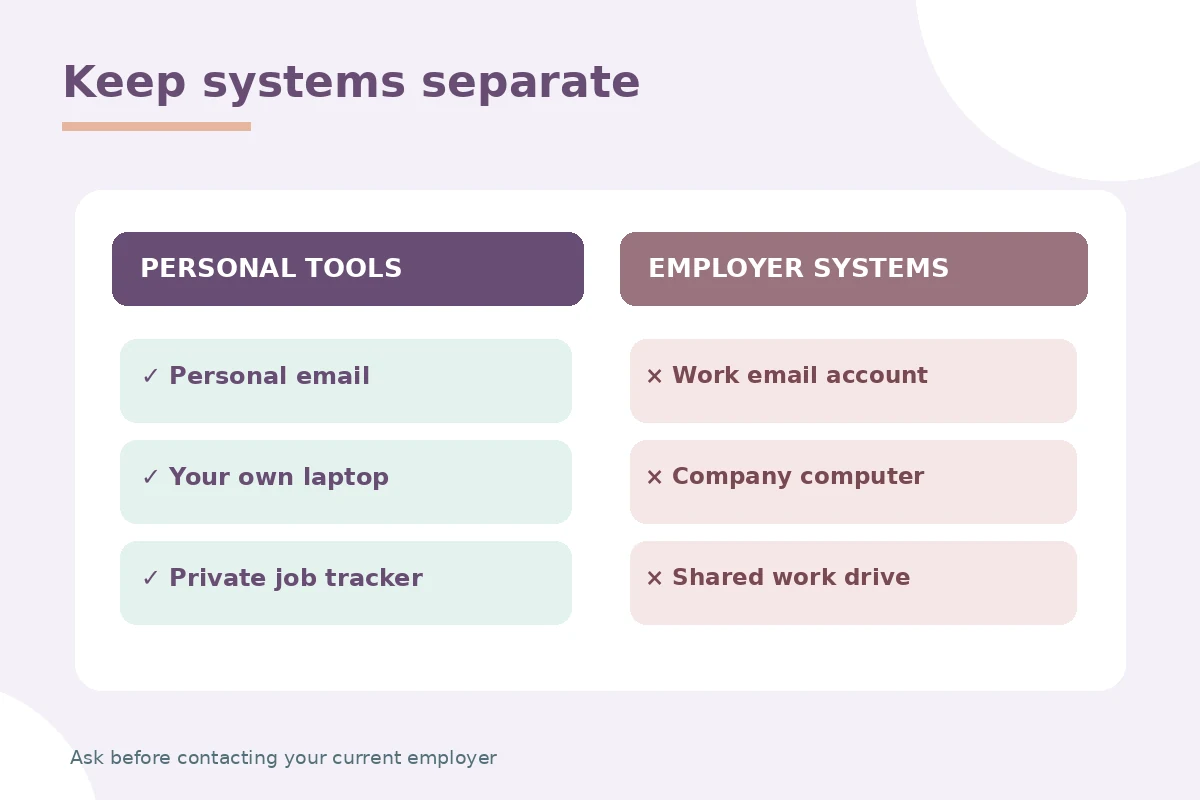
Separate personal search tools from work systems
Use a personal email, phone number, browser profile, and device for applications and interviews. Avoid keeping your resume in shared work drives, printing applications at work, or using an employer-provided meeting calendar to arrange interviews. This is good professional judgment as well as a privacy precaution: employers may manage or monitor their own systems under applicable policies.
Maintain a tracker in personal storage with the employer, position, original listing, date, next action, interview format, and any sensitive timing notes. Do not copy confidential work files into that tracker or attach employer-owned documents as portfolio samples. Build examples from public information or your own authorized descriptions, with sensitive details anonymized.
Choose references without surprise contact
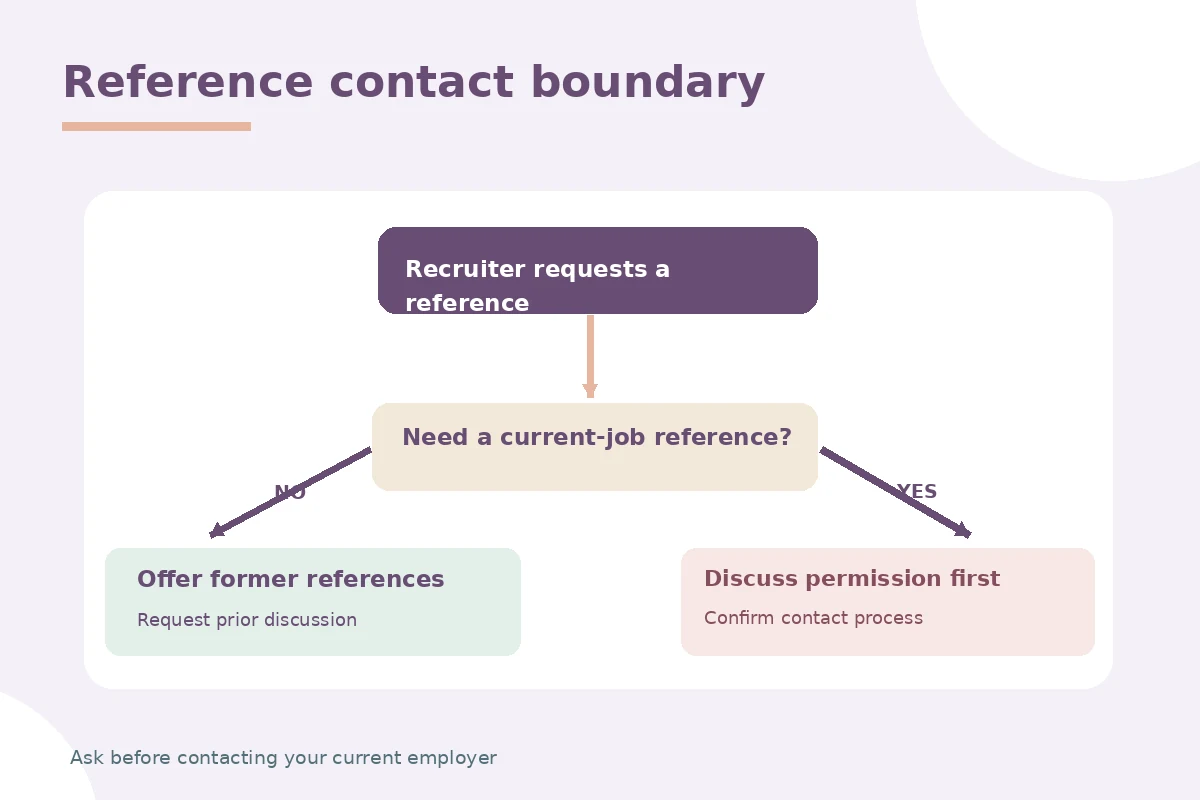
A recruiter might request your current manager’s contact information before you are ready to disclose the search. You can respectfully ask that your present employer not be contacted without your permission, and offer former supervisors, colleagues no longer in the organization, or other appropriate references. It is a request rather than a guarantee; clarify the hiring process before sharing names.
Suggested wording, fictional and adaptable: “I am currently employed and would appreciate keeping my search confidential. I can provide references from previous roles now; please discuss any need to contact my current employer before doing so.” This protects a reasonable boundary without claiming that the recruiter has made a promise. Never list someone as a reference without asking them first.
Schedule interviews without neglecting the job
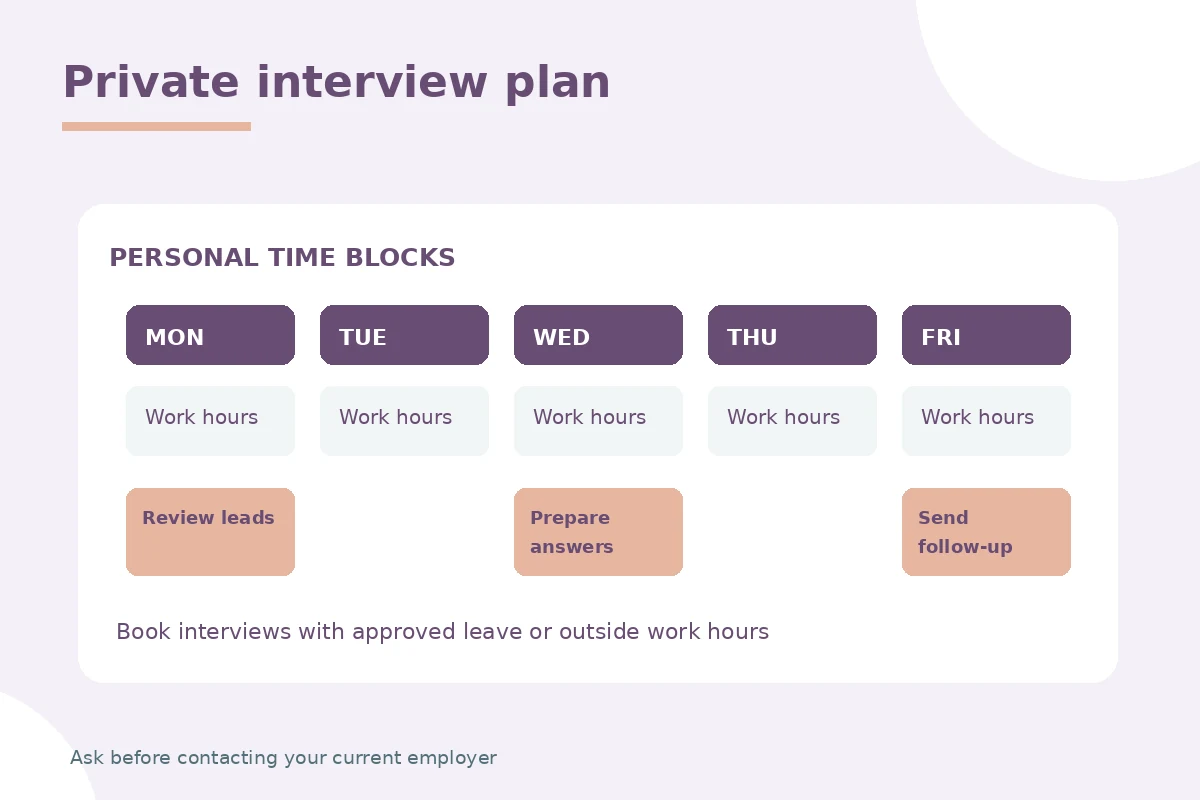
Ask for early, late, or planned time-off interview slots when possible. If you need to take leave, follow your employer’s rules; do not use an invented emergency as an excuse. You can describe your availability simply: “I am available after 5 p.m. on weekdays or during approved leave.” You do not owe an external recruiter a detailed explanation of your work calendar.
Prepare ahead by saving the job description, writing two or three verified examples, and checking your private meeting setup. If an interview is online, make sure the location is quiet and does not expose your employer’s proprietary screens or documents. Consider what you are permitted to say about work results; many strong examples can be described without confidential numbers or client identities.
Compare new offers with your current commitments
When a prospective employer discusses availability, distinguish your estimated notice period from a guaranteed departure date. Confirm any contractual notice or handover expectations that actually apply. Do not resign on the strength of an informal message alone; verify written terms, contingencies, location, and start date first. There is no universal notice requirement for all US workers, so avoid copying a generic rule into your plan.
A new role should solve the problem you identified. Compare duties, manager expectations, work hours, reporting relationships, and flexibility instead of evaluating only a job title. If a role changes the schedule or increases travel, calculate whether that truly meets your needs before declaring it better. Use notes to keep competing opportunities separate.
Follow a discreet weekly operating rhythm
Reserve one or two periods outside work to research and shortlist postings; set another period to tailor applications and check responses. Keep interviews on your personal calendar. Once a week, review which roles passed your must-have filter, which contacts need a reply, and where you can improve a real example. This avoids checking job alerts during meetings or rushing applications from a work device.
Scam warnings still apply even when a recruiter knows you are employed. The FTC advises verifying organizations and watching for requests for bank details or payments before legitimate hiring steps. A confidential search should not pressure you into bypassing ordinary checks. If a recruiter resists a reasonable verification request, that is a reason to slow down.
Be intentional about what others can see
Review privacy settings on professional profiles before making visible changes, but remember that settings do not guarantee secrecy. Consider how you will explain your goals to recruiters and which references have permission to speak. If you have signed a confidentiality or non-solicitation agreement, examine the specific wording or seek qualified guidance rather than accepting generic claims online.
You can discuss outcomes without showing private files. For instance, say that you organized a handoff process and documented recurring issues; do not attach internal reports, contact lists, or sensitive screenshots. A future employer may appreciate your ability to protect professional boundaries as much as your technical expertise.
Verify the offer and protect your information
For any attractive listing, independently find the employer’s official site and confirm that the vacancy or recruiting contact is legitimate. Use a personal, accurate application and share sensitive identity or banking data only through a verified and appropriate hiring process. The Federal Trade Commission’s job-scam guidance warns about impostor recruiting, fake checks, fees, and misleading promises. No response, message, or invitation alone proves a genuine employment offer.
Use a simple four-column review: actual role requirement, evidence you have, uncertainty to resolve, and next action. Apply only when the fit is defensible; otherwise contact the employer or seek more training. Track the source and submission date. The CareerOneStop application guide recommends keeping records of the vacancies and organizations you have contacted, rather than relying on memory or automatic notices.
How We Research This Job Search Guide
We compared the stated beginner job-search task with public guidance from the U.S. Department of Labor’s CareerOneStop, relevant government resources, and role-specific material where useful. The examples above are illustrative, not real applicant histories, employer promises, verified openings, or guaranteed results. Requirements, schedules, and available services must be checked against the specific employer and location on the date you apply.
Source notes: Indeed’s updated guidance discusses personal devices, confidentiality, references, and interview timing for employed job seekers. CareerOneStop recommends tracking employer contacts and applications while using targeted materials. The FTC describes recruitment scams and warns against premature disclosure of personal or banking information. We may review or update these resources as public guidance changes. Read our affiliate disclosure; no paid endorsement or affiliate relationship is implied by these links.
Related Job Search Guides
That depends on your relationship, workplace policies, and circumstances. A private search is an option, but do not breach agreements or neglect responsibilities.
It is safer and more professional to use your own equipment and accounts. Employer-controlled systems may be managed or monitored under applicable policies.
Ask recruiters not to contact your current employer without prior discussion and offer suitable alternative references. Do not assume this request creates a binding guarantee.
Verify offer terms and contingencies, then plan an appropriate transition under your actual obligations. An interview invitation is not a job offer.
Request another time or take approved leave according to your current employer’s procedures. Do not fabricate an emergency or misuse work time.