
A logistics coordinator resume objective should identify the flow of goods you can help track, the records or contacts you have managed, and the kind of exception you know how to flag. It should not imply that you have authority to approve carrier changes, purchase inventory or negotiate contracts unless you truly did. This short opening is most useful for warehouse, shipping, order-entry or customer-support workers pursuing a coordinating role. State the position you want and one observable contribution supported by the jobs or projects underneath your objective.
Understand what logistics coordination actually covers
Logistics roles may involve monitoring shipments, matching receiving information with order records, communicating status and helping resolve delivery disruptions. O*NET describes broad logistician functions extending from acquiring materials through distribution and resource allocation. A coordinator opening may represent only part of that cycle. Read the advertisement for the real tools, contacts, schedules and decision rights. One company may call a tracking clerk a coordinator; another expects substantial carrier management experience. Your resume objective should mirror the tasks you have demonstrably performed rather than assuming the same duties accompany every job title.
Use a warehouse-to-coordinator bridge honestly
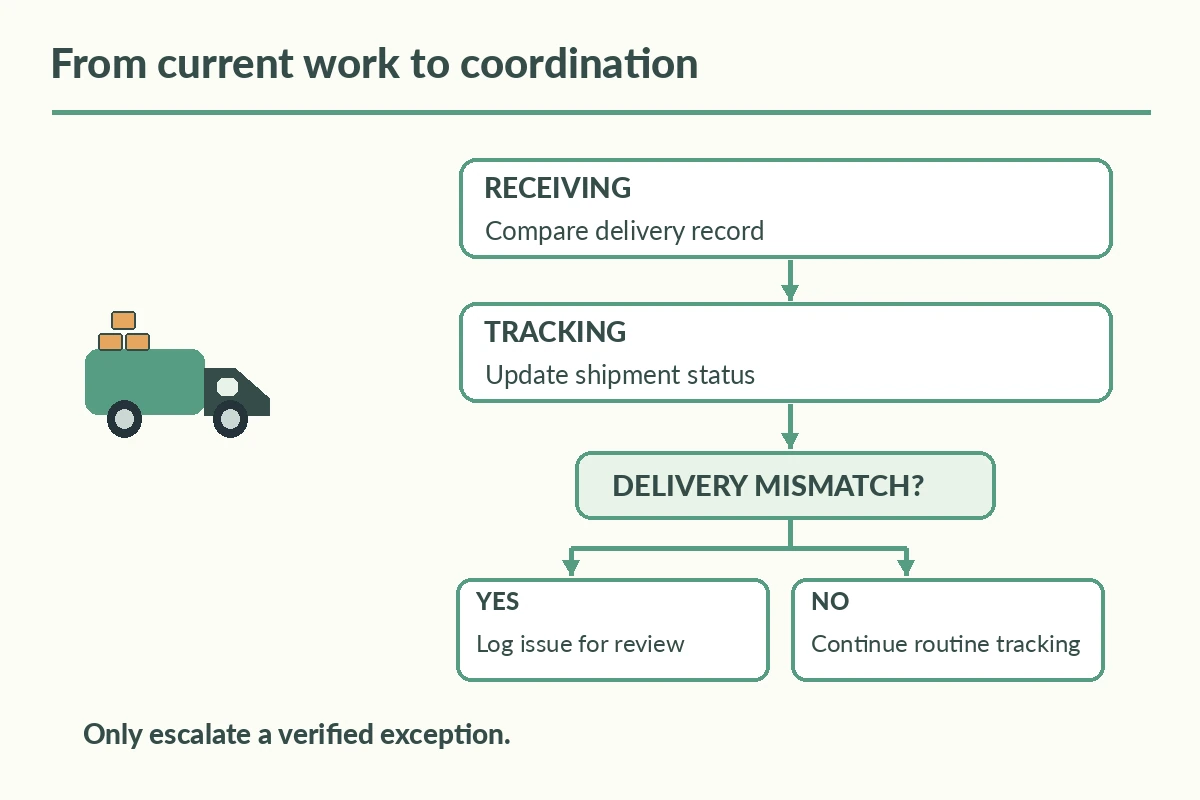
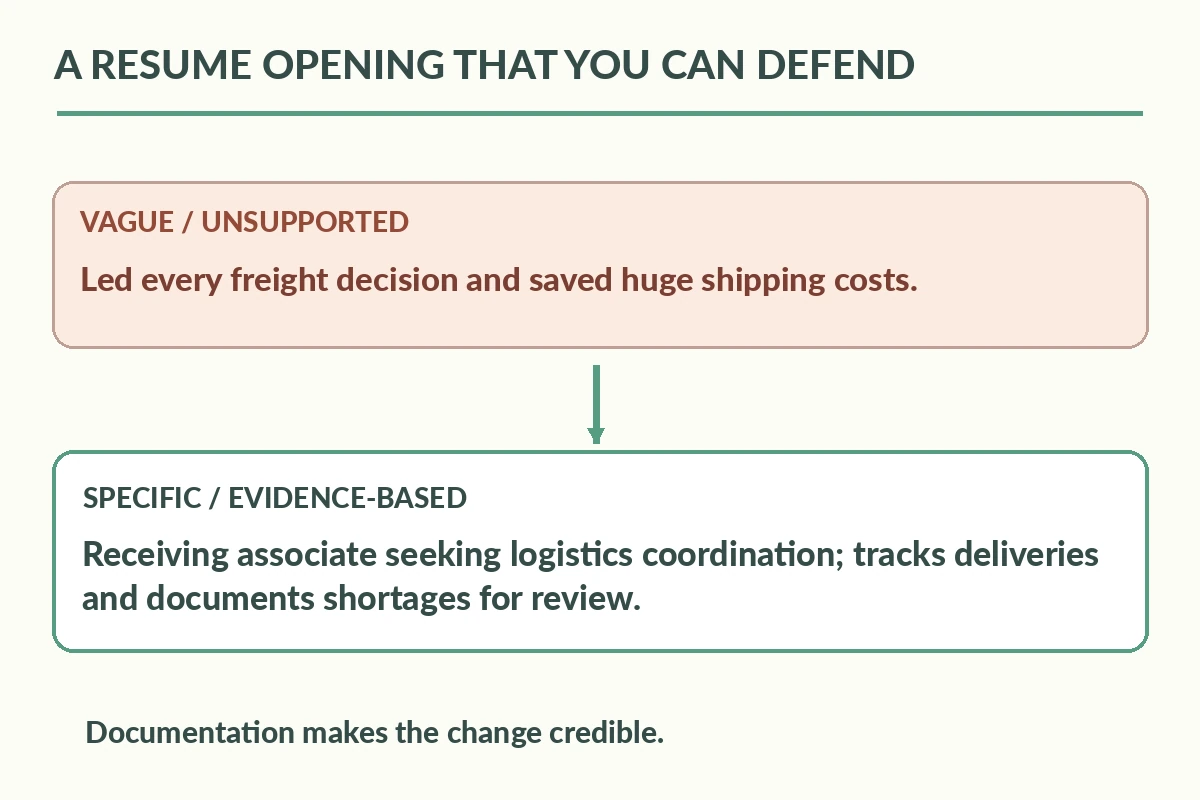
An applicant moving from warehouse receiving can bring relevant evidence: comparing delivery slips with purchase orders, noting quantity differences, checking item labels, or updating a shipping register. An illustrative objective could read, ‘Warehouse receiving associate seeking a logistics coordinator role; experienced in checking incoming quantities, maintaining shipment records and escalating delivery discrepancies.’ This is useful only if those tasks are true. It does not claim that the applicant independently scheduled all carriers. Supply-chain terminology should help the recruiter connect experience, not conceal a lack of direct coordination work. Attach a bullet describing the actual process and escalation contact.
Differentiate routine updates from exception handling
A routine shipment update states where an order is in the process; an exception is a problem requiring action or a decision. You may have documented a delay, matched a missing carton with the warehouse record, or informed customer service that an ETA changed. Describe these contributions precisely. If you only passed a note to a supervisor, do not write that you resolved every delay. If you contacted carriers under a defined process, identify the communication but avoid implying that you authorized surcharges or rerouting. The objective can highlight reliable tracking; the bullets underneath can prove how you escalated the exceptions you encountered.
Make your evidence concrete but not fictional
Useful logistics evidence includes the type of records handled, systems personally used, handoff frequency where documented, and examples of accurate discrepancy reporting. Never borrow sample numbers for shipment counts, on-time percentages or inventory savings. If you cannot demonstrate a rate, explain the workflow: ‘Compared receipts with the delivery record and documented shortages for team review’ is a defensible statement when true. Do not publish customer addresses, private shipping details or confidential vendor pricing as samples. A hypothetical practice exercise can use synthetic orders, clearly labeled as such. Good operational judgment means protecting information as well as moving paperwork.
Match the job to your actual software use
Job descriptions may mention a warehouse management system, ERP, transportation management system or spreadsheet tracking. These are different products and workflows. State a tool only if you used it and can explain the screen or task you completed. ‘Updated inbound quantities in the receiving system’ is more precise than ‘expert in supply chain software’ if your responsibility was narrow. When transitioning from customer service, draw on legitimate case tracking and handoff records without claiming carrier booking experience. Position your transferable evidence within the objective, but let the employer’s posted qualifications guide which skills deserve space.
| Starting point | How to frame the objective | Evidence to show |
|---|---|---|
| Warehouse receiving | Compare physical and paper counts | Accurate receiving and exception notes |
| Order support | Record status and customer handoffs | Real tracking records and responses |
| Carrier liaison support | Request updates within approved process | Proof of authorized communications |
Write for carrier communication without overstating it
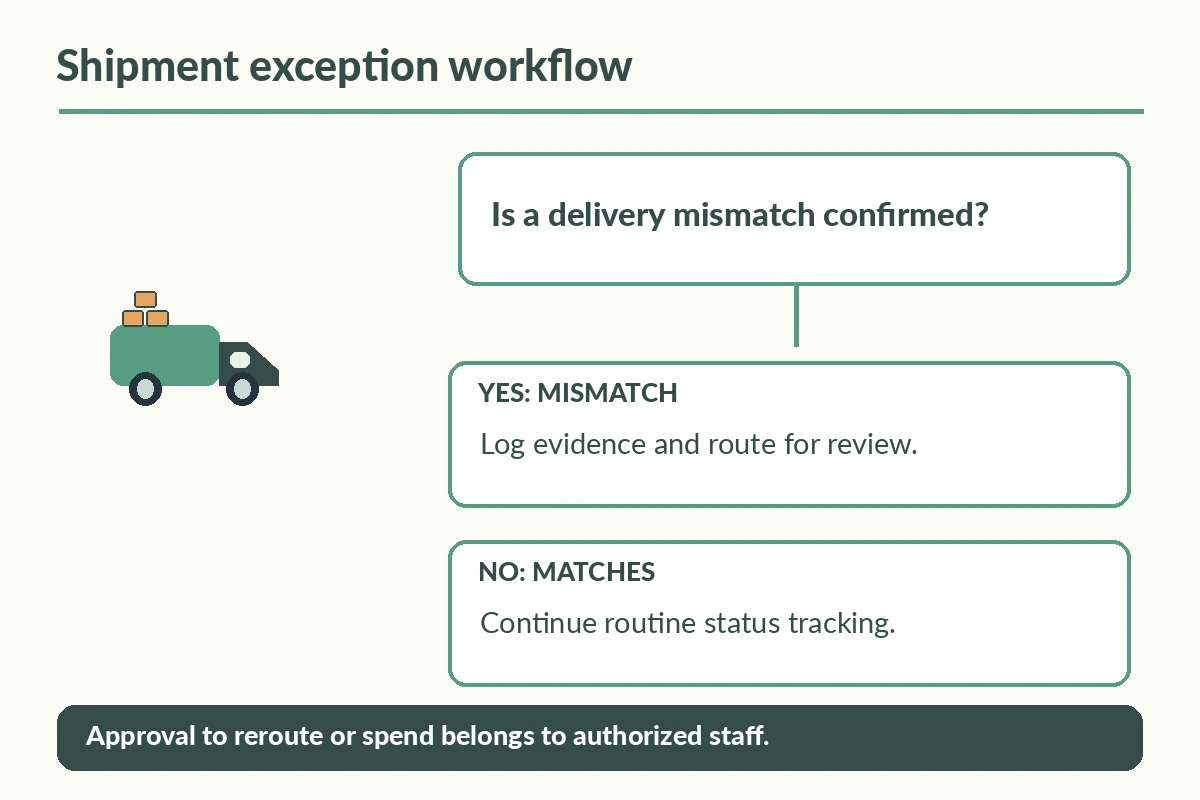
A coordinator may send delivery updates, request status from carriers, or relay approved changes. These differ from negotiating contracts, choosing vendors and authorizing financial commitments. A junior objective can legitimately emphasize organized communications and accurate timestamps. Example, if accurate: ‘Order support assistant seeking logistics coordination work; brings experience tracking customer orders, documenting delivery exceptions and handing off unresolved issues.’ If the role involves direct shipment management you have not done, identify the learning need in an interview rather than presenting an invented achievement. Clear distinction between recording and deciding is a signal of reliable operations practice.
Use a precise objective formula
Start with your present or most relevant experience, add one coordination skill you can substantiate, and finish with the job-specific contribution you seek. A good pattern is ‘Current role + factual process experience + target logistics function.’ Keep the result at roughly one to two sentences. This approach is clearer than saying you wish to ‘leverage dynamic synergy across the supply chain.’ If you have several years as a logistics coordinator, a summary may fit better than a forward-looking objective. Whichever format you use, the opening and work history must agree on job dates, responsibilities and the actual level of authority.
Review responsibility and approval boundaries
Check the posting for costs, scheduling, customs, regulated cargo or inventory release. Responsibility for observing an exception is not automatically permission to approve a reroute or a price change. If you handled exports, safety-related goods or sensitive shipments, do not claim special training or certification unless earned. Ask who approves changes and what documentation is required. Tailor the objective toward work you can perform independently today or tasks you can support as a junior coordinator. An objective that promises ‘full freight compliance’ without supporting qualifications can create questions you cannot answer confidently.
Convert a real shift into supporting bullets
Suppose your true experience includes receiving pallets, comparing counts with the paperwork and noting short shipments. You might use two bullets: ‘Compared inbound counts with delivery documentation and flagged missing items for review’ and ‘Updated the receiving register so the next shift could follow unresolved items.’ These are models to adapt, not permission to invent your past. A second applicant might cite support tickets and estimated-delivery updates rather than receiving. Put the evidence directly below the objective. The reader should understand which part of the coordination lifecycle you already know and which you are preparing to learn.
Use a short final application checklist
Before submitting, confirm the objective names the target logistics role, one record or system you have used, and one real handoff or tracking skill. Check that any claims of shipment volume, efficiency or cost savings can be defended from records or work experience. Make sure your objective does not imply authority you never held. Compare your skills to the actual employer’s posting and revise the lead for receiving-heavy, carrier-communication or order-support vacancies. The purpose is not to sound like a supply-chain director; it is to show a trustworthy route from evidence you own to coordination work you can perform.
How We Research These Resume Objective Examples
We checked these primary occupation, regulator or consumer-guidance sources on November 16, 2026: O*NET describes logisticians coordinating goods movement, distribution, suppliers and performance reporting. BLS explains logistics functions across supply, inventory and delivery operations. O*NET outlines shipping, receiving and inventory clerk activities that can provide transferable entry-level evidence. All example objectives are hypothetical and must be adapted only to a candidate’s real experience. Credentials, permission boundaries and hiring requirements differ by job and location. JobAsk does not guarantee interviews or placement. Read our affiliate disclosure.
More Resume and Cover Letter Guides
Yes. Describe real receipt checks, inventory records, shipping documentation and escalations without inventing carrier authority.
Only if you used the named system. Be ready to describe the precise functions you performed.
Only if the employer recorded and attributed the result to your work. Avoid fabricated percentages or totals.
Not always. Employer titles and responsibility levels differ; use the actual vacancy task list.
That can be relevant evidence. Explain which records you updated, how you checked accuracy and who handled exceptions.