
An event coordinator resume objective should establish the type of events you want to support and show what part of the event process you have actually handled. Registration, schedules, vendor communications and run-of-show updates are different from ownership of an entire budget or event contract. A strong opening names a true logistical contribution and connects it to the advertised coordinator position. This is especially useful when your experience comes from campus events, nonprofit volunteering or hospitality rather than a formal event coordinator title.
Determine Whether the Job Is Planning, Logistics or On-Site Support
Event coordinator titles can cover corporate meetings, community fundraisers, conferences, venue operations and internal employee events. Read the vacancy for its real deliverables: registration lists, room changes, vendor follow-up, attendee communication, schedules, budget tracking or post-event reconciliation. A candidate who helped with one school fundraiser should not describe themselves as the lead planner of a multi-site conference. The objective should match the scale and type of role while identifying one concrete function that the employer wants staffed.
For a junior opening, a hypothetical objective could read: “Campus event volunteer seeking an event coordinator role, bringing registration-desk support, room setup checklists and dependable schedule updates.” This is only valid if those duties happened. If the job centers on vendor communication, an applicant with hospitality or purchasing experience could emphasize those skills instead. The objective should tell the reviewer which part of a complex workflow you can support immediately and what you want to learn.
Find Evidence in Registration, Schedules and Handoffs
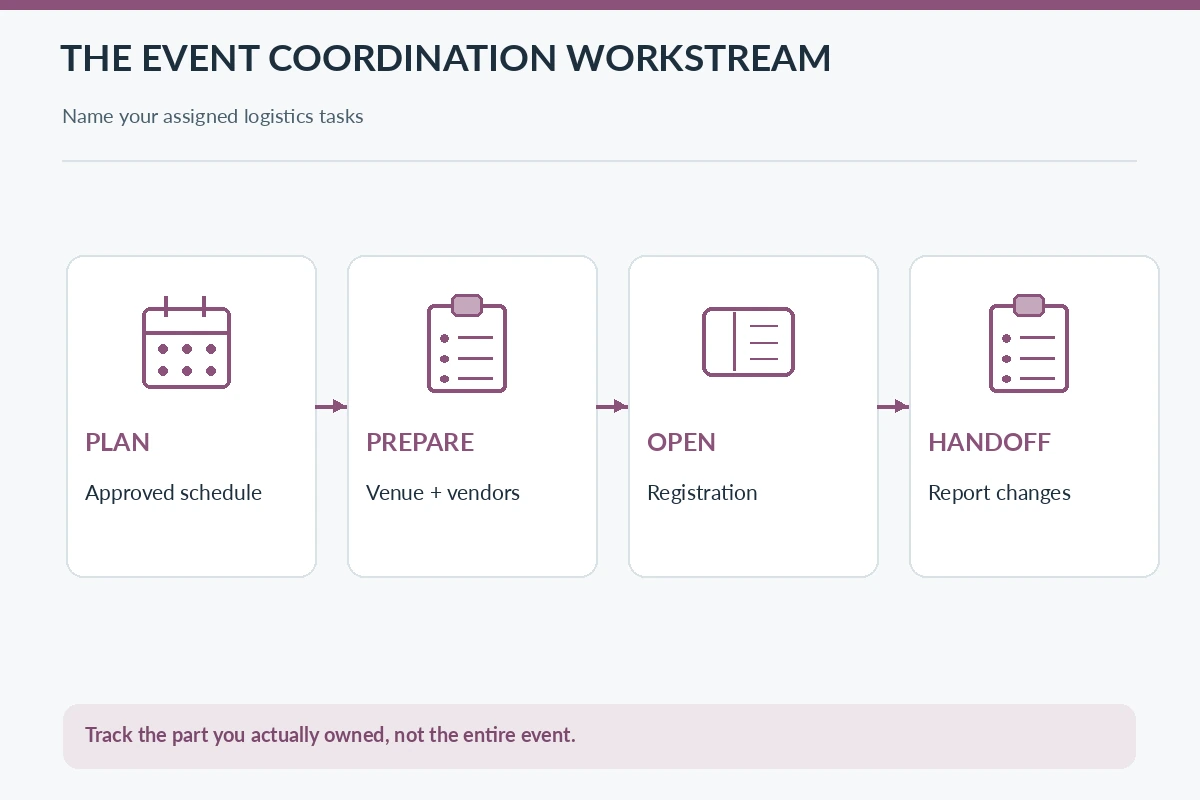
Build a short proof sheet for each event: event type, your shift or assignment, specific tasks and final handoff. Registration support may involve checking attendee lists and directing arrivals; scheduling may involve updating a versioned timeline; vendor support may involve passing delivery changes to the coordinator. Describe only the work you personally completed. If you were part of a team of twenty, that does not mean you independently coordinated twenty people. Use the role or organization’s real name and the actual event dates.
A concise bullet for a hypothetical campus volunteer could say “Updated session-room signage from the approved schedule and notified the event lead of last-minute changes.” This is stronger than “successfully managed the event.” If you truly tracked participant counts, use verified numbers from an authorized record. Otherwise omit counts instead of guessing. Do not publish names, private attendee details, budgets or contracts to prove effectiveness; examples can be generalized while still explaining the operational work.
Distinguish Vendor Contact From Contract Authority
O*NET describes event coordinators arranging services and working with venues, but role scope varies widely. Someone may confirm delivery windows and collect quotes without choosing suppliers or signing agreements. If you coordinated room setup with a vendor under a lead planner’s direction, say “confirmed logistics” or “tracked vendor responses.” Do not upgrade that to “negotiated contracts” unless you had actual responsibility. The same caution applies to budgets: logging expense estimates is different from authorizing spending.
A realistic objective might say: “Hospitality associate seeking event coordination work, offering guest communication, approved vendor follow-ups and schedule tracking.” If you did manage a small event end to end, document the scope and approvals in the experience section. For first-time applicants, volunteering at student clubs or local nonprofit activities can show real work, but the event owner and the scope of your participation should remain explicit. Precision is a professional advantage in roles where small communication mistakes can disrupt many moving parts.
Build an Objective for a New Graduate or Career Changer
A hypothetical graduate version is: “Communications graduate pursuing an entry-level event coordinator position, with project experience organizing volunteer shifts and maintaining registration records.” That depends on having done those projects. A career changer from front desk work might write: “Guest services associate seeking a conference event coordinator role, with experience communicating schedule changes, supporting check-in and coordinating approved room requests.” Neither objective assumes budget ownership, contracting powers or a professional event credential.
If you have multiple event examples, choose the one closest to the advertised role and show the event type: a scientific workshop demonstrates different tasks from an outdoor festival. Use generic personality descriptors only when tied to proof. Instead of “creative multitasker,” describe version control for a schedule, clear handoffs when a room changed, or accurate registration records. These tasks matter because they can be explained and checked in a practical interview.

Set the Supporting Resume Up as a Logistics Record
Under Experience or Projects, describe the event goal, size if verified, your assigned tasks, actual tools and result you can support. A volunteer fundraiser may provide valuable information even without a paid job title. If the work was unpaid, label it Volunteer Experience rather than inventing a contract. Place software under Skills only if you used it: spreadsheet registration, calendar tools and venue platforms should not become a long list of unfamiliar brands. Training and event certifications need accurate names and dates.
Event roles can involve late shifts and physical venue work, but availability is a real personal constraint, not a claim to insert casually. Do not guarantee 24/7 availability or a travel schedule you cannot accept. Where the vacancy requires procurement authorization, permits or specialized event-safety coordination, check those responsibilities and do not imply they are automatic for a junior coordinator. The objective can state interest in learning approved processes; the resume must still meet any stated requirements.
Do the Final Event-Ownership Test
Underline your verbs in the objective: organized, booked, approved, negotiated, tracked, supported and assisted mean different things. Which ones match actual records or a supervisor’s recollection? If the contract was signed by a venue manager, do not claim you signed it. If you updated the running order, that is a real coordination task even without being the event director. Check that all event names, dates and numbers can be explained without disclosing private attendees or financial data.
After editing, ask whether the opening helps the hiring team decide what you can contribute on day one. The answer should be visible in one or two sentences, followed by the supporting project history. Tailor to the real event type and employer instructions. A clear, limited objective is preferable to a generic promise to deliver “flawless memorable experiences” that cannot be verified. Your actual coordination habits and documentation are the persuasive material.
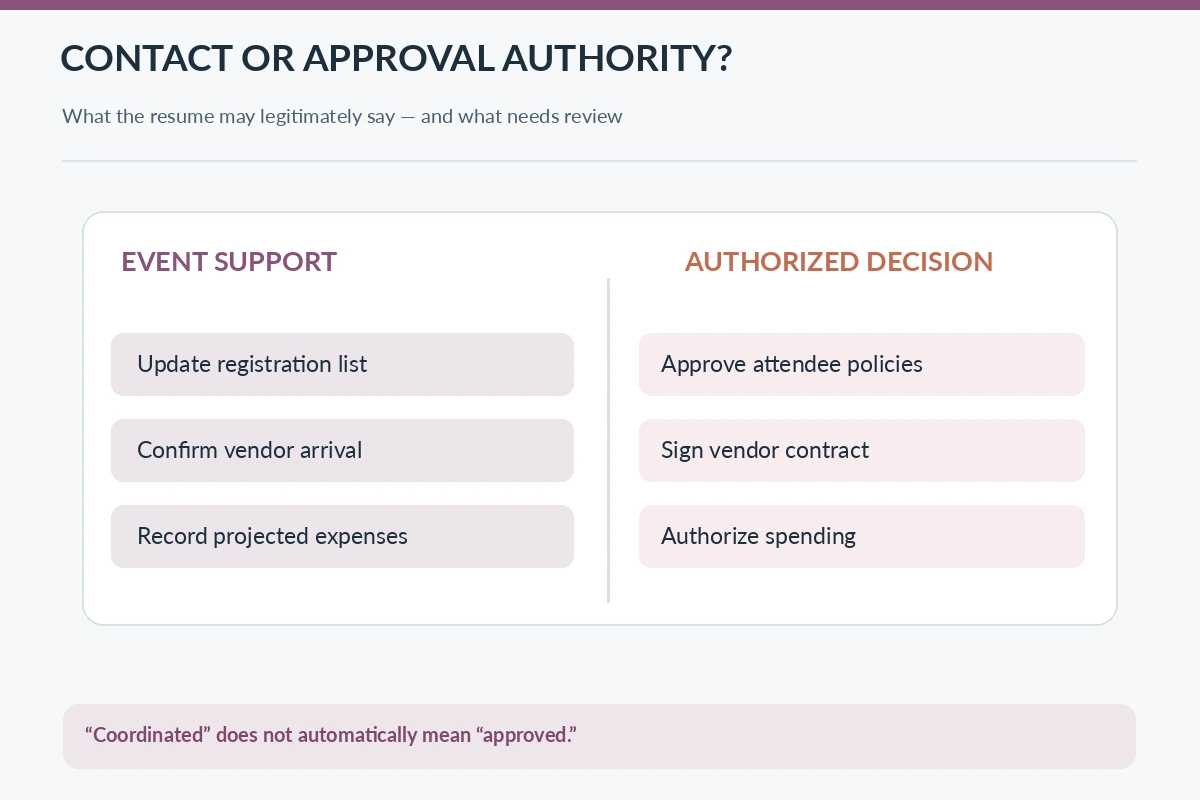
| Activity | Possible evidence | Boundary to confirm |
|---|---|---|
| Registration | Update approved lists | Protect attendee data |
| Vendor contact | Confirm timing changes | Record the event lead |
| Budget decision | Authorized planner | Do not claim sign-off |
How We Research and Verify These Objectives
We compared CareerOneStop guidance on targeted resume objectives with Harvard resume guidance and occupational descriptions from O*NET and, where relevant, the U.S. Bureau of Labor Statistics. All sample objectives and resume statements here are explicitly hypothetical. They are not employer endorsements, actual candidate results or promises of an interview. Facts and source pages were reviewed on 2026-11-05. Requirements vary by posting, employer and jurisdiction. Please consult the exact vacancy and licensing authority where applicable. Our affiliate disclosure explains the site policy.
Research sources: CareerOneStop resume advice — CareerOneStop explains that a tailored objective may help someone with little direct experience and should highlight actual education, skills, and professional interests.; Harvard resume guidance — Harvard career guidance emphasizes relevant evidence, clear language, accurate action verbs and a readable resume.; O*NET occupation profile — O*NET describes event planning and coordination tasks such as scheduling, vendor services, facilities, records and participant registration.; BLS occupation guidance — BLS outlines event-planning duties and the coordination of venues, services and attendee arrangements.. These sources identify common duties and resume principles; they do not certify the accuracy of any individual applicant’s experience.
More Resume and Cover Letter Guides
Yes. Identify the genuine club, project or volunteer setting and name your assigned registration, schedule, setup or communication tasks without implying full event ownership.
No. Describe check-in and any other assigned duties precisely. A supporting role is valid evidence when presented accurately.
Yes, as expense tracking or estimate documentation if true. Do not say you approved or owned a budget without that authority.
Highlight real vendor communications and follow-ups, stating when approvals belonged to a lead coordinator. Do not invent contract negotiation experience.
Match the event type and duties in each posting: conference registration and room changes differ from fundraising outreach and donation records. Choose the closest real evidence.