
A media planner career path begins with understanding an audience and ends with a reviewed recommendation, not with buying ad space without authority. Junior planners may research audiences and draft channel options; more experienced colleagues may own a planning rationale, manage revisions, or lead client discussions. Buying, contract changes, and budget approval can be separate responsibilities. Use the actual structure of your team as the roadmap rather than treating every agency title as identical.
This article describes U.S.-oriented career planning concepts, not a guarantee of a job or campaign result. All campaign examples are hypothetical. Check the scope of any budgets, private audience data, and commitments before publishing portfolio work.
Understand the Difference Between Planning and Buying
Media planners analyze audiences, channels, schedules, and the reasoning behind a recommendation. A media buyer may handle inventory, pricing, bookings, or purchase orders after an approved plan. Some employers combine these duties; others separate them. The American Advertising Federation career description names budget, flighting, and delivery as connected parts of planning work, while management-level responsibilities may include broader contract and staffing decisions.
Map the team you are targeting: who briefs the campaign, who drafts the plan, who verifies prices, who approves budget changes, and who reports performance. For entry-level applications, do not claim ownership of media buying if you only prepared audience research. The distinction helps you choose the right first position and ask useful questions about training rather than accidentally committing to tasks outside your authority.
| Development stage | Useful activity | Evidence or boundary |
|---|---|---|
| Research | Audience assumptions and sources | Research notes and gaps |
| Planning | Channel rationale and flighting grid | Draft reviewed by the lead |
| Execution handoff | Budget and inventory questions | Approved plan and buyer feedback |
Build Audience Research That Supports an Actual Choice
Begin with a written brief stating what the campaign is intended to accomplish, which audience it addresses, and which limitations apply. Identify trusted research sources and check definitions rather than collecting screenshots from social platforms. O*NET describes market and consumer research tasks such as gathering demographic information and examining marketing effectiveness; the quality of the method matters more than the volume of charts.
As a practice exercise, compare two hypothetical audience segments and write down what further information is needed before choosing a channel. Do not invent precise reach figures or claim that a paid platform reported them. A strong junior planner can say, “I compared the available audience descriptions and flagged that the two sources use different age ranges,” rather than presenting an unverified target as a fact.
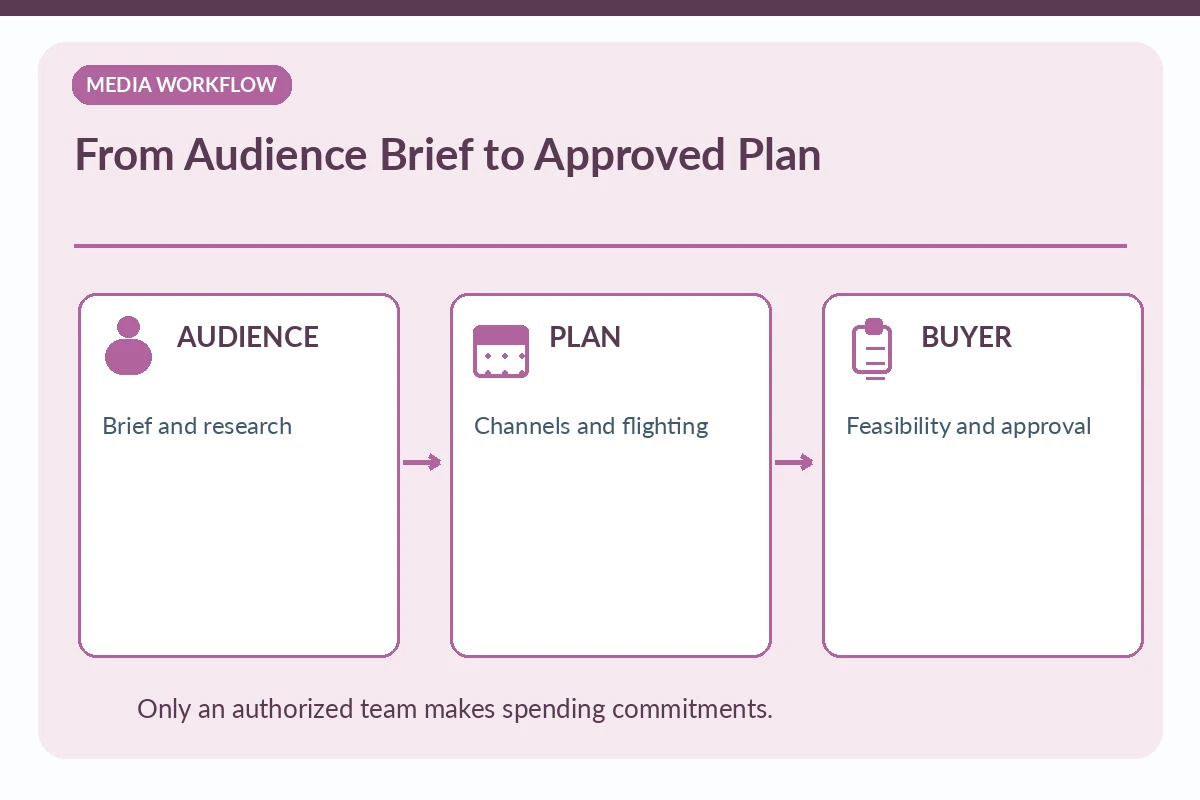
Show How a Channel Recommendation Becomes a Reviewed Plan
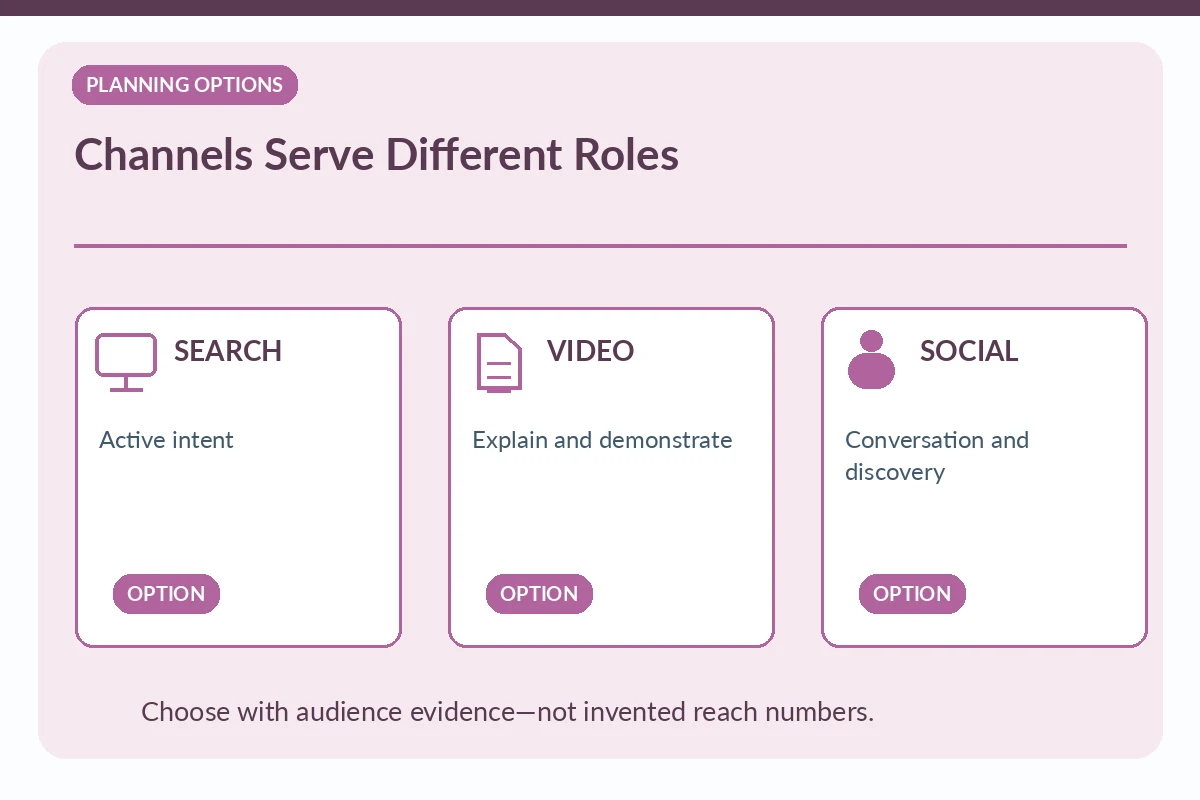
For a mock campaign, define channel roles such as awareness, consideration, or information-seeking, and state why each might fit the audience and creative format. Add a simple timetable and a hypothetical allocation without false currency figures. A real work plan should respect approved budgets, creative availability, and buying feasibility. Review with the people responsible for execution before treating a draft as final.
A planner may produce a media matrix and written rationale, while the media buyer checks availability and commercial terms. Your development goal can be to prepare a complete, reviewable plan draft with documented assumptions. It should not be to sign an insertion order or unilaterally adjust contracted spending unless the employer has explicitly delegated that responsibility.
Learn Flighting, Delivery Checks, and Exception Notes
Media planning continues after the initial recommendation. Teams compare delivery timing, available placements, campaign reports, and revised constraints. Build the habit of noting what changed, which numbers are verified, and whether a report is complete. A junior role may involve maintaining the flight calendar or preparing a status note for a lead rather than making the final reallocation decision.
Consider a hypothetical campaign that begins late because an approved creative asset is delayed. The useful response is to document the changed start date, notify the appropriate team, and explain the effect on the draft schedule. Do not claim you restored a budget or guaranteed performance. Honest handoffs give a future employer evidence that you can manage dependencies even before you own strategic recommendations.
Build a Portfolio Without Invented Campaign Performance
Choose a clearly fictional brief or an approved school exercise. Include audience assumptions, alternative channels, a short rationale, a flighting grid, a measurement approach, and notes about approval. Use illustrative numbers only when unambiguously marked as sample data, and do not present fictional ROAS or conversion outcomes as real campaign evidence. Screenshots of private platform accounts require permission.
Explain who would review the plan and what information a buyer still needs. If you have participated in a real campaign, describe only the research and reporting tasks you actually performed. A short document that makes the tradeoffs clear can provide more useful hiring evidence than a polished dashboard filled with unverifiable metrics.
Plan Progression Through Feedback and Repeated Campaigns
Your next development step could be clearer brief interpretation, more defensible research, stronger spreadsheet documentation, or better communication with buyers and account managers. Choose one and discuss it during a real feedback cycle. Senior media planning positions may add ownership of client recommendations or people leadership, but no universal promotion ladder applies across agencies and brands.
Return to the plan after a campaign or supervised practice assignment. Compare what you predicted, what actually happened, what remained uncertain, and whether the responsible lead trusted your work. Maintain a log of specific deliverables rather than a list of software logos. The aim is a repeatable, reviewable body of work that supports the next application.

Practice Explaining Tradeoffs Before Seeking More Budget Responsibility
Ask a reviewer to challenge a fictional media plan: what if the audience evidence is weak, the creative format is unavailable, or the buyer cannot secure inventory? Respond by showing which assumption would need another source and what part of the plan requires fresh approval. Keep campaign cost examples illustrative; do not use real client rates without authorization. This exercise demonstrates how planning supports a decision without pretending you have buying authority. Record the change made after feedback and the unanswered question you would raise in a real planning meeting.
How We Research Career Development Guidance
Checked 2026-11-15: www.onetonline.org (market research tasks include consumer research, campaign analysis and reporting); www.bls.gov (media-related management covers planning campaigns and collaboration on budgets and buying); jobs.aaf.org (media planner work includes channel mix, flighting, delivery and team handoffs); www.opm.gov (how individual development plans connect employee goals, activities, and supervisor feedback). These occupational descriptions identify common work, not automatic permission to perform regulated tasks or decide for an employer. Career plans and examples are illustrative, not real personal or organizational outcomes. Verify the specific job posting, current training requirements, workplace policies, and authorized reviewers before acting. No paid endorsement is confirmed in this guide; see the JobAsk affiliate disclosure.
Explore Related Career Guides
Media planners research audiences and recommend how and when channels can reach them, working with buying and account teams.
No. They can overlap by employer, but planning the recommendation and purchasing inventory are distinct activities in many teams.
Yes, if it is clearly labeled as a mock plan and does not invent measured performance or client approval.
Only if the employer delegates that authority; many junior roles prepare drafts for another person to approve.
Audience research, basic campaign metrics, documentation, and communication with buying and creative teams.