
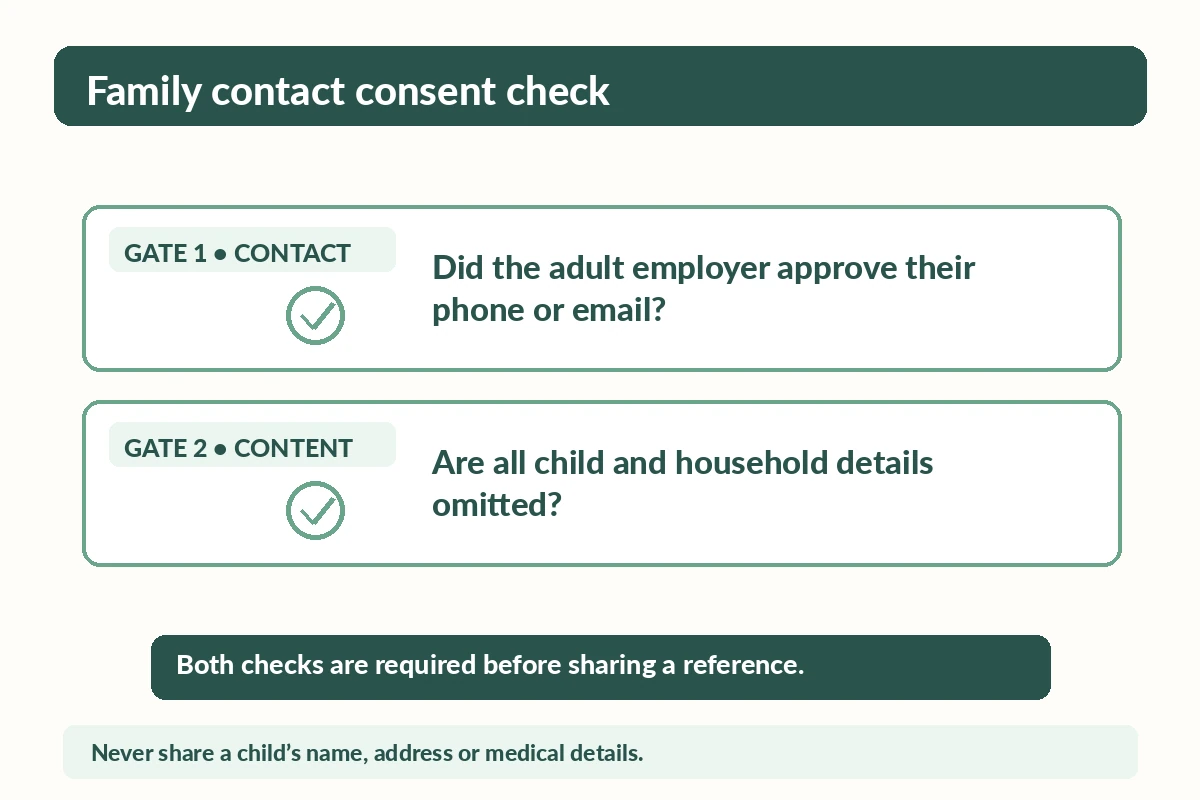
A family that hired you as a nanny can be a relevant job reference because a parent or guardian has seen your care routines, punctuality and communication firsthand. Ask that adult for explicit permission before listing a phone number or email. Focus the reference on the employment relationship: general ages or care settings only where appropriate, working hours, pickup coordination, safety habits and the duties the family can verify. Do not share a child’s name, school, schedule, medical information or photos to prove the job. A family reference is not a substitute for any background checks, training or licensing the new employer requires. It is evidence of real childcare work, bounded by household privacy.
Choose a parent who supervised the actual arrangement
The most useful contact is usually a parent or guardian who hired you, discussed schedules, reviewed expectations and observed your caregiving. A relative who occasionally saw you babysitting is a different kind of reference. If a family used a placement agency, clarify whether the agency, the parent or both can confirm specific facts. Avoid listing a minor, a neighbor who did not employ you, or a family friend who did not witness the duties. The BLS describes nannies as childcare workers in private homes, where routines and communication with families are central. Match the contact to that actual experience.
Request permission before revealing family contact details
Send the parent a short message explaining that you are applying for nanny or childcare work and asking whether they are comfortable being contacted by potential employers. Ask which email or phone number is best and how much notice they prefer. Some families want only a written reference or prefer contact through an agency. Respect that choice. An illustrative request is: ‘Would you be willing to confirm my caregiving schedule and how I communicated about routines? I would share only the contact details you approve.’ Do not post the family’s private number in a public resume or online portfolio.
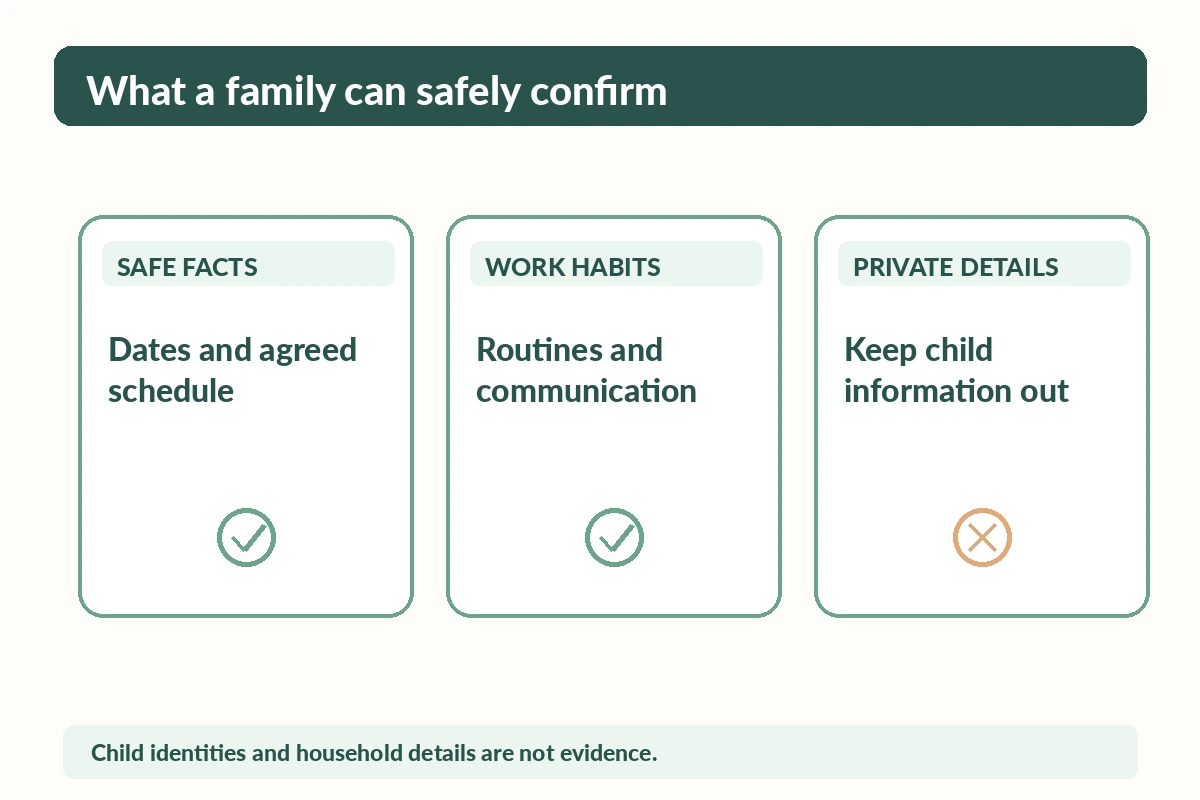
Identify useful job evidence without exposing a child
A family can discuss dependable arrival, meal preparation within their instructions, age-appropriate activities, school pickup arrangements when authorized, and communication about routine changes. Use facts about your own duties, not identifying details about the child. A résumé might say you supported an after-school routine for a household, but you usually do not need the child’s first name, photos or location. Never disclose diagnoses, behavior notes, family disputes or emergency contacts. If a prospective employer requests sensitive information about a former child, decline to provide it and offer a process example instead.
Separate references from formal hiring screening
Some nanny jobs involve background checks, required training, driving checks or other conditions, depending on the arrangement and jurisdiction. A strong parent reference does not itself establish that any requirement has been completed. If a new household asks for proof of CPR training or an agency screening, share truthful current credentials through an appropriate method. Do not imply that a past family’s trust grants permission to administer medication, drive a child or make medical decisions beyond your prior authorization. Discuss the exact duties and limits of a prospective job rather than treating every nanny role as interchangeable.
Prepare an accurate household employment entry
A private household is an employer relationship even when it is not a corporation. A reference entry might read: ‘Morgan Patel — Former Family Employer (nanny role); supervised my part-time care arrangement from [month/year] to [month/year]; contact details shared with permission.’ These are hypothetical placeholders, not real people. If the family prefers anonymity at an early application stage, ask the recruiter whether you can provide contact information later. Do not create a fictitious agency name just to make the experience appear more formal. State honestly whether the work was full-time, part-time, recurring or occasional.
| Reference source | What they may know | Before you share |
|---|---|---|
| Family parent / guardian | Routine and communication | Get direct contact permission |
| Childcare program supervisor | Scheduled care and supervision | Confirm role and review period |
| Placement agency | Placement dates if retained | Ask which records it can release |

Handle babysitting rather than full-time nanny experience honestly
A weekend babysitter may have useful references too, but the responsibilities may differ from a full-time household nanny. Describe the real frequency, length and expectations of the arrangement. A parent who observed you for several evenings could confirm reliability and adherence to instructions; they may not be able to verify managing an entire weekly school routine. Ask the new employer which skills it wants confirmed. CareerOneStop recognizes babysitting contacts among possible employment references, so there is no need to dress casual work up as a formal staff position. Precision helps families evaluate fit.
Share routines as categories, not private records
If asked for examples, discuss the structure of a routine: confirming pickup authorization, reviewing allergy instructions without disclosing specifics, communicating a schedule change and documenting an issue to the parent. Do not supply copies of household logs, children’s school addresses, medical notes or private messaging threads. Even if a family previously let you take photos, that does not automatically authorize reuse in a hiring application. A reference can describe how carefully you followed household instructions without revealing the underlying sensitive content. When in doubt, request the former family’s approval for the exact information.
Plan for families who have moved or are unavailable
A previous family may move, change phone numbers or prefer not to be contacted again. Send one respectful request; do not repeatedly contact them or search for their new address. If they are unavailable, consider a different consenting family, a childcare program supervisor or another adult with firsthand professional knowledge of your care work. Explain the kind of work each person observed. If the new employer requires a certain number of references, ask what alternate forms of verification it accepts rather than manufacturing contact details or listing a person who has not agreed.
Let a family speak independently and fairly
You can remind the parent about the dates and tasks they directly witnessed, but do not draft a false endorsement in their voice. A useful parent might say you consistently followed the agreed handoff instructions and communicated early when plans changed. That is more credible than a claim that you independently handled every potential emergency. If a former family mentions a challenge, avoid telling them to conceal it; give context about how you handled feedback if the hiring manager asks. References are not a guarantee of a position and cannot replace a practical discussion about the new family’s expectations.
Close the reference request professionally
Tell the consenting family when a specific recruiter or household may call, without forwarding unrelated personal application material. Thank them after a call or letter. If you later apply for a different type of childcare job, recheck whether the family is comfortable speaking about that context. Keep a private record of who agreed, when the contact details were confirmed, and which duties they are willing to discuss. Share only what the new employer needs and what the former employer authorized. This keeps reference checks useful while protecting a child’s and family’s privacy.
How We Research Professional References
JobAsk reviewed these source materials on November 16, 2026: BLS describes nanny work in private households, child supervision, schedules and communication with parents. CareerOneStop includes people for whom a candidate babysat among possible references and requires permission before sharing contact details. Yale recommends selecting references who have directly observed work and can describe it specifically. We compared the intended search question against the supplied WordPress post inventory and recent batch titles, and we checked the relevant JobAsk category and disclosure page. An external search cannot confirm that an unpublished WordPress slug is available. Example names, situations and reference wording are hypothetical and must be adapted to real duties, permissions, contact details and employer requirements. We do not invent testimonials, credentials, legal rules or promises about hiring results. Read our affiliate disclosure.
More Resume and Cover Letter Guides
Yes. A parent who employed you can describe firsthand childcare work. Ask before sharing contact information.
Usually no. Identify your role and the consenting adult employer without including the child’s private details.
Yes if the parent knows the work. Describe its actual frequency and scope rather than calling it full-time nanny employment.
No. Follow any separate screening, training or licensing instructions required for the position.
Respect their decision and ask another adult who directly supervised your childcare work.