
A state job bank can be a useful starting point for your first U.S. job search, but it is a discovery channel, not a guarantee that every listing is current or that every application link is safe. Begin from your state’s official workforce or employment agency website, search by occupation and location, and record the employer named on each posting. Then verify the opening and application route independently before submitting personal details. This guide explains how to keep a clear trail from state job bank to the legitimate employer, without claiming that a particular state system offers identical features everywhere.
Start with a verified state employment website
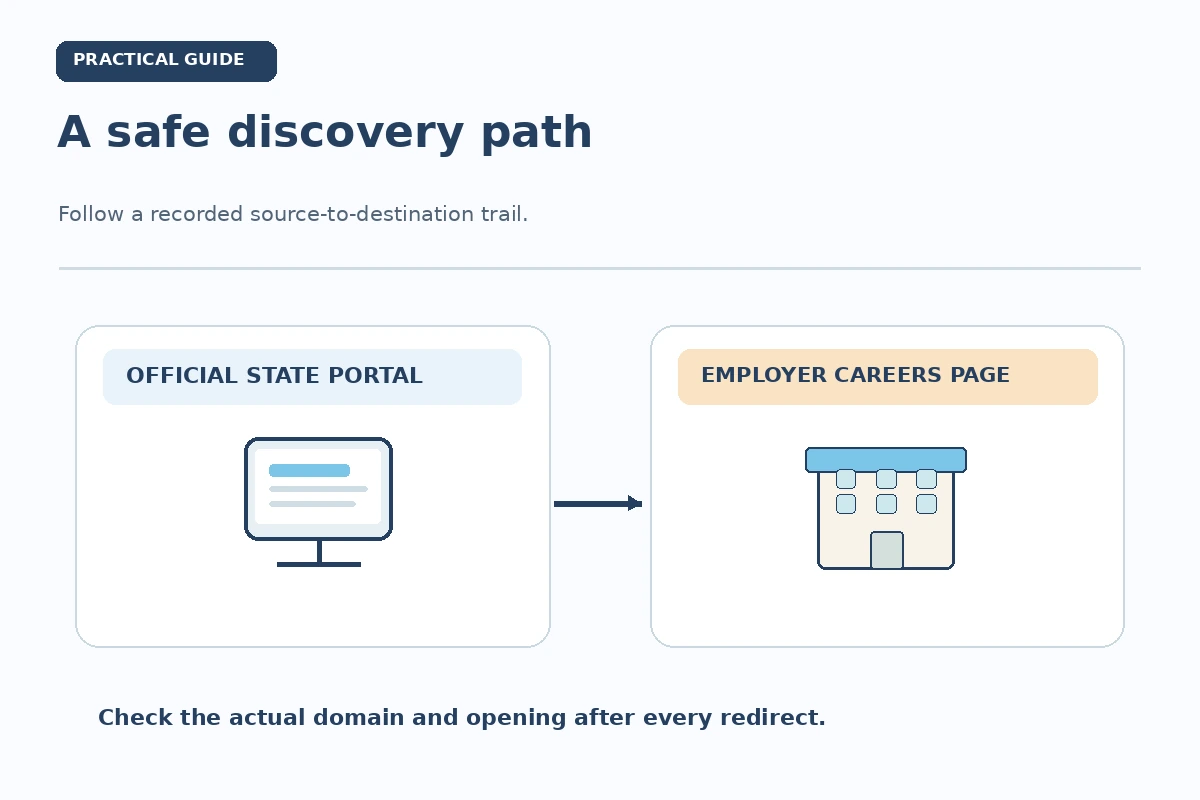
USAGov lists state job banks among resources for finding work. Use the official state government workforce or employment site, ideally reached through a trustworthy government directory rather than a sponsored search result. States use different website names, accounts, search filters and applicant tools. An official state portal may send you to an employer system or another listing service. Take note of the domain and the agency name; if you are redirected, check what site you are now on. Do not assume every website with a state flag in its design is operated by government. The goal is a repeatable route you can explain, not collecting dozens of unverified links.
Use job-title variants without changing the job you want
First-time applicants often search only a single phrase such as “office assistant.” Try closely related functional titles such as “office clerk” or “administrative support” when the duties match what you would actually do. Keep location, work arrangement and shift constraints visible so a broad search does not swamp you with unsuitable results. Review the description itself before saving a position; a title can conceal professional licenses or specialist duties. If the bank offers filters for education or experience, treat them as aids to exploration, not as proof that you qualify. BLS occupation descriptions can help clarify unfamiliar titles.
Record the listing before moving to an application
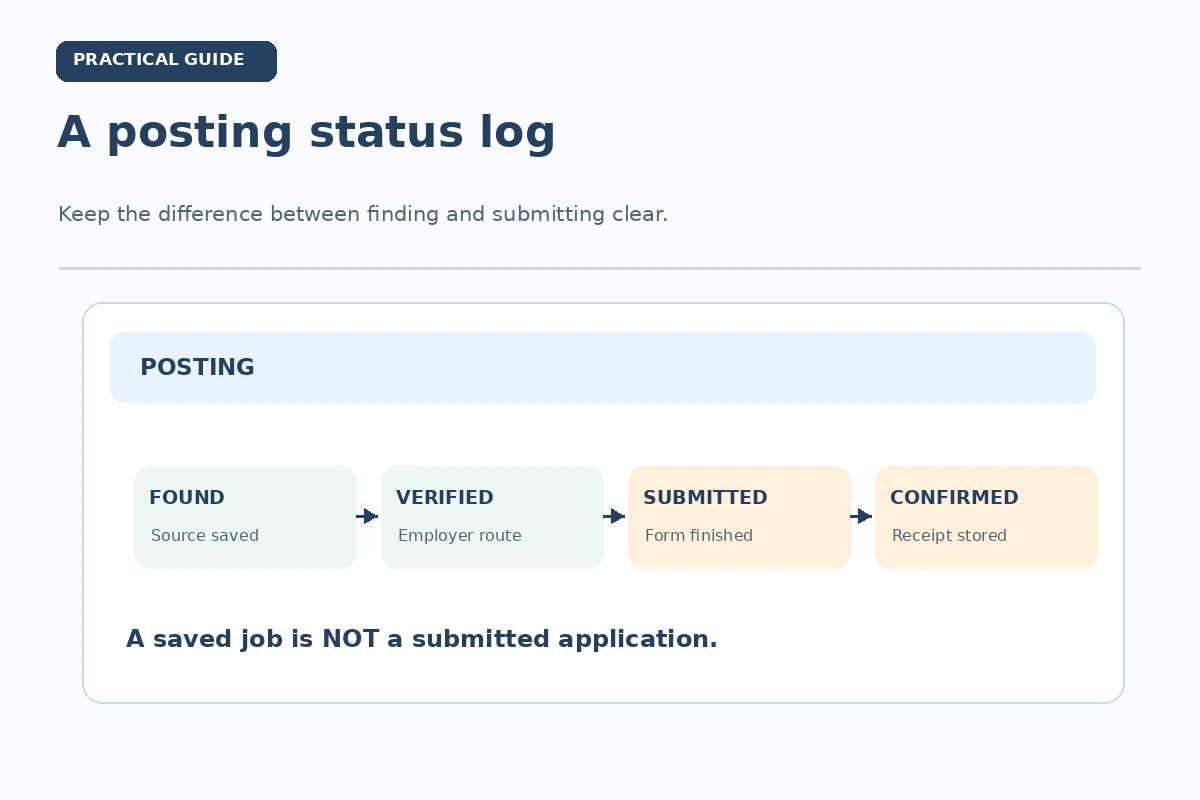
For each promising opening, write down the date found, job title, employer, city or remote requirements, identifier if shown, and the original URL. Save enough of the job description to prepare later, while respecting site terms and avoiding storage of personal candidate data. If the listing disappears, your record helps you explain where it came from; it does not prove the employer is still recruiting. CareerOneStop recommends keeping records of positions applied to and employers contacted. Label a job as “found,” “verified,” “applied,” or “closed” rather than confusing discovery with a completed submission.
Confirm the employer and authorized application destination
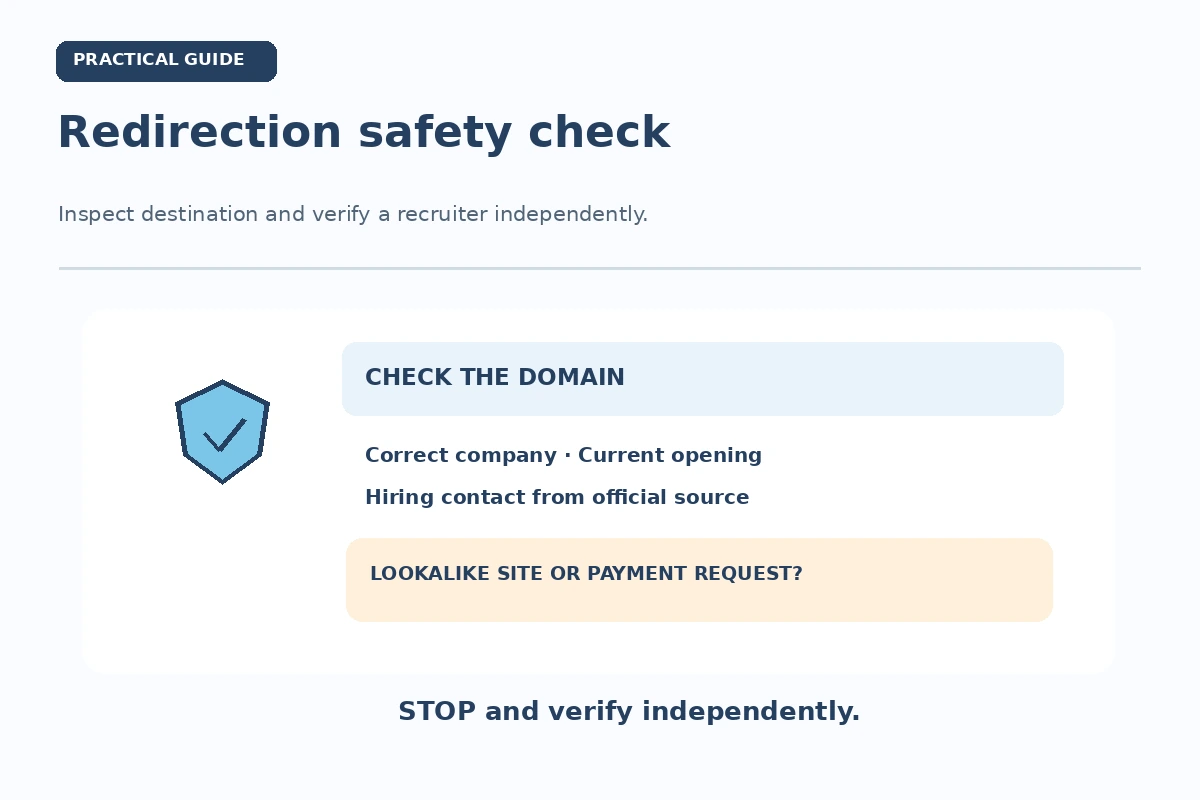
Find the employer’s official website independently. Look for the same position or a hiring contact who can confirm the appropriate application method. A state bank may host a full application, send applicants to an employer careers page, or show a contact method; use only a route you have reasonably verified. The FTC explains that scammers may post convincing fake jobs, including on real platforms, and obtain money or personal data through the resulting application. A familiar job-bank interface does not remove the need to inspect redirects and domain spelling. If no official confirmation is possible, hold the application and ask a legitimate agency adviser.
Check freshness and changing posting status
A listing date is useful but not infallible. Employers may extend deadlines, fill roles, change schedules or keep evergreen advertisements open. When the same role appears on multiple sites, compare the job title, location and identifier rather than assuming each copy is another opening. Check the employer’s current posting date or closing information before preparing a tailored application. If the official employer page contradicts the bank, use the employer’s validated contact route to clarify, rather than inventing a new deadline. A closed listing might still be accessible through search or browser history. Your shortlist should represent genuinely open opportunities at the time you apply.
Use free job-search support when the portal is confusing
The Department of Labor directs job seekers to CareerOneStop and American Job Centers for assistance. If you cannot interpret a listing or need help with internet access, contact your local workforce organization or library and ask which services are offered. Some may provide computers, workshops or individual job-search guidance; availability and booking arrangements vary. Do not share account passwords with a helper or email copies of identity documents to an unfamiliar person. It is reasonable to ask someone to explain a form while you retain control of the account and decide what personal data to submit.
Track application status without over-contacting employers
After applying through the verified route, save the confirmation number or an ordinary submission receipt. Do not mark the application complete merely because you opened the employer’s website or uploaded a resume before clicking submit. Follow the posting’s instructions for status questions. If a separate state portal account mirrors the role, do not assume its status synchronizes with the employer system. Keep a short timeline: found on state bank, verified with employer, submitted, confirmation received, next follow-up if appropriate. That approach prevents repeated applications to the same opening when a job appears on several sites.
Keep fraud checks active after a promising reply
An unsolicited message claiming to be the hiring manager may still be fraudulent, even when you recently applied somewhere. Verify that the sender works for the actual organization through an independently obtained contact channel. The FTC warns about offers that require you to buy equipment, transfer money after depositing a check, or pay for a promised position. Do not provide banking credentials or identification scans in an unverified chat. A legitimate hiring process can involve sensitive forms at appropriate stages; verify the employer’s secure process and ask questions if its instructions conflict with the official website. Pause instead of hurrying to meet a pressure deadline from an unknown sender.
A state-bank-to-employer tracking record
Use these fields: state portal name, state bank URL, title, employer, location, posting ID, date found, employer careers URL, verified route, date applied, confirmation received, and next action. Example (hypothetical): “Office clerk | found on official portal | employer careers page verified | form not yet submitted.” This prevents treating a saved listing as an application. Keep private notes on your own device or approved account, and do not include reference contacts or identification numbers in a shared job-search spreadsheet.
How We Research Beginner Job Search Guidance
We review U.S. primary resources about occupation requirements, official job-search services and employer verification, then translate those into a practical worksheet. Sample scenarios are hypothetical; they do not represent actual openings, hiring decisions, employer commitments or universal legal rules. Check the current employer posting and applicable licensing or program requirements before relying on an example.
Sources reviewed November 11, 2026: www.usa.gov — USAGov recommends state job banks, CareerOneStop and American Job Centers as sources of job-search assistance.; www.dol.gov — DOL describes employment and training resources, state and local assistance, job fairs, and online job banks.; consumer.ftc.gov — FTC explains that fake job ads can appear on otherwise familiar channels and advises independent employer verification.; www.careeronestop.org — CareerOneStop advises saving openings and tracking application and employer-contact records..
This guide offers general U.S. job-search information, not legal advice, job placement, an employment promise or proof that a particular opening exists. Review the JobAsk affiliate disclosure. The internal category links here are informational, not paid endorsements.
Related Job Search Guides
States maintain workforce and employment services, but confirm that you are using your state’s genuine agency website and check any redirects.
No. Listings can change or close, and online channels are not immune to misleading ads. Verify the employer and current opening.
Follow the legitimate current instructions for that posting after confirming the application route; systems vary by state and employer.
Check the employer’s official page or authorized contact and update your records. A saved listing does not prove a vacancy is still open.
Often, yes, but exact services vary. Contact your local center to ask about account help, job-search workshops or access to computers.