
If you are interviewing for a procurement assistant or purchasing coordinator position, arrive with three or four questions that reveal the actual work rather than asking only about culture. Procurement interviews should distinguish recording and coordinating a purchase from having authority to select a supplier, approve spend, or release payment. Start by checking the job description, choose questions the interviewer can realistically answer, and take brief notes on who reviews or approves the important steps. The questions below are designed for candidates learning about a role; they are not claims about the policies of any particular employer.
A purchasing or procurement support role can involve requests, quotes, purchase orders, delivery tracking, invoice comparisons, and communication with suppliers. Control points are employer-specific. Do not claim that a junior title automatically means no purchasing authority, or that every procurement worker can award contracts. Verify delegation in the job. According to the University of Michigan Career Center, preparing approximately three to five employer questions helps you learn whether a job fits, and the right questions depend on the interview stage and the person answering. The wording below is a practical starting point: adapt it to what you have already been told instead of reading a script. All example conversations are hypothetical.
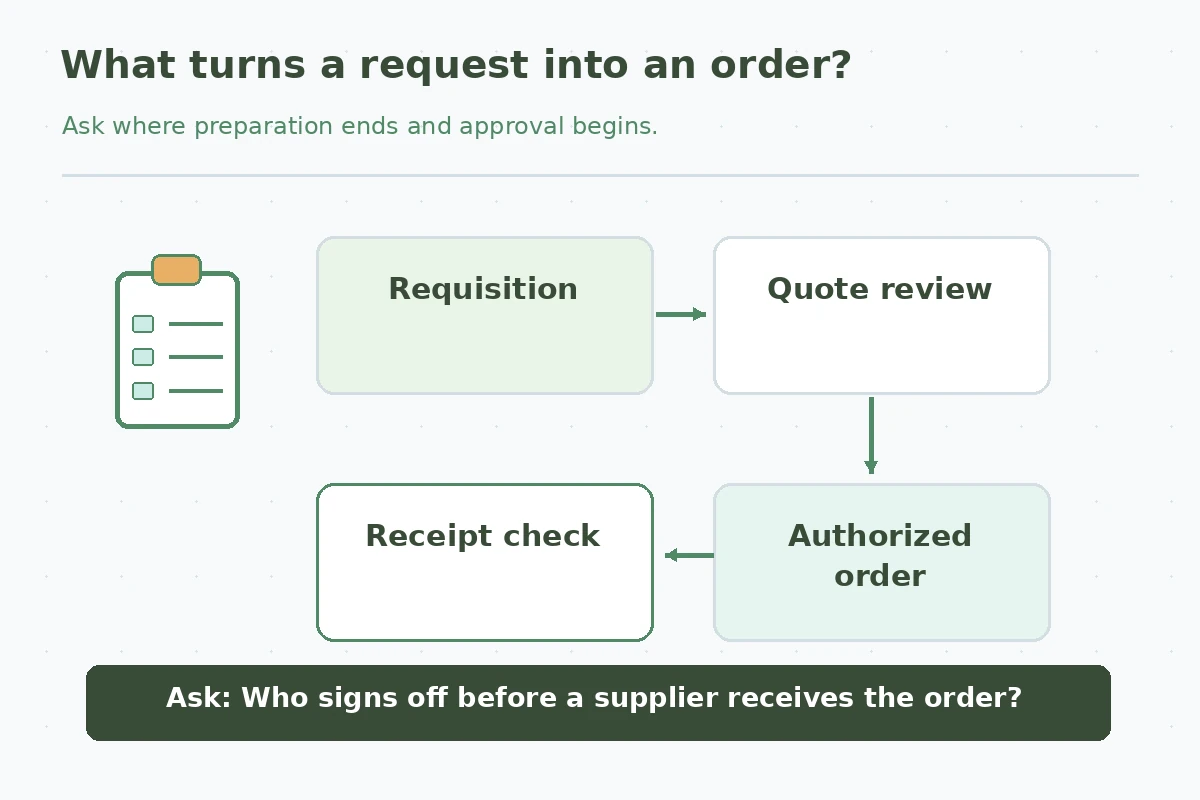
Separate a purchase request from an approved order
Ask: ‘Who verifies a purchase request before it becomes a purchase order, and what information must be complete?’ A practical answer might name item specifications, available budget or cost center, requested date, and approving role. Those are typical workflow concepts, not universal requirements at every organization. Follow with: ‘Would I assemble the record, send it for review, or have delegated authority to place an order?’ These are very different responsibilities even if they appear beside the same software tool in a posting. You want clarity about the gate that makes a proposed purchase an authorized commitment.
Understand how suppliers are compared fairly
Ask: ‘How does the team compare quotes, delivery terms, and specifications, and who makes the selection?’ O*NET includes supplier research and price comparison in procurement work, but a junior worker may simply organize information for an approver. Listen for documented criteria rather than an improvised choice based solely on the lowest price. If the company has preferred suppliers or formal bidding practices, ask where that guidance lives and how staff learn it. Avoid pressing for confidential supplier rates or asking the interviewer to describe a live negotiation. The goal is to learn the decision process you would follow.
Find out what an invoice discrepancy triggers
Try: ‘If an invoice differs from the order or receiving record, what is this position expected to do first?’ A clear response distinguishes checking a document, recording the discrepancy, contacting the right teammate, and authorizing payment. Ask whether there is an exception queue or a documented approval chain. Do not volunteer that you would alter an invoice to make it match; a mismatch requires investigation under the employer’s procedures. The interviewer’s answer also tells you whether new staff get access to training examples, and whether financial control is handled by procurement, receiving, accounts payable, or several teams.
Use a question-to-evidence comparison table
A question is useful when the answer tells you something you can verify later: the person who approves, the document the team uses, the training step, or the process for reporting an exception. This comparison grid captures the decision behind each question, so you can tell whether the interviewer actually answered it. If a topic was already covered naturally, replace the prepared question with a brief, relevant follow-up rather than forcing a repeated conversation.
| Decision point | Ask the interviewer | Listen for |
|---|---|---|
| Requisition | Who checks completeness? | Information and named reviewer |
| Supplier quote | Who selects vendor? | Documented criteria and authority |
| Invoice mismatch | Who investigates and approves? | Exception route and trail |
| Order change | Who can commit? | Delegation and recorded update |
Ask about vendor communication and boundaries
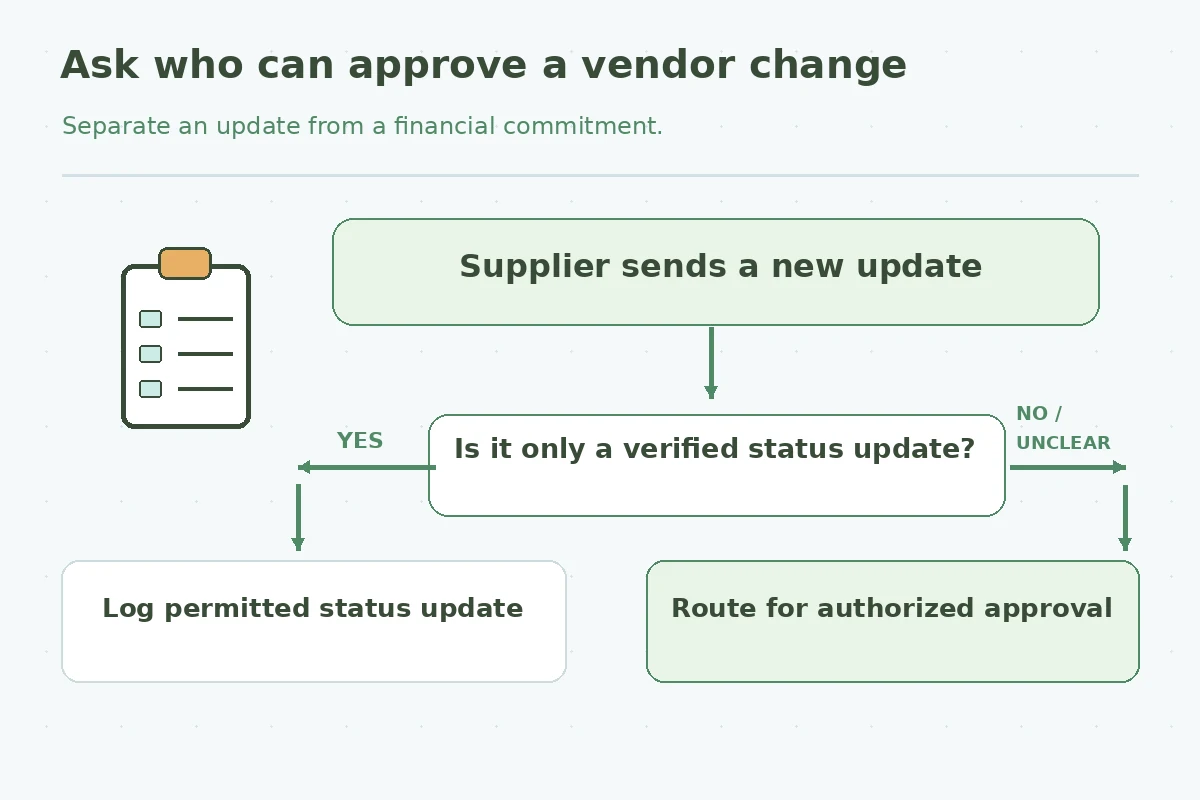
Ask: ‘Which supplier updates can I send directly, and which commitments require a supervisor?’ This covers delivery dates, substitutions, changed specifications, and requests for rush orders. There is a meaningful difference between asking where an order stands and agreeing to a price or contract change. A candidate can ask how conversations are logged so the rest of the team sees the same information. If the employer relies on verbal approvals, ask how they are recorded after the fact. You are looking for a way to communicate promptly without making a financial or contractual promise you cannot keep.
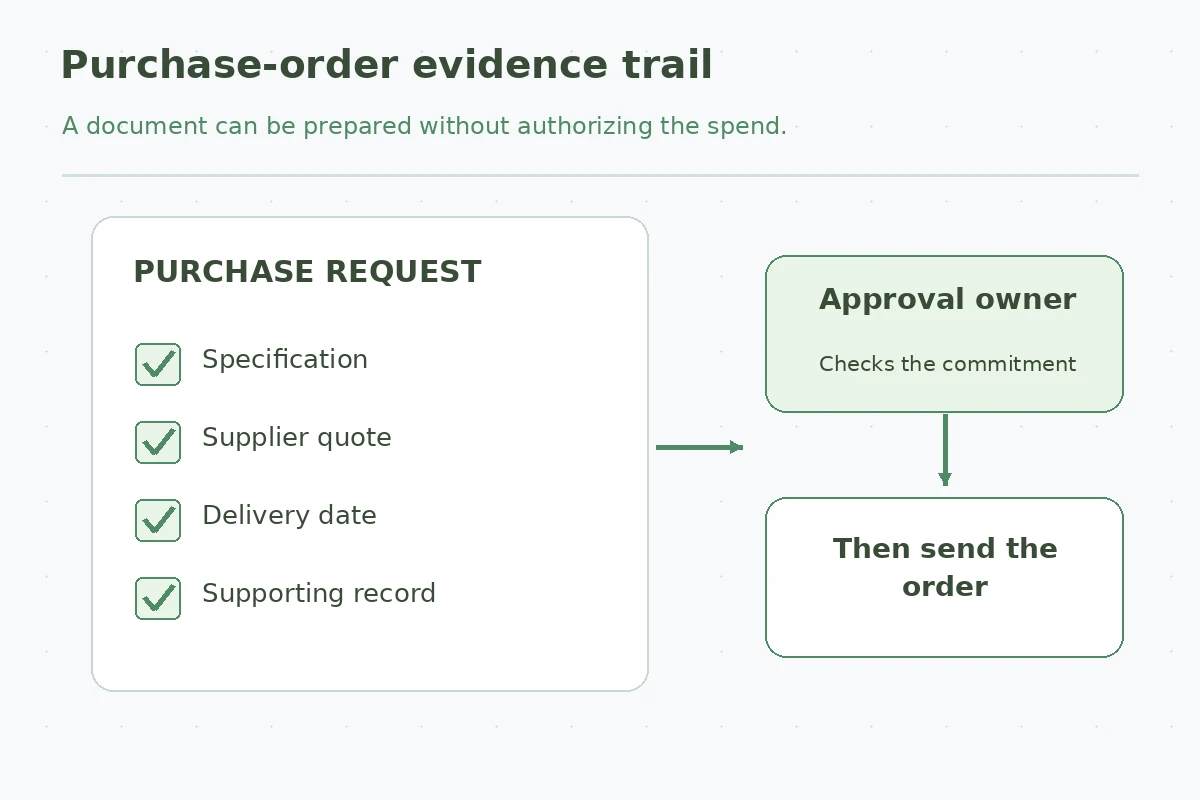
Explore system access and audit trails
Ask: ‘Which purchasing records can a new coordinator create, update, and approve in the system?’ A credible response should distinguish data entry and status changes from spending approvals and vendor-master maintenance. The exact controls vary, so avoid suggesting that one software package automatically guarantees oversight. Follow with: ‘What training helps staff recognize duplicate requests, incorrect coding, or missing supporting documents?’ That shows awareness of traceability. If the position includes records reconciliation, ask who reviews corrections and whether mistakes are documented for process improvement rather than quietly overwritten.
Turn vague questions into useful follow-ups
Instead of “Can I buy things?” ask “Which purchasing steps can I prepare independently, and which require signed approval before a supplier is contacted?” If you hear “we move quickly,” follow with “How do urgent changes get recorded and approved when the normal approver is unavailable?” Neither example should be asked verbatim if the interviewer already explained the process. A considerate candidate connects a follow-up to the employer’s answer: “You mentioned a shared queue. How does a new hire learn when to escalate an item?” That demonstrates listening while keeping your goal to understand the job rather than impress someone with jargon.
It is also useful to avoid questions that ask for restricted account details, identifiable personal records, private supplier terms, or internal performance numbers. Ask for the method and boundaries instead. If an interviewer cannot give a detailed response in a short screening call, note the subject and return to it in a later discussion with a manager. Silence or a partial answer is a reason to clarify at an appropriate stage, not proof that the organization lacks a policy.
Connect success to complete, reviewable records
Close with: ‘What would a strong first-month contribution look like in this procurement function?’ You might listen for complete requisition packets, responsive vendor follow-ups, accurate order status, or faster detection of missing information. Do not assume you will control supplier savings or purchasing results that depend on another person’s approval. Ask how the team gives feedback on the quality of a file. This question helps identify whether the role is primarily document coordination, supplier service, inventory support, or an authorized buying function—and what evidence you should bring to a future conversation.
Choose three priorities before the meeting
Prepare one operational question, one training or scope question, and one question about how good work is reviewed. If there is time, retain a fourth question about purchase request and handoff to the next employee. Put the highest-value question first so a short interview still produces useful information. In your notes, mark whether the interviewer gave a specific example, named a reviewer, described a documented process, or deferred the answer. This is an organizing device for your decision, not a score for the employer.
A short follow-up email should thank the person for the conversation without requesting confidential examples. If a concrete gap remains, ask one narrow question such as ‘Who normally reviews this step during onboarding?’ rather than sending the entire list again. Before accepting an offer, compare the interview account with the written job description and any practical terms you receive. Do not treat an exploratory answer as a contractual promise. Your own goal is to understand expectations accurately and decide whether the day-to-day work matches the position you applied for.
How We Research and Verify Interview Guidance
We reviewed the University of Michigan and Santa Clara University career-center guidance on preparing role-relevant questions, together with the O*NET occupational description for procurement assistant or purchasing coordinator work. O*NET lists procurement clerk tasks that can include both preparation and purchasing; actual delegation depends on the organization’s policy, not just the occupation label. We distinguished broad occupational duties from employer-specific authority and used only hypothetical interview exchanges. Source review date: November 15, 2026.
Sources consulted: University of Michigan Career Center — Interviewing Resources; Santa Clara University Career Center — Practice for Interviews; O*NET — role duties. Each source helps frame questions; none tells us the policies of a specific employer.
Reader trust and commercial relationships are explained in the JobAsk affiliate disclosure. This page is independent career education; it does not guarantee an interview outcome.
More Interview Preparation Guides
Yes. Ask what the role is authorized to do and who approves exceptions. Do not assume a specific dollar threshold or request internal financial details.
Yes, but ask which transactions and records you may handle after training. A tool name alone does not reveal your authority.
Ask what makes a requisition ready for review and who helps correct missing specifications. It focuses on a task that can be trained.
Yes. Frame the question around documentation and escalation rather than requesting a private supplier dispute story.
Ask where the discrepancy is logged and who investigates or approves adjustments. Never imply an employee should change a record without authorization.