
Quality improvement behavioral interview questions ask for a real process you helped make more reliable. The strongest answer distinguishes noticing repeated defects from proving their cause, then explains what you tested, who approved the change, and how you checked the result. You do not need to claim that you led a Six Sigma project or reduced errors by a made-up percentage. A carefully documented small improvement in a service checklist, handoff, or work log can demonstrate meaningful quality awareness.
Find a recurring process issue with an observable pattern
Look for a real example where the same kind of mistake, omission, or delay appeared more than once. A community coordinator may have seen the wrong event date copied onto two draft notices. A warehouse clerk may have noticed an unlabelled field causing rework, but should not present that as a certified product defect without evidence. State what you observed and how frequently you could actually verify it.
Avoid saying “the process was broken” when all you knew was that a few records looked inconsistent. Quality improvement begins with describing the problem narrowly. Good interview evidence may include a written checklist, approved work instruction, or log, but you should not carry protected employer records into an interview. You can name the type of evidence and explain your part without disclosing actual files.
Separate a symptom from a plausible cause
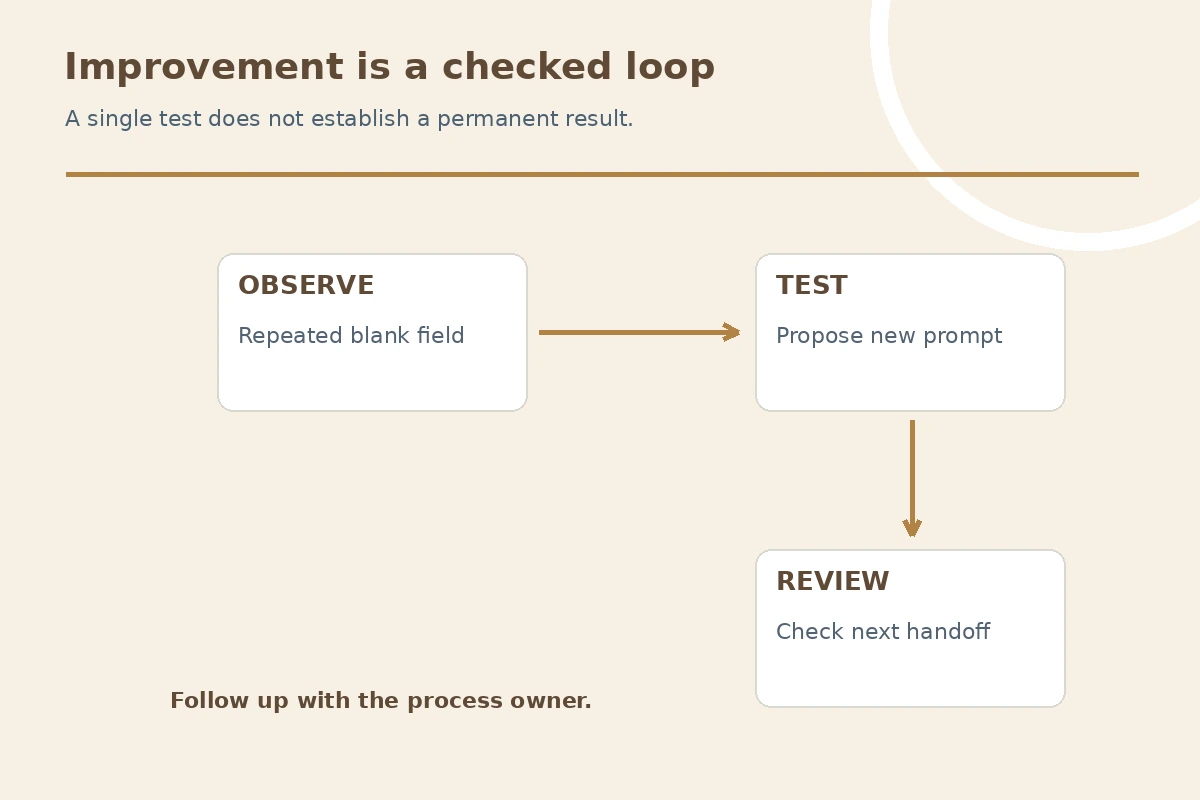
An incomplete form is a symptom; a missing instruction may be one possible cause. Do not jump from one example to a conclusion about staff carelessness. Describe how you checked whether the source form changed, whether users understood the prompt, or whether the handoff happened before review. ASQ provides tools for analyzing causes and processes, but using a simple comparison does not mean you completed a formal root-cause investigation.
When you only suggested a cause, call it a hypothesis. A useful STAR answer says, “I noticed several drafts lacked a date, so I checked the current form and found that the date field was easy to miss.” If the evidence could not distinguish causes, explain that you asked a process owner to investigate. This precision prevents exaggeration and shows you can learn from data rather than assign blame.
Explain the proposed fix and who reviewed it
Some improvements can be drafted by a support worker: adding an item to a checklist, changing a label in a training copy, or suggesting a handoff prompt. Implementing changes to official forms, machinery, billing controls, or regulated records may require designated approval. State whether you merely proposed, tested in a sandbox, or implemented a reviewed change. Those are different actions with different responsibility.
A strong answer includes a boundary such as “I showed the draft checklist to the coordinator and waited for approval before using it in the live workflow.” This does not make the story less proactive; it demonstrates the control that kept a quality idea from causing another problem. If your suggestion was declined, explain what feedback you received and whether you revised your recommendation.
Practice a fictional example of a small approved change
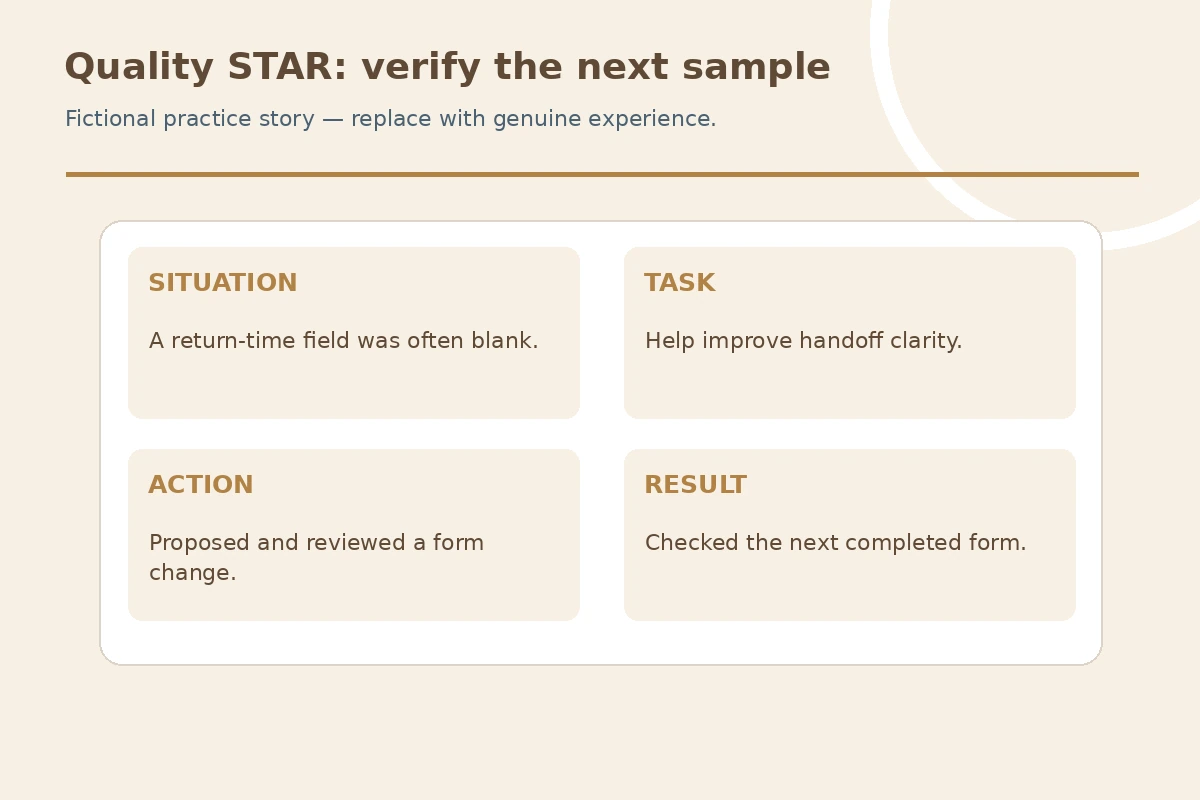
Hypothetical example for an event-assistant role: “Our setup notes sometimes missed the equipment return time. I compared the approved schedule with past blank templates and noticed the return field was not prominent. I drafted a revised checklist, asked the event lead to approve it, and used the approved version at the next setup. At handoff, I checked that the return time was recorded.” This sample demonstrates a defined check without inventing numbers.
The fictional story does not claim that the candidate redesigned company policy or eliminated all errors. It shows a small test and a concrete follow-up. Replace it with a truthful real event. If you have actual inspection or quality training, use the terminology you really applied; do not present a self-made chart as a certified quality system. The focus is the observation, test, approval, and check, not a prestigious methodology name.
Use this evidence and scope check before practicing
| Part of your story | What to verify | Boundary to keep |
|---|---|---|
| Pattern | Is it repeated and documented? | Avoid one-event claims |
| Cause check | What alternative causes exist? | Hypothesis is not proof |
| Trial change | Who approves the test? | No unauthorized revision |
| Follow-up | What changed in the next sample? | No made-up percentages |
Measure what you can honestly verify
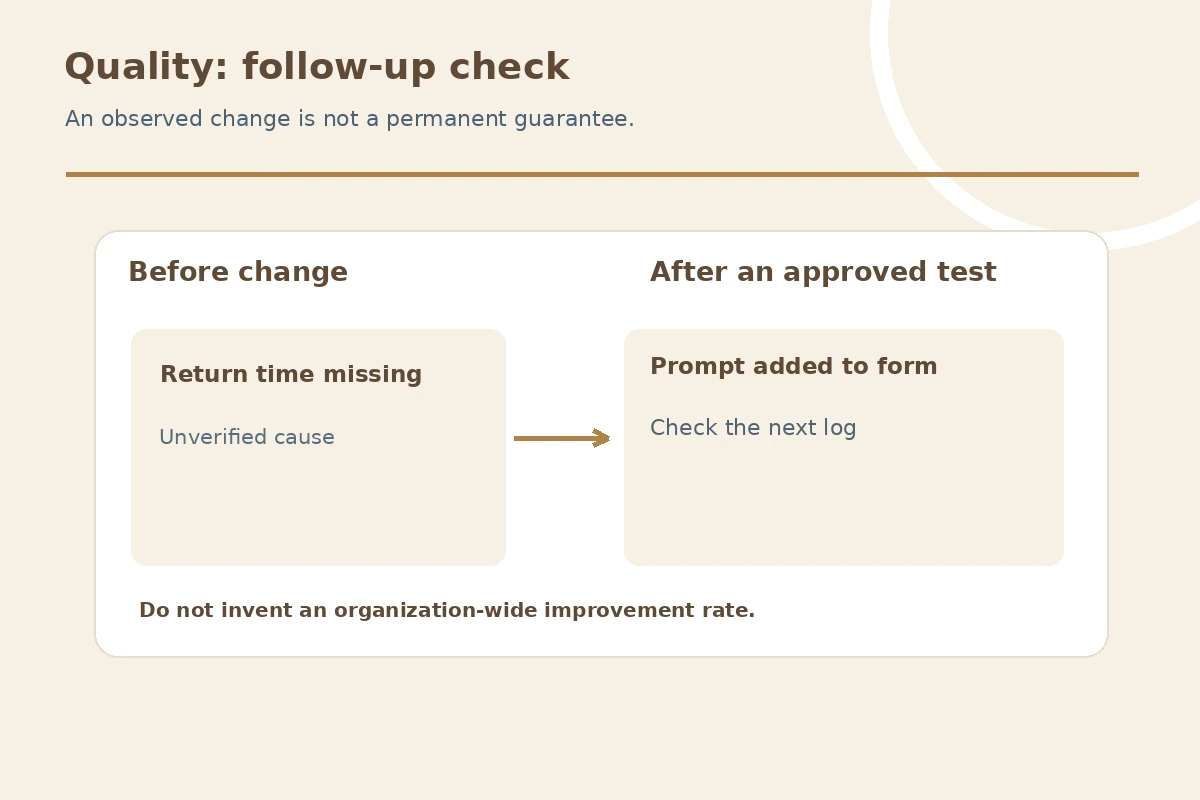
You may have access only to a sample, a shift log, or an informal team review. Describe that scope explicitly. “The next checklist included the return time” is a verified observation if you checked it; “mistakes fell by 40 percent across the department” requires a real measure and proper baseline. Avoid converting one successful use into a permanent organizational outcome. State when review ended and who retained responsibility.
If a supervisor tracked the metric, you may explain that the supervisor reported it only if you have permission and can attribute the number accurately. Otherwise describe the observable change without a metric. Quality improvement stories work when the interviewer can see what changed and how the evidence supports the conclusion. Not every worthwhile improvement produces a publishable statistic.
Prepare for a setback or failed test
A small improvement might not work the first time. Perhaps a new field confused users, or a sign was placed where nobody saw it. Explain how you gathered feedback, told the reviewer, and revised the proposal. Do not frame a failed test as secret success or blame others for following an unclear instruction. Showing that you checked whether a change worked is central to the competency.
If your role did not allow a second test, you can still say you documented the observation and passed it to the process owner. There is a difference between reporting a problem and managing the improvement program. This article is about constructing an accurate behavioral interview answer, not prescribing a formal quality-management standard for every employer.
Audit the STAR answer for proof and authority
Read your draft and underline the original defect pattern, your cause check, approved change, follow-up check, and known result. If you skipped the approval step, clarify who decided to test. If you cannot verify the result, present it as pending rather than complete. Remove proprietary measurements and customer identifiers. Use neutral language about coworkers and focus on the process, not personal criticism.
Compare the job posting with the actions you can describe. Some jobs need careful inspection records; others need service consistency, staff training, or support-ticket follow-through. Do not imply the role requires a certification or formal root-cause method unless the posting says so. A concrete, properly bounded STAR story is enough to demonstrate how you noticed a problem, investigated it, and learned from an outcome.
Try a safe, fictional practice scenario
Use a fictional volunteer check-in process in which late-arrival names are sometimes missing from the next shift’s paper log. Describe the symptom, two possible causes, and an authorized way to test a clearer handoff field. Identify who approves changes to the official form and who checks the next shift. Write a STAR answer that ends with the specific result you could verify—not a fabricated performance improvement. Then replace the practice narrative with an experience that actually happened, preserving only the steps you genuinely took.
How We Research Behavioral Interview Answers
For this guide, we reviewed interview-assessment resources and relevant professional or workplace guidance on November 7, 2026: www.opm.gov (OPM ties behavioral interview evidence to real job competencies and actions.); asq.org (ASQ outlines quality tools to understand processes, investigate causes and support improvement.); www.opm.gov (OPM describes problem solving through accuracy checks, evaluation of alternatives and recommendations.). General guidance does not establish the procedures or authority of any particular employer. All example candidate stories and illustrative results in this article are fictional learning exercises, not personal testimonials. Adapt the framework only to genuine, shareable experiences and confirm applicable workplace procedures and job requirements.
This is independent interview preparation guidance; it does not promise interview performance, hiring, or any employer-specific outcome. Do not disclose private records or proprietary systems during an interview. See the JobAsk affiliate disclosure for site transparency.
More Interview Preparation Guides
No. Explain an authentic process issue, your checks, the approved action, and follow-up. Mention credentials only if you earned them.
Yes. Specify what you proposed or implemented and credit the supervisor for the authorization.
Explain what you observed in the check, how you reported it and what adjustment or next step followed.
Describe a real observed output, such as a corrected field, reviewed checklist or documented next-shift handoff.
No. A symptom needs further evidence. State what you tested and label an unconfirmed cause as a hypothesis.