
A recruiter interview strength should be visible in the hiring process: accurate candidate updates, clear interview scheduling, consistent screening notes, or timely handoffs. A believable weakness identifies an area you are genuinely developing, such as giving long updates when a shorter status and next step would serve the candidate better. Your answer should show how you changed the process, while keeping selection decisions, protected information, and other team members’ authority clear. All scenarios below are illustrative, not real hiring records.
Choose a recruiter strength that can be audited
Recruiting involves communication across a candidate, interviewer, hiring manager, and the systems they use. O*NET describes recruiting and screening within HR specialist activities, but the scope of an individual recruiter’s authority varies. Instead of “I’m a people person,” name a process you actually completed: maintaining an accurate interview status, confirming a candidate’s availability, or recording job-relevant responses against agreed questions. The interviewer can probe who received the update and what was still outstanding.
If your experience is in campus recruiting, event coordination, HR assistance, or scheduling, be precise about that context. Do not claim you made hiring decisions because you arranged interviews. A meaningful strength might be consistency—giving every candidate the same logistics information and recording a next step after a conversation. Make sure the story contains no identifiable applicant details or confidential compensation discussions.
Tell a candidate-update story with ownership
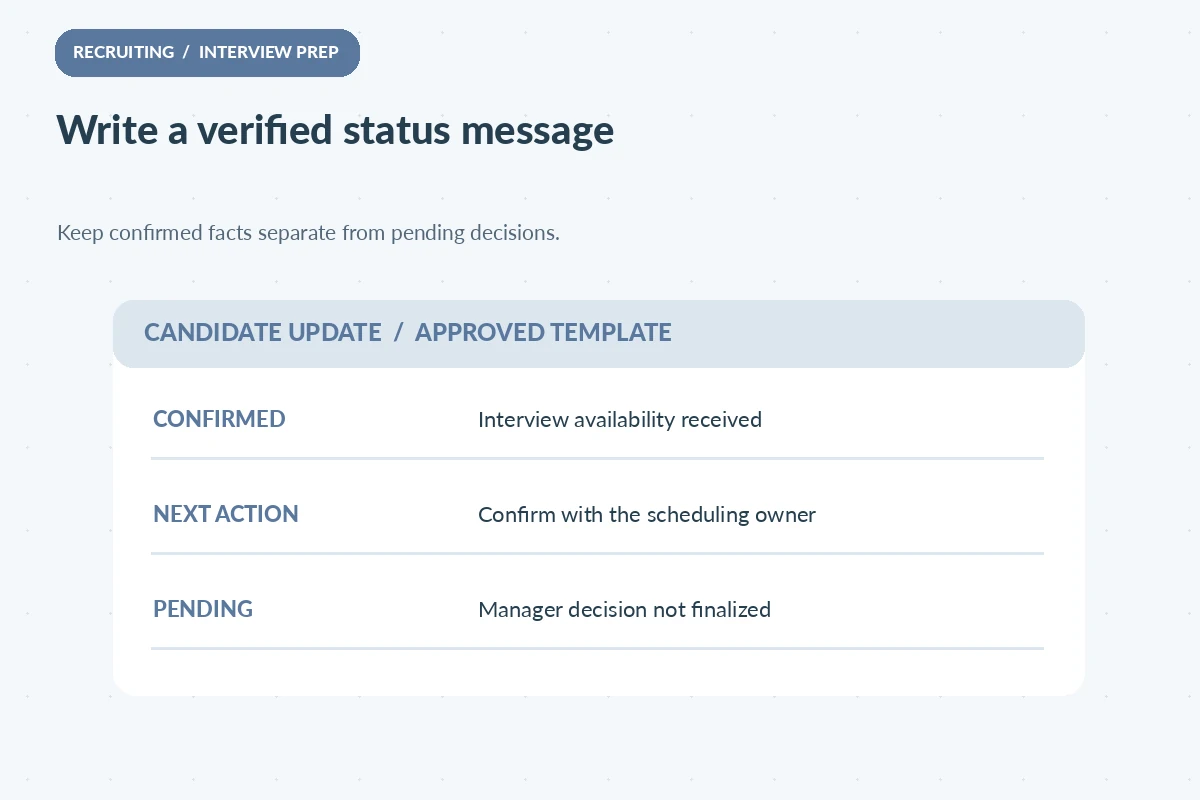
Here is a fictional answer: “My strength is keeping candidate status understandable. In an approved recruitment project, I checked the interview schedule against the latest coordinator note, sent a clear update using the team’s template, and marked the response that still needed hiring-manager confirmation.” This answer distinguishes preparing a communication from deciding an offer. It shows a source record, an action, a remaining question, and a handoff.
A follow-up may ask how you handle a delayed interviewer response. You can describe reviewing the agreed communication timeline, asking the appropriate owner for an update, and telling a candidate only what you are authorized to say. Do not promise a date or next stage that the team has not approved. Avoid inventing a “zero ghosting” record or a numerical candidate satisfaction score. If you tracked a real metric, define it carefully and ensure it is shareable.

Name a weakness that changes a repeatable process
A recruiter might genuinely be too verbose in status emails or wait too long to clarify which details a hiring manager needs in a handoff. Either can be addressed with a process: draft a brief update with current status, confirmed next step, and owner; ask the manager to confirm ambiguous criteria before sending candidate-facing claims. Your weakness needs a specific example from real experience, not a convenient claim that you work too hard.
One hypothetical answer: “I noticed my scheduling updates contained too much background and made the next action hard to find. I started using a short three-part format—confirmed status, required action, and pending decision—and asked the coordinator for feedback on clarity. I am still refining when extra context is necessary.” This admits a nontrivial communication flaw without implying that candidate data were disclosed or selections were made unfairly. Use this only if it describes an improvement you actually implemented.
Separate documented criteria from personal preference
An interviewer may ask which candidate is “best” when hiring notes are mixed. A responsible answer emphasizes the job’s approved criteria, documented relevant evidence, and escalation of an unclear requirement to the hiring team. Recruiters should not pretend that personal rapport, informal assumptions, or unrecorded impressions override the organization’s assessment process. The goal of your story is to demonstrate consistency and judgment, not to guarantee that every decision was fair or legally correct.
A fictional follow-up: “I would compare the screening notes to the requirements the team approved, clarify any inconsistent criteria with the hiring manager, and record the agreed next step in the permitted system.” This maintains a boundary: the recruiter may coordinate an assessment but does not automatically own the hiring decision. Do not invent an employer’s nondiscrimination compliance procedures or describe restricted candidate records. When discussing a mistake, show how the documentation was corrected through an authorized process.
Use scheduling pressure to show communication strength
When several interviews need rescheduling, the useful behavior is confirming the actual availability of each party and documenting the next approved option. A strong answer might name how you prevented a duplicate calendar invite or flagged an unconfirmed slot. Do not say you booked an interview before checking availability. If you assisted at a university career event, that work can provide transferable evidence; label it as event scheduling, not corporate recruiting.
For example, a hypothetical campus organizer might say: “I handled sign-up changes by keeping the updated attendee list separate from unconfirmed requests and sending only verified times.” That does not demonstrate independent recruiter authority, but it does show accurate coordination. Link it to recruiting as a transferable method, then explain what company tools or protocols you would need to learn. Interviewers can evaluate whether you understand the distinction between a logistical task and a decision about candidate eligibility.
Answer a difficult candidate question without overpromising
Suppose a candidate asks why their interview outcome is delayed. A precise answer should acknowledge the request, provide the information the team has approved for release, and confirm when or how an update may be requested. If the decision is not finalized, you should not imply it is. When you do not know, say who owns that answer rather than manufacturing one. This is a strong example of maintaining trust through accurate communication, not through unlimited disclosure.
If you mention a weakness in managing ambiguity, explain a practice such as flagging unconfirmed information before drafting candidate communications. You can describe a status field that reads “awaiting manager review” without exposing the contents of real applications. Avoid real rejection reasons, assessment data, or identifiable personal histories in a published interview article. The point is an honest working method and a clear escalation threshold.

Rehearse recruiter answers against your actual evidence
Review the posting: some recruiter roles focus on sourcing, others on scheduling or full-cycle hiring. Prepare a short strength example tied to your genuine responsibilities and a weakness you are actively addressing. Write down the evidence, the system or approved communication route, the decision owner, and what you learned. Your examples should not claim independently approved hiring decisions unless you were authorized to make them. Even a small improvement in update clarity can be a useful story when honestly reported.
Practice answering “What would your hiring manager say you need to improve?” with the same substantive weakness you can support. Never disclose personal candidate information to make the example vivid. Replace “I filled every opening” with a precise description of your role, if you have no attributable placement data. A good closing sentence connects your communication habits to a transparent process while acknowledging what you would need to learn about the employer’s hiring system.
How We Research Interview Strengths and Weaknesses
We reviewed guidance from U.S. university career centers on behavioral interview evidence, authentic weaknesses, accountability and improvement. We compared the profession-specific examples with O*NET descriptions of related occupations. These descriptions show possible tasks, not duties, permissions or rules for every employer. All sample statements, workplace situations and outcomes in this article are fictional practice material. No recruiter or employer has endorsed these answers, and no hiring outcome is promised.
Sources checked November 13, 2026: www.onetonline.org — O*NET describes HR specialists as supporting recruitment, screening, interviewing and placement activities.; careerservices.fas.harvard.edu — Harvard advises candidates to show competencies with true examples and describe weaknesses through specific improvement habits.; careerservices.upenn.edu — Penn recommends giving interview responses with personal action and reflection instead of untested personal labels..
Follow the hiring organization’s procedures, role permissions and privacy expectations; this educational guide does not replace legal, clinical, safety or professional advice. Please see the JobAsk affiliate disclosure. The informational links do not represent a paid endorsement or confirmed partnership.
More Interview Preparation Guides
Yes. Explain a real status update, coordination step or handoff with the information and authority you actually had.
If genuine, show how you improved the clarity of updates and which feedback or work examples support that change.
No. Scheduling, screening support and final selection are different duties. Name the real decision owner.
Yes as transferable scheduling or communication proof, with the original setting clearly described.
Avoid identifying candidates or disclosing confidential records. Use a generalized or fictional example that protects privacy.