
Sales situational interview questions measure the judgment behind an offer, not just how confidently a candidate closes. In a hypothetical sales role, you may need to explain stock uncertainty, a requested discount, a missing requirement or a post-sale problem. A convincing answer shows how you identify the buyer’s actual need, verify business facts, respect pricing and approval rules, and leave a truthful record. It should never suggest that an applicant would promise inventory, contract terms or delivery dates that have not been checked.
O*NET identifies answering customer questions about availability and terms, preparing orders, consulting customers after a sale and keeping records as common sales-representative tasks. Those activities do not give every representative authority to change legal terms, approve credit, guarantee fulfillment or sign every agreement. Some sales roles are transactional; others involve complex business accounts. State the employer’s approval or handoff boundary as part of your hypothetical response, especially where price, timing or a product’s suitability is uncertain.
Separate Client Needs From Commercial Promises
Use a four-part response. Clarify the buyer’s goal and the specific missing fact. Check a reliable source—current inventory, approved price sheet, product specification, contract owner or delivery team. Offer only available and authorized alternatives, including saying that you need to confirm information before committing. Then record the agreed next step, communicate the realistic timing of that update and follow through. Situational questions often reward clear trade-offs and honesty more than a dramatic last-minute deal.
Four Sales Scenarios With Model Answers
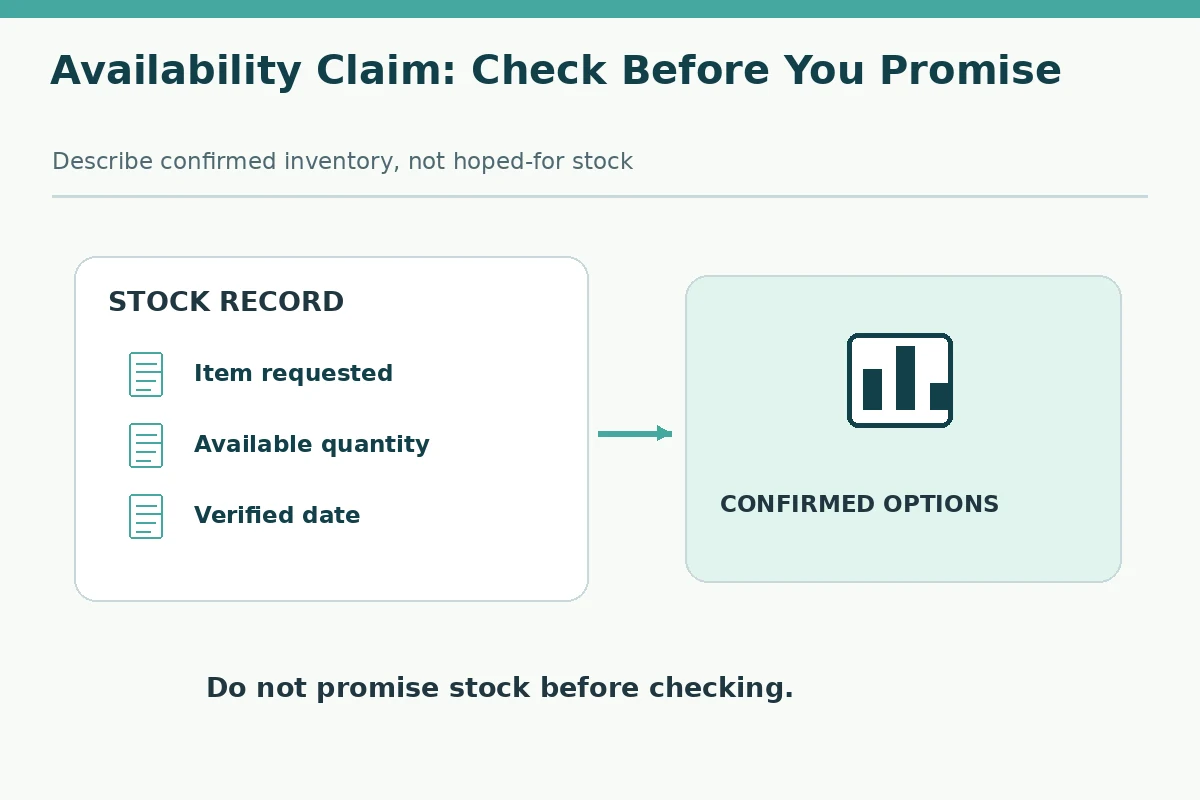
Scenario 1: The customer wants an item that is currently unavailable
Model answer (hypothetical): “I would first clarify the customer’s essential use case and deadline, then confirm the current availability with the inventory or fulfillment source we use. I would be candid about what is known and what is still uncertain. If approved alternatives or backorder options exist, I would compare them against the customer’s needs without claiming they are equivalent without evidence. I would confirm any estimated timing through the authorized team and document the follow-up, rather than promise a ship date to secure the sale.”
Why this works: The interview tests whether you treat availability as a verifiable fact and match alternatives to needs rather than maximizing an immediate yes. Do not claim: Avoid inventing inventory, delivery promises or product capabilities.
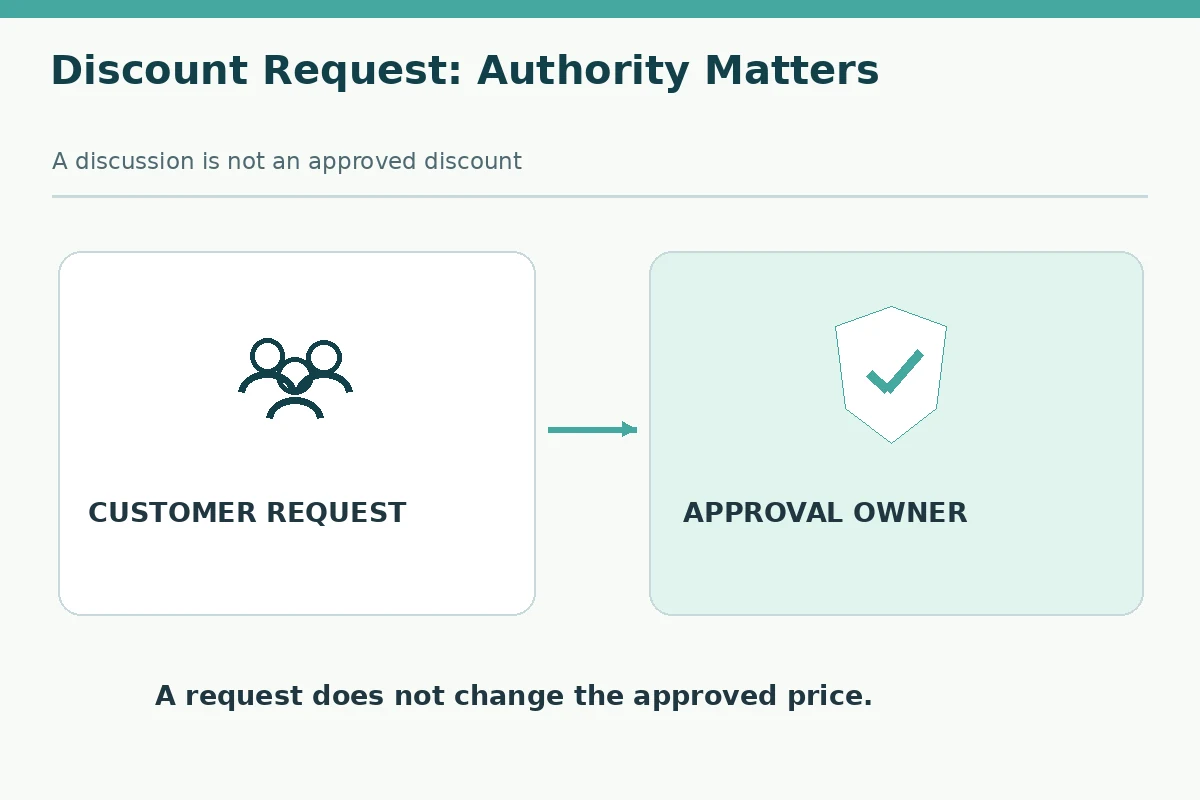
Scenario 2: A prospect asks for a discount outside your authority
Model answer (hypothetical): “I would ask what business constraint the buyer is trying to solve and confirm which terms are actually published or authorized. If the request exceeds my pricing discretion, I would explain that I need approval instead of implying that the discount is already agreed. I would summarize the proposal accurately for the responsible manager and return with confirmed terms. If an authorized adjustment is not available, I would be transparent and discuss legitimate alternatives without pressure.”
Why this works: The interviewer is checking honesty under negotiation pressure and your ability to separate discussion from commitment. Do not claim: Avoid implying that verbal interest makes a discount or contract change final.
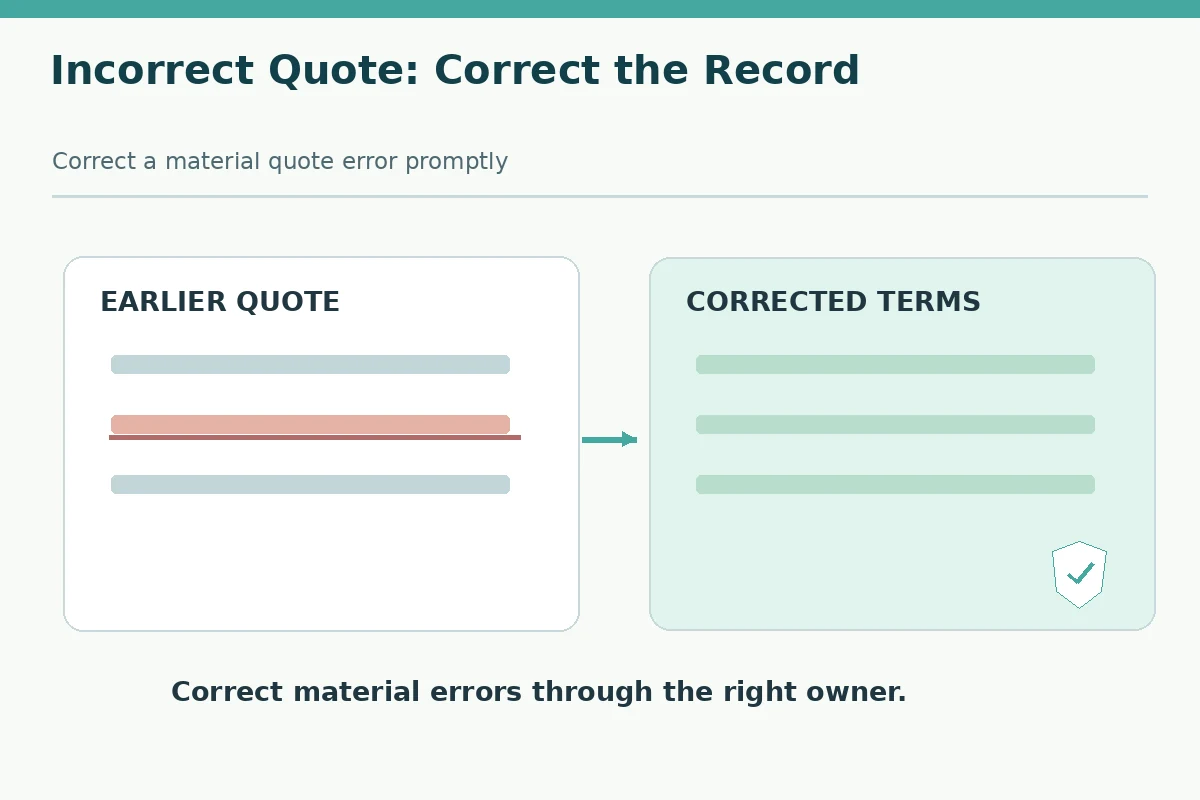
Scenario 3: You realize your earlier quote omitted an important condition
Model answer (hypothetical): “I would review the original message and the approved quote details to establish the exact error. I would notify the appropriate account owner promptly and correct the information with the customer through the established process. I would state what changed, why it matters and what options are currently authorized, without shifting blame. If a signed agreement or payment is already involved, I would route the issue to the team responsible for those terms before giving a new promise.”
Why this works: This scenario rewards early correction of material facts instead of hoping the customer will not notice the omission. Do not claim: Avoid silently changing an order history or making unauthorized contractual assurances.
Scenario 4: A client requests a feature the product may not support
Model answer (hypothetical): “I would ask how the client intends to use the feature and document the exact requirement. I would verify the current product capability with an approved specification or knowledgeable specialist instead of guessing. If the capability is unavailable, I would say so and discuss accurately described alternatives or the appropriate product owner’s follow-up. I would avoid assuring the client that a future roadmap item is committed unless that promise has been authorized and documented.”
Why this works: Interviewers want customer discovery paired with technical humility and reliable product commitments. Do not claim: Avoid promising a roadmap feature or a compliance guarantee you cannot verify.
Verify Terms Before Making Commitments
| Interview complication | Responsible next step | Unsupported response to avoid |
|---|---|---|
| Product is unavailable | Check inventory and approved alternatives | Guarantee a ship date without confirmation |
| Discount requested | Confirm limits and authorized decision maker | Promise unapproved price |
| Quote has an error | Correct record and involve terms owner | Hide the condition or rewrite history |
Rehearse one scenario with a table listing “buyer need,” “fact to verify,” “approval owner” and “next update.” The point is to make your answer operationally credible without claiming you alone control contracts, credit or delivery. If a recruiter asks whether you would risk losing a sale by being honest, explain that an inaccurate commitment can damage the customer relationship and create downstream problems. Keep the buyer’s actual goal visible throughout the response.
Practice Accurate Buyer Updates
A recruiter may ask, “What if the prospect says they will buy today only if you guarantee the date?” The answer should not automatically become “I would do it.” Explain which part of the timing can be verified, who authorizes exceptions and what update you can commit to personally. Separate a proposed alternative from an agreed contract term. Clarifying an objection is useful, but it should not become a pretext for concealing a product limitation. Sales judgment includes knowing when an accurate no or not-yet is better than a misleading yes.
Prepare by identifying the employer’s selling model: retail counter, inside account support, business development or wholesale representation. These jobs may use different pricing, quoting and fulfillment systems. Practice with a hypothetical buyer and a simple order record, then explain the evidence required for each promise. If your actual experience is customer support rather than sales, describe it as transferable listening and follow-up rather than completed commercial negotiations. A good answer leaves the customer with an accurate next step and a reliable owner.
Check Which Decisions Need Approval
Audit each answer for vague sales clichés such as “I would do whatever it takes” or “I would always close the deal.” Replace them with a verification step, authorized option and follow-up. A great situational answer may result in postponing a decision until essential facts are available; that is not a failure. For an entry-level role, use your real experience coordinating tasks or checking information, and mark any sales scenario as hypothetical. Never invent revenue, targets or conversion outcomes.
How We Research and Check These Scenarios
We reviewed occupational information and university career guidance on 2026-11-14. www.onetonline.org explains o*NET describes business sales duties including explaining availability, quoting terms, maintaining customer records and follow-up. www.onetonline.org explains o*NET task details include customer questions, order forms, quotes, delivery coordination and sales support. www.ualberta.ca explains university of Alberta distinguishes hypothetical conditional answers from descriptions of real prior experience. All model responses are hypothetical, not employer-specific safety protocols, verified candidate accomplishments or actual hiring outcomes. Check the current job description and employer procedures before using an example. See our affiliate disclosure.
More Interview Preparation Guides
No. A realistic response may involve verifying availability, requesting authorization or recommending that the buyer wait for accurate information.
Only within the authority and policies of the actual role. Explain how you would seek approval for exceptions.
Clarify the need, verify the limitation, and discuss accurately described authorized alternatives rather than promise an unsupported feature.
No. Explain your decision sequence and expected follow-up without inventing sales revenue or conversion figures.
State that you would verify the error, notify the proper owner, promptly correct the customer-facing information and document the permitted resolution.