
For a software QA analyst interview, introduce yourself by naming the kind of testing you have genuinely performed, one example of how you reproduced or documented a problem, and how you communicated with the team. Do not turn a testing assignment into a claim that you designed the product, fixed the code or approved a release unless those responsibilities were actually yours. A good opening explains your evidence process more clearly than a long list of automation tools.
Start with the software testing role in the posting
Quality assurance work may involve manual exploratory testing, writing repeatable test cases, automated regression checks, usability evaluation or defect triage. The Bureau of Labor Statistics describes software QA analysts and testers as developing and executing checks, documenting defects and giving feedback to developers. O*NET likewise emphasizes analyzing problems and communicating reproducible findings. Match your answer to the job’s actual product, environment and expected testing responsibilities.
If the vacancy emphasizes mobile app regression tests, a desktop-only manual testing experience is relevant only in part. State the common skill—documenting steps and expected behavior—then acknowledge what you still need to learn. Do not claim mastery of a tool because you watched a tutorial. Employers can ask detailed questions about test design, datasets or bug trackers, so mention only technologies you have actually used.
Describe one reproducible defect example
A strong QA example states the observed problem and how another person could verify it. You might explain that you documented the test environment, steps, expected result, observed result and relevant evidence. The example need not be a severe production outage. A carefully documented issue in an authorized class project or internal test environment can show method, especially for an entry-level applicant.
A tester should also distinguish evidence from interpretation. “I reproduced a login error on a specified test build and documented the steps” is not the same as “I diagnosed the root cause and fixed authentication.” If a developer investigated the cause, say that. Do not publicly share security findings, internal credentials, customer records or screenshots that include restricted data. Use synthetic descriptions when the real environment is confidential.

Explain how you designed and checked test cases
If you wrote test cases, describe how you chose conditions such as valid input, missing input or boundaries that matter to a feature. State whether you followed requirements supplied by a product owner, a test plan or an approved checklist. If you executed rather than authored tests, that can still be valuable: accurate results, clear retest notes and consistent environment setup help a team compare versions.
Resist the temptation to say you found “all the bugs.” Testing can provide evidence about cases run, not a guarantee that software is error-free. If you used automation, explain what the script checked, how failures were reviewed and what you did when results were flaky. An interview introduction should reflect a testing mindset—defined expected behavior, reliable observation and traceable reports—rather than treating tool names as achievements.
Separate defect priority from release permission
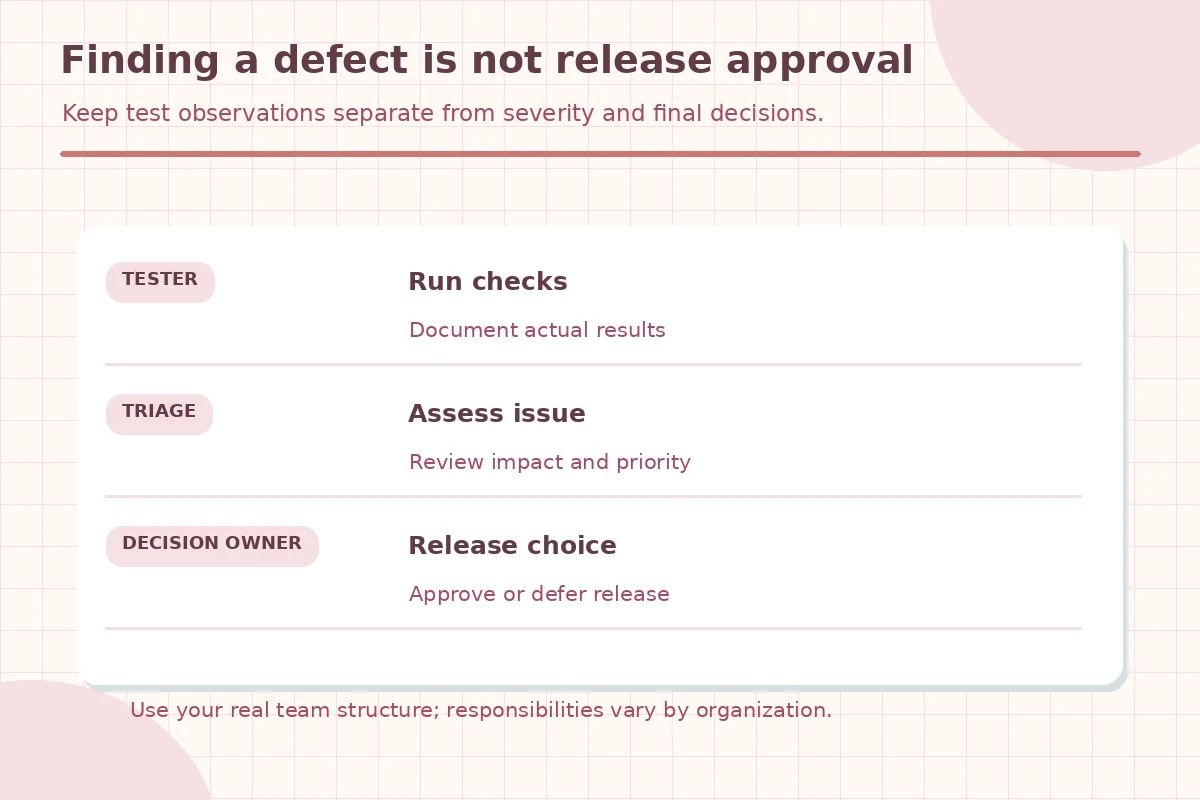
Defect reporting, severity assessment and release approval may belong to different team members. You can say you suggested severity based on observed impact, recorded an issue in the tracker and shared findings with the lead. Do not claim to have blocked or authorized a release if that decision belonged to a manager or product owner. If your team had a formal severity matrix, mention how you used it rather than inventing a universal ranking standard.
A useful example can show collaboration. Perhaps a developer could not reproduce the failure until you documented browser version and test data. Describe how you supplied the missing information, not how you “made engineering fix it.” QA work often requires respectful handoffs and retesting. Explaining your actual contribution makes the introduction more credible to both technical and nontechnical interviewers.

Use an honest entry-level or career-change model
An illustrative answer is: “I have hands-on experience with manual software testing in a supervised training project. I prepared test cases from requirements, recorded the expected and actual behavior, and wrote repeatable defect reports for team review. I enjoy turning unclear results into useful evidence, and I am interested in this QA analyst role because it emphasizes methodical testing and collaboration.” Every task in the example must be replaced with the applicant’s real experience.
Someone moving from customer support can mention accurately documenting repeatable user problems, but should not label ordinary support tickets as formal QA testing. Instead, describe the transfer: checking symptoms, recording steps and communicating the issue clearly. An experienced tester may lead with regression planning or automation when those have been genuine responsibilities. In every case, distinguish what you executed from what you designed or approved.
| Evidence | Strong description | Do not imply |
|---|---|---|
| Manual test | Ran documented cases and noted failures | Guaranteed zero bugs |
| Bug ticket | Recorded repeatable steps and environment | Fixed root cause personally |
| Release review | Shared test evidence with decision owner | Authorized release without responsibility |
Prepare for the follow-up on bug reports
The interviewer may ask what your defect report included. Be ready with a permitted example that identifies environment, build, reproduction steps, expected behavior, actual behavior, attachments and retest status. When an issue happens only intermittently, explain that you recorded uncertainty and attempted controlled repetitions rather than declaring a root cause without evidence. Avoid including real account credentials or confidential customer records in the example.
A related question might be how you decide whether a test passed. Talk about the documented expectation, observation and any ambiguity you flagged. If a requirement was missing, show that you asked for clarification instead of creating your own acceptance standard. These habits help interviewers assess your judgment regardless of whether your experience was in a classroom, internship or professional product team.
Finish with a role-fit check before the interview
Read the final answer aloud and ask whether it clearly names your testing approach, one defensible example and why this employer’s QA responsibilities appeal to you. Remove claims you cannot explain in a follow-up. A concise introduction usually works better than a chronological list of every tool, and you can expand when asked. CareerOneStop advises practicing with real examples rather than depending on impressive adjectives.
Finally, review how you refer to outcomes. Unless you have documented evidence, do not claim you eliminated defects, guaranteed a successful launch or increased testing coverage by a fabricated amount. Give honest scale, such as a project type and the test cases you handled. A clear, reproducible process and accurate ownership of work are more useful than a promise about software quality that no individual tester can ensure.
How We Research and Verify Interview Guidance
JobAsk compared this role-specific question with the user-provided WordPress inventory, original content queue, relevant public search results and US occupational and career guidance on November 7, 2026. The sample responses are hypothetical writing models, not employee testimony or promised hiring outcomes. Follow the employer’s current instructions, describe your own verified experience and see our affiliate disclosure.
Source: cloudfront.careeronestop.org — CareerOneStop recommends researching the job and employer, practicing truthful examples aloud and asking informed questions.
Source: careerservices.fas.harvard.edu — Harvard career guidance describes a brief, job-relevant introduction with background, current strengths and a next-step connection.
Source: www.bls.gov — BLS describes software QA work including test plans, defect documentation and feedback on functionality.
Source: www.onetonline.org — O*NET identifies software QA analyst duties in replicable tests, defect tracking and communication with developers.
More Interview Preparation Guides
Only if you have actually used both; give a test example rather than listing technologies without context.
Describe a permitted or synthetic version without disclosing restricted code, customer information or credentials.
No. Report your testing contribution accurately and identify who handled the correction if known.
Label it as coursework and explain the requirements, cases and results you personally documented.
Avoid unconditional guarantees. Say what was tested, what evidence you reported and who made release decisions.