
When a principal or school hiring team asks “Tell me about yourself,” use the opening to explain the kind of teaching work you can actually discuss. Identify your subject or grade-level focus, one teaching decision you have made or observed, and why the school position matches that experience. This is a professional introduction, not a life history or a promise that every learner improved because of you. A student teacher, substitute, paraprofessional, and licensed classroom teacher should name their responsibilities differently.
An effective structure is current teaching focus, one relevant example, then the connection to the school. The UW–Madison Career Center explains this present-past-future approach, while Eastern Illinois University Career Services identifies classroom management, instructional methods, assessment, and collaboration as typical teacher-interview topics. Pick only the themes that match the job description and your experience.
Start With Grade Level and Teaching Responsibilities
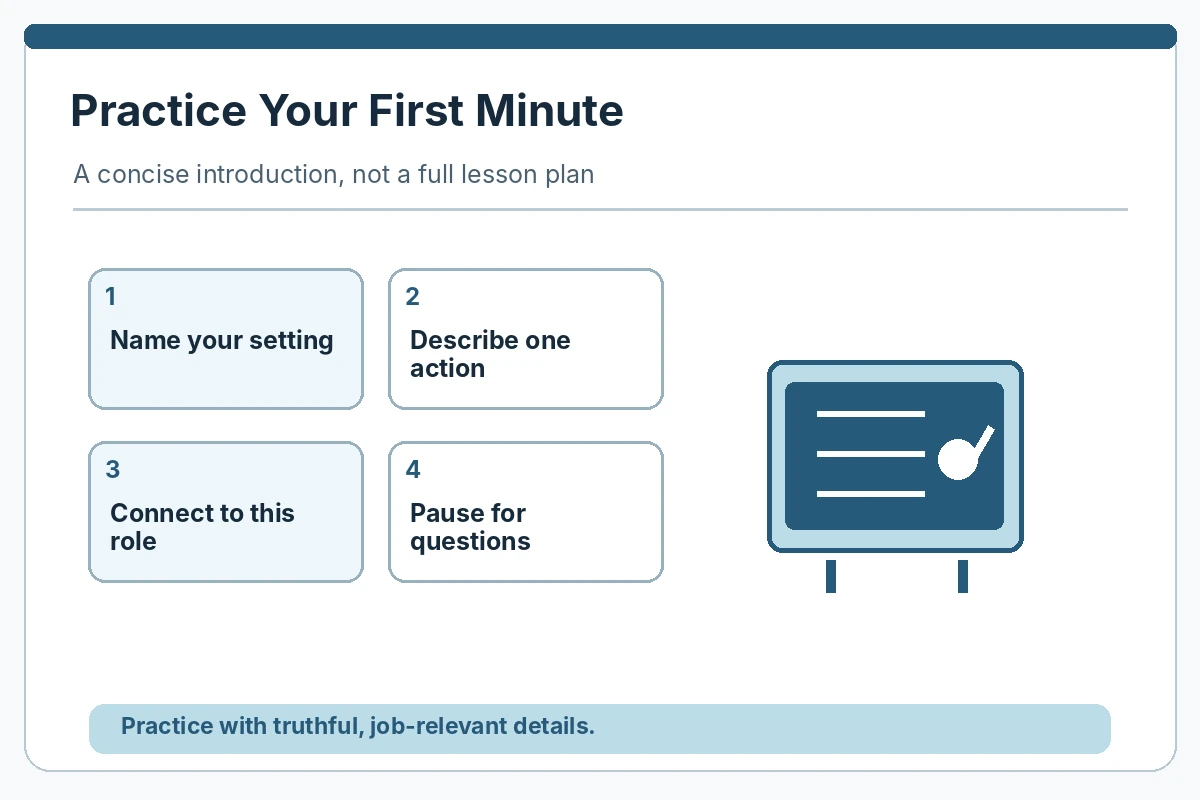
Begin with one concrete professional label: your credential status if applicable, the subject or age group you teach or trained to teach, and the setting in which you gained relevant practice. A student teacher should say they completed a placement and describe responsibilities under a cooperating teacher. A classroom aide should not introduce themselves as the teacher of record. This accurate opening gives the interviewer useful context before the example arrives.
Compare the posting with your own record. If the district emphasizes literacy interventions, identify authentic reading instruction or tutoring rather than offering an unrelated speech about passion. If the role involves secondary science, mention the curriculum and safety routines you actually supported. The point is to signal where your evidence comes from. Keep personal background brief unless it directly explains a professional choice you can substantiate.

Select a Small Instructional Example You Can Defend
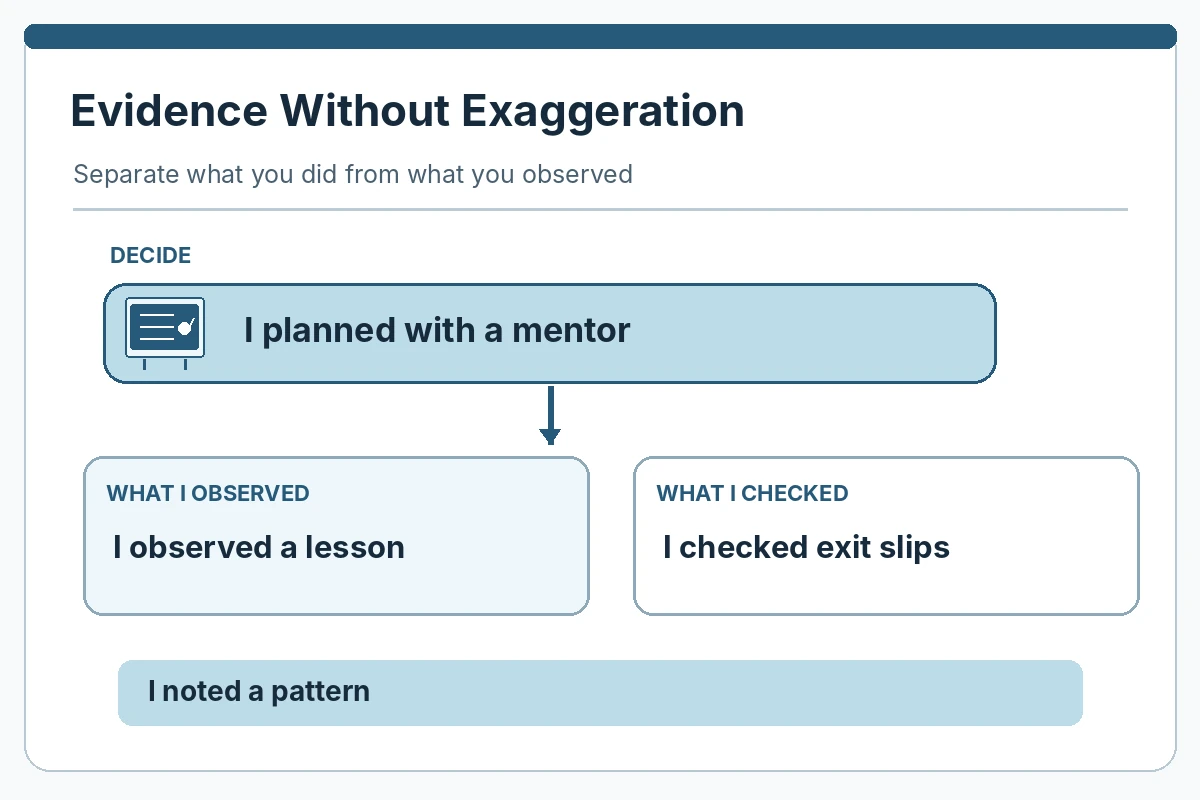
Choose one situation that reveals your instructional judgment without turning the opener into a long behavioral story. The evidence might be a lesson sequence adapted after an exit ticket, a small-group activity prepared with a mentor, or a method for explaining a complex concept. State what you personally did, how you checked whether students understood, and the limits of what you can claim. Do not manufacture test-score changes or describe shared team work as your sole achievement.
The BLS description of high school teachers includes lesson planning, assessment, adapting instruction, and communication with families. Those are useful categories for selecting an example, not proof that any particular candidate has performed them. If you were an observer rather than the decision maker, say what you learned and how you intend to apply it under the school’s policies. This distinction matters in entry-level teaching interviews.
Tie Your Introduction to the Actual School Role
The final sentence should make the transition from evidence to the job. Find a specific public detail from the school’s posted priorities, subject requirements, or program description. Connect it to a genuine interest and name the contribution you hope to make, rather than claiming you will transform outcomes. Avoid invented compliments about a school you have not researched. A modest, informed connection carries more meaning than praise repeated from a generic script.
For example, if the posting requests collaborative planning, a candidate who helped refine lesson materials with a mentor can explain that practice. If you have no comparable example, express interest in learning through a grade-level team instead of claiming experience with a process you have never used. Treat the opener as an invitation for follow-up questions. Do not try to describe all your teaching philosophy, classroom systems, and resume details at once.
Study a Hypothetical Teacher Introduction
Hypothetical example — fictional candidate, not a real outcome: “I recently completed a supervised student-teaching placement in middle-school mathematics, where I planned practice activities with my cooperating teacher and used short exit questions to see which concepts students needed to revisit. I learned how important it is to change an explanation rather than repeat the same steps. I’m interested in this role because the posting emphasizes thoughtful instruction and collaboration, and I’d welcome the chance to keep developing those practices with your team.”
This example deliberately avoids a fake school name, fabricated student gains, or unsupported credential claims. Replace the role, age group, and specific example only with facts you can discuss. Experienced teachers can use a real instructional adjustment and how they monitored it; candidates from tutoring or substitute roles should use those titles precisely. If asked for a measurable impact later, describe only recorded information and its limitations.
Use a Three-Part Evidence Practice Card
Prepare three short notes: “My teaching context,” “A decision I helped make,” and “What I would bring here.” Draft one sentence under each, then speak the answer aloud without reading. Listen for terms you cannot explain, such as differentiation, data-driven instruction, or restorative practices. If an expression is just a fashionable label, replace it with the concrete action you took. A reviewer can ask what you observed and what you would improve on a second attempt.
Time a spoken version as a practice aid, not a scoring promise; roughly a minute is often a useful first draft, but interviewers may prefer different lengths. Leave room for follow-ups on planning, assessment, and classroom routines. Ask a mentor whether your responsibilities are stated at the correct level. A rehearsed opening should sound like a conversation, not a memorized teaching statement read in one breath.
Respect Student Privacy and Credential Boundaries
Examples should avoid pupils’ names, identifying student work, sensitive support plans, and family details. Explain the instructional approach without exposing records. If you mention licensure, accurately state the state and current status, checking the requirements of the particular posting rather than assuming rules are uniform across the United States. Training under supervision is valuable, but it is not the same as independently holding a licensed appointment.
Before the interview, compare your resume dates, placement descriptions, and spoken introduction. All should tell the same story. You can express interest in inclusion and student development without claiming a practice was approved or effective when you lack evidence. Finish by asking whether the school would like more detail on your instructional approach. That keeps the introduction useful and leaves room for the hiring team’s questions. Our guide “Tell Me About Yourself in an Interview” covers how to build an honest, focused answer.
How We Research Interview Guidance
We compare job-specific duties with career-center advice on interview structure and delivery. An occupation source describes common work, not the facts of an individual candidate. Our examples are explicitly hypothetical and must be replaced with personal evidence. We do not claim guaranteed results or that one script satisfies every interviewer. Sources reviewed October 23, 2026; verify employer instructions and changing requirements before applying.
Useful references: career-center guidance; career-center guidance; professional occupation guidance. JobAsk explains its commercial relationships in the affiliate disclosure. This informational guide does not indicate a paid endorsement or hiring guarantee.
Related Guides
- Elementary Teacher Interview Questions: Lessons and Classroom Decisions
- Teacher Professional Growth Goals: Improve One Classroom Practice
- Questions to Ask in a Teacher Interview: Curriculum, Mentoring, and Support
- Teacher Interview Strengths and Weaknesses: Lesson Evidence and Reflection
- Preschool Teacher Interview Questions: Play, Classroom Routines, and Family Trust
Yes. State the placement and the duties you performed under supervision, then use one specific teaching example.
Yes. Describe observations or feedback you truly collected, but do not invent improvement rates or imply causation.
One relevant sentence is enough for an opener; keep a fuller philosophy for the question or statement devoted to it.
Explain your actual teaching context and a transferable instructional approach, without pretending you have taught the new grade.
Only mention a program you have verified and can connect to your authentic experience or learning goals.