
Use a volunteer-specific note rather than a paid-job template
A volunteer resignation letter can be brief: explain that you are ending your volunteer commitment, identify the role, give the final available date or shift, and thank the organization if that reflects your experience. Volunteering is not the same arrangement as paid employment. Avoid copying phrases about salary, employee benefits, or “two weeks required by law” into a volunteer message. Instead, review your volunteer agreement and the organization’s stated procedure. If you are leaving a governing board or a regulated volunteer position, more formal rules may apply; this article addresses ordinary operational volunteer roles.
Check the schedule and volunteer agreement before proposing a date
Look at any rota, event signup, training commitment, and agreed notice process. A volunteer may have future shifts assigned even without a full-time work schedule. Record the dates you can still attend and those you cannot cover, then tell the coordinator before they depend on your availability. An organization may ask for advance notice so it can safely plan; that does not make every volunteer an employee. Avoid announcing a date without checking whether a specialist role has an approved replacement process. If you need to leave immediately for a serious concern, use the organization’s safeguarding or urgent reporting route.
Send notice to the volunteer coordinator or designated lead
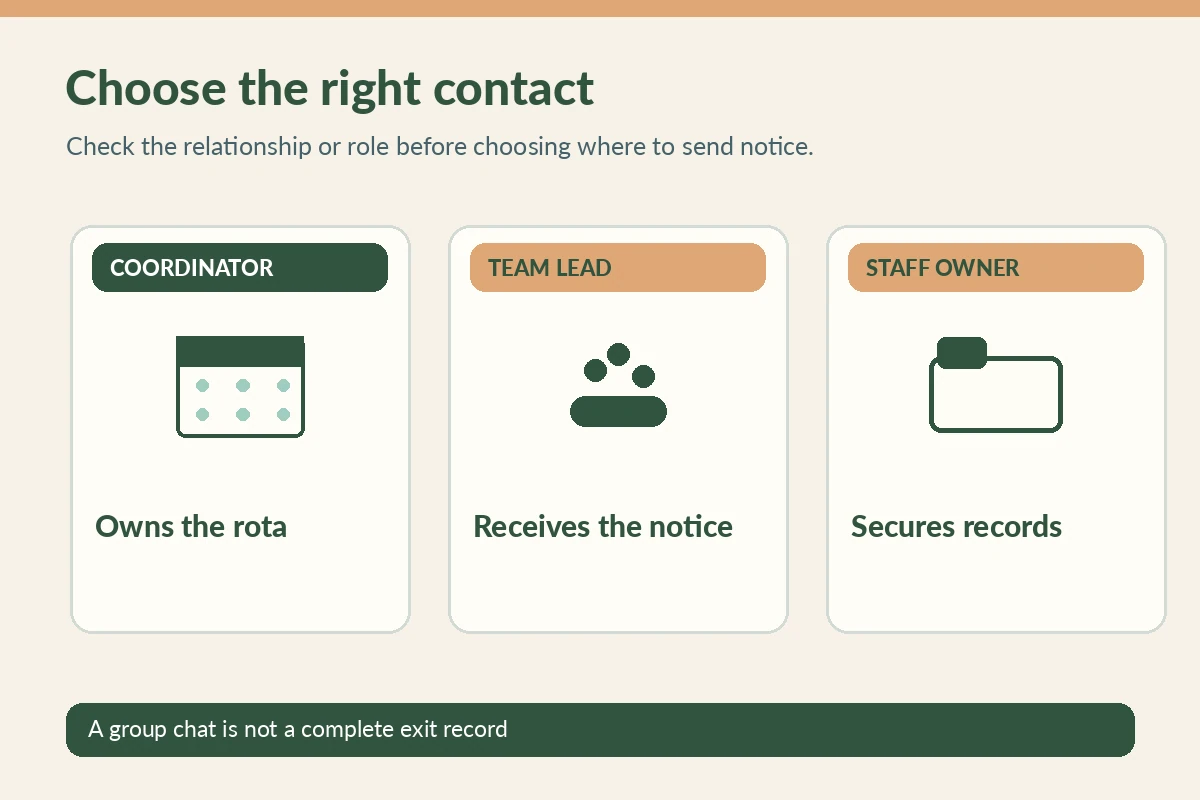
A message in a group chat may inform teammates but may not reach the person who owns scheduling and access. Use the volunteer manager, assigned team leader, or official address named in the handbook. Explain if you are leaving one recurring role but would like to volunteer in another capacity, without assuming that a transfer will be approved. NCVO guidance notes that organizations should make role endings and handoffs orderly, including equipment and access. Ask the coordinator which steps apply at your site. Do not assume your last shift will automatically be removed from the rota.
Write a simple letter with the necessary facts
Illustrative email: Subject: Volunteer Role — Final Shift Notice. “Hello Casey, Thank you for the opportunity to volunteer with the community reading program. I will need to step away from my weekly Volunteer Assistant role. My proposed last shift is [date]. Please let me know how to hand off any scheduled tasks and return my badge or materials. I appreciate the team’s guidance and wish the program well. Best, Alex.” This is a hypothetical example. If your departure is immediate, do not invent a future shift; give your honest availability and contact the coordinator promptly.
Transfer planned activities without sharing sensitive records
Volunteer roles may involve attendance lists, donor information, children, older adults, library users, or other people whose records are protected. The safe handoff is a summary of the work, next scheduled activity, and designated staff owner—not your personal copy of identifiable records. Leave files in the organization’s approved system and tell the coordinator where to find them. If a volunteer role includes supervised work, do not independently assign another volunteer to tasks that need training or screening. A responsible transfer may require staff approval before anyone new starts handling those activities.

Agree on how to finish open commitments
Consider a hypothetical fundraising event with a printed checklist and two volunteer slots. You might finish the print materials you have permission to edit, note the location of the latest version, and ask the coordinator to reassign your next shift. You should not promise to attend the event when you cannot, nor email an attendee list to a friend to arrange coverage. For ongoing support programs, continuity is especially important; the organization should decide who communicates a change to service users. Your contribution is a truthful status record and notice, not unilateral reassignment.
Return property and ask staff to manage digital access
Volunteer items can include badges, keys, branded clothing, loaned devices, sign-in credentials, organization accounts, or paper materials. Ask where each item should go and whether a return receipt is needed. If you have a shared organizer login, do not change passwords without authorization or pass credentials to the next volunteer. Staff should determine when and how access is removed. Delete organization material from personal devices only under the organization’s instruction and approved retention procedure; avoid destroying a needed official record. A clear record of the handoff protects service users and the volunteer team.
Handle a request to reconsider or reduce your hours
A coordinator may offer fewer shifts or a different role. If that genuinely works for you, ask for the new schedule and role requirements before committing. If your decision is final, one courteous repetition is sufficient: “Thank you, but I cannot continue after [date].” You do not need to disclose private health, family, or work details. Some volunteers feel personally responsible for the program’s future; it is reasonable to be thoughtful while letting the organization manage recruiting and coverage. Avoid promising that you will return on a fixed date unless you know you can.

Leave without a misleading employment history claim
Volunteer work can support a future resume, but record it accurately as volunteer experience. Note your actual organization, volunteer title, activities, and dates without calling the position paid employment. Do not claim you supervised safeguarding or made independent professional decisions unless that was authorized and true. If you would value a reference, ask the coordinator whether one is possible, rather than assuming staff can provide it. A respectful final note can maintain a relationship, but volunteers should not depend on praise or recommendations as a condition of stepping away.
Confirm closure and keep an appropriate record
After the coordinator acknowledges your message, confirm the final shift, reassigned commitments, and property returns. Keep your own sent notice and nonconfidential acknowledgement; do not save rosters or individual participant data. The organization may offer an exit conversation or feedback form, which you can use factually if appropriate. When a volunteer role involves a governing board, safeguarding responsibilities, a church office, or other special authority, consult that organization’s procedures first. The letter here is a practical starting point for everyday volunteer participation, not a universal resignation document.
How We Research and Verify Resignation Advice
We reviewed the primary guidance linked below and focused on what the source actually covers rather than assuming one workplace has every employer’s rules. The sample messages above are hypothetical. Verify your agreement, handbook, program, supervisor instructions, and actual dates before using them. This article provides general communication guidance, not a legal, immigration, compensation, or academic determination.
Sources checked 2026-11-03: NCVO guidance recommends volunteer handoffs, returning data and equipment, and managing removal of internal access. Children in Hospital requests notice to volunteer leaders and a final shift date in its volunteer-exit guidance. Northeastern general resignation letter guidance supports clear, courteous professional communication, adapted here to volunteering. Additional disclosure: Affiliate disclosure. No paid partnership is assumed in this article.
Explore Related Career Guides
There is no universal answer for all volunteer programs. Check the specific agreement and program process, and give as much realistic warning as you can.
If you must, contact the designated lead promptly and explain which shifts you cannot cover. Urgent safety concerns may require special reporting.
Use the volunteer coordinator or team lead designated by the organization, rather than relying solely on a group chat.
Leave them in approved systems and arrange staff-controlled access transfer. Do not take participant or donor data as a personal handoff file.
No. List the role truthfully as volunteer experience with actual duties and dates.