
A volunteer cover letter should make clear which opportunity you are interested in, what you can contribute, and how much time you can reliably offer. Avoid treating unpaid work as automatically informal: some roles have training, screening, privacy, safety or minimum-commitment conditions. Read the specific posting before writing. The right approach is a concise example of relevant activity and a realistic availability statement, not a promise to handle any task the organization needs.
Match the actual volunteer opportunity
A community food distribution shift, a museum visitor desk, an environmental stewardship event and a remote data-cleanup project may all be volunteer opportunities, yet the responsibilities and requirements differ. Use the role’s official name and check the application method, location, schedule and required onboarding. When the posting requires a form, do not assume an email letter can replace it. If the organization asks for a short motivation statement, adapt the same evidence to the requested length rather than attaching several documents without permission.
A helpful opening begins with the volunteer role and the specific program you want to support. Instead of “I love helping people and will do anything,” explain why a stated task suits you. For example, you may have helped organize sign-in tables at student events, making you interested in visitor check-in support. That example says what you can offer without implying access to protected participant data, authority to supervise others or professional qualifications you do not have.
Translate real activities into relevant contributions
Paid employment is not the only possible evidence. You may draw from school projects, neighborhood events, community groups or previous volunteering, as long as you identify their context. Describe the task, your action and the handoff. “Sorted donated materials using a provided category list and asked a coordinator about unlabeled items” shows care without pretending you controlled inventory, transportation or distribution policy. If your example has a known measurable result, state it accurately; otherwise, a clear process is enough.
Do not exaggerate the people you served or the outcome of an event. In a visitor-facing opportunity, it can be enough to explain that you welcomed participants and directed questions to trained staff. If a program works with children, medical information, sensitive financial records, vehicles or equipment, the role may have additional checks and restrictions. Interest and prior attendance do not automatically authorize you to perform regulated or sensitive tasks. Mention willingness to complete required training where appropriate.

State dependable hours and your preferred term
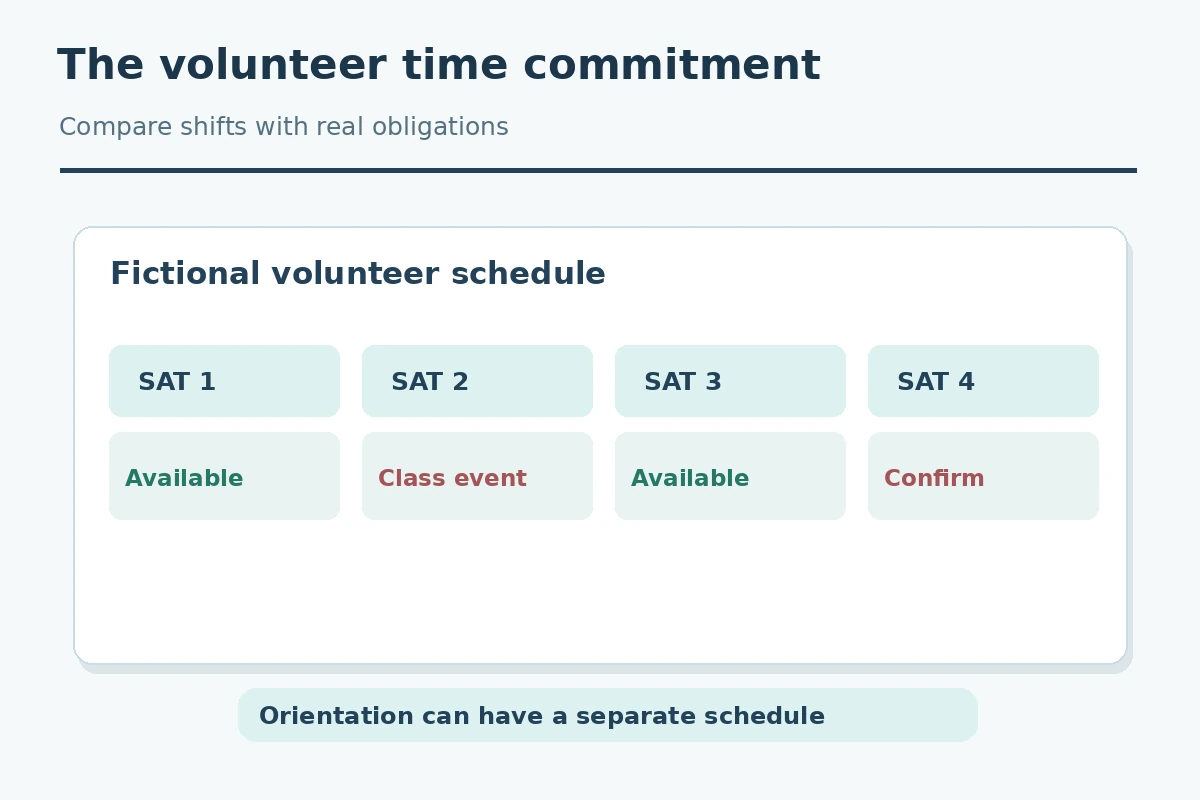
A coordinator may rely on volunteers to show up at specified times. Build a small private schedule before offering a commitment: possible days, transport, anticipated absences and whether you can sustain the requested duration. Do not say you are “available anytime” unless that is genuinely true. If you can attend two Saturday mornings per month but not weekdays, that is relevant information. Some projects prefer single event shifts; others ask for an ongoing term, so verify the opportunity’s requirements first.
The letter can use a straightforward line such as, “I can attend scheduled Saturday sessions twice per month and can discuss required orientation dates.” Replace that with your genuine availability. Do not confuse willingness to volunteer with a guaranteed assignment; placement may depend on screening, supervisor capacity or completing the official application. If you need accommodations or clarification about essential tasks, communicate those questions through the organizer’s stated process without inventing a universal rule.
Use a short example letter with clear boundaries
Hypothetical sample: “Dear Volunteer Coordinator, I am interested in the Community Event Welcome Desk opportunity listed on your organization’s website. During a student club event, I checked names against an organizer-provided list, directed visitors to the correct rooms and referred unusual registration questions to the team lead. I can offer two Saturday mornings per month during the upcoming term, subject to the orientation schedule. I would be glad to learn the procedures for your program. Thank you for considering my interest.”
The example is deliberately modest. It does not suggest that the applicant handled medical questions, performed background checks, supervised young participants or already received access to protected data. Replace the fictional event and time commitment with your own verified information. The organization might not need a formal letter at all; if so, use the relevant sentences in its own form and do not add extraneous attachments. Your goal is to make the coordinator’s decision easier, not to use volunteer language to claim professional status.
Ask about orientation and the limit of each task
Useful questions after the organization responds include who supervises the shift, what training is required, how volunteers sign in, and when to refer a question or incident. Ask about any published screening or other eligibility requirements without assuming the same checks apply to every volunteer opportunity. A volunteer program may have a specific escalation contact for sensitive situations. The right cover letter need not explain those procedures; it should avoid promising to bypass them.
If the posting involves heavy lifting, driving, personal care, or specialized activities, do not claim you can perform them safely without knowing the expectations and any necessary qualifications. If it involves participant records, stress responsible handling and following the coordinator’s instructions rather than access you do not possess. A clear distinction between your past experience and the training you still need shows realistic interest. It also prevents the letter from implying an agreement that has not been offered.

Check the commitment before submitting
Read the role description again and ask whether your example demonstrates a duty that truly appears there. Confirm spelling of the organization and contact, the requested document format and whether a volunteer application is required separately. If you mention a previous organization’s name, make sure you have permission to share it and do not reveal participants’ private details. Remove flattering phrases that could be sent unchanged to any charity; use one accurate detail that explains your interest.
Save the version you submit and your stated availability. If the role is not available, ask whether the organization has a public way to learn about future opportunities rather than assuming a placement is guaranteed. Volunteering can build experience, but your letter should represent an actual invitation to contribute under the organization’s rules, not a disguised claim of employment or special access. Honest limits make you a more dependable potential volunteer.
How We Research Cover-Letter Guidance
We reviewed official university career-center guidance on tailoring letters, selecting real evidence, keeping documents concise, and following the employer’s stated channel. We separately checked specialized guidance where available. The sample passages are fictional teaching examples, not actual employers, offers, hiring outcomes, or claims that any organization accepts unsolicited material. Availability, screening, worksite and eligibility details must be confirmed with the individual organization.
Sources checked November 10, 2026: careers.gmu.edu; careerservices.upenn.edu; www.volunteer.gov. Read the affiliate disclosure.
More Resume and Cover Letter Guides
Not always. Many opportunities accept school, club or personal project examples, but eligibility and training vary by organization and role.
Yes when the project specifies shifts or an ongoing term. Give realistic time commitments rather than claiming unlimited flexibility.
No. An application or inquiry is not an accepted placement; keep your status accurate.
Requirements vary by opportunity. Read the actual posting and follow the organization’s official screening process.
The evidence-based structure is similar, but the letter should address the volunteer mission, tasks, time commitment and onboarding conditions.