
Public relations experience can transfer to internal communications through interviewing, drafting, source verification, stakeholder coordination and channel planning. The main adjustment is the reader. Employees need to know what a change means for their work, what actions are required and where to ask questions—not only why an organization wants public attention. To make this move credibly, show how you adapt a message, verify operational details and respect the approvals that employee information requires.
Distinguish audience needs before changing channels
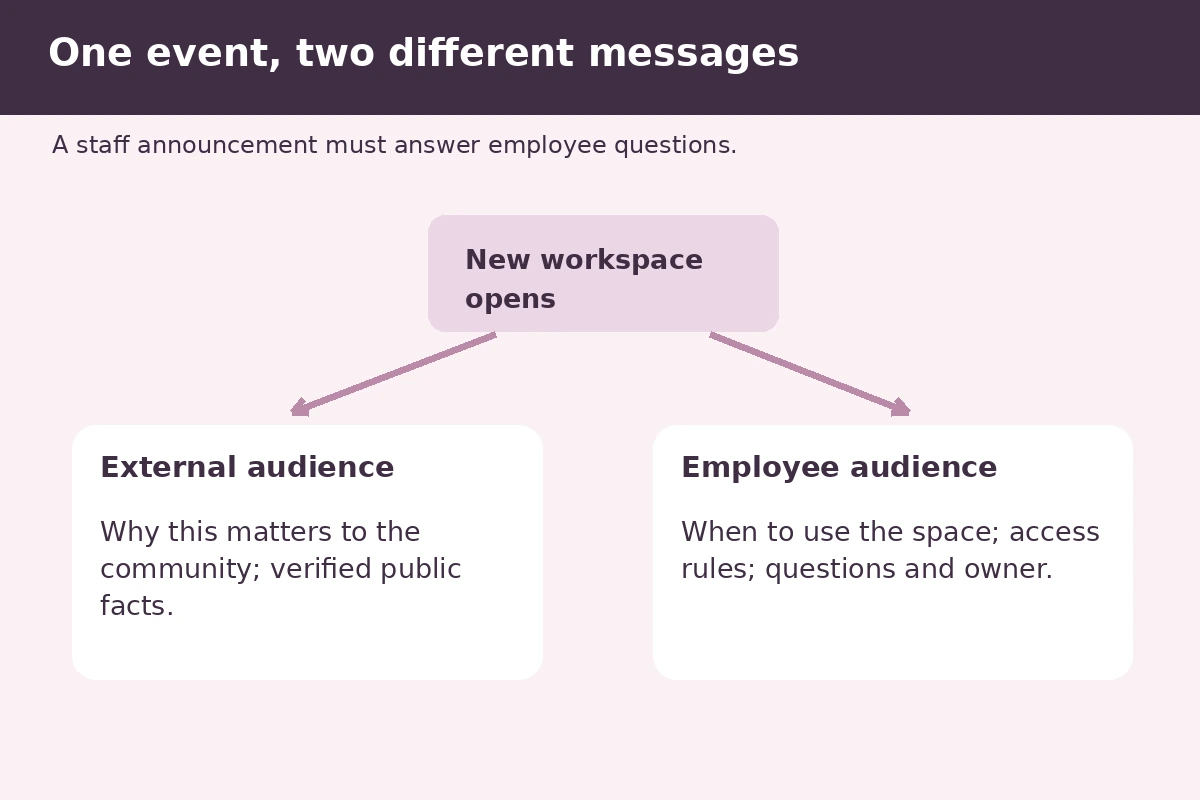
A media release may explain a company’s initiative for journalists, partners or the public. An employee update about the same initiative may need dates, affected teams, new procedures, training arrangements, contact names and a method for reporting problems. Merely pasting a public release into an intranet page can leave readers uncertain about what they must do. Build a comparison of each audience’s questions before writing.
For every prospective employer, inspect the job description for employee newsletters, manager toolkits, intranet updates, town-hall support, leadership messages or change communications. Separate writing duties from responsibility for employee policies and legal review. Your role may be to coordinate accurate communication, while HR, operations or leadership sets the policy and confirms the instructions.
Convert an external announcement into an employee brief
Invent a harmless example: a company is opening a new collaboration space. A public announcement might explain the purpose of the space and quote a spokesperson. An internal message should explain when the space is available, how to reserve it, who can access it and which team answers questions—only if those facts have been confirmed by the appropriate owner. Leave any unknown details clearly marked for review, not invented.
Create a portfolio pair labeled ‘fictional writing exercise’: a short external update and an employee note. Under each, list the intended audience, verified facts, proposed channel and unresolved approvals. That demonstrates a thoughtful communication process without copying a real employer’s embargoed plans or claiming authority to announce a workplace change.
Use a responsible fact-checking and approval process
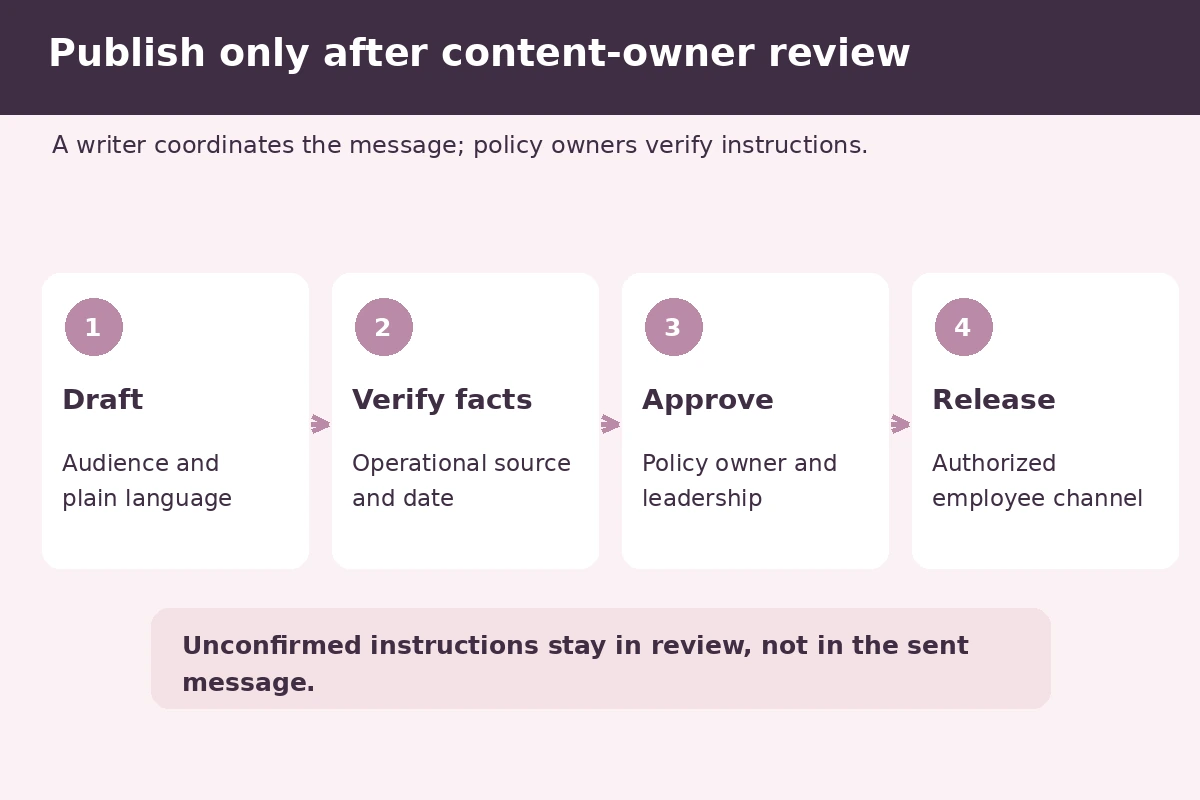
Internal communications can touch schedules, employment matters, technology changes and workplace safety. A draft should identify the source of every operational instruction, the document owner and the approver. Do not create new company policy in the voice of the communications team. If the content says employees must take an action, confirm that the owner approved both the instruction and its timing.
A useful review sequence is draft, check facts with the relevant owner, confirm the call to action, complete accessibility and distribution checks, obtain release approval and publish through the authorized channel. Where a notice is urgent or sensitive, follow the organization’s established escalation procedure. A writer should not bypass these steps to make a faster or more dramatic announcement.
Build employee-facing writing samples that answer questions
A strong staff note puts the outcome first: what changed, whom it affects, when it begins, what employees need to do and where to ask for help. Use descriptive headings, plain terms and links whose destination you have verified. A timeline or role table can help when different groups have different deadlines. Avoid making every item a marketing slogan or hiding important conditions in a long executive quotation.
Make the example accessible: meaningful link text, readable contrast, concise captions and a logical reading order. If you design a graphic summary, keep an equivalent text explanation for people who cannot use the image. Test an email or PDF at ordinary screen width and check the message on a phone. Those choices are practical evidence of audience awareness, not proof of a universally required technical standard.
Translate PR skills without claiming HR authority
Relevant PR evidence can include interviewing subject experts, checking spokesperson quotes, editing announcements, coordinating review cycles and monitoring questions after publication. Describe those tasks with real examples. Do not write that you established an HR policy, settled an employee dispute or approved a safety procedure unless that responsibility was actually yours and you had the required authority.
A hypothetical résumé bullet might be, ‘Coordinated review of stakeholder announcements, checked factual updates with content owners and prepared audience-specific drafts.’ Personalize it with genuine scope. For an internal role, add any real experience with staff newsletters, event instructions, volunteer updates or training communications; distinguish internal use from outward-facing marketing when you describe it.
Plan communication channels and feedback realistically
Different employees may use email, staff meetings, an intranet, posted notices or a manager briefing. The best option depends on who must receive the information, accessibility, confidentiality and workplace access. Ask a hiring manager how the organization reaches frontline teams without regular computer access. Do not assume that an email alone reaches everyone or that a public social account is an approved place for internal information.
After publication, plan how questions reach the right owner. A communications employee may summarize common themes and flag confusing passages without attempting to resolve confidential personnel cases. Define what feedback is collected and who may view it. If the organization measures readership or engagement, do not invent performance figures or promise that a metric proves comprehension.

Prepare a role-specific application and interview
Lead with writing and review evidence, not an unsupported claim that PR and internal communications are the same discipline. Share two short invented samples with the brief, audience, source assumptions and signoff points clearly described. If sharing actual work, confirm that it is public or that you have permission to use it. Remove employee names, private events, internal roadmaps and performance data from personal examples.
In an interview, ask which teams own policy accuracy, how leaders approve communications, how frontline employees receive important notices and what feedback loop exists after sending an update. These questions reveal whether the job is editorial, operational, organizational-change focused or employee-relations adjacent. Choose the next role where your present skills and the employer’s training expectations meet.
How We Research Career Transitions
We compare published U.S. occupational task descriptions with the practical workflow differences in each transition. The examples above are fictional unless explicitly described as duties the reader should verify from their own experience. O*NET profiles describe occupations broadly, not every employer’s position; BLS descriptions and the employer’s vacancy provide further context. Review date: November 10, 2026. We do not imply that a transferable skill substitutes for a required credential, a hiring decision, or authorization to approve technical, medical, legal or personnel matters.
Sources reviewed November 10, 2026: www.onetonline.org (O*NET describes PR specialists preparing written material, coordinating information and managing communications with different audiences.) www.bls.gov (BLS describes PR duties including press releases, response to information requests and communications planning.) www.onetonline.org (O*NET HR specialist profiles include explaining policies and developing materials that inform employees, demonstrating cross-functional review needs.). This is independent informational material, not a promise of employment or paid placement. See the JobAsk affiliate disclosure. The exercise templates and interview lines are illustrative, not an employer-approved process.
Explore Related Career Guides
Potentially. Writing, interviewing and coordinated approvals transfer, but internal audiences, policy ownership and distribution methods can be different. Match your evidence to the specific vacancy.
You can adapt a fictional press release into an employee-facing notice to show the difference in audience needs. Label the exercise and do not invent operational instructions as verified facts.
The authorized policy owner and the organization’s prescribed review chain should confirm operational instructions. A communications writer should not assume that drafting a notice creates authority to set policy.
Mention channels you actually used—such as staff email, meetings, printed notices or intranet updates—and describe your real contribution rather than claiming experience with every tool.
A paired fictional public announcement and staff update with clear audiences, facts, unanswered questions and approval steps demonstrates the editorial change.