
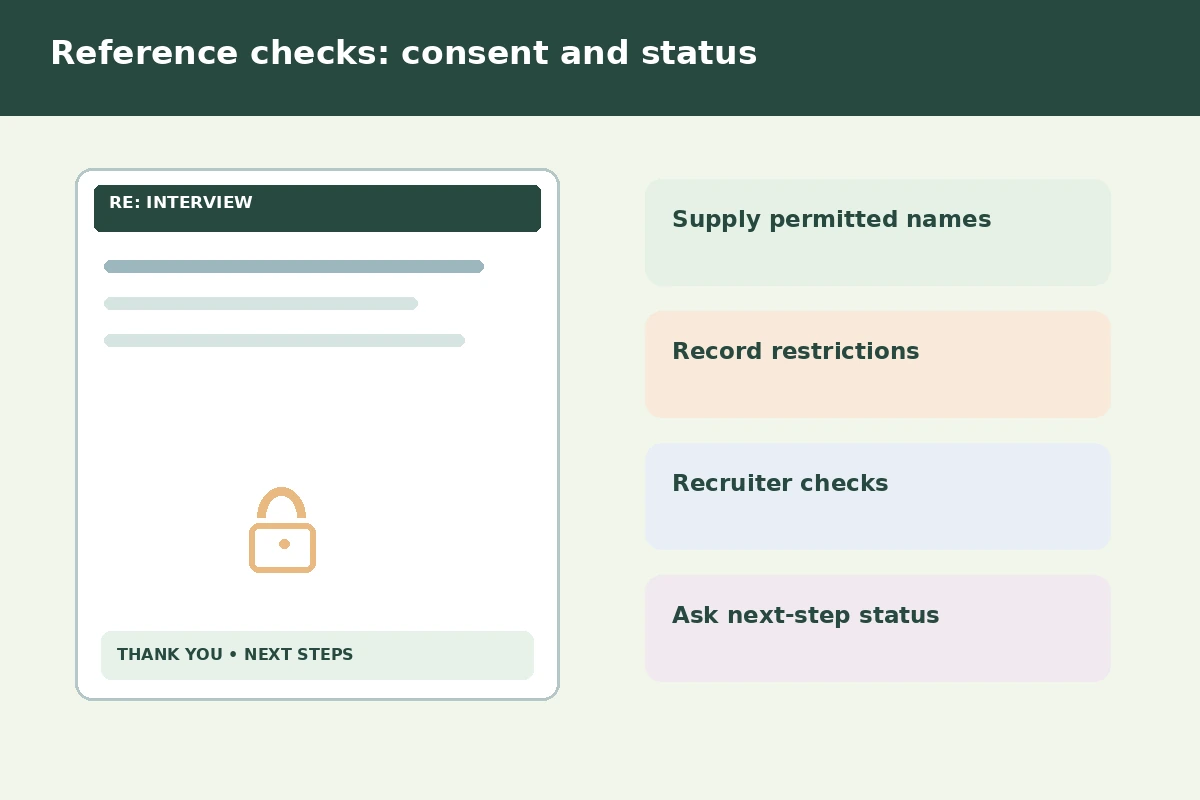
After an interview reference check, contact the recruiter about the hiring stage, not your references to demand a favorable review. A reference request can indicate that an employer is gathering more information, but it is not a written job offer or proof that an evaluation is complete. Confirm which referees have permission to be contacted, keep the current-employer boundary explicit if relevant, and wait for any timeline provided. If no date was shared, a short status inquiry can ask whether additional information is needed and when the next decision is expected. Different employers set different reference-check procedures.
Understand what reference checks actually establish
Reference checks may verify prior roles, working relationships, dates, skills and behaviors relevant to a vacancy. A recruiter might contact one former supervisor or several people, use a structured questionnaire, or pause while references are unavailable. University hiring guidance from UC Santa Cruz and UC Davis illustrates that organizational rules about permission and how referees are contacted can differ. These are examples of documented employer processes, not a universal statement about every state or private employer.
The fact that a supervisor was contacted does not prove a final hiring decision, a completed background process, or a compensation approval. References can be requested for multiple finalists, and internal approvals may still be outstanding. Do not write ‘offer pending’ in your public profiles because a referee mentioned getting a phone call. Keep a private record of which contacts you supplied, what consent was given and whether the recruiter specifically asked for more information.
Protect a current employer and other sensitive contacts
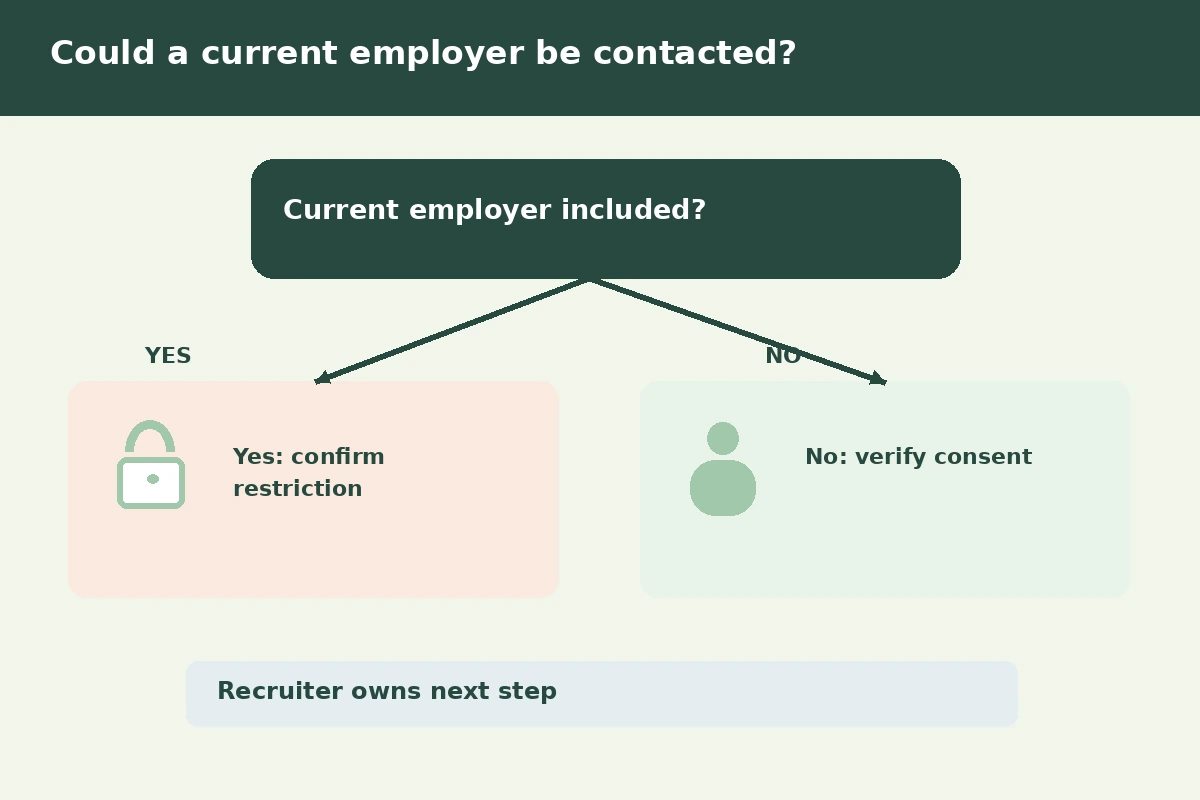
If your current manager does not know you are interviewing, confirm the contact restrictions in the employer’s application or recruiter messages. If you have told the recruiting team not to contact your current employer before a specified stage, repeat that preference through the recruiter if the process moves to references. Do not pretend this creates a guaranteed legal veto for every employer. Some organizations have policies that differ; ask which alternatives they accept, such as past supervisors, clients or academic contacts, and what they need to proceed.
Use only real reference details supplied with a person’s knowledge and permission. Do not list an invented manager, share a colleague’s private contact information without authorization, or ask a referee to exaggerate your duties. If the recruiter needs proof of a title or employment period, provide accurate records through the employer’s approved secure method. Avoid copying sensitive employee information, payroll records or internal correspondence into casual email as proof of work history.
Communicate a practical availability problem
A referee may be traveling, have changed employers, use an outdated address or be unable to respond within a short hiring window. If a real problem arises, ask the recruiter whether a substitute or alternate contact is permitted and supply details only with that person’s consent. Hypothetical message: ‘Hello [Recruiter], I understand the team may be contacting references for [role]. One former supervisor is unavailable until [date]. If a replacement is helpful, I can provide another permitted work reference. Please let me know your preferred process. Thank you, [name].’
Do not send repeated reminders to references on behalf of the hiring team or pressure someone to say they received a call. A simple heads-up to a consenting referee can tell them the employer and role so they can recognize a legitimate request. Asking them to disclose what the employer asked, or to share confidential evaluation forms, may be inappropriate. It is better to fix genuine contact-data problems than to attempt to manage the content of a reference.
| Situation | Appropriate response | Important boundary |
|---|---|---|
| Former supervisor available | Confirm consent and accurate contact details | Do not script a favorable answer |
| Current employer restriction | Tell recruiter and ask about alternatives | Do not imply permission was given |
| Reference contacted | Ask recruiter for process status | Not an offer or a completed check |
Ask recruiting for a timeline without implying approval
If the recruiter gave an expected decision date, let it pass before requesting a status update. If your references say they were contacted but no timeline was supplied, a measured inquiry can ask whether anything else is needed. Example: ‘Subject: [role] — hiring process update. Hello [Name], Thank you for coordinating the interviews and reference stage. I remain interested in [role] and wanted to ask whether there is an updated timeline for the next step. I can provide additional information through your preferred process if needed. Best, [name].’
This note does not claim that all references have answered or that the applicant has cleared any check. Avoid asking the recruiter to reveal what a particular referee said. An employer’s documented process may protect the confidentiality of evaluations. The status inquiry belongs with recruiting, while a referee can independently choose whether and how to respond to employer requests. Keep a single outbound-contact log and avoid sending the same question to multiple interviewers.

Distinguish reference checks from other screening stages
Reference calls are not the same as identity verification, an occupational license check, a criminal-background screen or a signed offer. You may receive an administrative request for a secure form as part of a separate stage. Verify that the requester and submission channel are genuine before sharing any sensitive personal information. The FTC warns about fake recruiters who use official-looking hiring messages and early requests for financial details. A real reference request does not authorize payments or sending banking data to a stranger.
If the employer reports a discrepancy in a job date or title, respond with the correct facts instead of blaming a reference. Use permitted documentation, and ask which specific record they need. Do not speculate that a delayed decision means your reference gave a poor review. Recruiting may be waiting on internal approvals, more finalists or a contact who has not replied. Continue other job applications without misrepresenting the hiring stage to another employer.
Finish with a respectful consent and tracking audit
Keep four entries: reference name and role, permission or restriction, preferred contact route, and the date your information was submitted. Avoid storing personal reference phone numbers in widely shared spreadsheets. If a reference asks not to be contacted further, respect that decision and promptly ask the recruiter about a substitute. If the employer says references are complete, reply only to any outstanding instructions and do not demand a transcript of their feedback.
Once a written offer arrives, review its actual conditions before resigning from a current job. If the employer declines, you may politely request general feedback, but an organization may not disclose individual reference comments. Thank your references for their time without telling them a decision or implying what their statements caused. Consent, truthful records and calm follow-through make this process easier for everyone involved.
How We Research and Verify Interview Follow-Up Advice
Sources accessed and checked on November 16, 2026: UC Santa Cruz hiring guidance describes candidate notification, reference-check procedures and sensitivity about contacting a current employer.. UC Davis hiring guidance stresses affirmative permission for its own reference checks and confidentiality in selection decisions.. CareerOneStop recommends a concise post-interview thank-you, with details relevant to the conversation, and an assessment of later steps.. Indeed advises using the employer-provided timeline and keeping later status inquiries brief; generic intervals are not guaranteed response times.. FTC advises verifying suspicious job contacts independently and avoiding requests for payment or sensitive financial information before genuine hiring.. We separately compared the planned subject with the supplied JobAsk WordPress published and draft title exports, recent JobAsk production batches and public search results. This can identify thematic overlaps but cannot confirm whether an unlisted unpublished WordPress slug exists. Message scripts and diagrams are explicitly hypothetical: replace bracketed text with true events and follow the particular employer or program instructions. No email guarantees a response, assessment result, offer or award. We recommend no paid service or confirmed affiliate relationship here; see the affiliate disclosure.
More Interview Preparation Guides
No. Employers may check references before a final selection and other approvals can remain outstanding.
Rules and employer policies differ. State any restriction clearly and ask the recruiter how their procedure handles current-employer contacts.
You can thank them for agreeing to serve, but do not pressure them to disclose confidential evaluations or scripts.
Explain the actual availability issue and offer another consenting contact if the employer permits it.
Use a short message to the recruiter referencing the role and asking for the next decision date, without suggesting you already passed.