
Work-from-home graphic design jobs can involve marketing graphics, documents, presentations, web assets or production-ready layouts. The key is not whether the ad mentions a familiar design tool; it is what the designer must deliver and who approves it. A credible role defines the creative brief, collaboration process, file formats and rights to work shown in a portfolio. Do not assume every home-based design position is freelance, fully asynchronous or open worldwide. The practical checks below help distinguish genuine design work from vague online “image creation” offers and unsuitable production responsibilities.
Match the design output to the actual posting
One remote designer may create presentation graphics while another prepares multi-page documents, digital advertisements or export-ready brand assets. The BLS describes developing layouts, choosing typography and images, reviewing proofs and incorporating client feedback. That does not mean every graphic designer owns strategy, copywriting and publication. Read the posting for end products, not only software names. A job involving responsive interface research may belong to a different discipline than print production; a simple social media role may demand high output rather than complex brand systems. Name what you can deliver with confidence and avoid claiming expert skill across unrelated formats.
Ask for the brief, audience and constraints
Before producing a mockup, a designer needs the intended audience, message, dimensions or destination, approved assets, file delivery requirements and any restrictions on brand use. If the hiring test includes a landing-page graphic, check whether it is for a public real campaign or a fictional exercise. A vague instruction to “make something attractive” hides the review criteria. Strong applicants explain how they use the brief to prioritize visual hierarchy and legibility. If the employer wants accessibility checks, ask which standards and review methods it follows. Never suggest that a design has been professionally approved just because the draft looks finished.
Build a portfolio that identifies your contribution
Choose a few samples resembling the required deliverables. Explain what problem the design addressed, how you organized information and which elements you personally made. If the sample comes from team work, name the collaboration and avoid claiming teammates’ art, photography or research. If you use a fictional client, label it clearly instead of presenting the mockup as a real contract. Ask permission before including confidential work, unreleased materials or proprietary logos. A screenshot without context can make a polished portfolio misleading. A concise case note showing brief, constraints, decisions and outcome of the review process helps employers evaluate skills without invented performance statistics.
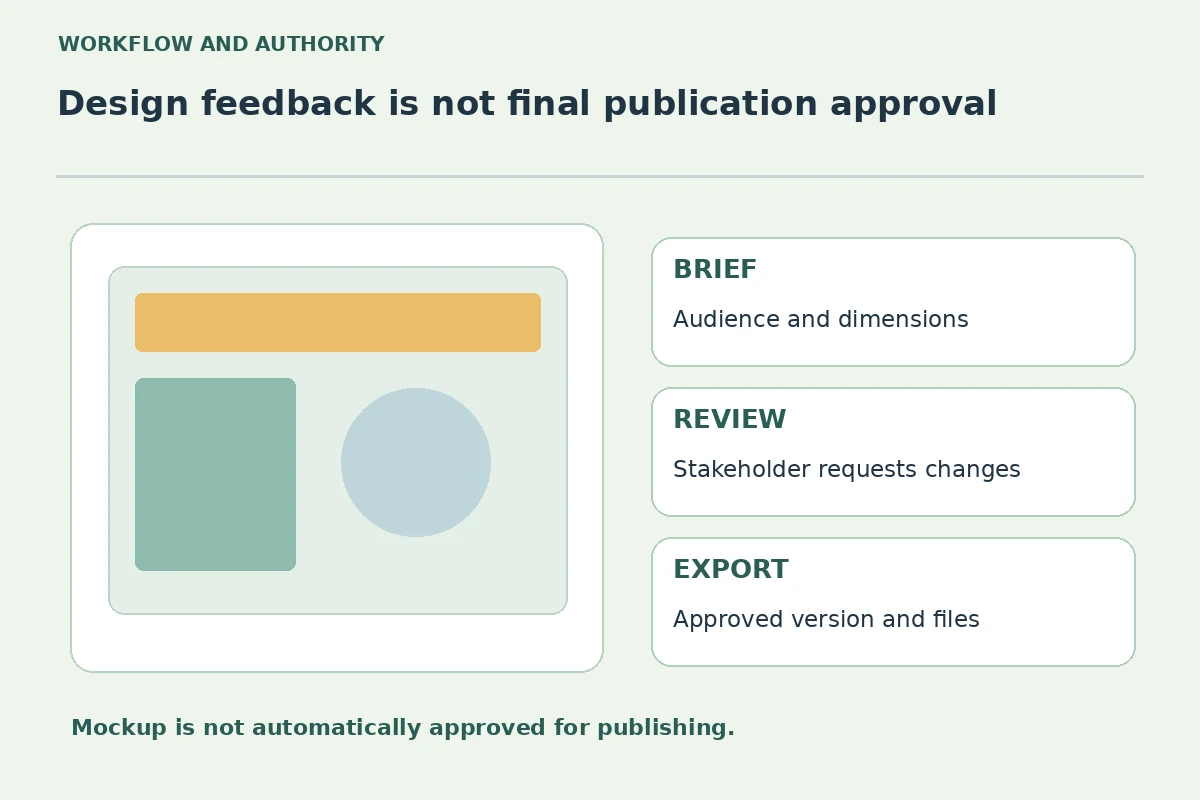
Distinguish design revisions from final approval
A typical design flow involves early concepts, stakeholder feedback, revised files, production checks and a designated final approver. Ask whether review takes place asynchronously in shared files or in scheduled live meetings. Who resolves contradictory comments? Who signs off copy supplied by the client, licensed images or compliance text? The designer can flag obvious errors and prepare the updated layout without pretending to certify every claim. For your application, describe times you organized file versions or responded to feedback. Avoid promising unlimited revisions or suggesting that a stylistic preference is an objective quality score. The graphic below separates the artist’s work from the client’s decision rights.
Check fonts, images and authorized source assets
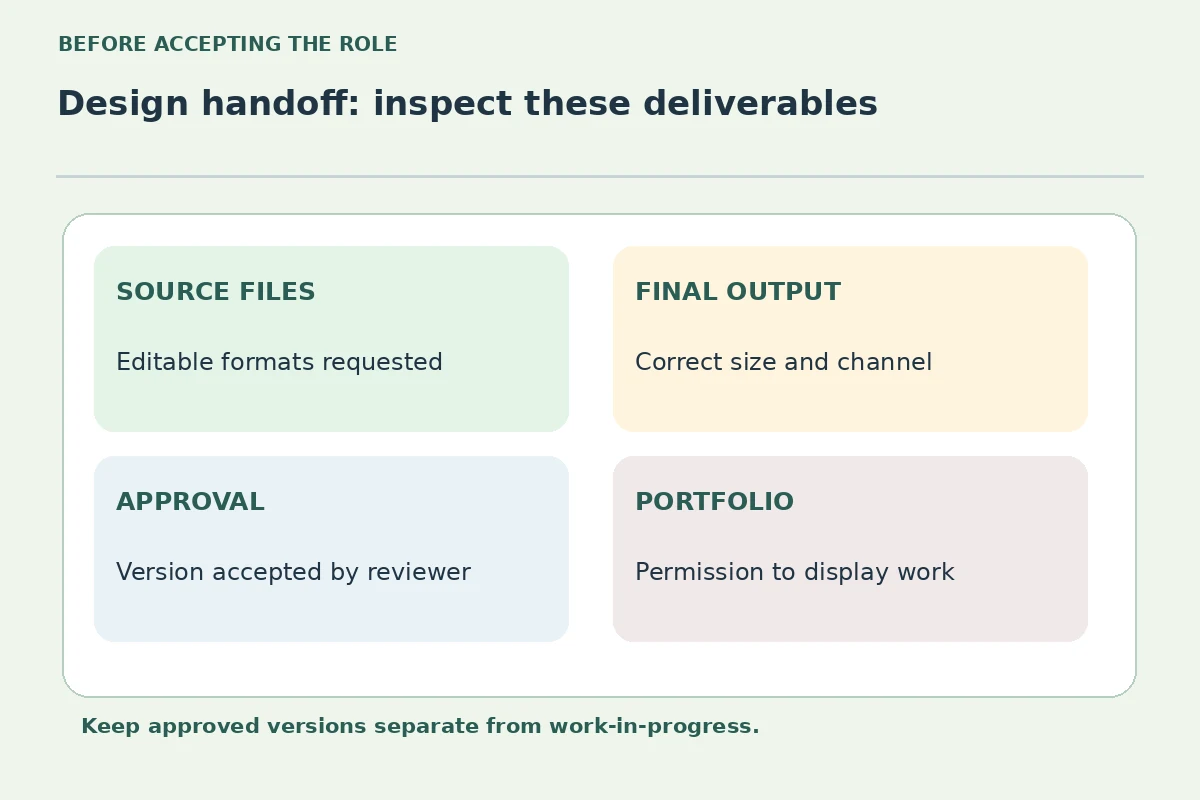
Design work often includes third-party fonts, photographs, icons and templates. Confirm who purchases any needed licenses, what the permitted distribution is and whether a client expects editable originals. Use only images and marks you own or are authorized to work with. Publicly displaying a finished advertisement does not automatically authorize the designer to share the underlying source files or client material. The U.S. Copyright Office notes that ownership can be transferred, which makes the actual agreement important. When preparing sample assets, prefer self-created text and graphics and keep notes about any licensed resources. Do not describe stock art as personally illustrated work.

Confirm the file handoff before accepting the brief
A design that looks correct on your computer may not be ready for the intended publication channel. Ask about export dimensions, color settings when relevant, file type, naming conventions, editable source requirements, version numbering and review of final proofs. For example, a brochure may need a print production check while a web banner needs readable text at smaller sizes. Keep approved versions distinct from drafts so no one publishes a rejected file. If an employer expects you to upload directly to a live website, ask about permissions, review gates and a rollback process. Do not claim you performed production signoff if another teammate was responsible.
| Checkpoint | Evidence to request |
|---|---|
| Design brief | Audience, format and constraints |
| Work samples | Own contribution and permission |
| Review stage | Who approves revisions |
| Handoff files | Versions, format and owner |
Compare work schedule, hardware and compensation
A “remote” design job may still require overlapping office hours, a protected client workstation, an approved software subscription or equipment capable of handling large source files. Ask who supplies the license and how transfers are handled safely. Freelance design requires clear deliverables, due dates, payments, revision limits and ownership terms; employee work may have a different approval and tool process. Do not pay a recruiter for supposed guaranteed access to design work or deposit an equipment check and return money. The FTC flags these as common remote-work scam patterns. A good listing describes real tasks, a supervisor or client and a hiring method that can be verified.
Tailor the application to one production problem
Create a short mapping between the posting’s deliverables and two or three examples from your own work. If the employer needs presentation templates, show an authorized presentation system; if it needs email graphics, demonstrate crop-safe layouts and readable typographic hierarchy. Explain your part of the design and how feedback was handled. Include accessible links only to material you are permitted to share, and check that the files open on common devices. Avoid overloading a resume with dozens of software names disconnected from actual use. Search the official employer site for the opening and record its remote eligibility, interview stages and file requirements before sending your portfolio.
How We Research Remote Job Roles
We reviewed these primary U.S. government and occupational sources on November 17, 2026: BLS describes preparing layouts, presenting concepts, incorporating revisions and checking designs before delivery. U.S. Copyright Office explains transfer of ownership rights; portfolio use and ownership should be verified rather than assumed. FTC cautions that fake work-from-home offers seek money or identity data, and warns against advance fees and fake equipment checks. The role duties described above reflect typical tasks and professional boundaries, not an assertion that a particular company is hiring now. All illustrated cases, resumes, examples and names are hypothetical. Actual job requirements, employee classifications, geographic eligibility, equipment rules, permissions and work schedules differ by employer. Check any specific vacancy on the employer’s own site and confirm disputed claims with the responsible department. We do not guarantee employment, earnings, employer responses or interview outcomes. For commercial relationships and referral disclosures, see our affiliate disclosure.
Related Job Search Guides
Some jobs permit remote delivery, but meetings, hardware, production testing and location restrictions vary. Confirm the actual arrangement.
Include relevant samples, the brief or goal, your specific contribution and finalized or labeled practice output; use only materials you may share.
No universal tool set applies to all jobs. Focus on tools and workflows in the real posting and describe proficiency accurately.
Usually the designated client, art director or employer reviewer. A designer should know whether they have final approval or only prepare drafts.
Do not assume permission. Check the engagement agreement, confidentiality rules and any relevant client or employer approvals.