
A bartender resume should make service reliability visible: taking and preparing orders, working with other staff, handling payments, maintaining a clean station, and restocking supplies. Organize relevant hospitality work above unrelated history and show the actual shift responsibilities you held. If you are moving from serving or barback work into bartending, label that transition honestly. Do not claim mixology experience or alcohol-service certification just because a listing asks for it.
The BLS occupational guide describes drink preparation, ID checks, customer interaction, inventory, and payment handling as typical bartender tasks. It also notes that training and rules can differ by jurisdiction. ServSafe tells applicants to check state and local requirements before choosing alcohol-service training. Your resume should clarify what you have done, what training you completed, and what still needs to be verified for the actual location.
Lead With the Actual Service Setting
A busy full-service restaurant, a hotel lounge, an event venue, and a casual neighborhood bar may demand different workflows. Name the real employer type and your actual position, then choose the responsibilities most relevant to the target opening. Serving guests and clearing glassware as a barback is not the same as independently preparing alcoholic beverages. If you have moved between positions, show the dates and transition instead of merging them into one invented bartender title.
Applicants with limited bar experience can use genuine restaurant work: taking orders, following food safety instructions, coordinating with kitchen staff, using a point-of-sale terminal, restocking, or closing a station. These show transferable routines without suggesting you have already been trained to serve alcohol. A focused two- or three-line profile can summarize the setting and tasks, but avoid the generic claim ‘expert mixologist’ if your evidence is only a short course or personal practice.
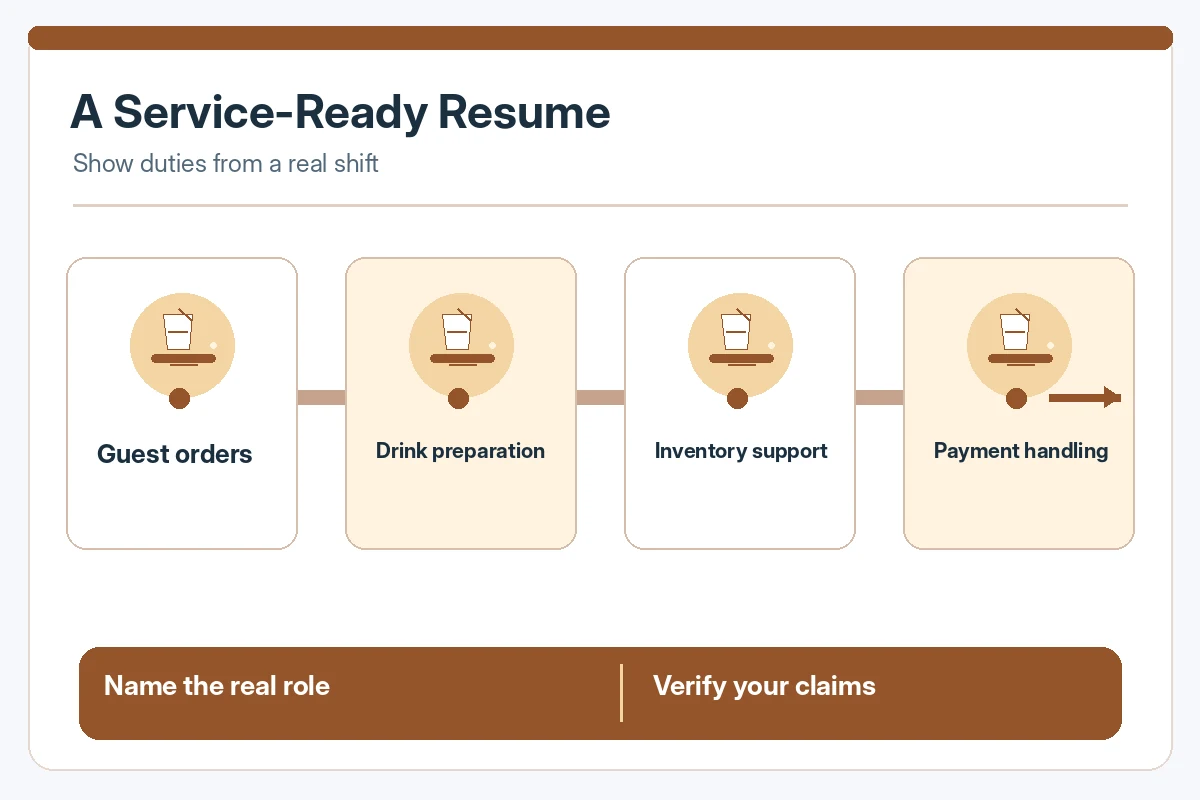
Turn Shift Tasks Into Verifiable Bullets
Use the sequence action, setting, and check or outcome. For example, if you genuinely handled cash drawers, say what you reconciled and how discrepancies were escalated according to policy. If you prepared orders, describe communication with serving staff and recipe consistency. A large claim such as ‘increased sales by 40%’ must come from a reliable record; do not calculate a decorative metric from memory or copy a figure from a sample resume.
Hypothetical line: ‘Tracked beverage restock needs during evening service and confirmed low items with the shift lead before close.’ This is a fictional example, not an observed worker’s achievement. Replace it only with something you performed and can discuss. If you served mainly coffee or nonalcoholic drinks, label that accurately rather than describing the work as cocktail bartending. Honest examples let the employer determine what additional instruction you need.
Show Responsible Service Without Inventing Licenses
A responsible-service certificate can be relevant, but accepted training and age or licensing requirements depend on the state, locality, and role. List the exact course, issuer, completion date, and current status when that information is known. Do not advertise a uniform nationwide bartender license; one does not apply to every situation. Some workplaces require specific processes for age verification, monitoring service, or escalation, so follow employer training rather than relying only on the resume’s terminology.
The BLS bartender profile identifies identity checks and monitoring intoxication among common duties, not universal permission for every worker to make every decision. If you worked under a supervisor, say so where relevant. If a posting requests training you lack, investigate a recognized route in that jurisdiction rather than purchasing a random certificate solely because a website claims guaranteed acceptance. Never claim certification before passing the actual requirements.

Describe Inventory, Setup, and Teamwork
Inventory support can be more revealing than a generic adjective about multitasking. Show whether you counted supplies, completed restock lists, tracked breakage, prepared garnishes, checked equipment readiness, or coordinated handoff with coworkers. Keep operational descriptions within your real authority. A server who requested more glassware helped the workflow but did not necessarily manage purchasing or the bar’s inventory system.
If you handled point-of-sale transactions, name the system only if you actually used it. Avoid ‘expert in every POS platform’ and similar claims that cannot be tested. A truthful line about a specific station setup or end-of-shift check makes it easier for an interviewer to ask practical follow-up questions. When writing about safety, describe adherence to approved site procedures rather than implying you set legal policy or were responsible for all service compliance.
Match the Resume to the Shift and Venue
Study the posting for service style, evening or weekend hours, physical demands, and expected experience with cocktails, banquets, or hotel service. Choose examples that show comparable routines. If the employer emphasizes events, coordinated setup and rapid guest turnover may be useful. If it emphasizes a quieter hotel venue, attentive communication and records may matter more. Do not state open availability unless your actual schedule permits it.
Keep education and certifications legible but secondary to genuine relevant work unless you are a beginner. Avoid multi-column skill meters that look polished but do not convey actual competence. A simple file with contact information, relevant work, skills, and training is usually sufficient. CareerOneStop’s formatting guidance emphasizes readable layout and tailoring to a real posting rather than cluttered design. Export the requested format and check the resume on a phone as well as a desktop.
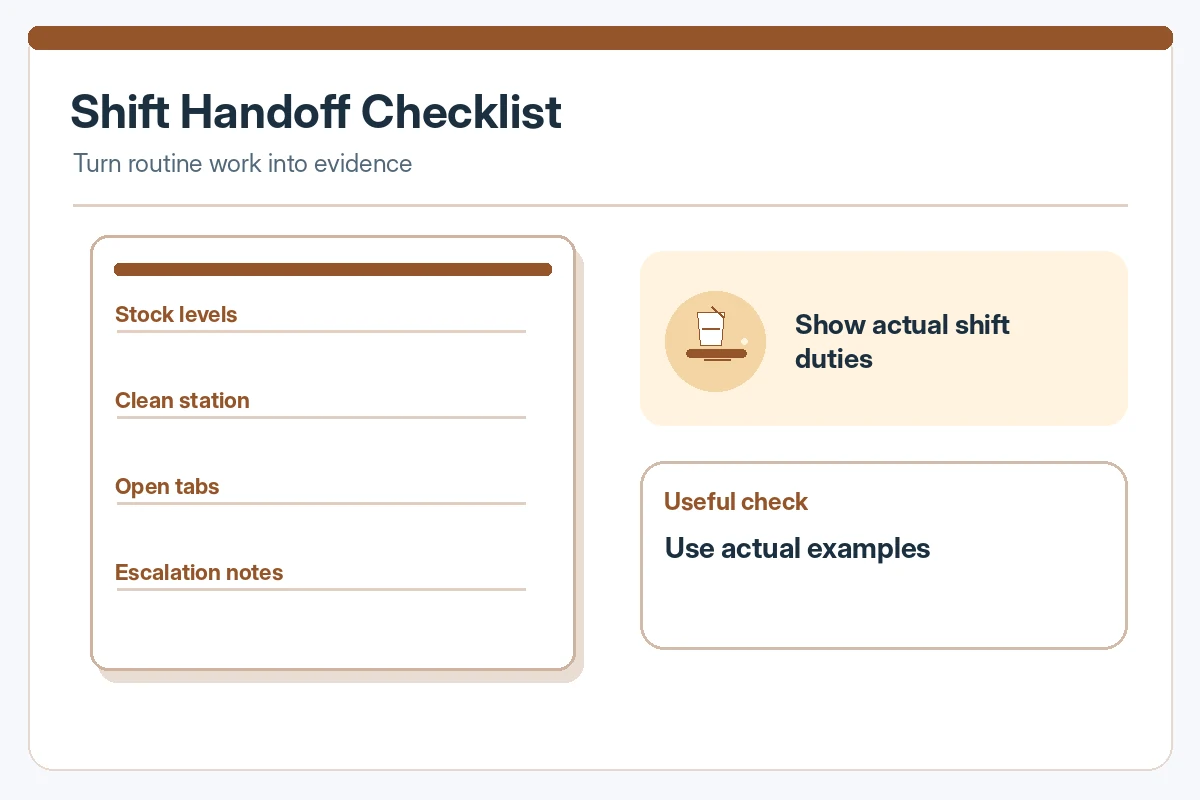
Proofread the Details Before You Apply
Check actual employer names, job titles, work dates, training status, and shift descriptions. Do not borrow real establishment logos without permission or fabricate customer testimonials and performance ratings. If a resume example includes numbers, verify them against records and remove them when uncertain. When referencing teamwork or difficult guests, omit identifying customer details and respect the former employer’s confidentiality policy.
For a career transition, label barback, server, banquet, café, and bartender experience separately. State any current responsible-service training accurately and research local requirements before promising availability to handle regulated service tasks. Your final test: Could you explain every bullet to a manager during a practical interview without changing the story? A concise truthful resume is more useful than a long list of cocktail names or abilities you have only watched online. Our guide to acting resume format adds more detail on this.
How We Research Professional Resume Formats
We compared claims with professional guide, occupational guidance, career reference. We emphasize what the sources actually establish: formatting practices, occupational responsibilities, and credential distinctions. These sources do not prove that one layout passes any particular applicant tracking system or secures employment. Employer instructions, professional norms, and state-specific requirements take precedence over a sample document.
All sample resume statements and names in this article are explicitly hypothetical, not verified candidates or invented success stories. The site provides an affiliate disclosure. We make no assumption of paid referrals, advertising partnerships, or employer endorsements in this article.
More Resume and Cover Letter Guides
- Functional Resume Format: Highlight Skills Without Hiding Your Work History
- Warehouse Resume Summary: Show Order Accuracy, Inventory, and Safe Scope
- Barista Cover Letter: Highlight Service, Orders, and Teamwork
- Restaurant Manager Resume Format: Show Staffing and Service Scope
- Flight Attendant Resume Format: Put Safety, Service, and Training First
You can apply where the posting permits it. Label your serving experience honestly and ask about required bartender training.
No universal U.S. bartender license applies everywhere. Check the relevant state and local requirements and the employer’s policy.
Avoid presenting informal practice as professional experience. Explain your actual training context if relevant.
Yes, if you genuinely performed them. Describe the specific transaction or reconciliation tasks and how you checked accuracy.
Relevant service work, genuine training, and practical teamwork evidence usually help more than broad claims of mixology expertise.