
Bilingual work-from-home roles fall into distinct paths: spoken interpretation, written translation, and customer support in two languages. Choose by real language competence, subject matter, credentials, schedule, and privacy requirements—not by a generic remote-language title.
The decision framework below uses official occupational descriptions and consumer-protection guidance. Any scenarios described as hypothetical are instructional, not verified job listings, placement claims, or promises of earnings.
Choose the Right Type of Bilingual Work
“Bilingual work from home” covers more than one occupation. An interpreter conveys spoken or signed messages, sometimes in real time; a translator works with written text; a bilingual customer service representative solves customer issues while using two languages. The BLS interpreters and translators profile distinguishes interpretation from translation and notes that some assignments are remote. A job title alone may not specify which language skill is dominant.
Make three columns. Spoken interpretation tests active listening, rapid meaning transfer, and note-taking. Written translation tests reading, terminology research, accuracy, and revision. Bilingual customer support tests product or service knowledge, written records, and authorized actions. A person can be conversationally fluent yet lack the specialized training required for legal, medical, or simultaneous interpretation. Do not present everyday fluency as proof of professional credentials.
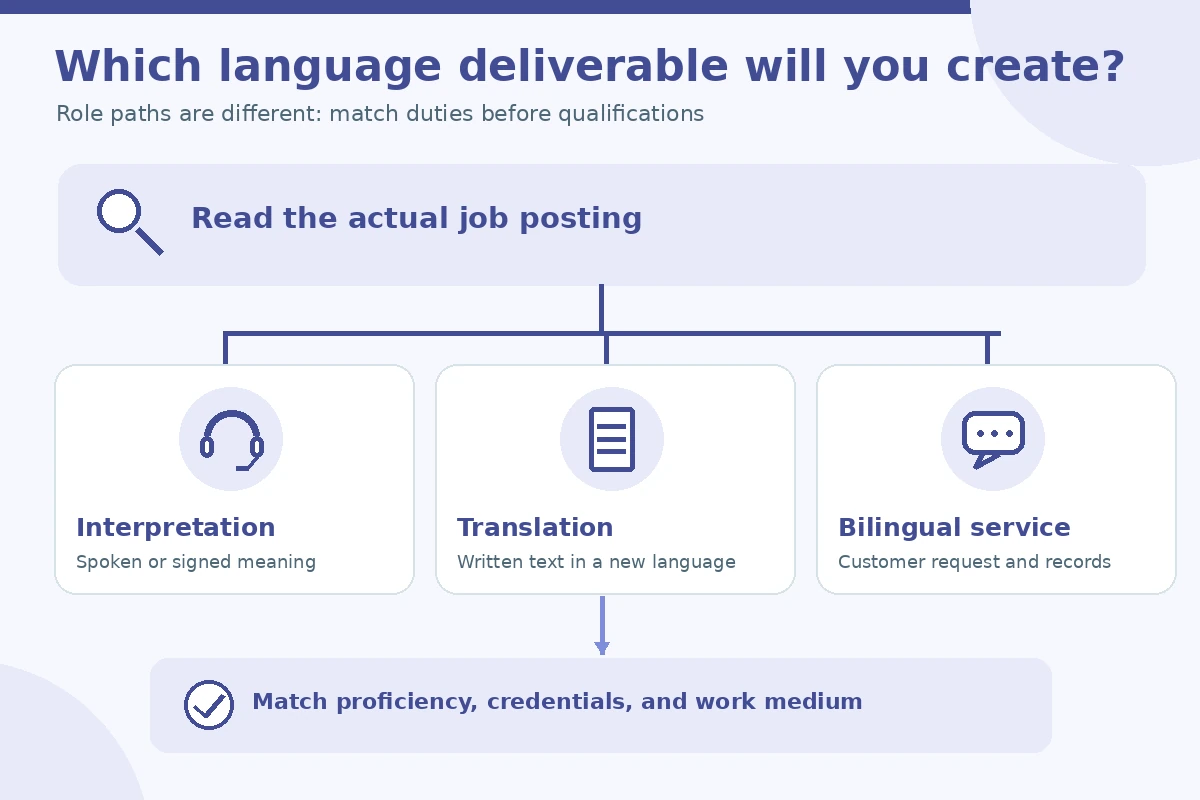
Verify the Language Pair and Real Assignment
Check both source and target languages, dialect or regional variation, interpreting mode, and subject area. If the posting calls for interpreting during a live medical visit, that is different from translating a general information sheet. If it requires formal certification or testing, verify the exact organization and jurisdiction. BLS notes that education and certification needs can vary with role and setting; a generalized promise that “all bilingual speakers qualify” is not sound.
For a customer-support role, ask whether conversations are via phone, chat, email, or video and who handles difficult issues. For translation, ask whether the output is a draft, reviewed final file, or machine-generated text requiring human revision. If a test is offered, use an authorized prompt and make your own work visible. Do not use unauthorized tools to transmit confidential source material.
Understand Confidentiality and Accuracy Boundaries
O*NET’s interpreter and translator tasks include following confidentiality rules, maintaining message meaning and context, and researching terminology. These are concrete responsibilities rather than generic claims about being a “people person.” Ask how the employer protects sensitive material and which systems are approved for calls or file transfers. The right tools depend on the assignment and are not permission to record or store clients’ conversations privately.
Interpretation should not add a professional opinion, omit inconvenient details, or soften meaning without an authorized procedure. A bilingual support agent likewise must not invent policy or give professional advice simply because the customer asks in another language. When terminology is unclear, follow the service’s protocol for clarification or qualified review. In a clinical or legal setting, role boundaries and local requirements may be especially important.
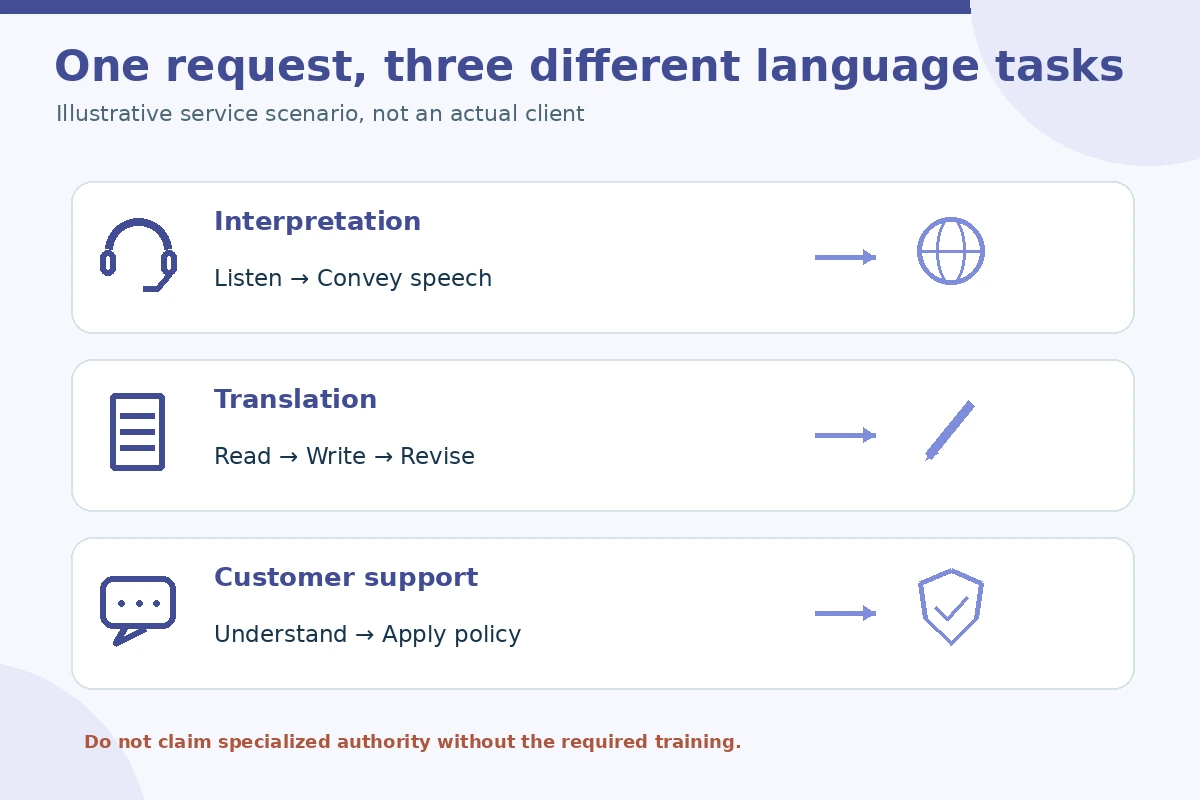
Match Work Mode to Schedule and Equipment
Live interpreting often means accepting booked or on-demand sessions, with tight response expectations and an appropriately quiet connection. Translation can allow longer planning periods but may have fixed delivery deadlines and revision rounds. Bilingual customer support can require scheduled shifts across time zones. None of these automatically means fully flexible hours or unrestricted international work. Review any geographic hiring limitations before preparing a sample.
Ask whether equipment is supplied, whether a private room is required, how calls or documents are assigned, and whether time spent waiting or revising affects compensation. A listing may use “remote” while still requiring onsite orientation or region-specific eligibility. Put facts in a comparison table: language pair, medium, schedule, credentials, review path, security requirements, and location. Choose a route based on actual strengths rather than the easiest-looking headline.
Create Appropriate Evidence for Each Role
For written translation, an original or authorized short text and its carefully revised target version can demonstrate terminology and meaning. For interpretation, a clearly labeled mock dialogue may show the process, but it is not proof of professional simultaneous interpreting. For customer support, a fictional bilingual question-and-answer exchange can show helpful wording and escalation. Do not use real patient, client, employer, or customer information without permission.
Hypothetical example: A caller asks a bilingual agent for a change that requires supervisor approval. The agent confirms the request in the customer’s chosen language, explains the approved escalation route, and records the next owner. The sample does not claim a refund or legal decision was granted. Describe the boundaries you would respect as well as the words you would use. Professional value comes from faithful meaning and safe action, not just rapid switching between languages.
Read Pay and Credential Claims Carefully
A remote language posting may pay per session, interpreted minute, translated word, document, or hour of work. For contract work, consider prep time, glossary research, corrections, and scheduling gaps. Ask how cancellations and complex assignments are handled. Never treat a rate per audio minute or source word as guaranteed take-home hourly income. If a listing mentions a specific credential, check directly with the credential provider and the hiring organization.
The FTC’s work-from-home advice explains that fake job offers may demand upfront money or sensitive details. A recruiter promising instant interpreter status after a required payment deserves scrutiny. Verify the company’s career page and professional contact, and do not share identity documents through an unknown messaging account. If a role involves regulated communication, confirm the qualifications rather than relying on a recruiter’s broad assurances.

Use a Three-Question Role Fit Test
First, can you reliably deliver the required language skill in the specified medium? Second, do you meet the actual credential and subject-matter requirements? Third, can you comply with the schedule, privacy rules, location limits, and review workflow? A “no” may mean you need training or should pursue a different bilingual route. It does not mean bilingual ability has no value; it means different jobs demand different evidence.
Prepare two or three targeted questions for hiring: “Does this role require consecutive or simultaneous interpretation?” “Who checks the final written translation?” “Is the position customer support using two languages rather than professional interpretation?” A clear answer helps you avoid an inflated title or unsafe commitment. Then tailor your resume to documented work, verified languages, and the responsibilities you are actually allowed to perform.
How We Research These Remote Work Choices
We checked BLS, O*NET, FTC on October 27, 2026 to distinguish occupational duties, qualifications, remote-work limitations, and job-scam warnings. The illustrations are original explanatory diagrams; sample tasks are hypothetical, not actual employer policies or reported client outcomes. Requirements may change, so verify the current job listing and the organization’s official instructions.
JobAsk does not claim an employer affiliation, an available vacancy, or a guaranteed hiring result from this information. If you follow commercial links elsewhere on the site, read our affiliate disclosure; no paid referral or affiliate relationship is asserted in this guide.
Related Job Search Guides
- Work-From-Home Chat Support Jobs: Verify Text Duties and Shift Requirements
- Funeral Home Jobs With No Experience: Attendant Duties and Role Boundaries
- Work-From-Home Transcription Jobs: Compare Audio Tasks and Pay Terms
- Overnight Work-From-Home Jobs: Compare Shifts and Coverage Rules
- Work-From-Home Data Annotation Jobs: Verify Real Tasks and Quality Rules
Not necessarily. Specialized roles may require tested proficiency, training, and qualifications specified by the employer or setting.
Some written translation work is remote, but deadlines, location and confidentiality conditions vary.
No. Customer support primarily solves service issues; professional interpretation conveys others’ messages.
Describe your abilities accurately and avoid claiming a certification or professional level you cannot demonstrate.
Language pair, work mode, credentials, scheduling, pay unit, authorized systems and employer legitimacy.