
A letter of interest for a company with no advertised job is an inquiry, not an application for a vacancy you have found. Identify the type of work you could do, offer one relevant piece of evidence, and ask whether the employer has an appropriate route for future consideration. Never say you saw an opening unless you actually did. A small, accurate request is more useful than a long generic pitch.
Check the company and its actual hiring route
Start by checking the employer’s official careers page and recent announcements. If there is an open role that matches your skills, use the published application instructions; a cold email is not a substitute for an application portal. If the site lists a talent community or general-interest form, that is usually a more appropriate route than guessing a manager’s address. Record where you looked and the date, because career pages change. This keeps an inquiry based on observed facts rather than a rumor about upcoming hiring.
Do not infer that a newly announced project guarantees hiring. A business may expand, reorganize, outsource, or pause recruiting. What you can state is narrower: you are interested in the organization’s work and have experience relevant to a defined function. If no published contact exists, consider whether a respectful professional networking message would be better than sending attachments to a generic inbox. A clear boundary matters: outreach creates a possibility of conversation, not a claim on a position.
Define a specific function before writing anything
Choose the department or work type you mean, such as inventory records, technical documentation, or customer onboarding. ‘Any job you have’ is difficult to act on because the reader cannot tell whom to forward it to. Compare the organization’s actual products or services with tasks you have completed elsewhere. A useful evidence note connects your verified task, the setting where it occurred, and why it might transfer. Avoid suggesting access to sensitive customer information or systems you have never used.
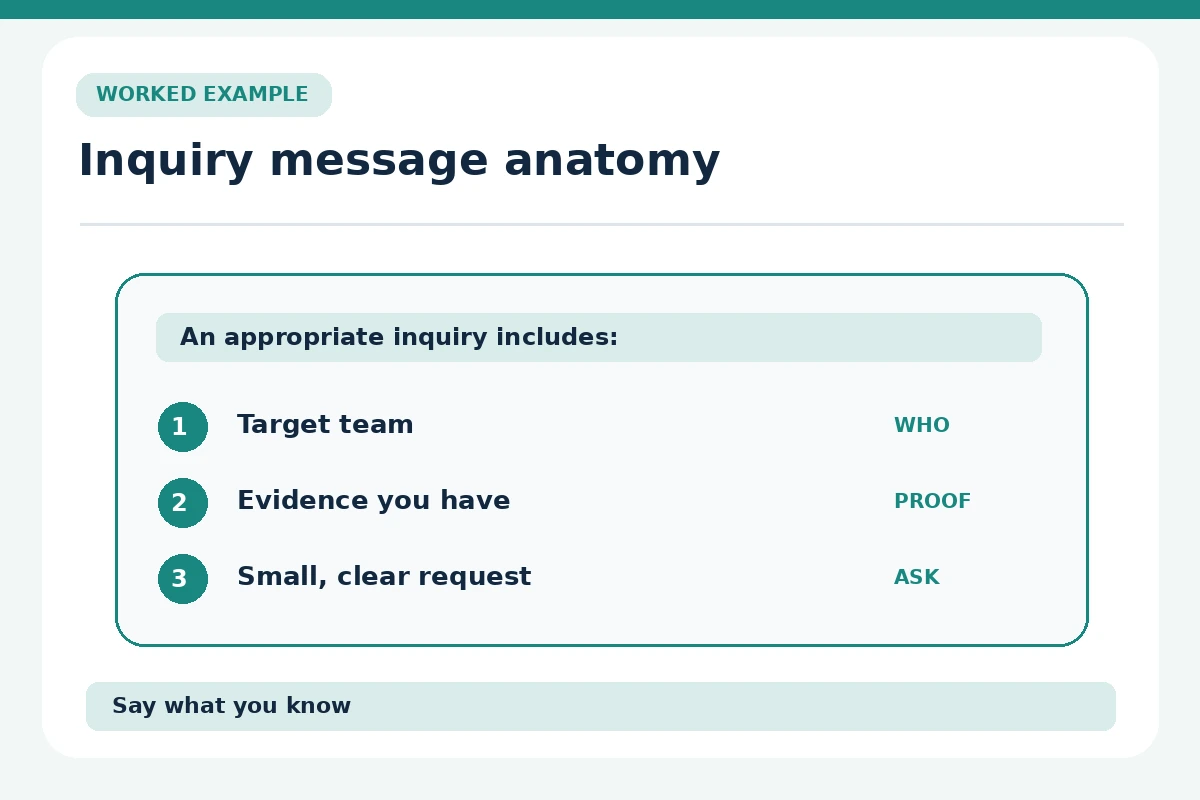
Build a three-line preparation sheet: the team you hope to support, one demonstrable skill, and one restrained question. For example, a candidate who maintained shipment exception logs might express interest in operations support—not claim to be a logistics manager. If you only know the organization by name, spend more time on research. The letter’s purpose is to make a specific, defensible introduction that the employer can route, not to flatter the company with claims you cannot verify.
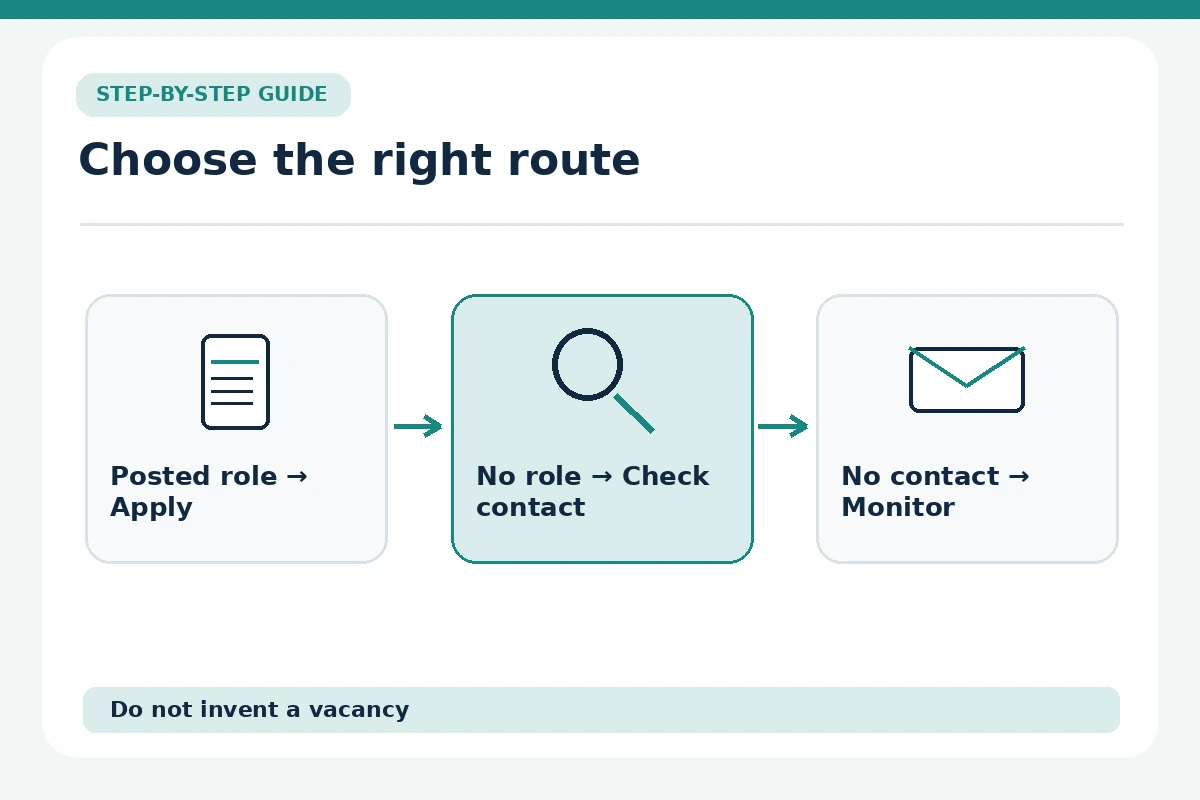
Write an inquiry that does not invent an opening
Illustrative message, not a real vacancy: ‘Hello Recruiting Team, I have been following your public information about distribution operations and am interested in future operations-support opportunities. In my previous role I maintained exception records and prepared shift handoff notes for review. I would welcome guidance on the correct way to share my resume or receive notice when relevant openings are advertised. Thank you for your time.’ Adapt the facts only to experiences you personally had and a company you actually researched.
Notice what the message deliberately omits. It does not claim that the company is hiring, that a particular manager knows the writer, or that a response is guaranteed. It also does not list every job the candidate has held. If there is a permitted contact, include a concise subject such as ‘Inquiry About Future Operations-Support Roles.’ Make any attached resume consistent with the inquiry. Never attach private client samples or send personal identifiers that were not requested through a trusted channel.
Choose the right next step from the employer response
If the employer directs you to a careers portal, follow that process and select only roles you truly qualify for. If a recruiter asks for a resume, send the current version and clarify your target area. If the response says there are no opportunities, thank the person and stop; do not pressure them for exceptions. A generic automated acknowledgment does not prove that a human reviewed your qualifications. Keep the status in your private job-search tracker as ‘inquiry sent,’ not ‘job application submitted.’
If you hear nothing, decide whether one brief follow-up is appropriate from the contact guidance provided. There is no universal response interval or promise of a reply. A firm no-contact instruction should be respected. Continue searching advertised opportunities rather than treating a single speculative inquiry as a lead that must progress. This method protects both your time and the employer’s ability to route a message without making an unsupported commitment.
Avoid the common risks of unsolicited outreach
A public website or social-media profile does not authorize you to send confidential documents. Use official business contact channels, and be cautious if an unsolicited reply asks for payment, account credentials, identity documents, or unusually detailed personal data before a credible hiring process exists. Confirm the company and the role through independently found contact information. A request for an interview from an unknown address is something to verify, not proof that a job has appeared.
Review the letter for implied facts: ‘your open role,’ ‘as discussed with your director,’ and ‘your planned expansion of the team’ can all mislead if they are guesses. Replace them with what you actually know. Express genuine interest, not entitlement. If the organization has a stated practice against speculative applications, do not override it with an email. Your other option is to monitor the company’s published job listings and prepare a focused application when one appears.
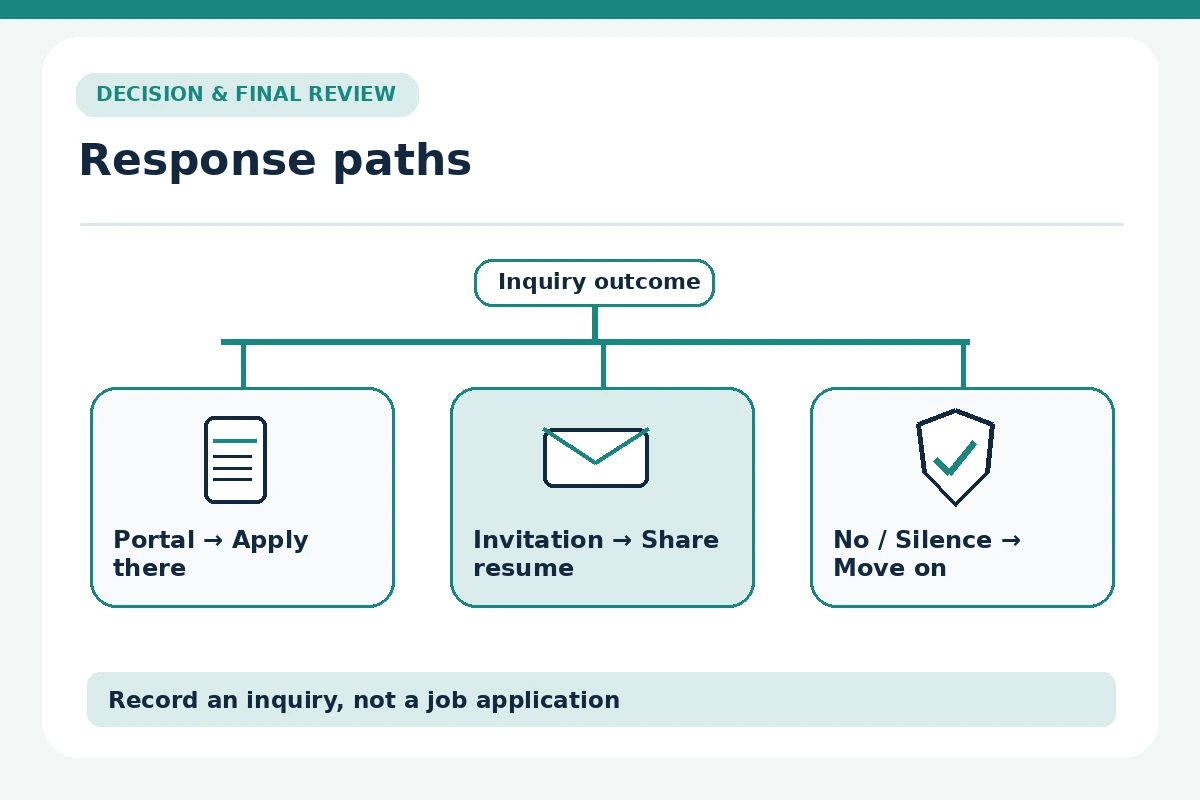
Keep an inquiry record and prepare to apply later
Save the date, employer, published careers URL, permitted contact channel, message, and any instruction received. Store a short note on which evidence you selected and why. If a vacancy appears later, treat it as a new application: re-read the specific requirements, adjust your resume truthfully, and submit through the named route. Do not assume an earlier interest letter was forwarded or retained. The company may handle expressions of interest separately from applications.
A successful outcome from this exercise may simply be a clear understanding of the hiring route. That is still useful. You have identified a realistic target function, checked public information, developed an accurate explanation of your fit, and learned when to stop contacting the employer. Continue broadening your search while preserving the employer’s instructions and the distinction between an inquiry and a submitted application.
How We Research and Verify This Guidance
We compared the distinctions in this article with public guidance published by US career-service organizations and CareerOneStop. We checked specific statements about cover-letter structure, job targeting, supporting evidence, and submission practices rather than using unverified templates. All applicant and employer scenarios above are illustrative. Requirements may differ by hiring organization, platform, or profession, so follow the real vacancy instructions and verify personal facts against your own records.
This guide provides general US-oriented job-search writing information, not a promise of an employer response or an application-system outcome. We do not know any reader’s individual work history and do not imply that described samples are real applicants or endorsed hiring results.
Source: COS UNADV career guidance — CareerOneStop distinctions between advertised and unadvertised opportunities; does not confirm any specific opening.
Source: TORONTO career guidance — University of Toronto Scarborough cover-letter guidance, including approaches to non-advertised positions.
Source: COS career guidance — CareerOneStop cover-letter guidance on positioning, examples, and respectful closing.
Source: BERKELEY career guidance — UC Berkeley guidance on connecting specific experience to employer needs and careful writing.
For information about site funding and relationships, read the affiliate disclosure. The informational examples in this article do not represent paid endorsements or confirmed hiring outcomes.
More Resume and Cover Letter Guides
No. A cover letter commonly supports a specific posted role. A letter of interest may introduce your skills when no suitable opening is advertised; it should not imply you applied to a vacancy.
Only if the published contact route accepts resumes or the recipient requests one. Otherwise ask for the appropriate process first and avoid sending sensitive documents unsolicited.
Do not invent one. Respect any instruction against unsolicited inquiries, consider a published talent community, or monitor future listings.
Mention only a verified public statement and never convert it into a claim that a role exists or that the organization is about to hire.
Label it as an expression of interest or inquiry, with the date and channel. Change it to an application only after you actually submit to a listed vacancy.