
Treat an extension offer as a separate decision
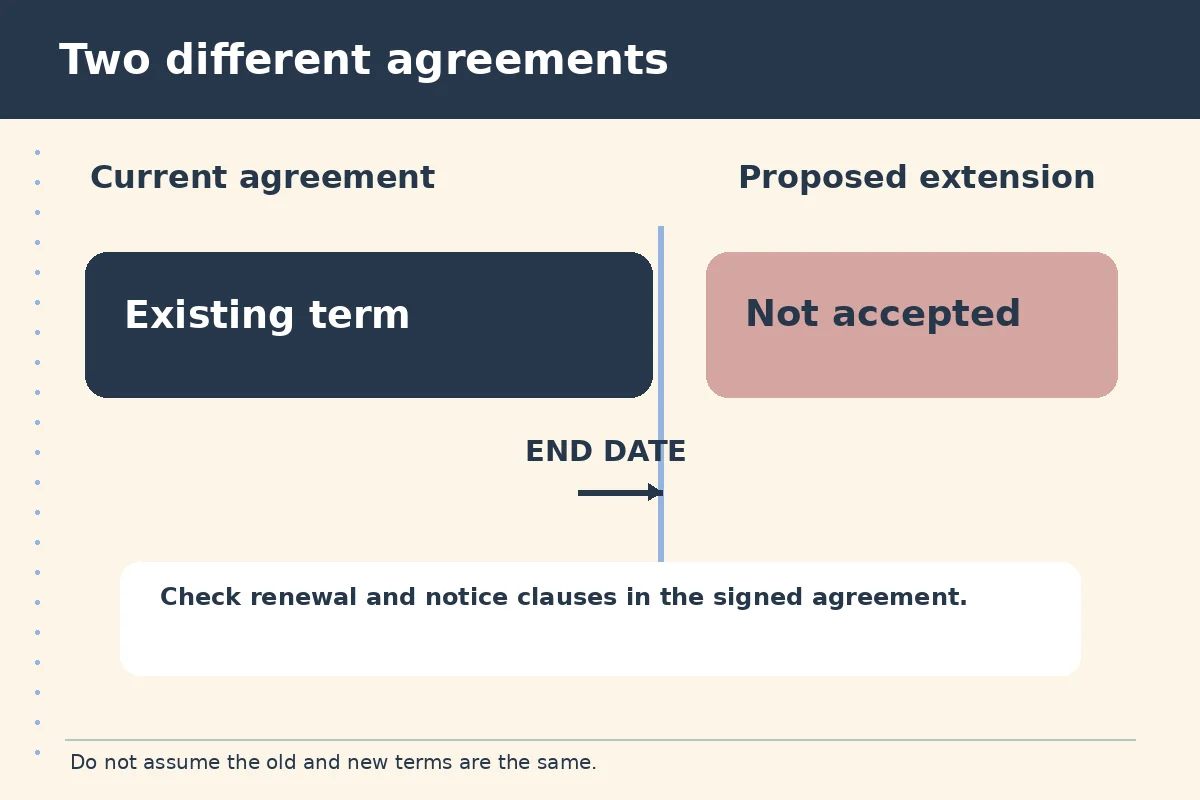
If a client or employer asks you to extend a fixed-term contract, first decide whether you wish to accept the new period. A polite “no” to a proposed renewal is not automatically a statement that your current obligations have ended. Read the existing agreement and the proposed extension side by side. A current contract may contain notice, renewal, delivery, or handoff provisions; the effect of those provisions depends on the actual language and circumstances. Do not assume that every contract expires without action or that an extension must be accepted just because work remains.
Review dates, notices, and the actual documents
Find the stated end date, renewal clause, any required form of notice, the recipient for official correspondence, and the description of work already promised. Record whether the proposed extension is a new document or an amendment to the old one. If there is automatic renewal language, uncertain notice timing, or a dispute about obligations, seek appropriate professional advice rather than relying on a generic email template. Career-center etiquette helps with tone, but it does not interpret a contract or establish what notice a particular agreement legally requires.
Distinguish completion from additional scope
A project may have milestones scheduled before the existing end date and suggestions for additional work afterward. List only deliverables you have actually undertaken, the current owner of each task, and any handoff materials you are authorized to share. Do not promise free post-expiration troubleshooting or extra training without an agreed arrangement. Equally, do not label existing work “optional” without checking the contract. A clean scope table can clarify what you will finish under the present term and what would require separate approval.
Send a concise written decline
Illustrative email: Subject: Contract extension decision — Content Operations Project. “Hello Sam, Thank you for proposing an extension of the Content Operations agreement. After reviewing the proposed dates, I have decided not to extend the contract beyond its current term. My understanding is that the existing agreement ends on [confirmed date]. I will complete the remaining work and handoff steps required under the current agreement, subject to the terms we have in place.
Please let me know the designated contact for the final delivery. Best, Taylor.” This is a hypothetical template; verify the date and duties rather than copying them as facts.

Route the message to a contracting contact
A team lead might request the extension informally while procurement, human resources, or an agency controls contract amendments. Follow the written agreement’s official notice instructions, and consider a separate courtesy message to the day-to-day project contact if appropriate. Avoid giving legally significant notice only through an unrecorded chat when the contract specifies another route. If a staffing agency is the actual contracting party, do not assume an end-client manager has authority to change dates or accept a formal decline. Keep written copies without exposing confidential client records.
Plan a handoff without crossing access boundaries
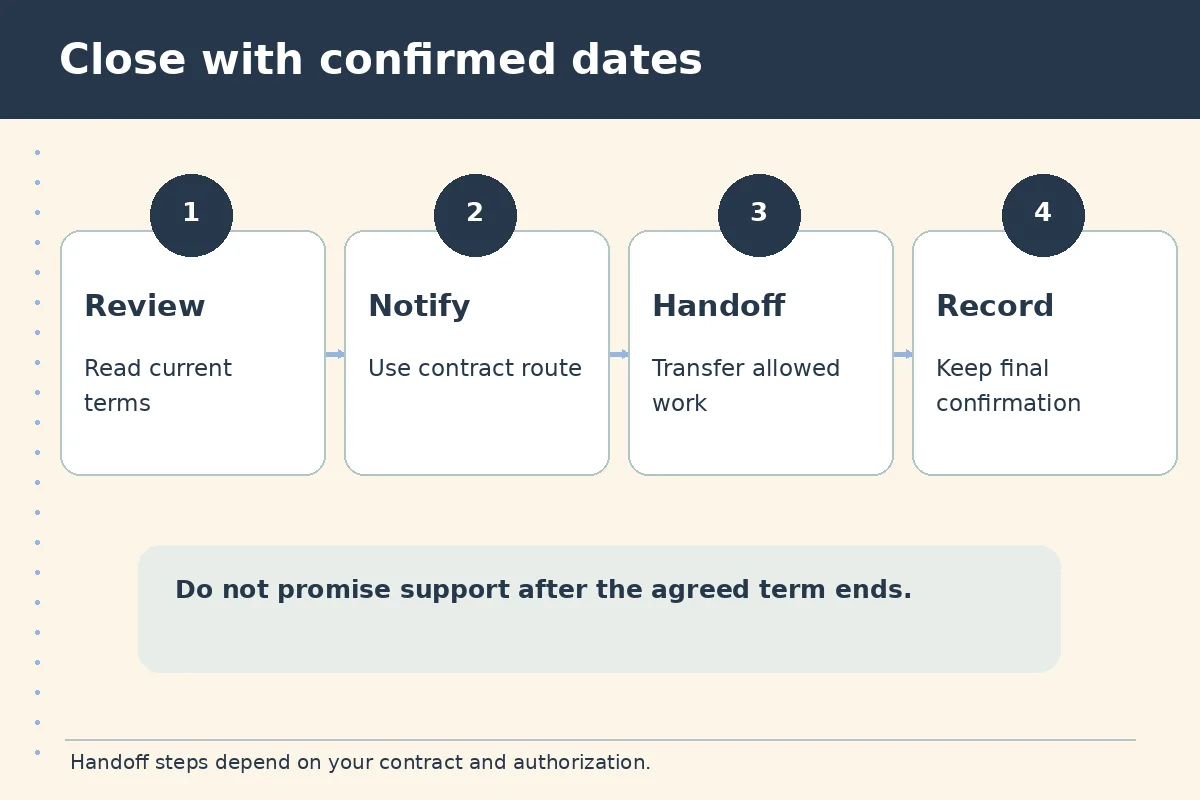
A useful handoff identifies open tasks, current status, approved locations for documentation, and the person authorized to take ownership. Avoid downloading sensitive files to a personal device or forwarding client data outside approved systems. If the company needs access to a shared project board, confirm which transfer method it authorizes. A successor may need context about decisions and unresolved items, but this does not mean you are expected to train them indefinitely. Discuss any extra transition period and its terms explicitly before agreeing to it.
Respond if the company asks for a shorter or longer term
The employer may counter with a different duration, part-time support, or revised project scope. Consider that a fresh proposal. If the answer remains no, thank the person and restate that you cannot extend. If you want to explore the option, request written scope, dates, and decision authority, and do not begin additional work on the assumption an agreement exists.
Avoid calling a suggested extension a confirmed contract when no formal acceptance has occurred. Clear language keeps the commercial conversation separate from the delivery status of the original project.
Protect working relationships with precise closure
A respectful decline does not require a personal explanation or a criticism of the project. You can acknowledge useful collaboration if it genuinely happened. The most helpful professional courtesy is accuracy: do not give an unreliable finish date, claim all work is done when it is not, or suggest continued availability that you have not agreed to provide.
After sending the notice, confirm receipt using the agreement’s process if required. Keep a record of the final status of current deliverables and any agreed corrections without including passwords or sensitive work samples.
Build a small end-of-term status record
For an illustrative design project, an end-of-term record could have three columns: agreed item, current status, and designated handoff contact. One row might say “Approved layout files — ready in the authorized shared folder — project manager”; another might say “Open revision request — awaiting client clarification — project manager.” These are examples of a status format, not assumed duties.
The record should avoid client names, credentials, private data, or unapproved transfers. Compare it with the actual deliverables and deadlines before using it. When sending a decline of a proposed extension, attach or link a handoff record only if the organization authorizes that sharing and the agreement calls for it. The note should not casually add new post-expiration maintenance or deliverables. This keeps the end of the current work distinct from a new engagement that you have decided not to take.
Know when a generic template is not enough
Contractors, temporary employees, consultants, and employees with fixed-term agreements may have different arrangements. A clause labelled “renewal,” “notice,” or “termination” can change the practical steps, and laws vary by jurisdiction. If you are unsure what an agreement requires, consult an appropriate qualified adviser before relying on this example. Do not treat career-center guidance about declining offers as legal advice. The purpose of this page is to communicate a decision clearly while prompting you to verify duties under the actual agreement.
How We Research and Verify Offer Guidance
We reviewed primary university career-center or official program guidance on how to respond to offers, including career.uconn.edu, careerservices.fas.harvard.edu, careers.umd.edu. We checked the cited pages on November 3, 2026. Each source supports communication practices, not a guarantee about an employer, a contract, or a particular school policy. We also compared this topic with existing JobAsk offer articles to keep the advice focused on this specific decision.
All message examples on this page are hypothetical and must be adapted to the real role, organization, and decision. The guidance is educational rather than legal or individualized career advice. For relationships and site policies, read our affiliate disclosure. No referral arrangement or paid endorsement is implied by the examples or the linked sources.
Related Workplace Guides
Often the two decisions can be stated separately, but your actual obligations depend on the agreement. Review the current term and notice provisions first.
Not necessarily. Use whatever notice method the signed agreement specifies and request advice if the wording is unclear.
Only describe authorized handoff tasks already agreed or negotiate any extra transition work separately.
Check who is party to the agreement and who can accept formal notices. Tell the project lead separately when appropriate.
Not for a straightforward courtesy message, but unclear renewal clauses, disputes, or consequential commitments warrant qualified review.