
Remote logistics tracking work may involve watching shipment statuses in approved software, checking carrier milestones, identifying missing scan events, documenting exceptions, and notifying the right operations contact. It does not automatically mean driving, assigning routes, approving customs classifications, or making carrier-contract decisions. O*NET describes some logistics analysts remotely monitoring vehicles or inventory through web-based systems and contacting service providers. That is evidence that digital tracking tasks exist, not a guarantee that every logistics position can be performed from home. Read each employer’s operating model and worksite requirements.
Search for the workflow rather than a vague job label
Look for shipment visibility coordinator, track-and-trace assistant, logistics support analyst, or transportation operations support on verified carrier, freight broker, third-party logistics, manufacturing, and retailer career pages. A good listing identifies the shipment type, tracking platform, customer-reporting expectations, shift or coverage model, and escalation point. A field dispatcher, warehouse clerk, and tracking assistant can work closely together while having different location needs. Do not apply solely because an aggregator labels a hands-on role remote; confirm the employer’s own posting.
Separate routine scans from an actual exception
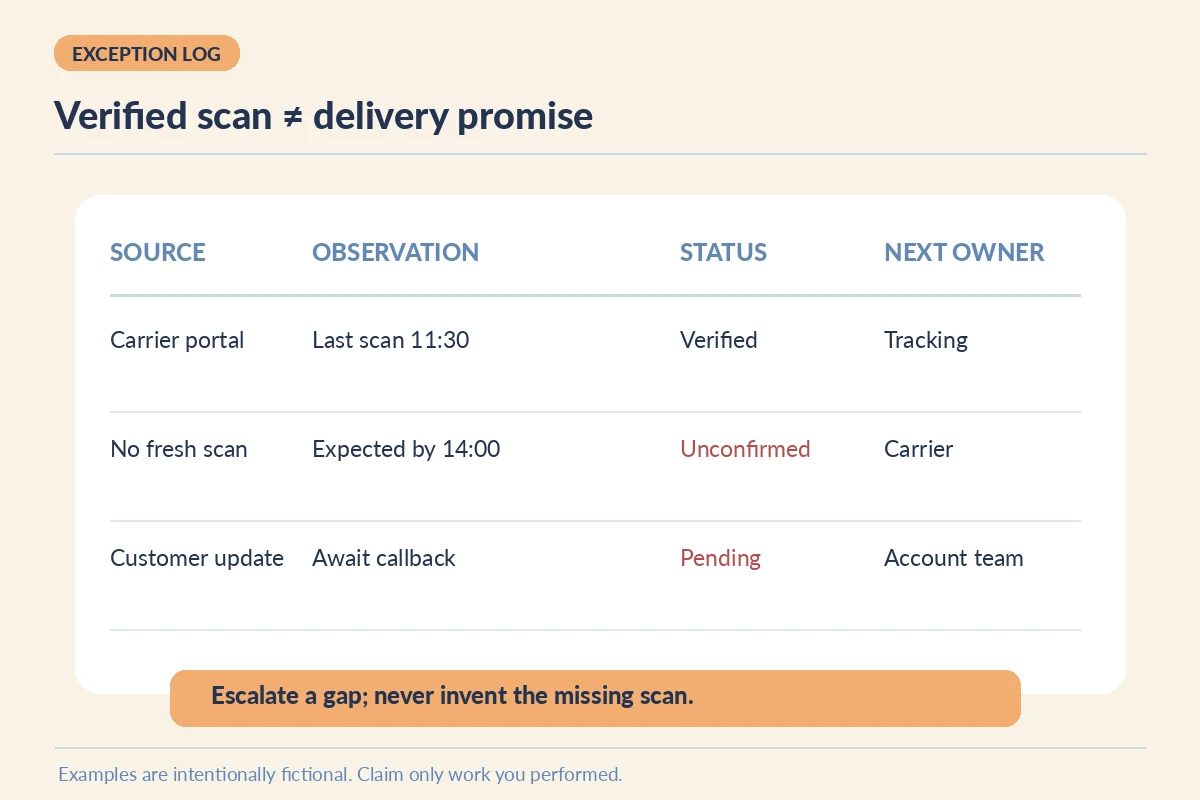
A milestone such as picked up, in transit, at hub, out for delivery, or delivered is a status report. A long gap, inconsistent carrier message, missed expected handoff, or damaged-shipment flag may trigger an exception. The assistant should record what system showed and when, then use a defined contact route. Do not invent a new arrival date to make a report look complete. Distinguish verified carrier updates from estimates, customer expectations, and internal follow-up targets. That careful labeling is often more useful than dramatic claims about improving delivery rates.
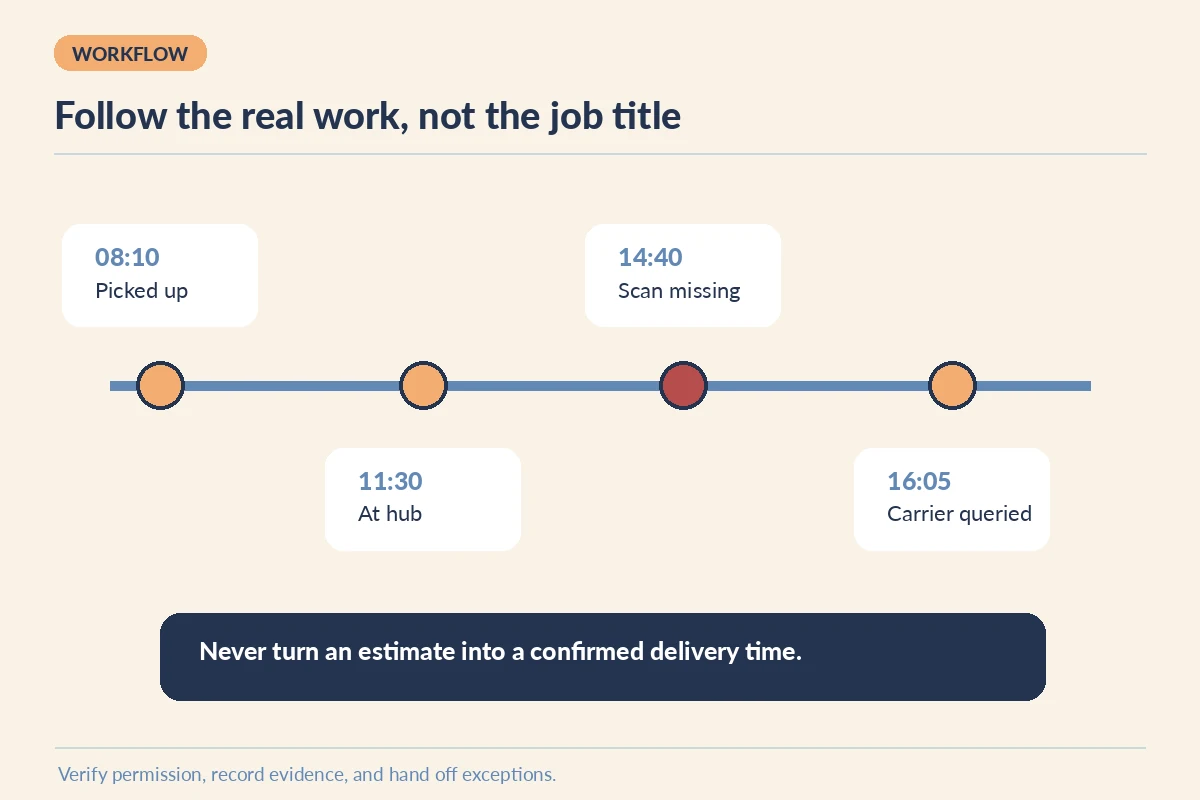
Understand who can change a route or promise a date
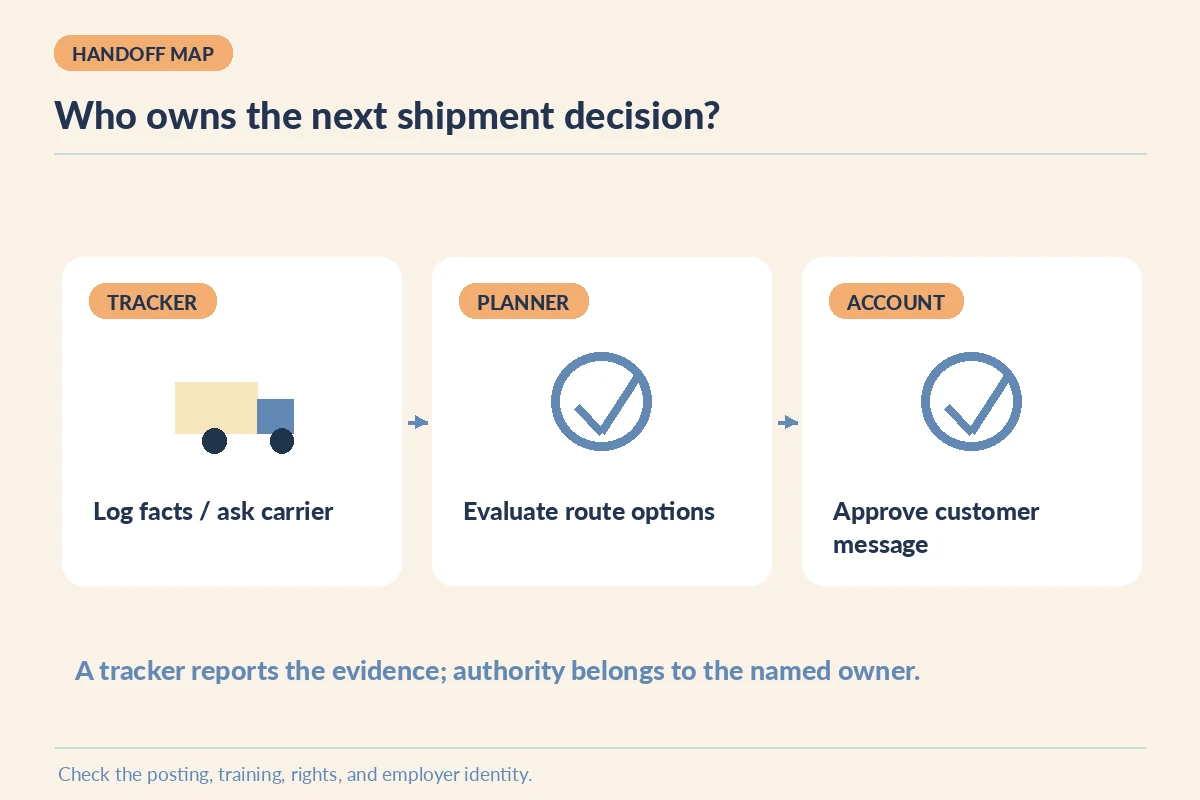
A tracking coordinator may flag delays without authority to reroute a truck, issue refunds, approve expedited shipping, or resolve customs matters. Ask which decisions belong to a dispatcher, planner, carrier, account manager, or customer-service owner. In a sample scenario, a late carrier scan can be escalated with evidence and a proposed follow-up time, but not advertised as a guaranteed delivery commitment. Job applications should describe the decisions you actually owned: monitored, documented, contacted, escalated, or approved only where accurate.
Create an exception log with no real customer data
Build a fictional spreadsheet for three parcels. Record shipment ID, carrier status, time and time zone, last verified update, customer-facing status, reason for exception, next action, owner, and follow-up deadline. Include a case where a parcel appears delayed but has an unconfirmed estimated arrival. Show that you ask the carrier before changing the customer-facing message. Label it as a practice exercise. Do not paste real shipment identifiers, addresses, or customer conversations into a public portfolio, automated assistant, or shared link.
Check whether the shift is truly workable at home
Operations may follow carrier cutoffs, fulfillment windows, or customer support hours in multiple time zones. A remote role can still require early-morning, late-night, weekend, or rotating coverage. Ask which time zone defines the shift, who handles incidents after you sign off, and whether a backup team takes critical exceptions. It is misleading to call the job fully flexible if there are fixed carrier contact windows. Compare the schedule with your internet reliability and realistic availability before applying.
Prepare for a carrier-call or status exercise
A hiring assessment might ask you to read a tracking timeline, decide which records are missing, and write a concise update to the right stakeholder. The strongest response distinguishes facts from assumptions: ‘The last verified scan was at 09:10 local time; I requested a carrier update and will revise the report after confirmation.’ Avoid pretending you can control carriers or promise outcomes. Use clear timestamps and document what you actually learned. This demonstrates process discipline rather than an invented shipping success metric.
Verify access to systems and customer information
Shipment platforms can contain customer addresses, inventory values, account contracts, driver details, and other protected data. Ask what permissions are required, whether training uses sample records, and whether remote access is managed by the company. Do not request or retain full customer lists just to prove you have logistics experience. If a supposed employer asks you to receive goods at your home, move funds through personal accounts, or provide credentials via an unverified messaging app, stop and independently verify the organization.
Review the difference between logistics tracking and analysis
Some roles mostly update events and exceptions, while analyst roles may evaluate trends, carrier performance, service reliability, and process design. O*NET’s Logistics Analysts profile spans both monitoring and analytical tasks. Ask whether reports are descriptive or whether you are expected to develop recommendations, models, or forecasts. A candidate experienced in customer updates can still be suitable for support positions without claiming advanced logistics analytics skills. Present accurate examples of structured records, stakeholder messages, and follow-through.
Compare job descriptions using three sample cases
Illustrative case A: a marketplace needs support staff to flag unscanned parcels for the morning team. Case B: a freight broker needs live carrier follow-up during an evening coverage window. Case C: a manufacturer needs a planner to analyze recurring delays and recommend route changes. All involve shipment information, but the responsibilities and training are different. Before sending a résumé, map your evidence to the actual scope. A tracking spreadsheet alone does not show that you negotiated a carrier contract or scheduled trucks.
Check the employer and written terms
Use the organization’s verified careers domain to match the job title, remote location requirements, compensation model, and hiring steps. Request a clear supervisor contact and whether the company provides software access and equipment. A job board can display outdated or copied descriptions, so keep a screenshot or PDF of the official posting and check the employer before sending identity documents. Consumer.gov warns that job scams can appear on ordinary job boards; an early demand to pay for access or training is a stop signal.
Make a sensible final application decision
Apply when the work is truly status monitoring, reporting, or exception coordination that you can demonstrate; the schedule is viable; and the employer defines escalation ownership. Ask for clarification if route changes, customer promises, and approvals are described as though every employee can make them. Reject demands to pay for assignments or let unknown recruiters access your private accounts. A well-grounded application explains how you preserve the integrity of a shipment timeline and hand unresolved issues to the person who can act.
How We Research Remote Job Guidance
We reviewed the role-specific occupational, professional, or government guidance linked below and compared it with practical questions that a real applicant can ask. The examples in this article are fictional, not employer testimonials or live openings. A job title and its remote eligibility can vary by organization; the official advertisement and written access rules should control the decision. No source promises a job, a particular salary, an interview, or automatic qualification.
Sources checked on November 4, 2026: www.onetonline.org (O*NET describes logistics analysts monitoring shipments or vehicles through web systems, communicating with providers, and maintaining logistics data.); www.onetonline.org (O*NET gives task-level examples such as shipment tracing, carrier coordination, data reporting and logistics analysis.); consumer.gov (Consumer.gov explains how impersonated employers and advance payment requests signal job scams.). Review our affiliate disclosure; this article does not claim any paid partnership.
Related Job Search Guides
No. Tracking documents status and escalates exceptions; dispatching may involve assigning equipment, drivers, or routes and different authority.
No. Some tasks are digital, while employers may require onsite equipment access, physical verification, or fixed office coverage.
Use fictional IDs, verified versus estimated milestones, time zones, exception owners, and follow-up actions.
Only when the responsible organization authorizes and verifies it; otherwise clearly label estimates and pending carrier confirmation.
Ask who owns route changes and customer commitments, then confirm shift hours and remote-system access.