
Quick answer: Use a practical decision guide to separate acknowledgment, requests for clarification, employer contingencies, and final acceptance. The safest next step is to verify the employer and the exact written offer before communicating a final commitment. A clear response should name the decision you are actually making, not imply agreement with missing terms.
This guide covers a specific situation in the accepting-offers process. It is not a substitute for your offer, employer policy, or legal advice. All scripts below are hypothetical; use only accurate details from your own correspondence and documents.
Define What Is Still Open Before You Reply
A job offer can look complete while leaving an important point unclear. Perhaps the recruiter gave a worksite verbally but the letter says ‘multiple locations,’ or the expected schedule differs from your available hours. Make a short list of decisions you cannot yet make. Separate material terms that affect whether you will accept from ordinary first-day logistics that can wait until onboarding.
Avoid an email that says ‘I accept with conditions’ without identifying the issue. The employer may reasonably interpret that as a counterproposal rather than a final yes. Request a precise correction, clarification, or updated letter before stating unconditional acceptance.
Distinguish the Employer’s Contingency From Yours
An employer may issue a contingent offer requiring specified verification or other conditions before a start date is final. Your decision to accept such an offer is not the same as inventing new terms in your reply. Read which steps are listed, who performs them, what dates apply, and whether the letter describes the job as provisional. Ask HR what stage the process has reached.
A different case occurs when you want the employer to change the offered shift, worksite, or pay. That is a request for a revised agreement. Keep these cases separate in your notes and communications. Do not tell a current employer you have a guaranteed start until you understand the new offer’s actual contingencies.
Ask Specific Questions Instead of Sending a Vague Yes
Use a short email with numbered questions. Hypothetical example: ‘Thank you for the Customer Support Specialist offer. Before I confirm my decision, could you clarify whether the schedule is fixed or rotating, and which office is the reporting location? The offer letter and our call seem to differ. I can respond once I have the confirmed terms.’ This does not claim acceptance.
Ask only questions that matter to your decision. If you need the details of an insurance plan, request the official summary rather than assuming the recruiter can personally guarantee coverage. University career centers encourage evaluating the entire offer package, not just the headline pay.
Check Revised Terms in the Official Document
When HR replies, compare the answer with the written offer. A casual promise in a chat may not appear in the contract or portal. If the change is material, request a revised written offer or an authorized written amendment. Verify that the corrected start date, location, and pay basis agree across the official documents before you sign.
The UConn negotiation guide recommends asking for a new written offer when terms change. Read the entire updated version, not only the field you asked about. Confirm any revised decision deadline, because an extended discussion does not automatically extend an earlier deadline.
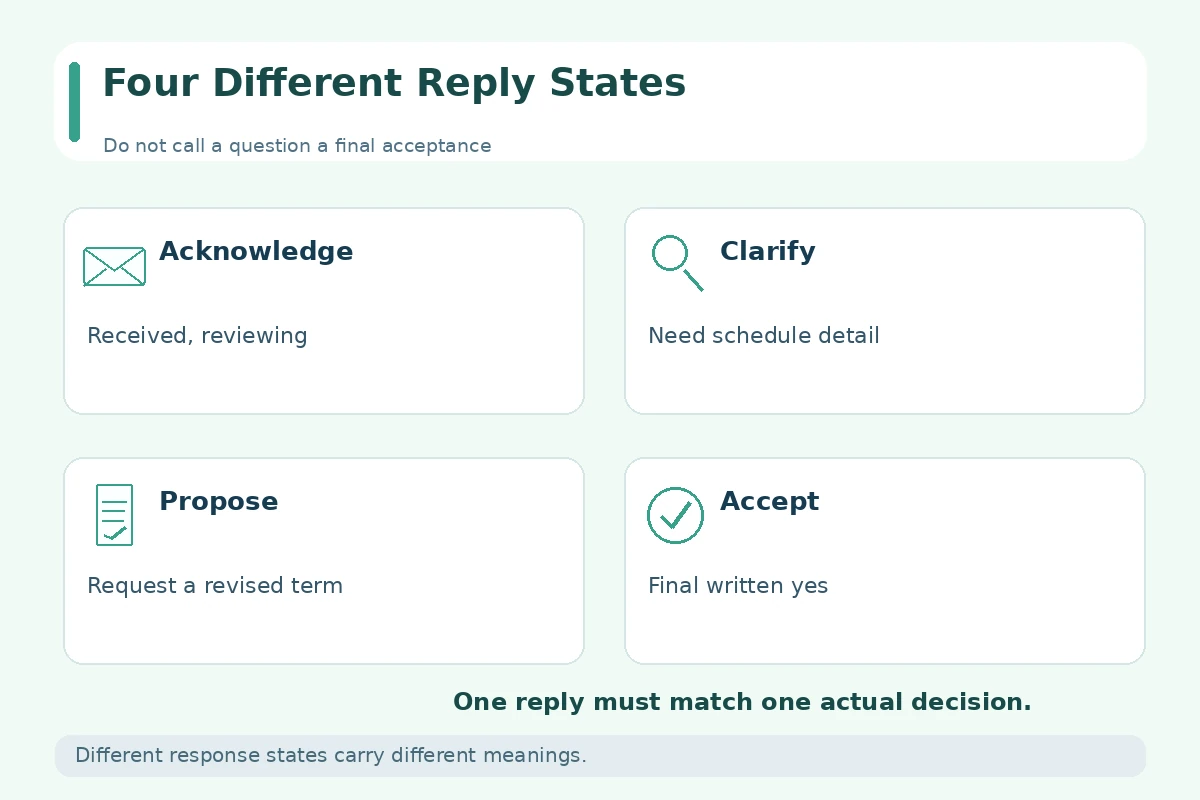
Choose One of Four Clear Reply States
State one: acknowledgment only—‘I received the offer and am reviewing it.’ State two: request for clarification—‘I need confirmation of the rotating schedule.’ State three: counterproposal—‘Could you revise the work location to the agreed office?’ State four: final acceptance—‘I accept the attached written offer dated …’ Each has a different meaning and should be written as such.
This distinction also makes your records easier to review later. Do not combine ‘I accept’ with a new pay request in the same sentence and hope it is interpreted the way you intended. When in doubt, ask HR which step their process requires and whether they have issued the final version.

Do Not Confuse Start-Date Logistics With Terms
Not every question should block acceptance. Where to park, who to meet on day one, and the building entrance are often onboarding details. By contrast, a start date you cannot meet, a different base pay, or an unexpected in-person location may change the decision itself. Sort your questions into ‘must settle before yes’ and ‘confirm after yes.’
This separation keeps communication efficient without sacrificing important decisions. If the recruiter says details are ‘standard,’ request the actual policy or offer attachment when that standard materially affects your acceptance. Do not fill gaps by guessing what is typical at other organizations.
Set a Real Decision Deadline and Keep It
Read the deadline stated in the offer. If you cannot obtain an answer in time, ask for a specific extension rather than simply letting the date pass. Explain what information is missing and when you could decide after receiving it. Do not send a false acceptance merely to keep an offer open while you investigate.
The University of Maryland recommends prompt communication about offer timing. An extension is a request, not a guarantee. If the employer declines it, you must decide using the verified information you have, seek qualified advice when necessary, or decline rather than commit on terms you cannot accept.

Keep a Decision Record You Can Understand Later
Record each unresolved issue, who answered it, the date, and whether an updated document followed. A simple private table with ‘question → employer answer → document reference → resolved?’ makes inconsistencies visible. It is particularly valuable when multiple people from HR and the hiring team communicate through separate channels.
When the material points are settled, write one definitive acceptance referencing the final offer version. Keep the supporting messages, but do not attach a private note of every negotiation to your acceptance unless HR asks for it. If the terms include legal or contractual issues you cannot interpret, seek qualified professional guidance for the applicable jurisdiction.
How We Research Offer Acceptance Decisions
We checked the original career-center and consumer-protection sources on October 28, 2026 and separated their documented principles from the hypothetical messages and workflow examples in this article. University career guidance University career guidance University career guidance. Offers, deadlines, contract rights, and employer processes vary; check the actual written documents and the organization’s authorized contacts.
This article is informational; no employer, job offer, paid placement, or affiliate relationship is asserted. Verify each term with the actual employer and read the JobAsk affiliate disclosure. We cannot verify private WordPress drafts or your own offer from public sources.
Related Workplace Guides
- How to Respond to a Job Offer With Questions Before Accepting
- Job Offer While Waiting on Another Employer: Manage Deadlines
- Accept a Job Offer by Text: Confirm the Terms in Writing
- Ask for More Time to Accept a Job Offer: Deadline Extension Email
- How to Accept a Job Offer After Reviewing the Written Terms
That is not the same as unqualified acceptance. Ask the employer to confirm a revised schedule in writing before you provide a final yes.
No. An employer may offer a role subject to stated checks; your own unanswered terms or proposed changes are separate matters.
Ask HR for the plan summaries, eligibility dates, or written explanation needed to decide.
If material terms remain unresolved, raise them before signing. If an issue arises later, seek professional advice and an explicit revised agreement.
Thank the employer, identify the precise unresolved item, and ask when a written clarification can be provided before the decision deadline.