
Quick answer: A text-message decision guide explains when a brief yes is appropriate, what must be verified first, and how to create a reliable written record. The safest next step is to verify the employer and the exact written offer before communicating a final commitment. A clear response should name the decision you are actually making, not imply agreement with missing terms.
This guide covers a specific situation in the accepting-offers process. It is not a substitute for your offer, employer policy, or legal advice. All scripts below are hypothetical; use only accurate details from your own correspondence and documents.
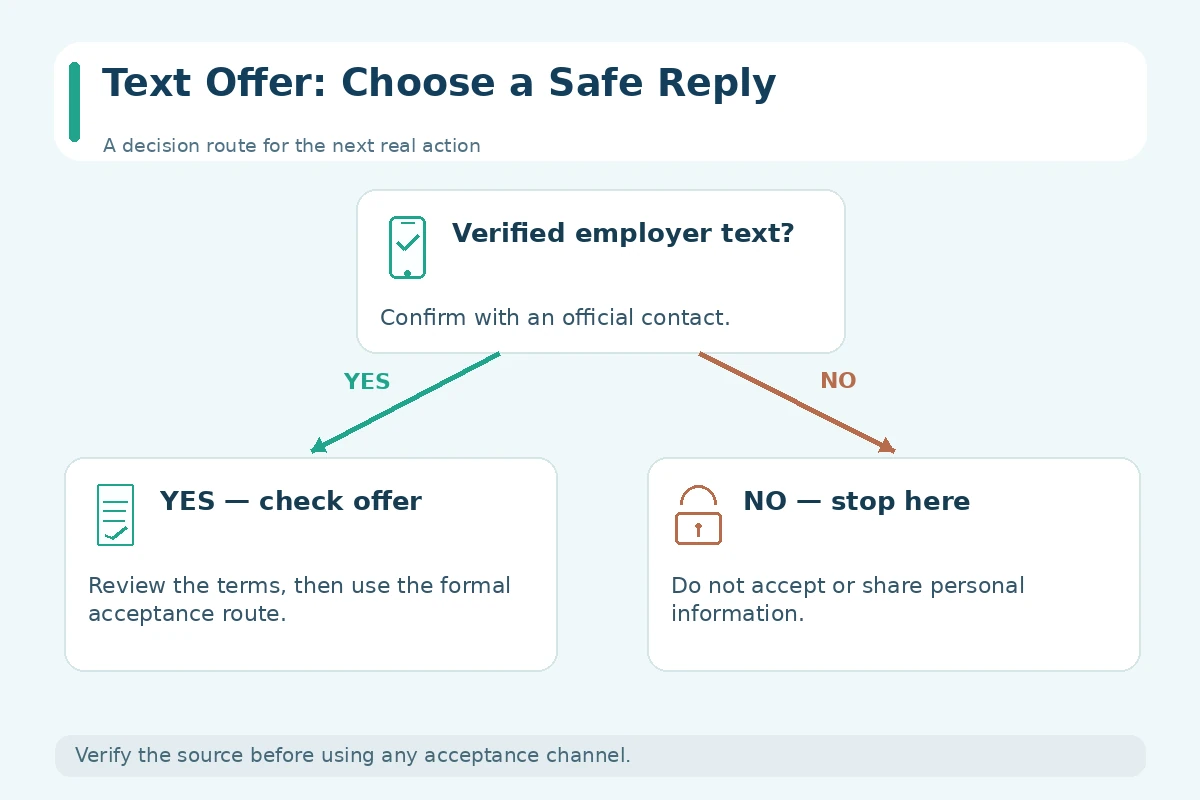
First Decide Whether the Text Is Really From the Employer
A text can come from someone you have met during interviewing, a recruiter you have never spoken to, or a number that only claims to represent an employer. Treat those situations differently. Look up the organization’s official contact information independently, and confirm the person’s name, title, and the exact job opening. A familiar logo or an earlier chat thread alone is not proof that a new request is authentic.
The Federal Trade Commission warns that fake recruiters use text messages and push candidates toward sensitive paperwork. An authentic offer should not require you to pay a fee, send bank details to a stranger, or buy equipment from a link in a message. If you cannot verify the sender, stop the exchange until you can.
Separate an Acknowledgment From an Acceptance
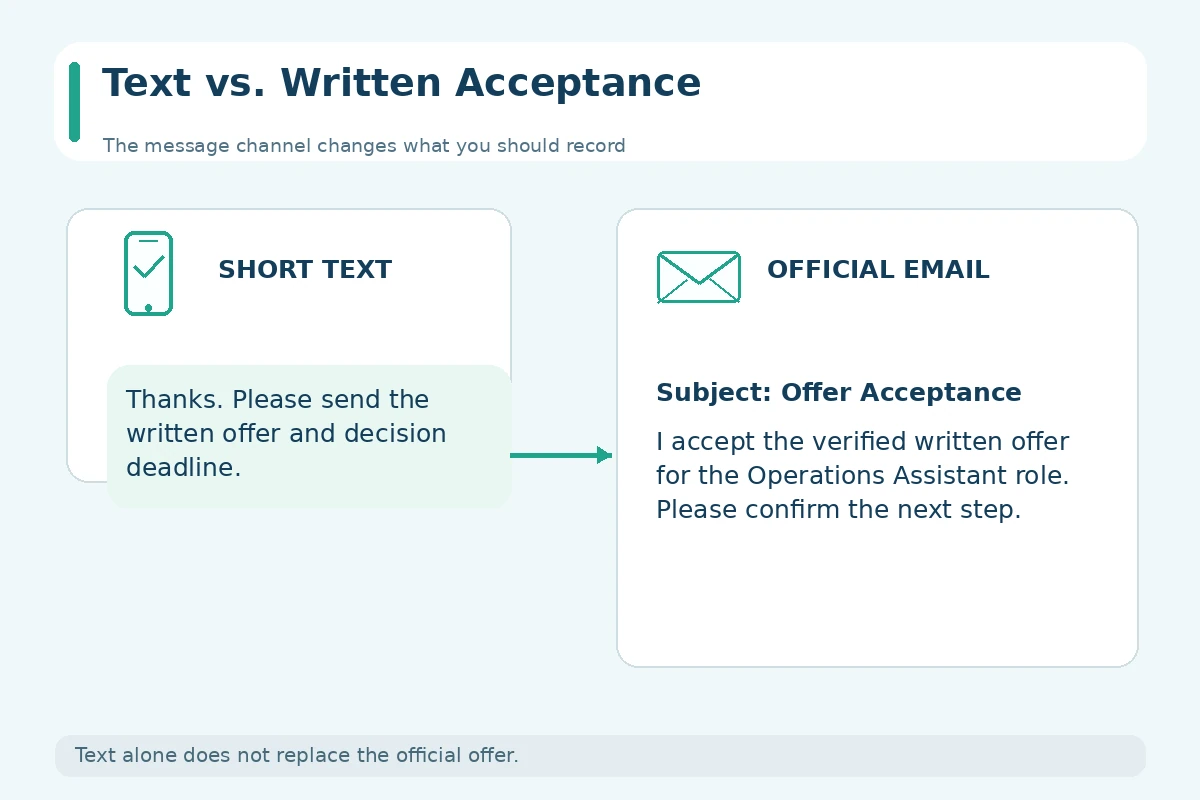
An acknowledgment says you received the message. An acceptance says you are committing to the role under terms you understand. These are not interchangeable. If the text arrives before the full offer letter, a safe response is: ‘Thank you for the offer. I’m excited to review the written details. Could you send them to my email and confirm the decision deadline?’ This is a hypothetical example, not a claim that you accepted.
If the written offer has arrived and you agree to all terms, a short text can acknowledge that decision, provided the employer accepts that channel. Still request the formal confirmation steps. Never add language such as ‘subject to everything working out’ and assume it will protect you. Ask the employer to define what remains open instead.
Read the Written Terms Before Saying Yes
Review the formal job title, worksite or approved remote location, reporting relationship, pay basis, schedule, start date, and any clearly stated conditions. Look for differences between what the interviewer described and what the written offer says. A date or shift that conflicts with your actual availability should be clarified now rather than after a text promises your start.
The University of Maryland career center recommends understanding the entire package and getting offers in writing. If benefits are only described generally, ask when plan documents will be available and whether eligibility starts on day one or later. Do not invent a promise about benefits based on a short message.
Choose a Response Based on the Evidence You Have
Use three different paths. Verified offer but no document: thank the sender and request the official letter. Written offer with unresolved details: name the specific point and ask for correction or explanation. Verified, complete offer that you intend to take: express acceptance in the employer’s requested format and confirm where to send the signed copy if required. These paths should not collapse into one generic ‘yes.’
A useful message identifies the position rather than merely replying with a thumbs-up. Hypothetical final reply: ‘Thank you. I accept the Operations Assistant position under the written offer dated October 20. I’ll return the signed document through the HR portal today. Please confirm the next onboarding step.’ Replace every detail with your own actual facts.
Create an Email Record That Matches the Offer
Even when an employer uses SMS during scheduling, the HR portal or corporate email may be the official place for acceptance. Send the confirmation to the authorized contact or follow the stated portal instructions. Include the actual role, agreed start date, and any revised term only if it appears in the official offer. Keep the message professional and concise; there is no advantage in repeating a long negotiation by text.
Save a copy of the offer, your response, and any signed forms in a private folder. Check that attachments are the final versions and do not contain comments or tracked changes. A text screenshot can help you recall what happened, but it does not replace the employer’s acceptance record.
Know What Not to Share in a Text
An offer message is not a reason to send a Social Security number, banking details, photo of an identity card, or login code to an unverified phone. Those items may be requested during legitimate onboarding through secure channels, but that is a different task from expressing acceptance. Ask HR what secure system is used and verify the URL without relying on a shortened link.
Be cautious if the sender claims the offer will disappear unless you pay immediately or provide confidential information in minutes. You can thank the sender without committing, and you can ask a verifiable HR representative for clarification. A real employer’s written procedure should be understandable.
Check the Reply Before You Send It
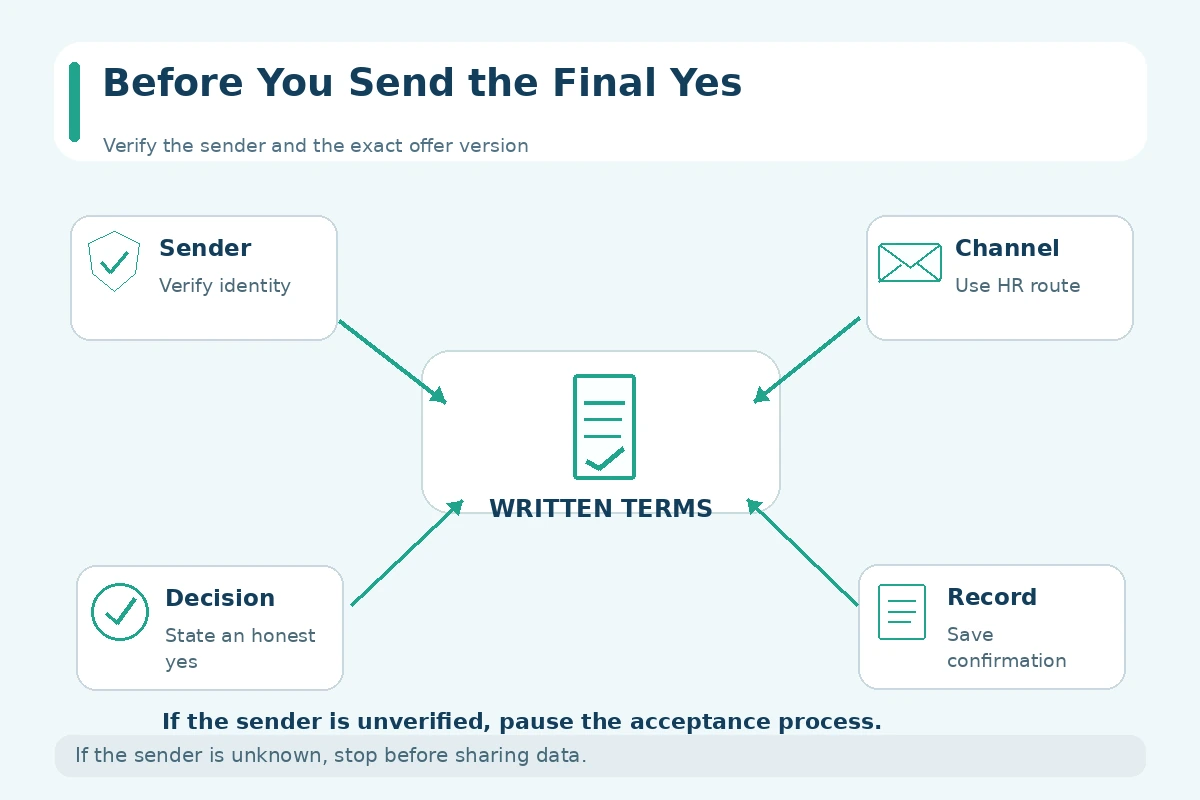
Read the draft on the phone screen and check for autocorrect errors in the role title, date, or recipient name. Make sure your wording communicates the actual decision. ‘I am interested’ does not mean the same thing as ‘I accept,’ and ‘I accept pending approval’ can create ambiguity. If you have not decided, say so clearly and request a deadline if none is stated.
For a final acceptance, confirm that the offer is the correct version, that you have no unanswered material questions, and that the requested official submission channel is available. Treat the text as one step in a traceable process, not as a complete onboarding system.
If the Employer Gives Conflicting Instructions
Sometimes the hiring manager texts ‘you’re hired’ while the HR portal still shows an earlier document or a different start date. Do not choose whichever version sounds more favorable. Reply with a specific discrepancy: ‘The email shows a November 16 start, while the text says November 9. Which date should I use in the formal acceptance?’ Keep the message neutral and factual.
If a corrected document is issued, review the whole revision rather than only the changed line. Then follow the employer’s instructed acceptance steps. Do not assume that one employee can override formal approval, especially for a change to location, schedule, pay, or employment conditions.
How We Research Offer Acceptance Decisions
We checked the original career-center and consumer-protection sources on October 28, 2026 and separated their documented principles from the hypothetical messages and workflow examples in this article. University career guidance Official consumer guidance University career guidance. Offers, deadlines, contract rights, and employer processes vary; check the actual written documents and the organization’s authorized contacts.
This article is informational; no employer, job offer, paid placement, or affiliate relationship is asserted. Verify each term with the actual employer and read the JobAsk affiliate disclosure. We cannot verify private WordPress drafts or your own offer from public sources.
Related Guides
- Resignation Text Message to Your Boss: Say It Clearly and Confirm in Writing
- Job Offer While Waiting on Another Employer: Manage Deadlines
- Accept a Job Offer With Open Questions: Clarify Before Committing
- How to Accept a Job Offer by Phone and Follow Up in Writing
- How to Accept a Job Offer After Reviewing the Written Terms
A text could have consequences depending on the arrangement and applicable law. Do not rely on assumptions about enforceability; request the employer’s official written process before making a commitment.
No. Ask to review the complete written terms and clarify any gaps before stating a final acceptance.
Verify that person and the offer through a known official contact channel rather than responding with sensitive information.
Only when you have reviewed the verified offer, agree to it, and the employer permits text replies; follow with an email documenting the exact role and terms.
Keep the message record, request or review the official offer, send a written acceptance by the required channel, and verify the next steps.