
An assembly-line job might involve connecting parts, checking a finished component, staging materials or updating a production record. These tasks sit near one another but may require different skills and authorization. BLS describes assemblers and fabricators as workers who build products and components, use tools or machines and perform quality checks. A posting labeled “production associate” may combine several activities, so read its actual duties before using a generic factory resume.
Do not confuse different factory roles
Write down the product category, production area and verb that defines the role: assemble, inspect, pack, transport or maintain. Maintenance is not automatically part of a beginner assembly position, and specialized machines or electrical work can demand extra training. Choose an opening where you can honestly meet the listed entry requirements.
Verify the manufacturing employer and location
Start at a verified manufacturer or staffing company careers site. Compare the posting title, plant location, employer name and job number with the listing that led you there. A temporary assignment may be employed through a staffing firm rather than the plant itself; record that distinction. Do not assume that an organization advertising an opening at a factory owns or directly employs all of its workers.
If an unsolicited recruiter demands a fee, financial account details or a deposit to schedule an assessment, stop and verify the company independently. The FTC advises job seekers to check openings through real employer contacts and not pay for a promise of employment. A badge, logo or photograph of a plant does not verify a recruiting link.
Check the shift and your commute first
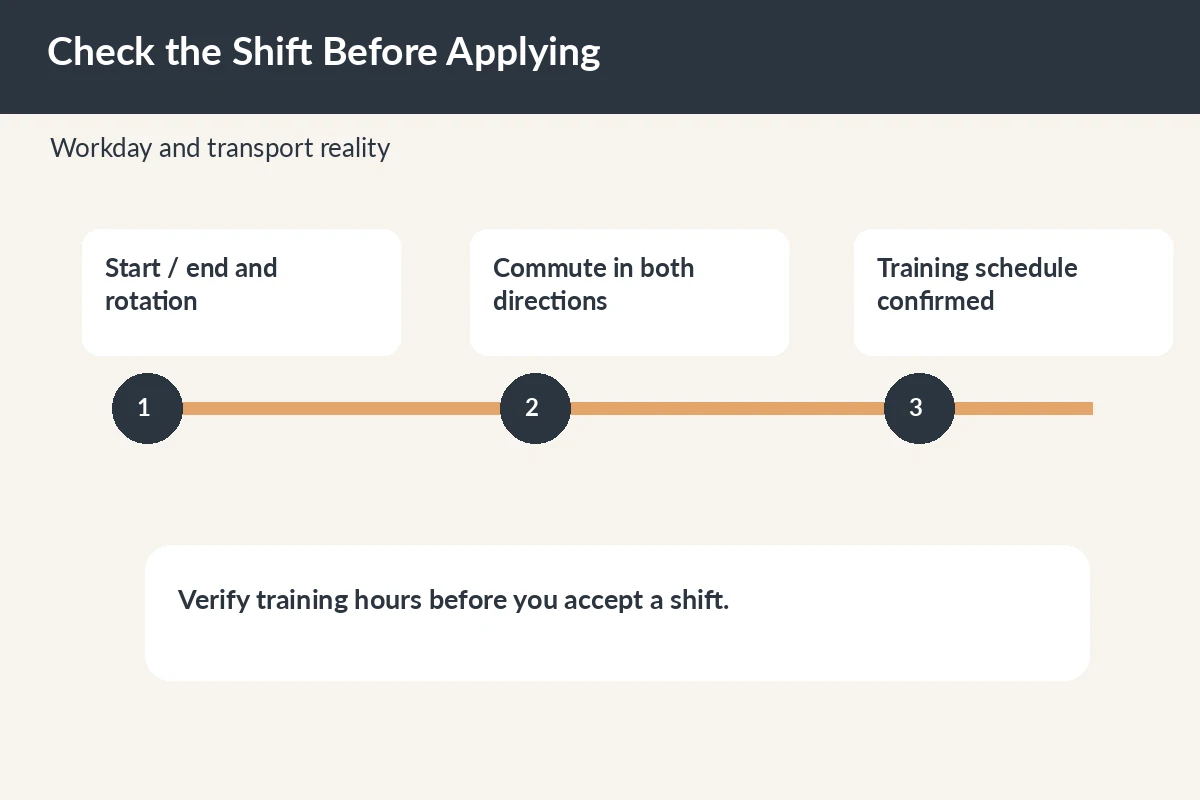
BLS notes that assembly work is often full time and some positions have evening, weekend or night shifts. Some employers use rotating schedules; others advertise a fixed shift. Read the actual vacancy to see whether start and end times, overtime expectations, weekend work or training hours are stated. Do not assume a second-shift position will change to days after you start.
Test transportation both before the earliest stated start and after the latest stated end. If the online form asks for a shift preference and flexibility, select the options you can truly sustain. If transportation makes a schedule impossible, a confident checkbox will not solve the problem. A small timetable can reveal more than a general statement that you are willing to work hard.

Separate training from credentials
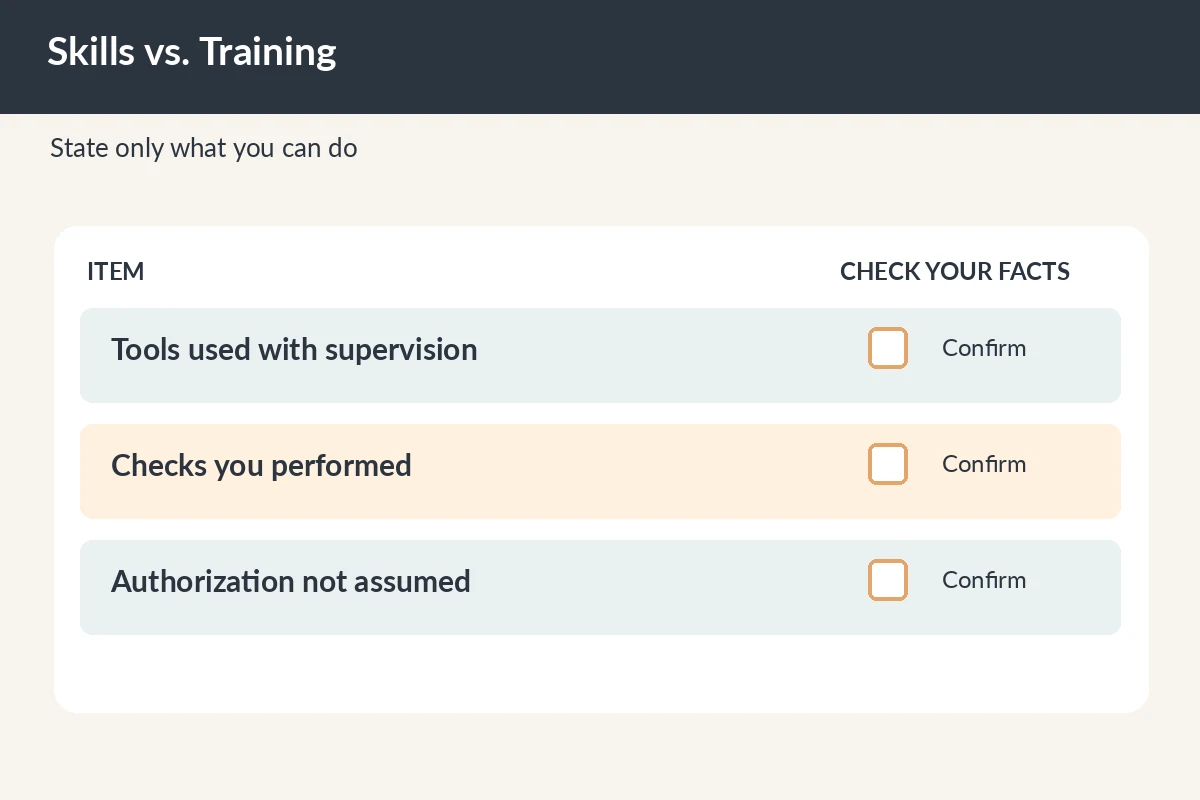
Many assembly jobs include employer-provided training, but advanced product or equipment areas can have more demanding entry requirements. The BLS notes that education and training vary by industry and employer. Do not tick “certified” for a machine or process because you expect to learn it after hiring. Training you received under supervision can be described as supervised experience, not independent authorization.
If a posting lists blueprint reading, measuring tools, soldering or automated equipment, identify which skills you have practiced and in what setting. A school exercise or hobby project can be relevant if you label it correctly; it is not a substitute for a required industrial credential. When a requirement is unclear, use the verified hiring contact rather than making assumptions on the form.
Show quality and safety behavior with evidence
A useful application example might say: “Followed written assembly instructions for a supervised class project, compared finished pieces against a checklist and reported a mismatch to the instructor.” This is a hypothetical educational example, not paid manufacturing experience. If you worked in packing or inventory, describe accurate counts, label checks or documented damage reports that you actually performed.
Avoid claiming you released products, adjusted guarded machinery or overrode a safety stop unless the work and authorization are real. Employers control their own procedures, equipment access and incident reporting. A careful applicant can show awareness of process limits without pretending to be a safety officer or a certified equipment operator.
Answer physical and schedule questions accurately
A portal may ask about standing, repetitive work, shift availability or other job-related tasks. Answer based on the wording of the question and your circumstances rather than guessing what will make an algorithm approve you. Not every plant has the same physical demands; BLS describes a broad occupation with different product types and work areas. The exact posting and the employer’s process matter.
If an application asks about a specialized license or qualification, give only a status you can document. For questions involving accommodation or health information, use the employer’s official, appropriate process rather than entering unnecessary personal details into a free-text box. This article is not a substitute for individualized employment or medical advice.
Align the resume with the actual station
For an assembly role, prioritize practical work examples involving accurate instructions, tools genuinely used, quality checks and team handoffs. For inspection support, focus on documented checks and reporting anomalies. For material staging, focus on item identification and safe handoff. Do not paste the same equipment list into three applications when each role uses different machines.
Match the employer, dates and titles in the online application to your resume. If you have no industrial employment, honestly use a school project, volunteer event or nonindustrial role showing attention and reliability. Avoid fabricated throughput figures. A clear example with verifiable scope is stronger than an impressive number without a source.
Review the digital application before submission
Check the plant location and every shift choice, then review education, work history and attachments. An online system may import resume dates or employer names incorrectly, and you remain responsible for fixing them. If a position requires a specific file type, follow its instructions. Do not attach photographs of another employer’s equipment, proprietary process diagrams or customer records as proof of skill.
Submit only after the preview reflects the facts you can support. A saved application or online profile is not necessarily a submitted application. Look for a job-specific receipt or portal status and record the job number, plant, shift and resume version.
Prepare follow-up questions about training
If the hiring process advances, useful questions concern the actual training schedule, supervision for unfamiliar equipment, how work quality is checked and who handles a defect or safety issue. These help you evaluate whether the role matches what was advertised. Do not assume that a trainee may independently approve defective products or operate every machine in the area.
Wait for verified employer instructions about assessments and documents. An interview request or offer-like email does not justify sending private records to an unknown third party. Continue searching for legitimate alternatives while retaining a clear record of the application you made.
How We Research Online Job Applications
We reviewed U.S. occupational descriptions, university career-center guidance, and FTC consumer protection material as relevant to this specific online application. Our editorial examples and field labels are hypothetical, not screenshots of a live employer portal. The employer’s own posting and authorized application instructions determine eligibility, file types, deadlines, screening and training. The guidance is informational and cannot guarantee an interview or offer. Review date: November 10, 2026. We do not assume a saved profile is a completed application or that a candidate possesses access, certification or approval they have not earned.
Primary and reference sources reviewed November 10, 2026: www.bls.gov (BLS explains assembly tasks, work conditions, shift schedules and employer training that varies with product and role.) consumer.ftc.gov (FTC warns about fraudulent online job ads and advises independent employer verification.) careerservices.upenn.edu (Penn Career Services recommends concise job-specific skills and accurate evidence in application materials.) Examples are fictional and should be replaced with the reader’s own dates, work history and documents. This independently prepared article does not imply paid placement or any employer endorsement. Read the JobAsk affiliate disclosure.
Related Job Search Guides
Possibly. Requirements differ by product and employer. Show transferable evidence and only claim tools or training you genuinely have.
No. BLS describes some evening, weekend and night schedules. Check the particular plant and position for actual hours.
No. Observation is not independent operation or certification. Describe what you personally performed and whether it was supervised.
Yes if relevant and permitted, clearly labeled as coursework. Do not present it as a paid factory assignment or share restricted material.
Find a confirmation or status tied to the specific plant and requisition, not just an account or saved form.