
Decision-making appraisal comments should evaluate how a person understood the issue, compared realistic options, used the authority available to them, and documented what happened. An employee does not demonstrate poor judgment merely by escalating a decision that belongs to a supervisor. Nor does a lucky outcome prove that a risky process was appropriate. Start with evidence of the decision sequence, then explain which part of it the employee should repeat or improve.
A clear manager comment has four parts: the situation, the evidence considered, the action taken within the employee’s role, and the observable consequence or next check. This approach follows university HR guidance that review narratives should use specific examples and observable work behavior. Do not give every decision equal weight; a routine scheduling choice is different from an action involving sensitive records, money, safety, or required approval.
Name the Decision the Role Actually Owns
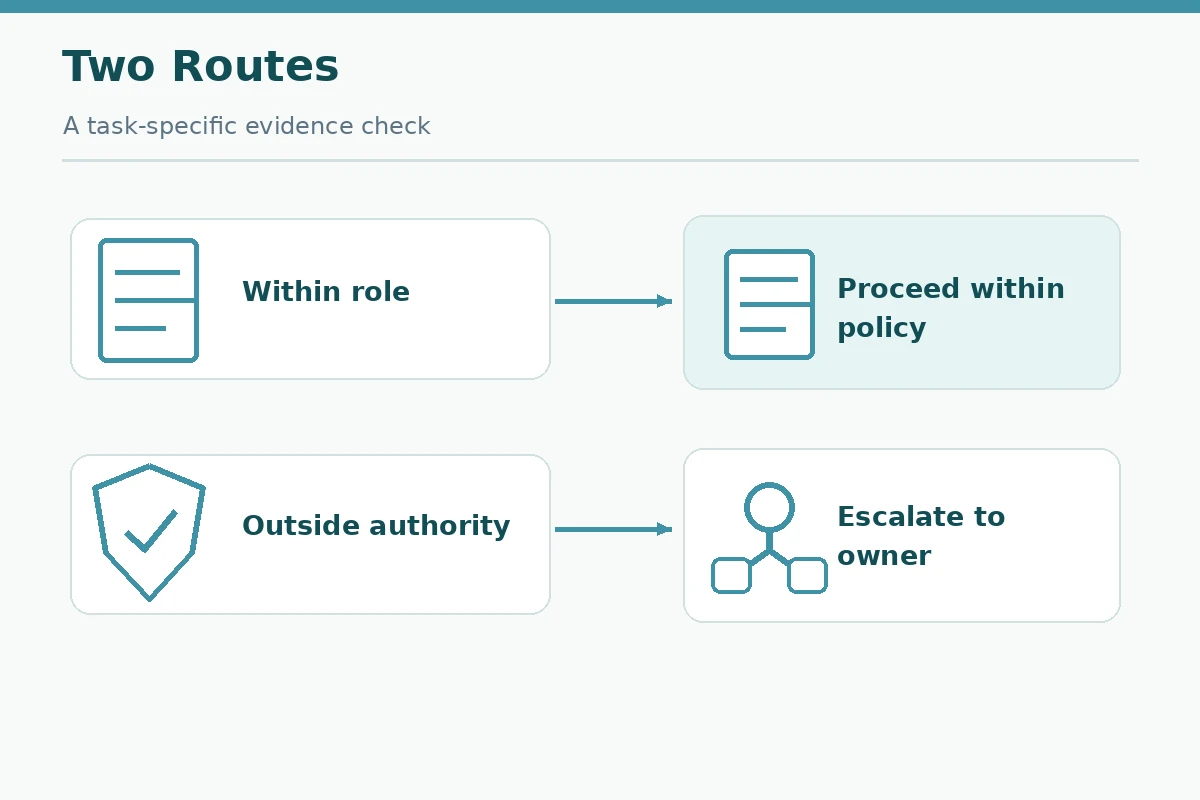
Before writing the comment, identify what the employee was authorized to decide. A front-desk coordinator may choose how to order nonurgent requests, but may not be able to authorize refunds or disclose private customer records. A junior analyst may compare figures and recommend an investigation, but an assigned reviewer may own the official report. Reviews should reward timely escalation when the task crossed that authority line instead of promoting unsupported independence as a universal virtue.
Check the policy or written workflow in effect when the choice occurred. Employees can be expected to seek clarification when an instruction conflicts with what they know, but managers should also ask whether the guidance was available and clear. If expectations changed halfway through the period, date the change. Otherwise a review risks rating the employee against rules they had no opportunity to apply.
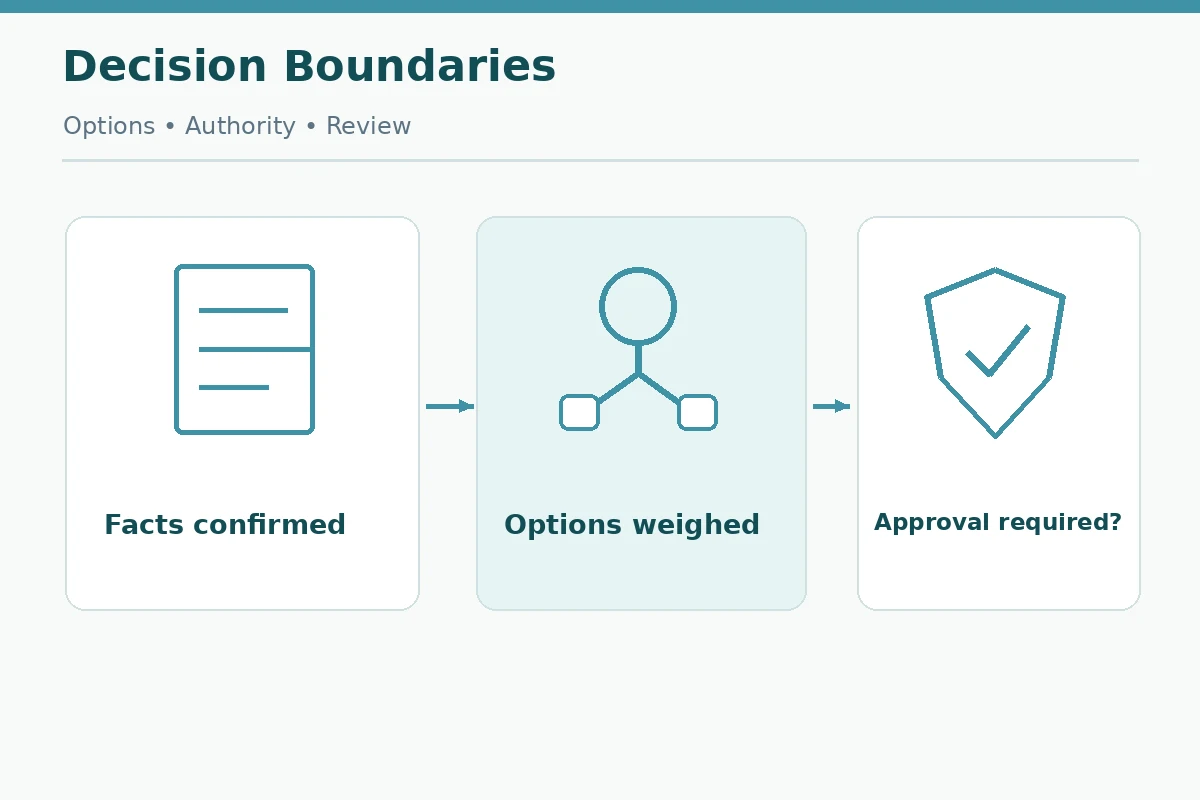
Evaluate Inputs Before You Judge the Outcome
Look at what information was available at the decision point: confirmed facts, uncertain assumptions, customer requirements, priority deadlines, or a supervisor’s instruction. Did the employee ask a useful question or verify a missing field? Did they recognize an option that was faster but outside the permitted workflow? Distinguish clear evidence from hindsight, because an unfavorable later result does not automatically make an earlier reasoned choice negligent.
Create a brief option record with the relevant constraint, alternatives considered, who approved the path if approval was required, and what information would cause the choice to be revisited. This is not paperwork for every trivial action. Use it for decisions significant enough to explain in the review, and avoid retaining sensitive details in a general-purpose notes document. Your organization may already have an incident or decision system.
Write Comments for Strong and Developing Judgment
Positive hypothetical comment: “When the requested report figures disagreed, you checked the underlying definitions, identified the unresolved question, and held the draft for the designated reviewer. That kept an unverified number out of the shared update.” This recognizes caution and communication without pretending the employee personally approved the metric. Another useful comment: “You presented two workable scheduling options and described the trade-offs before requesting a decision.”
Development hypothetical comment: “During the reviewed vendor change, you selected a replacement before confirming the authorized purchasing limit. For future requests, list options and cost assumptions, then obtain approval before a commitment is made.” An effective review names the missed step and the next behavior. Avoid insults such as “poor instincts” or overgeneralizations such as “cannot make decisions” when the record concerns a particular choice.
| What to examine | Evidence to verify | Review action |
|---|---|---|
| Option comparison | Alternatives and constraints | Describe the trade-off considered |
| Approval needed | Role and process boundary | Praise timely escalation |
| Outcome unexpected | What was known at the time | Review the process, not hindsight |
Separate Initiative From Unapproved Action
Good decision-making may involve proposing a new process, asking for a policy exception through the proper channel, or pausing when data is unreliable. It does not mean bypassing supervision. A person who spots a discrepancy and alerts the right owner has used judgment even if someone else made the final decision. Recognize the quality of the recommendation and the promptness of the escalation rather than claiming they personally resolved every downstream issue.
Also distinguish a correct result from a repeatable process. A shortcut may happen to work once; that does not make it appropriate for a regulated task. Conversely, someone who followed an approved process can encounter an unfavorable outcome because conditions changed. Review the information available at the time, the required check points, and how the employee adjusted after new information appeared.

Turn a Decision Review Into a Learning Plan
The next step should target the weakness: a decision tree for referral thresholds, practice comparing two options, a pre-approval checklist, or structured debriefs after complex cases. Managers should specify who provides approval and what evidence the employee should bring to the next check-in. A useful development goal might be to document the assumption and approver before a sensitive change rather than to “be more confident” in general.
Give the employee a chance to explain why the choice looked reasonable at the time. If a missing system permission or unclear instruction caused the delay, address that operational issue as well. Keep the review language proportional and tied to available records, without predicting future discipline, licensure consequences, or promotion decisions that the reviewer cannot verify.
Two Worked Examples With Different Lessons
In this hypothetical example, a support representative receives a request that could affect a client account. They verify the request, document the alternative routes, and ask the authorized account owner to approve the action. A manager should not mark the representative down simply because the approval took time; the review should examine their preparation and handoff.
In a second fictional scenario, a coordinator books additional work without checking the agreed capacity constraint. The lesson is not that the employee lacks character. The coachable behavior is to confirm the capacity rule, record the unresolved choice, and seek a decision before promising delivery. Future reviews can check that process in actual assignments.
How We Research and Verify These Examples
We reviewed primary, public occupational and university human-resources guidance on 2026-11-14. The blink.ucsd.edu resource supports uC San Diego recommends objective observations, examples and documented actions rather than impressions. The hr.umn.edu resource supports review narratives should describe behavioral examples, outcomes, and the reasoning for ratings. The uwaterloo.ca resource supports appraisal feedback should focus on behavior instead of perceived attitudes or personality. All example comments and worker situations are hypothetical teaching illustrations. Actual performance ratings, approval limits, privacy standards, and personnel decisions depend on the role and employer policy; this guide is not legal or disciplinary advice. Our affiliate disclosure explains commercial relationships and editorial transparency.
Explore Related Career Guides
Name the option considered, the relevant evidence, the authority boundary and the documented action taken.
No. Escalation can be the correct and responsible choice when the action exceeds the employee’s authority.
No. Consider the information and constraints available when the decision was made, and how the employee responded.
State the observable missed check, the consequence where known, and a specific approval or verification step for next time.
Compare the choice with the expectation and information available then, invite explanation, and document the basis for feedback.