
A digital marketing resume objective should name the channel or marketing problem you can support, cite a real project or task, and be careful about claiming results you did not measure. Useful evidence may come from school work, a supervised internship, a small business’s approved campaign or a paid role. Do not write that you doubled conversions because a sample resume used that number. Your objective should explain what you personally contributed—research, copy, scheduling, tagging, reporting or testing—and aim it at the type of marketing opening you actually want.
Choose a channel instead of listing every platform
Digital marketing can involve search content, email campaigns, paid advertising, social media, web analytics, market research or a combination. The job posting tells you which work is relevant. O*NET describes marketing specialist tasks involving campaign evaluation, research and online metrics, but it does not mean every entry-level marketer personally manages all those areas. Pick the one or two channels you have actually used and can discuss. An objective promising SEO, paid search, social strategy, email automation and attribution expertise all at once is unlikely to match a beginner’s evidence. A focused opening makes it easier to connect your experience to a hiring team’s needs.
State what you actually created or analyzed
Think through a specific project. Did you draft copy, schedule approved posts, research search terms, build a reporting worksheet or compare campaign results? Identify the deliverable and whether it was a class simulation, volunteer activity or live work. An illustrative objective might read, ‘Marketing graduate seeking a digital marketing coordinator role; created a course email campaign plan and compared open-rate definitions in a supervised analytics assignment.’ Only use it if that work genuinely occurred. Do not imply that a classroom exercise generated paying customers. Hiring readers benefit from seeing the boundaries of a project as well as its relevance.
Understand attribution before claiming growth
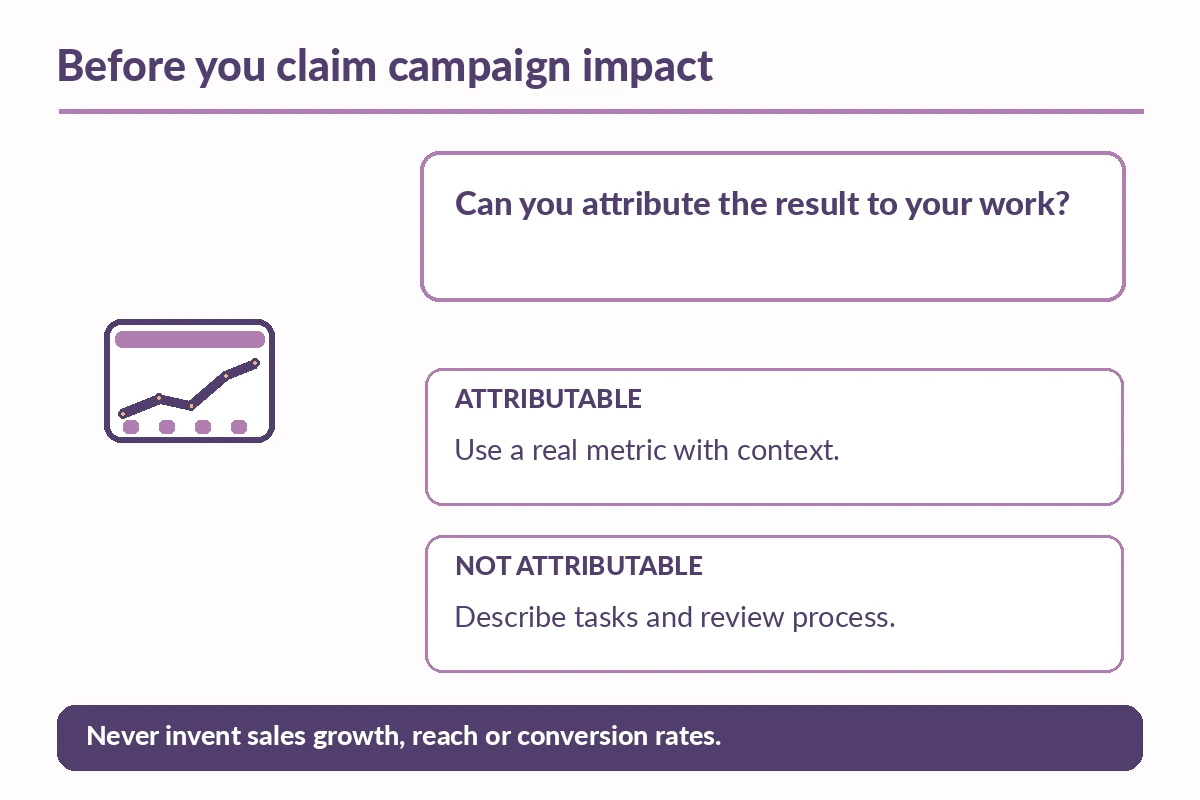
Marketing reports can include impressions, reach, clicks, leads, sessions or conversions, but these measures are not interchangeable. A change in web traffic does not automatically prove that you caused it, and a dashboard screenshot may not isolate your contribution. If you worked on a team, describe the task you owned and how results were reviewed. A genuine measured outcome can appear in a bullet with the metric definition and period when shareable. Otherwise, lead with your process: preparing tagged links, checking a report, building approved content or summarizing trends. The objective should not contain a fabricated conversion rate or imply guaranteed future performance.
Use portfolio evidence that a reviewer can inspect
For a beginner, a small portfolio can support an objective when it presents the task, intended audience, method and limitations. A content calendar, sample brief, audience-research summary or annotated dashboard made with synthetic data may be useful. Label speculative and practice work as examples. Do not expose client accounts, confidential campaign budgets, private analytics access or customers’ personal data. If the project involved teamwork, identify your contribution and what was reviewed by someone else. A brief objective can point toward a portfolio, while the projects section supplies the context that makes the claim believable.
Write separate objectives for social, email and analytics
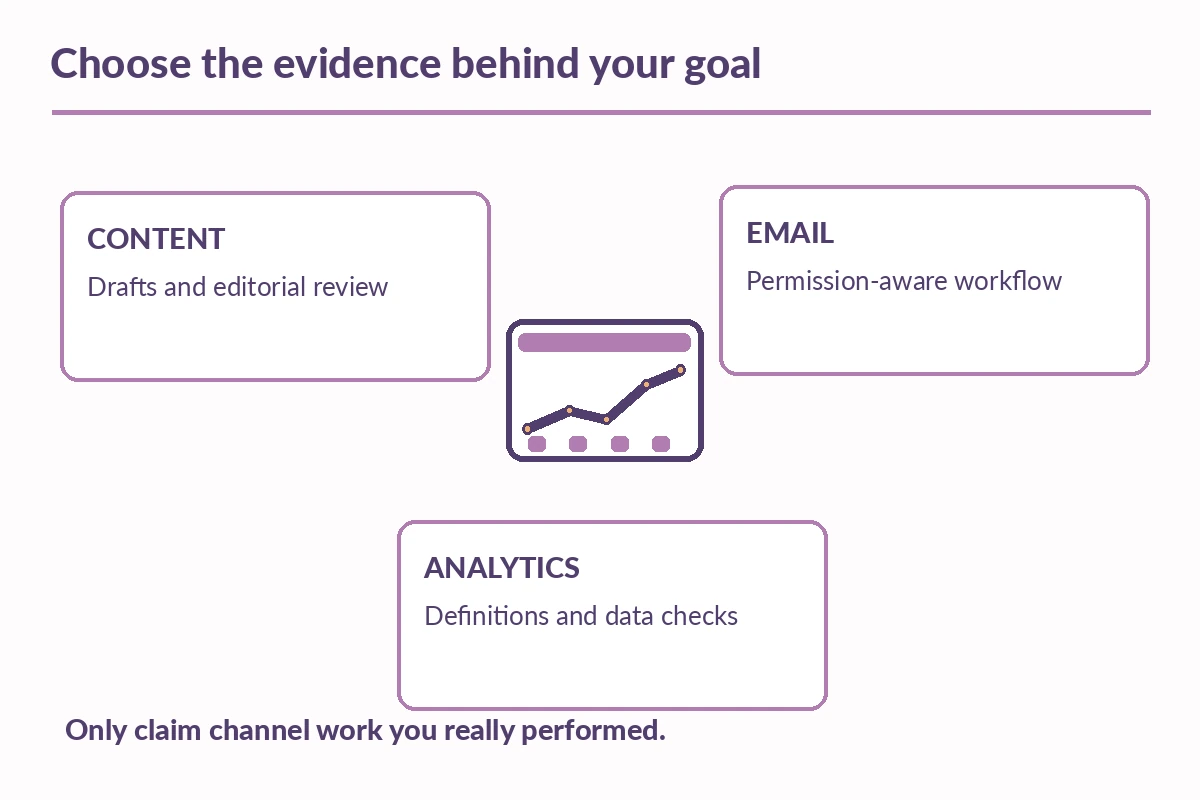
A candidate applying for social content support could emphasize researched posts and editorial review. For email operations, the objective might foreground segmentation exercises, proofreading and permission-aware list handling, if those tasks were actually completed. For analytics support, emphasize reporting definitions, spreadsheet checks and interpretation rather than promising to drive sales. Avoid using one generic ‘digital marketing wizard’ objective for all three vacancies. You can adapt emphasis from the same experience without modifying the underlying facts. Do not claim platform certification or access simply because you have watched a tutorial about the tool.
| Starting point | How to frame the objective | Evidence to show |
|---|---|---|
| School campaign exercise | Identify deliverable and mock status | Brief, copy and review notes |
| Internship content support | Describe owned drafts and approvals | Shared calendar or permitted sample |
| Reporting assistant | Name checked metrics and report scope | Verified chart or nonprivate report |

Describe tools at the level of actual use
‘Google Analytics,’ ‘marketing automation’ and ‘ad platforms’ can cover many capabilities. If you reviewed a shared report, say so; do not claim you built the complete tracking implementation. If you designed an email in a training account, describe the exercise instead of representing it as a production send. If you scheduled content under a manager’s approval, identify the review relationship. Tool names should be supported by a skills or projects bullet explaining which functions you used. A small set of credible tools is more persuasive than a long inventory of software selected only to match keyword scanners.
Make the first line fit a career changer
A retail or customer service professional may have evidence in customer questions, product descriptions, point-of-sale reporting or local event promotions. Translate that honestly. For example: ‘Retail associate transitioning to digital marketing, with experience writing approved product descriptions and recording customer feedback for team review’—but only if true. Those activities show content and audience awareness without claiming campaign leadership. If you have little marketing experience, add a small practice project with a clearly stated goal and evaluation criteria. A resume objective is most useful when it explains the pivot and then connects it to credible current evidence.
Check editorial approval and brand responsibilities
A marketing intern may contribute copy, research or scheduling, but not have authority to publish unreviewed brand statements, approve ad spending or change account access. Distinguish drafting from approving and measuring from optimizing. If you prepared recommendations, do not write that you implemented the strategy unless you did. In regulated industries or with sensitive customer data, follow the employer’s controls and omit private materials. A good resume objective can mention supporting reviewed campaigns or accurate reporting rather than suggesting independent control over budgets and confidential systems. This reinforces reliability, which matters when teams handle brand reputation.
Revise vague claims into evidence-based language
Replace ‘creative expert driving exponential growth’ with a truthful description such as ‘prepared social content drafts based on audience research and revised them after editorial feedback.’ If you did track campaign metrics, specify whether the numbers represent posts you handled, the whole brand account or a classroom case. Do not invent positive results simply because an example says every objective needs percentages. Readers can evaluate a clear work sample and your explanation of process. Keep the objective one or two sentences, put supporting details below, and reserve large outcome claims for situations in which you can show credible records.
Finish with a channel-specific application checklist
Choose one target posting. Highlight the channels, measurable responsibilities and collaboration requirements. Pick an authentic project that demonstrates one of those tasks, and decide whether you have a defensible result or only process evidence. Draft the objective, then audit every verb: ‘wrote,’ ‘researched,’ ‘supported,’ ‘published,’ ‘owned’ and ‘improved’ carry different implications. Remove fabricated rates, unsourced ROI and certifications you do not hold. Add the project or role that substantiates the line and make sure the portfolio is shareable. The objective should clarify your direction and capability, not promise marketing outcomes that no applicant can guarantee.
How We Research These Resume Objective Examples
We checked these primary occupation, regulator or consumer-guidance sources on November 16, 2026: O*NET describes digital marketing and market research duties such as campaign analysis, metrics and marketing program evaluation. BLS explains research, analysis and interpretation of marketing and consumer data. O*NET provides detailed work activities and software skill categories for marketing specialists. All example objectives are hypothetical and must be adapted only to a candidate’s real experience. Credentials, permission boundaries and hiring requirements differ by job and location. JobAsk does not guarantee interviews or placement. Read our affiliate disclosure.
More Resume and Cover Letter Guides
Only if they are real, measured, relevant and attributable. Otherwise describe the actual project and your contribution.
Yes, if clearly labeled as a classroom exercise rather than a live client campaign.
No. Name only tools you genuinely used and support each with the functions you performed.
Connect actual customer communication, product content or record analysis to one target marketing task.
Only if you truly had ownership. Drafting for review and independently managing a campaign are different responsibilities.