
Look for processor or loan clerk support, not instant lending authority
Entry-level loan processor jobs often involve collecting, organizing, and checking application documents so authorized lending staff can review a file. Related titles include loan clerk, loan assistant, mortgage processing assistant, or processing coordinator. O*NET groups loan interviewers and clerks with duties such as reviewing document completeness and recording applications. This should not be confused with authority to approve a mortgage, decide a borrower’s eligibility, or make binding claims about loan terms. Some employers require previous banking experience even for “junior” postings, so compare the exact job scope instead of assuming all loan processing roles are open to first-time applicants.
Read the difference between intake, processing, and underwriting
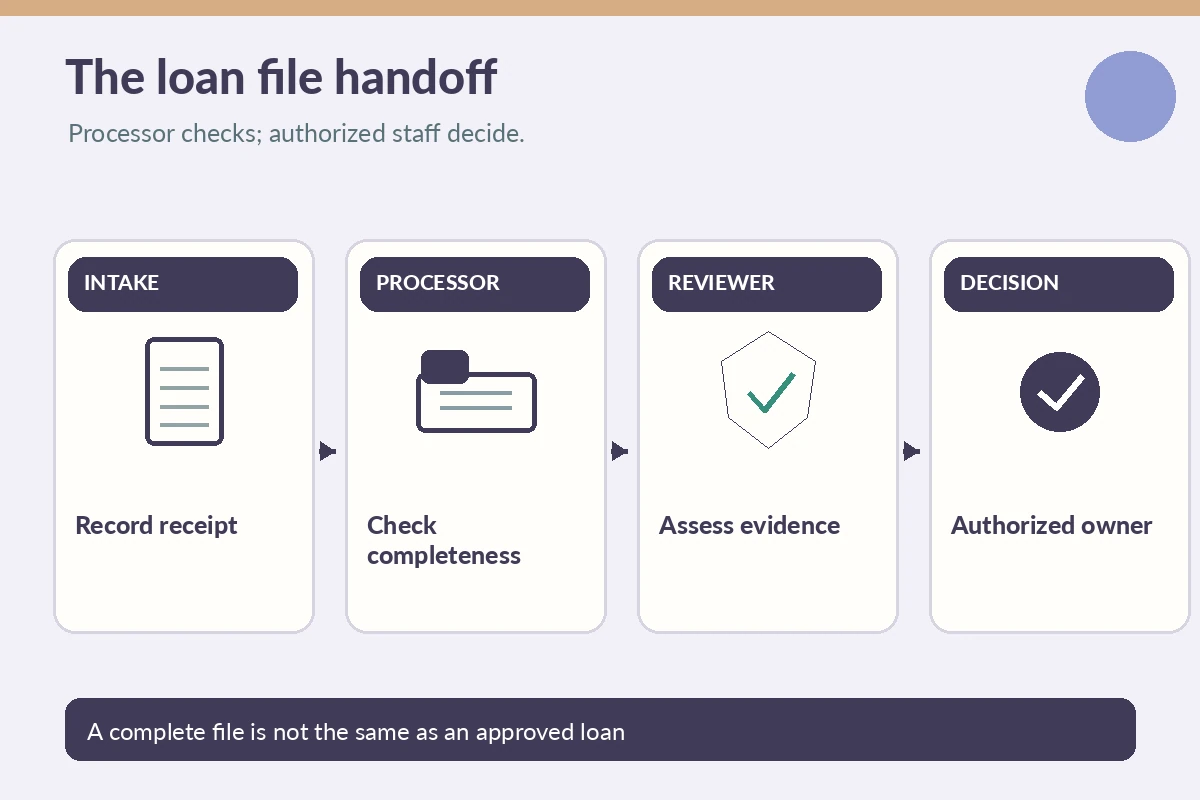
Loan intake may involve identifying what information is missing and following an employer-approved request checklist. Processing often concerns file organization, verification steps, record status, and communication between teams. Underwriting and approval decisions require separate designated staff and procedures. A processor may assemble information used for decisions without having the right to make them. If a posting says “approve loans,” “quote guaranteed rates,” or “independently clear underwriting,” ask what authority, credentials, and supervision are actually required. Treat the title and legal requirements as employer- and jurisdiction-specific rather than relying on one broad occupation description.
Understand the document trail before applying
A hypothetical file might include a signed application, income documentation, identification collected through a secure channel, and property or account information relevant to the product. The exact documents vary by loan type and company policy. A beginner may check that a requested item is present, clearly labeled, current under the organization’s checklist, and routed to the correct reviewer. If the item is missing, the truthful status is “awaiting document,” not “rejected.” Do not create fake bank statements or alter applicant documents to complete a file. Accuracy includes preserving source records and an audit trail for every change.
Practice a completeness checklist with invented data
Create an entirely fictional applicant file showing three status columns: document requested, received, and pending review. Use invented names, no Social Security numbers, and no real financial data. For example, label a practice income record “received; awaiting reviewer verification” rather than “income approved.” The difference matters because receipt of a document is not acceptance of its contents. In a job interview, describe how you track a missing form, request clarification through approved channels, and leave the decision to an authorized reviewer. Do not present a classroom spreadsheet as experience processing real mortgages.
Know the personal-data boundary on the first day
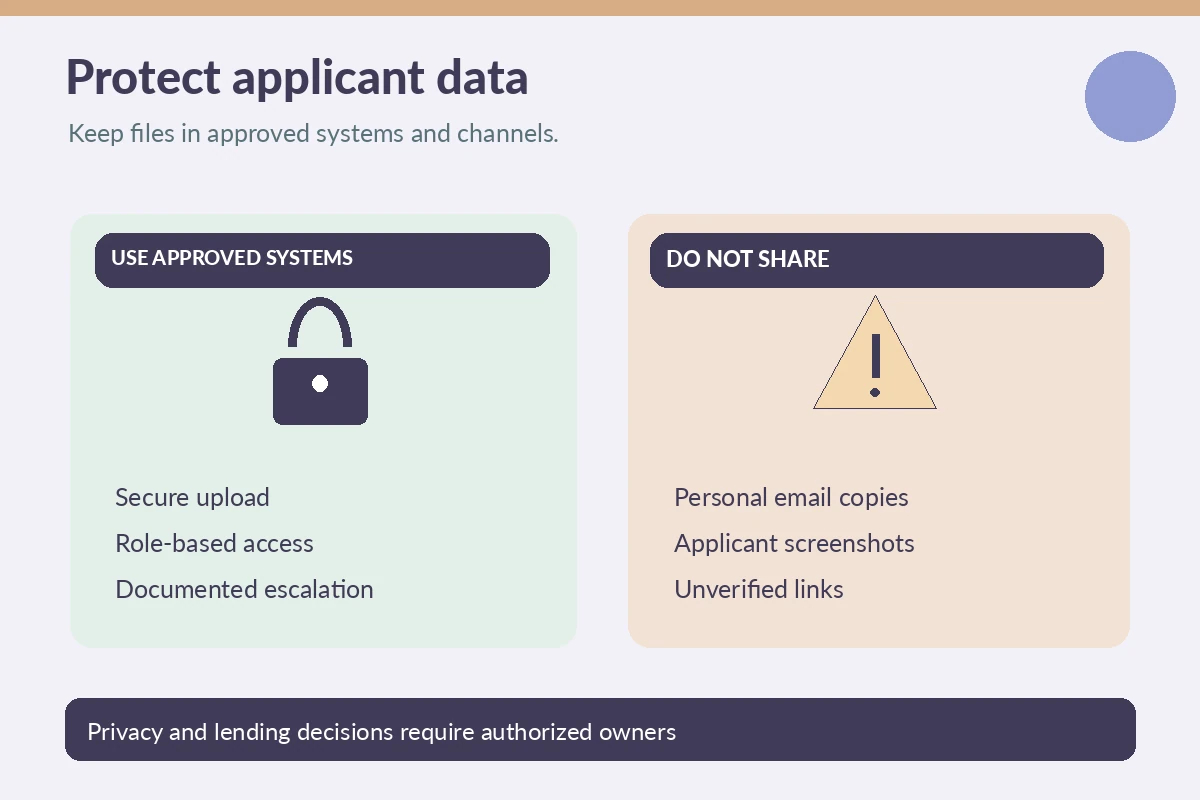
Loan records can contain highly sensitive personal and financial information. Ask what secure system stores documents, who may access applicant records, how customers submit material, and what to do if someone sends a file to the wrong address. Never forward income documents to your personal email, copy identification into a sample portfolio, or share login credentials for convenience. If you are asked to contact an applicant, confirm approved scripts and verification procedures first. A candidate who can explain careful data handling may be more useful than one who claims to “speed up approvals” without authority.

Prepare transferable accuracy and customer-service evidence
Relevant experience can come from office records, school finance assignments, bank branch support, data entry, scheduling, or customer service. Translate it into actual tasks: matching a form against a checklist, maintaining version labels, tracking incomplete requests, or escalating discrepancies. A truthful resume bullet could read: “Checked incoming forms for missing fields and routed exceptions to the designated reviewer.” Add a real count only if you can verify it. Do not imply you underwrote credit or approved loans if you maintained records. Financial terminology is useful when accurate; unsupported job titles are not.
Review technology requirements by purpose
A loan processing post may mention spreadsheets, document management systems, application portals, customer-contact tools, or proprietary lending platforms. Do not list specialized software you have never used. Instead show that you can maintain organized files, interpret a checklist, document status accurately, and learn approved systems under supervision. Ask if the role includes data-entry targets, applicant communication, escrow coordination, or closing support, because the workflow differs. When learning a platform, distinguish training records from actual customer information and never reproduce sensitive screens in public examples.
Ask how exceptions move to an authorized decision maker
Consider a file that shows two different dates on supporting records. A processor should identify the discrepancy and send it to the appropriate reviewer under the organization’s workflow. They should not silently choose the date that makes the file look complete. O*NET describes verification and preparation tasks, while the BLS identifies loan officers as workers who evaluate and authorize or recommend approval. An interview question about a mismatch is a chance to demonstrate respectful escalation. Explain your documentation, the source of the conflict, and how you would confirm the authorized resolution without making a lending decision.
Verify lender legitimacy and the actual job arrangement
Check whether an opening comes from a bank, credit union, licensed lender, servicing company, or legitimate staffing agency. Find the real careers page, office or remote-work terms, and applicant communication domain. The FTC warns that fraudulent recruiters may ask applicants to pay for equipment or submit banking details. Do not pay for a job or send financial documents to an unverified contact. If the employer uses a recruiting agency, confirm the employer relationship and the eventual worksite. Avoid interpreting a long compensation promise or instant offer as evidence that the role is real.
Compare offers by oversight, privacy, and volume expectations
Before accepting a first loan processing role, confirm training, file volume, review ownership, customer-contact expectations, schedule, location, and privacy controls. Ask whether you will support one product type or several and whether any licensing requirement applies to the specific tasks. A legitimate entry route should explain who approves decisions and how a new processor learns compliance procedures. Choose a position that values accurate records and escalations over a claim that you can make credit decisions from day one. Strong support work means the next reviewer receives a reliable file, not an invented approval.
How We Research Entry-Level Job Requirements
We reviewed occupation-specific federal and O*NET descriptions, checked the role boundaries described above, and compared related prior JobAsk topics. This guide is about evaluating a job category, not proof that a vacancy or a hiring outcome currently exists. Illustrative examples are fictional; actual training, schedule, eligibility, and authorization depend on the employer, location, and position.
Sources checked 2026-11-03: O*NET identifies loan clerk, loan processor, document examination, verification, and referral tasks. BLS distinguishes loan officer evaluation and recommendation roles from clerical processing support. FTC covers fake recruiter requests and payments in job scams. Editorial and relationship disclosure: affiliate disclosure. No partnership or paid placement is implied.
Related Job Search Guides
Do not assume so. Processing, underwriting, and loan approval are distinct responsibilities; authority depends on the specific role and rules.
Some employers require it and others train assistants. Read the actual job criteria.
Use a fictional file-status checklist without real names, account numbers, or financial records.
Record its status and follow the organization’s approved request or escalation workflow; do not substitute invented information.
Ask about document collection, access control, secure communication, and what to do after a misdirected file.