
Identify which telecom technician job the posting means
Entry-level telecommunications technician jobs can refer to customer-premises installation, central office maintenance, fiber work, service desk coordination, or radio and tower equipment. These are not interchangeable first-day assignments. The BLS notes that technicians install and repair equipment and lines, test devices, keep maintenance records, and explain equipment to customers. However, the tools, physical environment, and safety requirements differ sharply by specialty. Start with the actual worksite and supervised tasks, not the impressive job title. A desk or bench trainee opening may be a better fit for a candidate with basic network coursework than a tower role requiring specialized climbing credentials.
Compare indoor bench tasks and field work
A bench support job might test a returned router, label equipment, log serial numbers, or reproduce an equipment fault using an approved checklist. Customer-premises work may involve scheduled visits, explaining setup, documenting work, and observing an experienced installer. Line and tower specialties can involve outdoor travel, heights, electrical hazards, and specialized rescue training. Ask where the work happens, whether customers are present, and which tasks a trainee can perform without direct oversight. Do not assume that learning to configure a home router qualifies someone for cable splicing or work on energized infrastructure.
Treat safety training as a job requirement, not a bonus
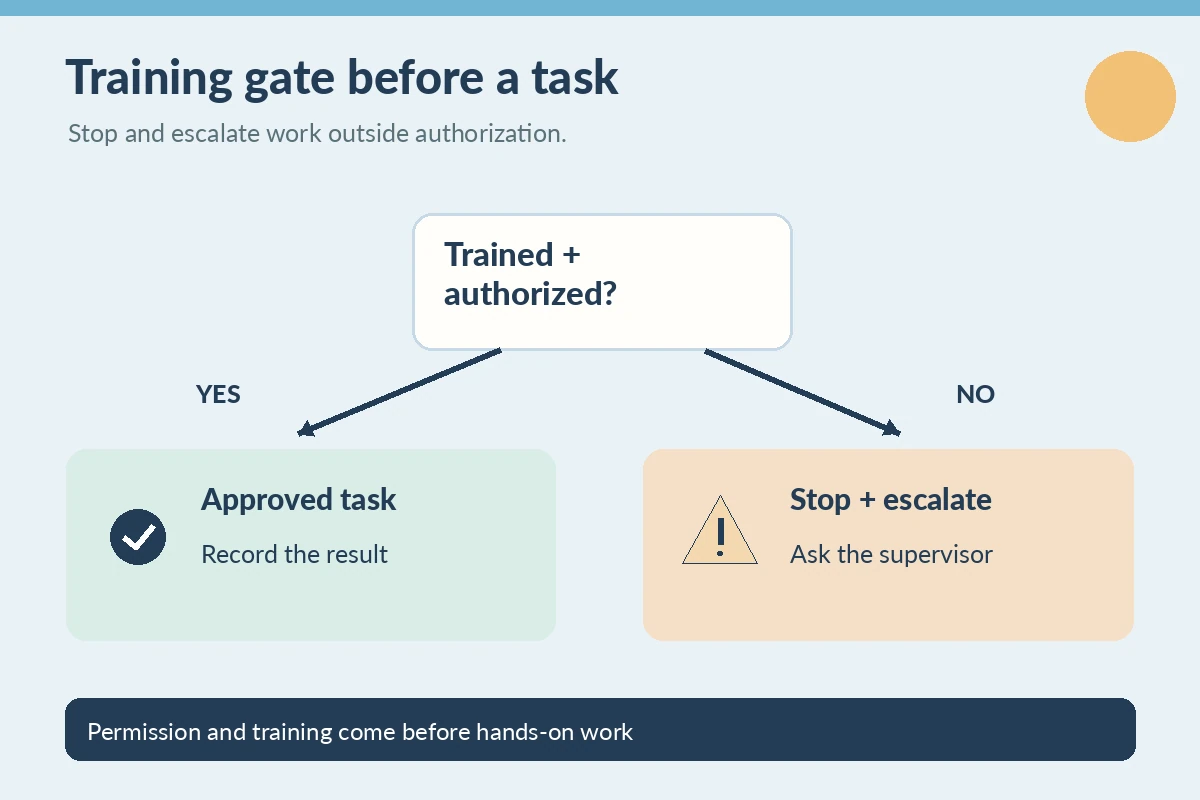
Telecommunications work can involve electricity, ladders, lifting, traffic areas, or elevated structures. BLS describes significant training and different requirements for some tower and line specialties. If a recruiter says that a beginner will climb a tower or handle unfamiliar electrical equipment immediately, ask for the documented training, supervision, protective equipment, and emergency procedures rather than accepting an informal assurance. Never attempt a dangerous task to prove willingness in a trial shift. The specific employer and worksite should make safe work assignments and stop-work escalation clear before hands-on work begins.

Review equipment knowledge without overstating it
List devices or concepts you have genuinely used: network cables, routers, signal testing in a classroom, basic troubleshooting, ticket writing, or safe handling of electronics. If you only watched a demonstration, label that as exposure instead of practical experience. A personal lab can show a simple diagram of a lawful home network and a documented connection test without including neighbors’ network information or access credentials. Avoid claims such as “certified fiber technician” unless you hold the precise credential. Product training often depends on the employer’s equipment, so willingness to follow procedures matters as much as buzzwords.
Understand the difference between a test and a repair
In a hypothetical supervised service call, the trainee first confirms the authorized ticket, identifies the device, and records the symptom. The experienced technician chooses the approved test and explains what the results show. If the result is outside the trainee’s training, the trainee records the finding and escalates rather than replacing parts or resetting customer services on their own. Only after approval should a repair be made and verified. This scenario is not technical repair instructions: it illustrates decision rights and documentation. A useful interview answer emphasizes accurate status reporting and safe escalation over dramatic instant fixes.
Make a useful service-ticket writing example
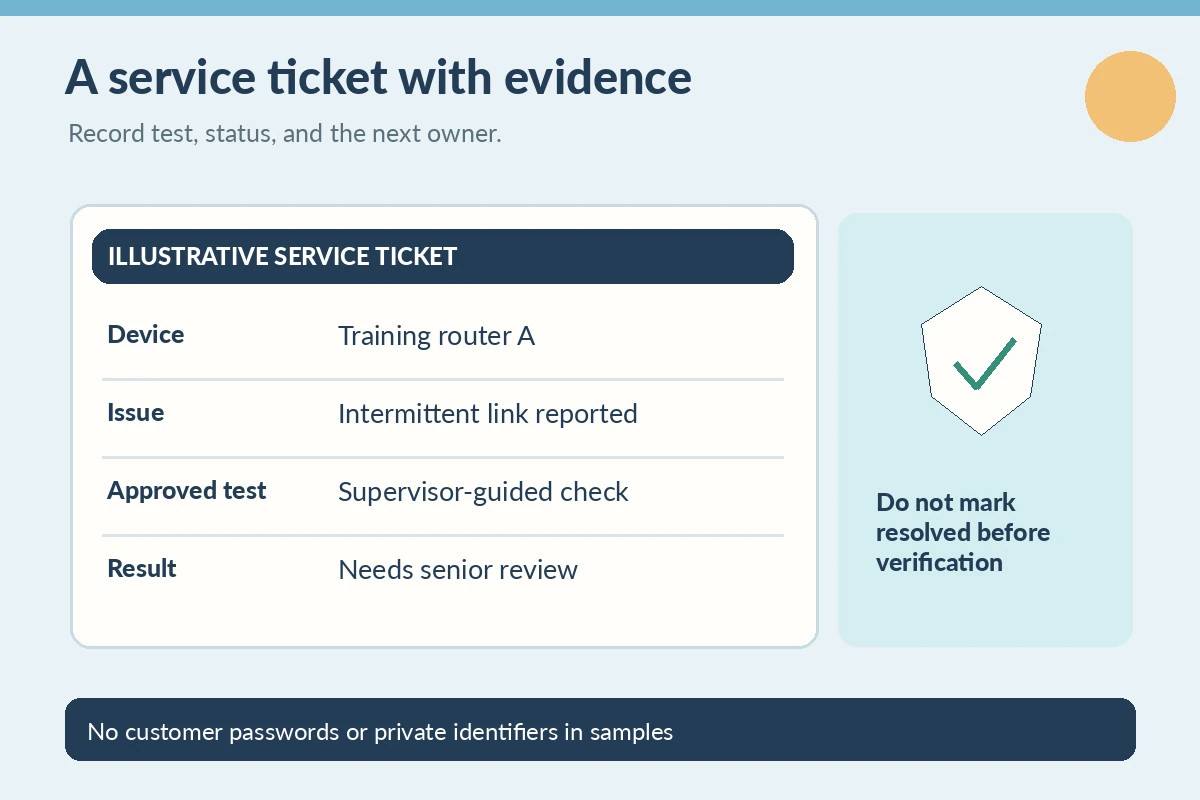
A service ticket should allow another technician to understand what was reported, which device was involved, what approved check occurred, what the result was, and who owns the next action. Create a fictional example with invented device identifiers, not a screenshot from a real customer’s account. A good status label distinguishes “reported,” “reproduced,” “awaiting senior review,” and “resolved after verification.” Do not mark a service closed merely because you sent a note. Never include passwords, access tokens, or private customer addresses in a job portfolio. Clean incident documentation can be persuasive evidence for candidates without formal telecom employment.
Ask who teaches and approves the first month of work
A trustworthy entry posting should be able to explain whether training is in-house, manufacturer-based, union-based, or delivered alongside an experienced field technician. Ask when you may use test gear, which tasks require supervision, who checks installation quality, and whether a valid driver’s license is required. Verify travel, vehicle, weather, emergency-call expectations, and any work outside regular hours. The label “paid training” is not enough if the employer cannot describe what is learned or the conditions under which work is performed. Request the terms in writing before making plans.
Use a realistic job-search verification workflow
Search official company vacancies for telecom field trainee, installation apprentice, equipment technician, service technician trainee, or network operations support. Check that the employer’s domain, business, and application process match the public listing. The FTC warns that fake work offers may ask applicants to pay for equipment or move the conversation to private payment channels. A real job may require background checks or identity verification at an appropriate stage, but you should verify the employer and the secure process before sharing sensitive data. Record the role, site, schedule, training, and application URL.
Answer troubleshooting questions with safe boundaries
When an interviewer asks what you would do if a test fails, explain that you would document the observed result, verify the approved test setup, ask the supervising technician to review, and avoid unapproved changes. If you have a legitimate classroom project, describe the actual observations rather than inventing a successful repair. For customer work, emphasize keeping the person informed through approved channels without disclosing credentials or promising a fix you cannot authorize. Good early-career judgment includes knowing when to stop, log, and escalate instead of improvising at a customer site.
Compare offers by the worksite, support, and growth route
An entry telecom technician offer is not attractive just because the title says “engineer” or promises rapid promotion. Compare supervised tasks, equipment exposure, required travel, physical conditions, written training, safety standards, and on-call scheduling. Ask what advancement actually requires, and distinguish a certification you will earn from one already required at hire. Choose a position where you can reliably document work, learn from trained staff, and operate only within your permissions. The best first role is transparent about both what a beginner may do and what remains a specialist’s responsibility.
How We Research Entry-Level Job Requirements
We reviewed occupation-specific federal and O*NET descriptions, checked the role boundaries described above, and compared related prior JobAsk topics. This guide is about evaluating a job category, not proof that a vacancy or a hiring outcome currently exists. Illustrative examples are fictional; actual training, schedule, eligibility, and authorization depend on the employer, location, and position.
Sources checked 2026-11-03: BLS describes telecom installation, testing, repair, training, and specialty-specific work environments. FTC warns that fake job offers may request money, banking data, or equipment payment. Editorial and relationship disclosure: affiliate disclosure. No partnership or paid placement is implied.
Related Job Search Guides
Some trainee roles provide on-the-job training, but requirements vary greatly by specialty and employer.
No. Customer equipment, central-office, fiber, and tower tasks differ. Check the posting and training requirements.
Use an original, fictional service ticket or permitted home-lab diagram without private customer data.
No. Tasks depend on training, authorization, procedures, and supervision.
A request to pay for an interview or equipment through an unverified recruiter is a serious warning sign.