
The first 90 calendar days of a part-time job may include far fewer working shifts than a full-time employee’s first three months. Plan onboarding around the hours actually assigned: how many times you can practice a task, who supervises it, what changes between shifts, and when feedback is available. A calendar-based 30/60/90 plan can be useful, but it should not be mistaken for a minimum number of shifts, guaranteed training hours, or a promised schedule. Confirm the employer’s rules and your assigned duties before taking on work independently.
Begin with the hours actually scheduled
Write down your ordinary shifts, location, reporting time, break or attendance procedures, and the process for a shift change. Confirm who issues the schedule and where the current version lives. Do not rely solely on a coworker’s screenshot of an old rota. If your part-time availability has boundaries, communicate them through the approved channel rather than casually swapping hours. A 90-day calendar plan should list the number of expected working shifts separately from calendar days because opportunities to practice tasks may be limited.
Identify essential training before solo coverage
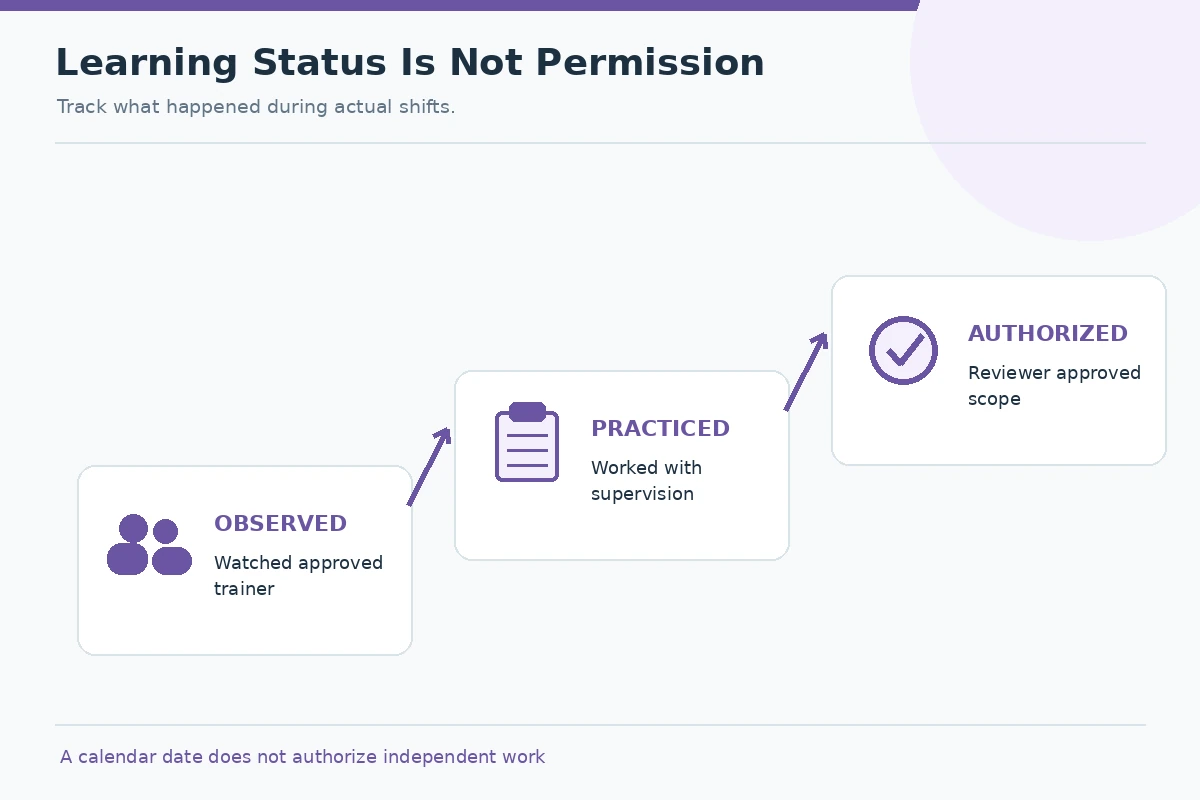
Ask which tasks must be demonstrated or approved before you perform them without assistance. The answer depends on the workplace and role; do not borrow permissions from another employee’s experience. A cashier trainee may need a reviewed register close, while a desk assistant may need a supervisor’s demonstration of handling restricted records. Keep a task-by-task training list with columns for observed, practiced under supervision, and authorized for independent work. Recording ‘observed’ is not the same as recording ‘approved.’
Arrange training when the right mentor is present
A short or irregular schedule can make it difficult to learn from the same person each week. Ask who is assigned to demonstrate each task and which shifts allow appropriate practice. If a required trainer is absent, request a new training opportunity instead of improvising. An employee who works evenings might not meet the daytime manager often, so identify another authorized reviewer or schedule a brief check-in. The goal is consistent instruction, not asking coworkers to certify skills they are not authorized to assess.
Make every shift handoff explicit
Part-time employees may be away for several days while tasks continue. Learn the designated handoff format: pending request, last action, next owner, urgency if known, and where the record lives. Never place sensitive client details in a personal notebook or text thread. For example, ‘Return request recorded, pending supervisor policy review’ is more accurate than ‘refund done’ when no authorized refund occurred. Ask the next shift to acknowledge ownership using the normal process; you are not responsible for work you were never assigned.
| Training record | What it proves | What it does not prove |
|---|---|---|
| Observed | You watched a qualified coworker | Permission to do it alone |
| Practiced with supervision | You performed it with guidance | Automatic independent approval |
| Authorized | Appropriate reviewer approved scope | Authority outside assigned duties |
Use the first month to practice representative work
During early shifts, prioritize common tasks before unusual exceptions. Observe one normal workflow, repeat it with supervision, and write down the steps in approved training material if the employer permits. When a rare situation arises, identify whom to call instead of guessing. A useful first-month check-in question is, ‘Which two tasks should I be comfortable doing on the shifts I normally work, and which cases require immediate escalation?’ This turns vague confidence into an agreed, job-specific plan.

Do not compare progress only by calendar age
Two people hired on the same day may have completed very different numbers of shifts by day 30. At a check-in, describe exposure accurately: how many times you saw a task, which variation you practiced, and what feedback you received. Avoid claiming that ten weeks of employment means ten weeks of full-time practice. If the organization uses formal milestones, ask how they apply to your schedule. A fair conversation should compare the employee’s assigned work and actual training opportunities, not imagined hours of experience.
Plan reliable coverage for days 31 to 60
By the second month, ask which routine tasks you can cover independently and which require a named backup. If your shifts touch peak demand, confirm what must be handed off before you leave. Do not extend your assigned hours or promise overtime without approval. For example, a part-time receptionist can leave an authorized appointment exception in the shared queue for the next shift instead of solving it through a personal account after clocking out. Managers should know what work will remain, and the record should make that visible.
Ask for feedback during an actual work window
If the supervisor works different hours, propose an approved short meeting at the beginning or end of a scheduled shift. Bring two concrete examples: one task you handled as instructed and one point you want to practice. Avoid vague goals such as ‘be faster at everything.’ Instead ask, ‘Can I independently handle routine bookings, and what situations should I still bring to the lead?’ Record the answer where authorized. This keeps the 60-day checkpoint useful even when working hours are limited.

Review readiness and training gaps at day 90
By the third month, compare your observed, supervised, and independent task lists against the role’s expectations. Note skills you have not yet had the chance to demonstrate. Ask for another practice opportunity and the name of an authorized assessor. Confirm your current schedule and how changes are requested; do not assume part-time hours automatically increase. A good 90-day summary states tasks you can perform, exceptions you escalate, and training still planned—without inventing customer scores or suggesting that an elapsed date confers permissions.
An example you can adapt without inventing evidence
Illustrative shift handoff: ‘Thursday evening: processed routine desk requests within assigned access; one unusual request left in the shared queue for the Saturday lead. I will practice the approved exception procedure during my next supervised shift.’ This example names no real employer and demonstrates how a part-time schedule changes follow-up. It avoids copying private details, claiming that a manager granted permission without confirmation, or assuming a request was completed while the employee was off duty.
How We Research and verify this guidance
We compared onboarding advice from university human-resources teams with relevant project guidance and federal telework materials, where applicable. These sources describe structured training, feedback and communication practices; they do not establish your employer’s specific rules. The resources reviewed on 2026-11-16 are umich.edu guidance brandeis.edu guidance ucdavis.edu guidance. We also checked overlapping JobAsk topics so this page addresses a distinct situation. All sample messages and work records are illustrative. For editorial and commercial relationships, see our affiliate disclosure. No product purchase is required for these steps.
Related Workplace Guides
Calendar time passes equally, but actual training exposure depends on scheduled shifts. Follow the employer’s own review and training process.
Only if workplace policy and an authorized supervisor permit it. Observation is not automatic sign-off.
Ask for an approved check-in window or another authorized reviewer; do not treat feedback from an unassigned coworker as formal approval.
Follow the employer’s schedule, timekeeping and communication policies. Avoid informal off-shift work without proper authorization.
Your actual shift experience, tasks approved for independent work, handoff quality, remaining practice needs and confirmed schedule expectations.