
Housekeeping experience is valuable resume material when it shows how you maintained rooms or work areas, checked supplies, noticed problems, and reported issues promptly. An effective entry explains the setting—hotel, residential facility, office, or another permitted workplace—and identifies duties you personally completed. Do not confuse cleaning a room with certifying it for guests, managing chemical safety for a facility, or supervising an entire shift. Below are sample bullets, a room-turnover map, and a scope checklist to make the wording specific without exposing guest information. The examples are illustrative, not descriptions of actual hotels or measurable results.
Define the environment and the cleaning assignment
O*NET describes maids and housekeeping cleaners as workers who clean rooms and common areas, replenish supplies, and handle linens. Yet a hotel guest-room attendant, a hospital environmental-services aide, and a private-house cleaner can have different training and site rules. Start with your real setting, shift, and assigned spaces. A hotel worker can describe guest-room turnovers and supply carts; a hospital worker should not casually claim specialized decontamination procedures that were outside their training or assigned scope.
Make a short task inventory: room entry under site policy, linen collection, surfaces cleaned, bathroom restocking, vacuuming, equipment checks, and communication of room status. Choose only tasks you did yourself. If you were a laundry worker, identify the linen workflow rather than stating that you inspected guest rooms. If you floated between floors, say so only if that was your regular work, not one exceptional day.
Explain the turnover sequence without overclaiming
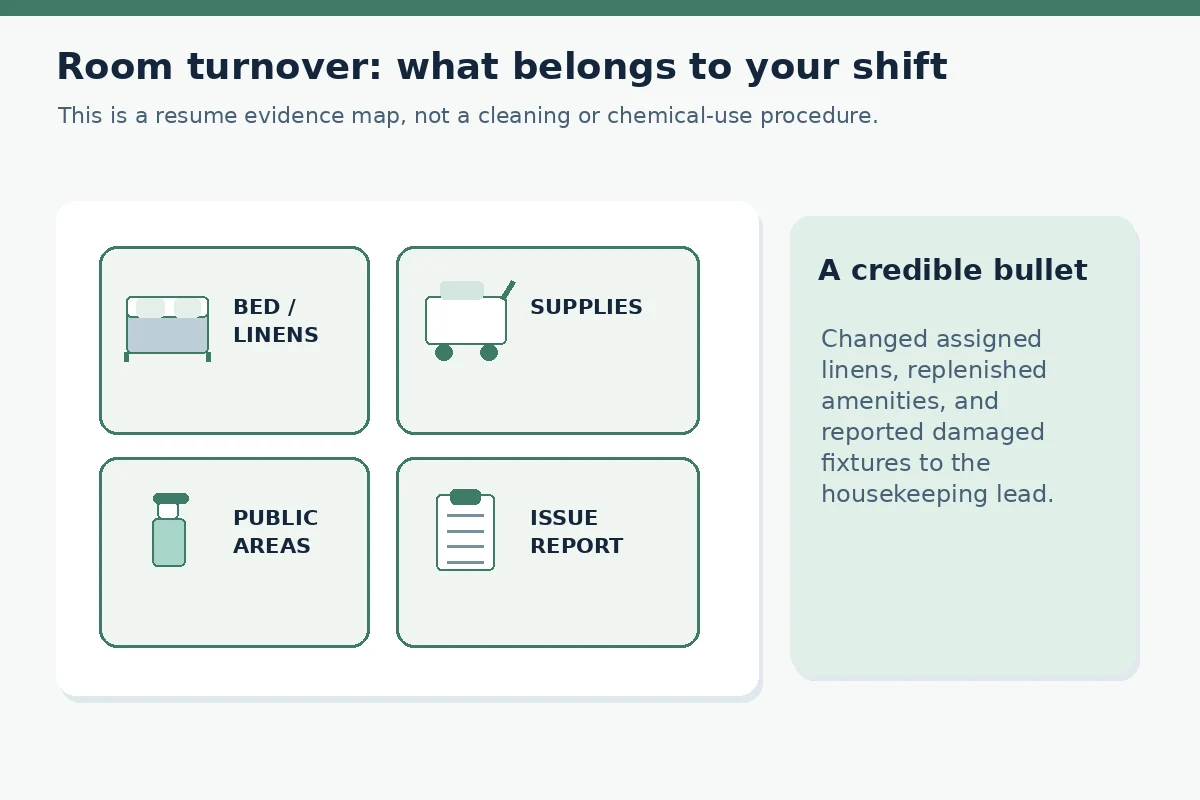
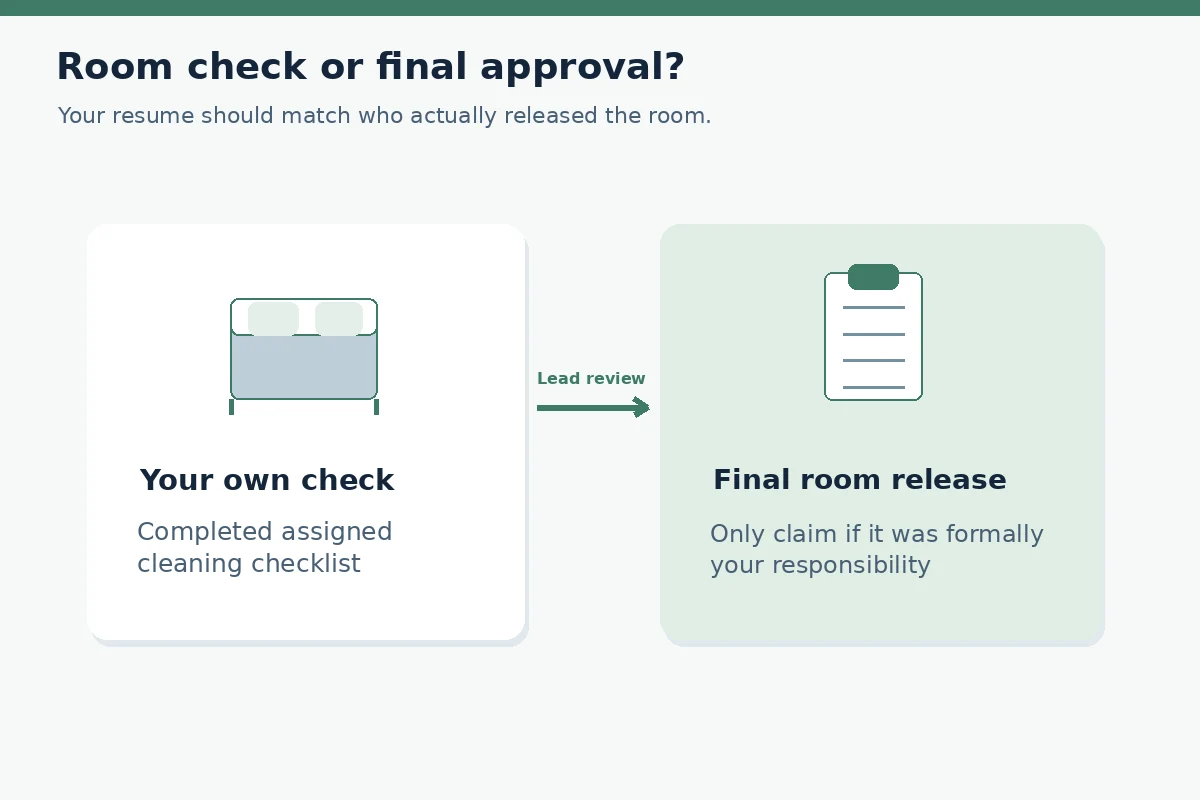
A useful room-turnover bullet can connect preparation, cleaning, restocking, and notification. ‘Prepared assigned guest rooms by changing linens, replenishing bathroom supplies, and reporting maintenance issues using the housekeeping process’ contains visible tasks and a handoff. By contrast, ‘Guaranteed flawless rooms’ is unverifiable. Some hotels have supervisors or inspectors who release rooms for occupancy; mention that final sign-off only if you really held that responsibility.
Your shift may have included public-area cleaning rather than room turnovers. In that case emphasize corridor, lobby, restroom, or service-area cleaning and the checks you followed. A useful record could be ‘Restocked assigned public restrooms and flagged broken fixtures for maintenance.’ Avoid generic claims that you were solely responsible for guests’ health or safety. The focus is correct completion of assigned tasks and reliable reporting.
Show supply and equipment care with evidence
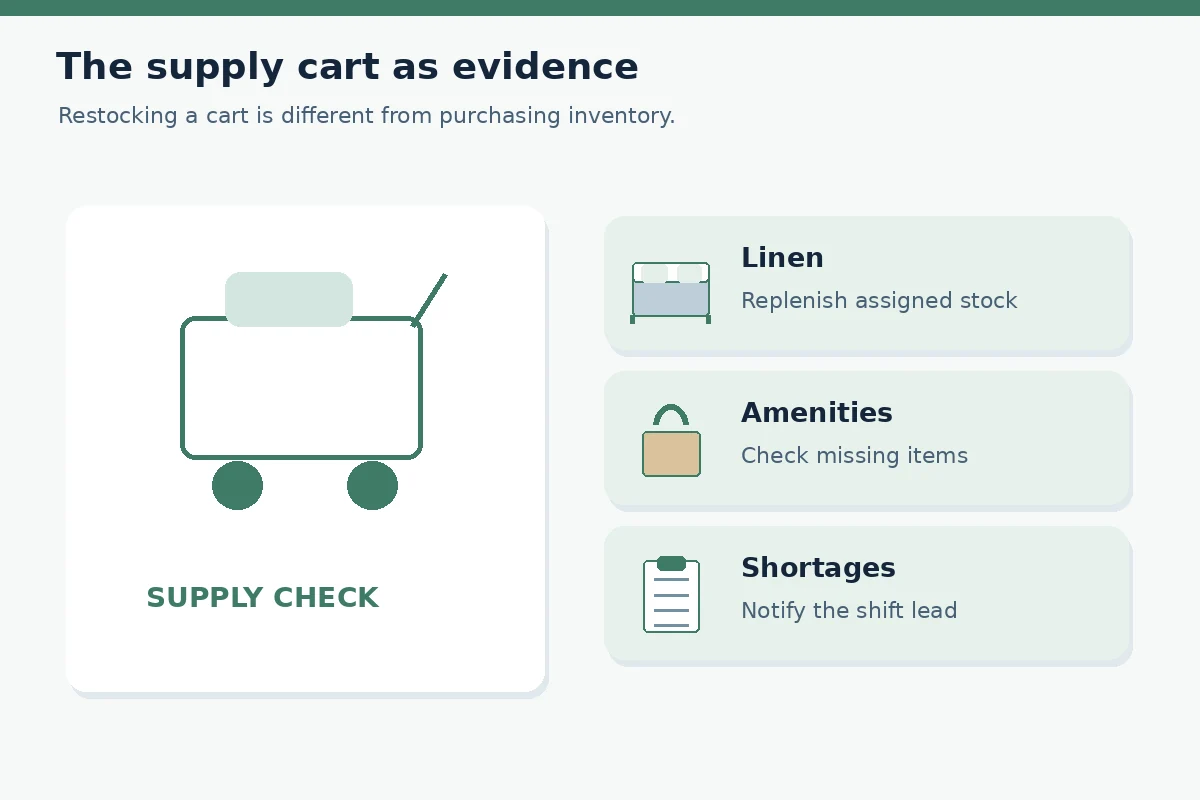
Supply management does not always mean ordering inventory. Many housekeepers refill carts, count linen stacks, notice shortages, and tell a lead about missing items. Write ‘Restocked linen carts and reported supply shortages at shift handoff’ if that is true; do not write ‘managed purchasing’ unless you genuinely placed authorized orders. A simple cart illustration can remind you which supplies you handled and where a shortage was recorded.
Tools and chemicals are another scope boundary. Mention only equipment you were trained and authorized to operate, and describe compliance with the actual site procedures. If a task required protective equipment or a supervisor, do not present yourself as the person who created the safety protocol. Specific details such as vacuum use, laundry handling, or inspection of a supply cart can show dependable work without implying specialized hazardous-material training.
| Task to describe | Evidence to check | Boundary to respect |
|---|---|---|
| Cleaned assigned rooms | Linen change and supply checklist | Not final room release |
| Prepared supply carts | Items restocked and shortages noted | Not procurement management |
| Noticed damage | Concern reported to maintenance or lead | Not a repair certification |
| Found belongings | Site procedure and supervisor handoff | No guest details disclosed |
Handle guest property and found items correctly
Housekeeping teams may encounter forgotten belongings, damaged fixtures, or signs that a room needs maintenance. O*NET identifies reporting damaged or found property as a task in the occupation. A resume can describe ‘Documented found-item or maintenance concerns through the supervisor’s reporting process’ if that was part of the role. It should not give examples containing identifiable guest property or room numbers, and it should never imply that you independently decided what to do with valuables.
Keep privacy language practical. ‘Followed site procedures when entering occupied rooms and reporting found items’ is a clear duty. ‘Protected all customer data’ is too broad for most room-attendant roles. In an interview, explain how you sought supervisor help, followed posted access rules, or paused an unusual task—not how to bypass a lock or access guest information. Evidence of careful judgment matters more than dramatic stories.
Use a realistic housekeeping resume entry
Hypothetical example — Room Attendant | Example Hotel (fictional) | Dayton, OH | May 2024–October 2025. ‘Cleaned assigned guest rooms and replenished linens, toiletries, and room supplies according to the shift checklist.’ ‘Flagged damaged fixtures and missing supplies through the designated housekeeping reporting channel.’ ‘Kept the supply cart orderly and handed off unfinished room tasks at shift change.’ None of these lines claims final room-inspection authority, guest satisfaction metrics, or a particular hotel brand.
For a hospital or assisted-living position, replace guest-room language with your actual assigned environment and relevant training. Do not borrow infection-control terminology unless you performed that work and understood its procedures. For a facility-support opening, emphasize organization, stock checks, and timely maintenance escalation. For hospitality, emphasize discreet room access and structured turnover. An accurate role heading and truthful employment dates should accompany the bullets.
Replace vague claims with physical work evidence
‘Cleaned the hotel’ hides the important differences between a room, a floor, and a shared area. Name the space. ‘Responsible for supplies’ is clearer when it becomes ‘Restocked carts with linens and replacement amenities before assigned shifts.’ ‘Inspected rooms’ may overclaim authority if you only checked your own work; say ‘checked assigned cleaning tasks against a room checklist’ instead. The distinction between self-check and supervisor inspection belongs in the resume wording.
Do not invent rooms-per-shift totals, perfect inspection scores, or time savings. If you have legitimate recorded volume and are permitted to use it, describe the context and period. Otherwise, focus on consistent responsibilities. Dates also matter for seasonal contracts or work through a cleaning service: identify the actual employer and assignment relationship rather than listing every client as an employer. This improves accuracy when a recruiter reviews your history.
Review scope, confidentiality, and relevance
Read your entry once for safety: Does a sentence imply chemical handling beyond your training? Does it describe access to an occupied room or handling guest belongings without a site procedure? Does it claim management authority just because you checked a cart? Remove or narrow such claims. The strongest housekeeping bullets often explain steady processes and communication when something could not be completed as expected.
Then match the job you want. A hotel opening values room-turnover routines; a school custodian role may care about common-area routines and record keeping; a supply-support position may care about inventories and handoffs. Keep every claim tied to a task you actually did, and make the first line the most relevant. A short, honest section can show both pace and judgment without declaring results you cannot substantiate.
How We Research This Resume Advice
We compared task descriptions for this occupational setting with the federal O*NET career database, then used CareerOneStop guidance for clear work-history entries. A typical occupational task is not proof of what any individual applicant did. Confirm your own duties, training, and employer-specific limits before adapting any example. Reference sources: O*NET. CareerOneStop. BLS or OSHA. These are informational sources, not endorsements or hiring promises. Read the site affiliate disclosure for relationship transparency.
More Resume and Cover Letter Guides
Name the actual spaces, cleaning methods, supply checks, and reported issues instead of suggesting that you performed hotel guest-room turnovers.
Describe self-checks against an assigned checklist unless you formally had final inspection or release authority.
List equipment you genuinely used and were trained to operate. Do not imply specialized hazardous work from generic cleaning duties.
No. Include an accurate, permitted count when available, or describe the regular assignment and quality checks without invented numbers.
List the correct employer, accurate dates, and assignment context. Do not describe multiple clients as independent employers unless that relationship was real.